Timor Wrasse
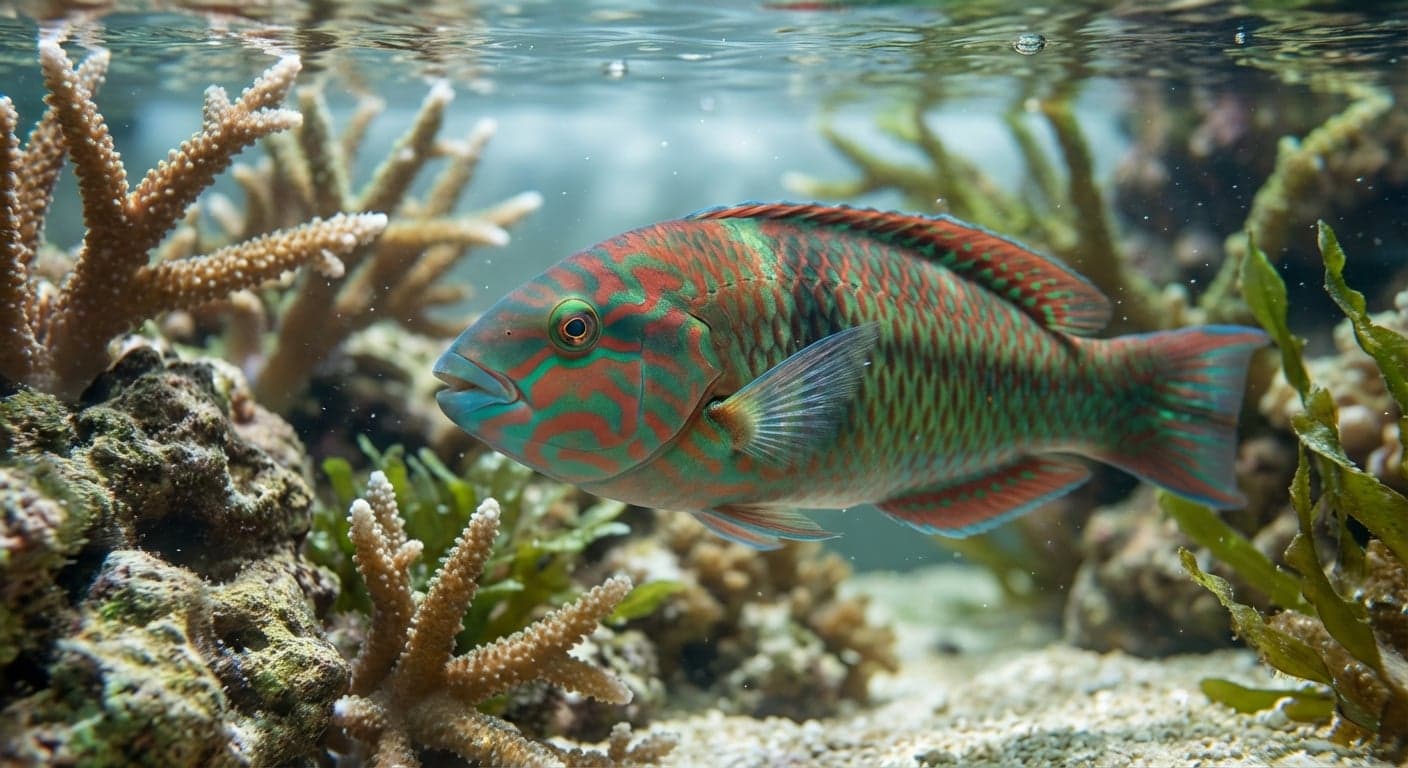
The Timor Wrasse (Halichoeres timorensis) is a hardy, active Indo-Pacific reef wrasse — reef-safe and a useful pest-eater, with the genus's classic sand-diving habit.

Timor Wrasse
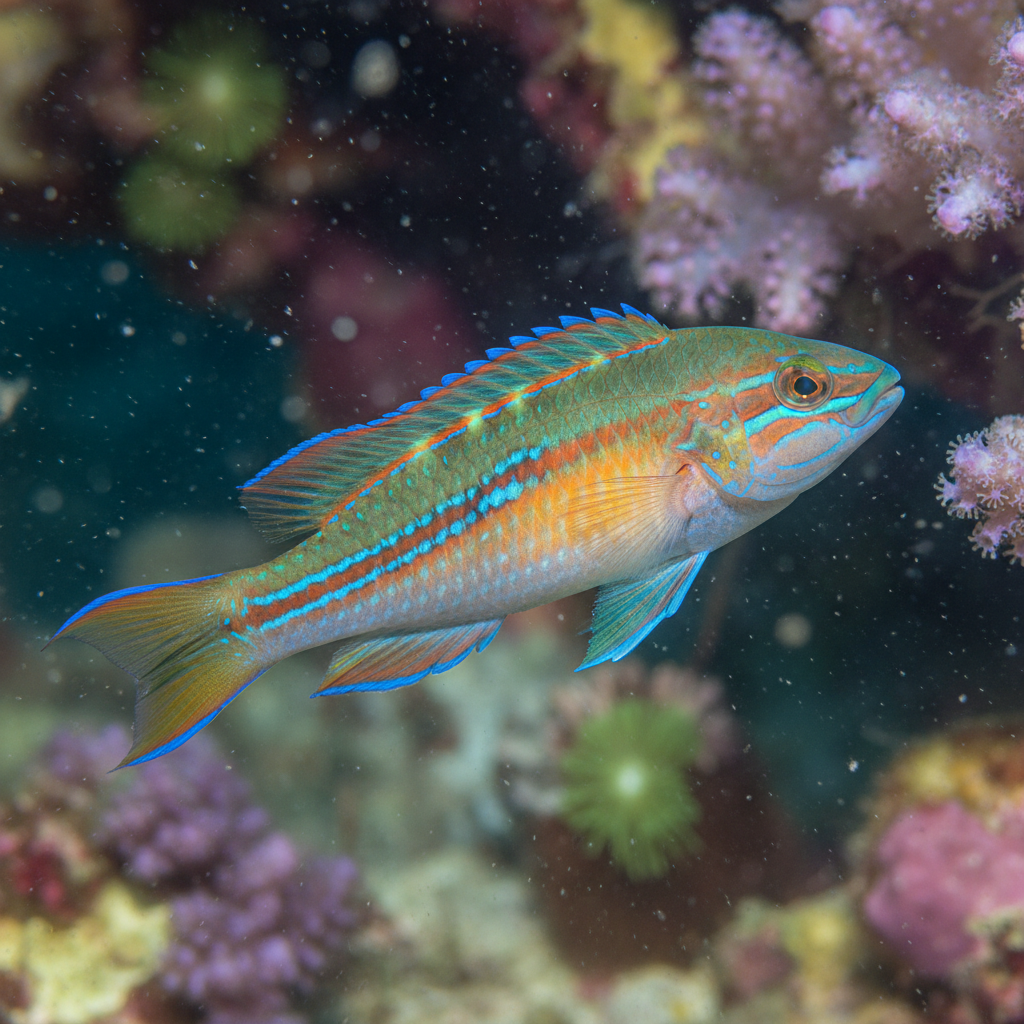
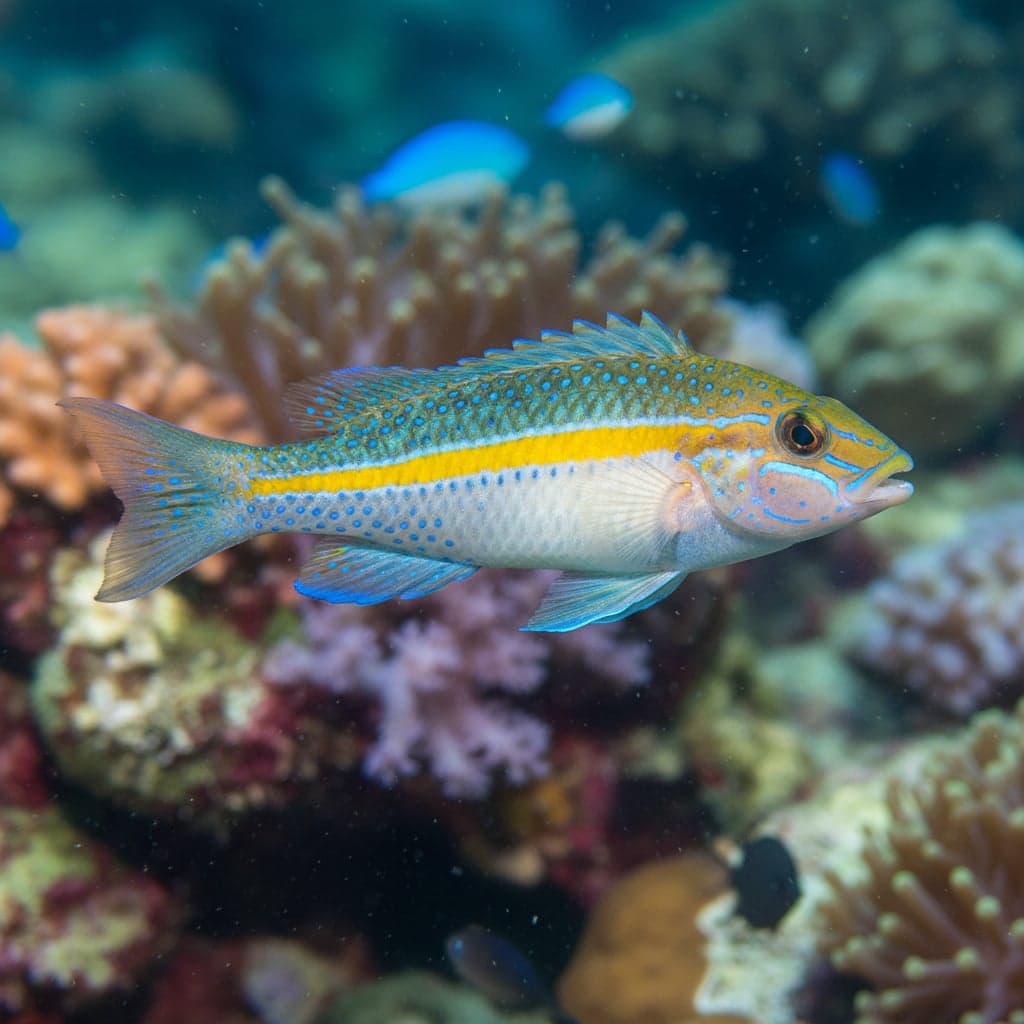
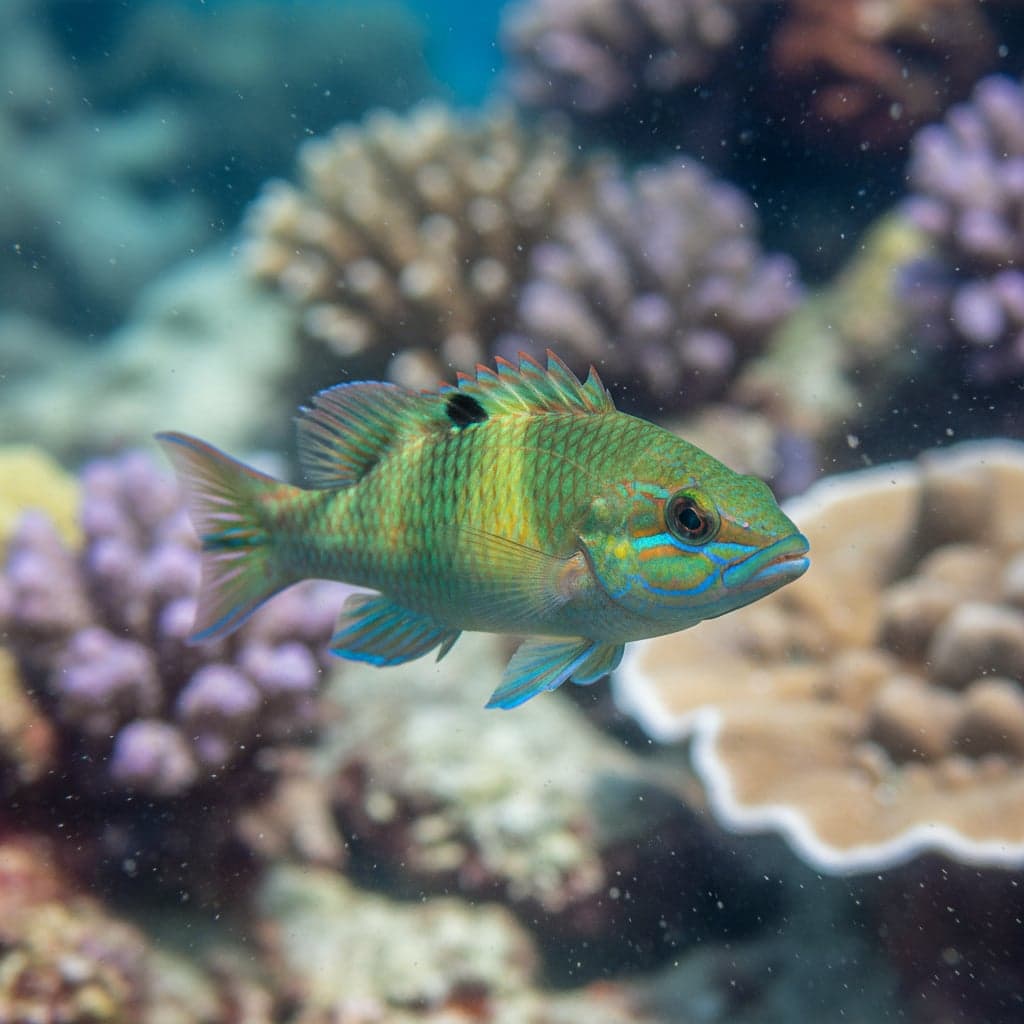
The Timor Wrasse (Halichoeres timorensis) is a busy Indo-Pacific Halichoeres marked with fine lines and spots over a pale-to-greenish body that brightens with maturity. It is constantly on the move, hunting small invertebrates over rock and sand, and it shares the genus’s useful habit of taking pest species many reef keepers are glad to lose. Active, generally reef-safe with corals, and undemanding once eating, it is a solid beginner wrasse — provided you give it sand to dive into and a lid it cannot clear.
The sand dive is not a quirky bonus; it is how the fish sleeps and escapes. Without a fine sand bed deep enough to bury in, you get a stressed wrasse that rams rock, jumps, or never settles. “Reef-safe” here means corals and most sessile inverts are fine — tiny ornamental shrimp and micro-fauna may still disappear because a small predator does not read compatibility charts.
Natural Habitat & Origin
Halichoeres timorensis ranges across the Indo-Pacific on reefs, rubble and sandy patches, ranging actively while picking crustaceans and other small invertebrates from surfaces and the top layer of sand. At night and when threatened it buries completely. That wild rhythm — hunt by day, vanish into substrate by night — is what captivity must allow.
In the aquarium provide open swimming lanes over a fine sand bed (not coarse rubble that scrapes the face), live rock with crevices, and clear sightlines so the fish can work the rock–sand interface. A bare-bottom FOWLR is a poor match; so is a tank whose entire floor is covered in dense coral so no sand remains to dive into.
Care Requirements
Stable marine conditions: salinity around 1.024–1.026, pH 8.1–8.4, temperature about 24–26°C (75–79°F). Adults reach roughly 12 cm (about 5 inches). Around 115 litres (30 US gallons) works for a single fish with real sand area and rock; shop size is often far smaller, so size the tank for the adult, not the bag. Larger systems dilute feeding competition and give shy tankmates somewhere the wrasse is not constantly vacuuming.
Sand depth matters: enough for a full bury — typically several centimetres of fine sand — not a decorative dusting over glass. A secure, gap-free lid is essential. Halichoeres jump when startled, when chasing food, and when night lighting or sudden movement flushes them from the sand. Mesh covers beat open-top aesthetics for this genus.
Quarantine new arrivals. Wild wrasses import marine ich (Cryptocaryon irritans) and marine velvet (Amyloodinium ocellatum) through the trade. Treat in QT before the display; copper and many protocols do not belong on a mixed reef — see medications. A QT tank still needs a sand dish or container so the fish can dive; denying the burying response in hospital is how “hardy” wrasses refuse to settle and stop eating.
Moderate flow keeps oxygen up and carries scent of food across the sand face. Dead spots behind rock grow detritus the wrasse will stir — skim and export accordingly. Log salinity and temperature in the Aquarium Tracker; small systems drift while the fish still looks busy and “fine.”
Diet & Feeding
Carnivore with a pest-control side hustle. Wild diet is small crustaceans, worms and other invertebrates taken from rock and sand — including bristleworms, pyramidellid snails and other pests reef keepers often welcome disappearing. In captivity offer a varied meaty diet: frozen mysis, enriched brine shrimp, finely chopped seafood and quality marine pellets, once or twice a day. It is usually an enthusiastic feeder once converted.
Prove eating in QT. A newly imported Halichoeres may ignore pellets while still snapping mysis off the sand; that is progress, not failure. Enrich frozen foods if the fish arrived thin. Do not rely on pest fauna alone as the diet — once the tank is “cleaned out,” a wrasse without prepared food loses weight fast. Body shape tells the truth: a pinched dorsal profile after the honeymoon pest banquet means you stopped feeding when the free food ran out.
Because it works the sand continuously, it often beats shy fish to every mysis. Feed in a way that spreads food — multiple spots, or target feeding for slower tankmates — or you will keep a fat wrasse and starving gobies without meaning to.
Behavior & Temperament
Generally peaceful and community-safe toward similar-sized fish, but a busy, fast swimmer that can intimidate timid species at feeding time rather than by true aggression. Best kept singly in normal home tanks; two Halichoeres of similar size may quarrel over the same sand and rock beat unless the system is large. It ranges all day over rock and sand, then vanishes into the substrate to rest — if you cannot find it after lights-out, check the sand before assuming a jump.
Toward corals it is indifferent. Toward tiny mobile inverts it is a predator by design. That is temperament meeting ecology, not a sudden personality change when the first expensive shrimp vanishes.
Tank Mates
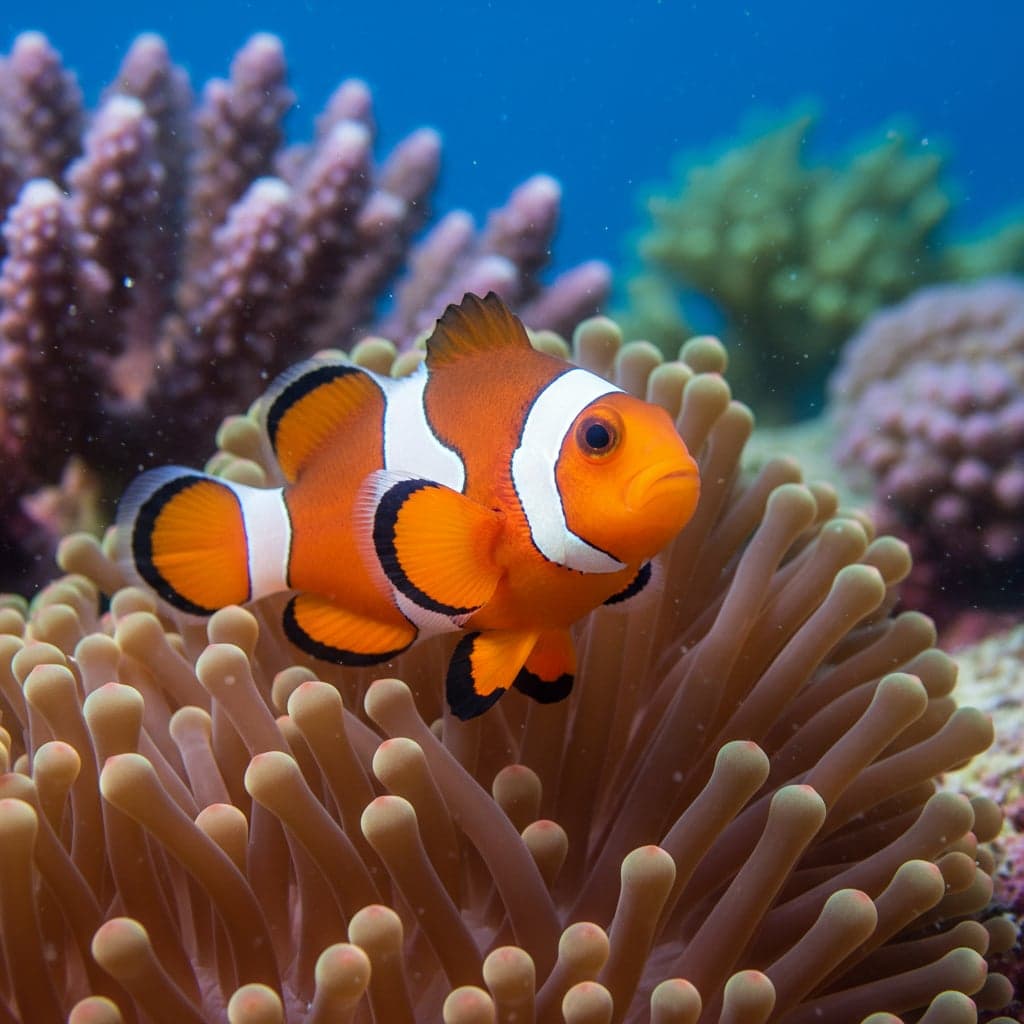
Good companions are a wide range of peaceful to semi-aggressive reef fish: clownfish, tangs in large enough systems, gobies that hold territories away from the main sand highway, dissimilar wrasses and similar. Avoid packing it with other sand-diving wrasses of the same niche in a small footprint. Avoid the tiniest ornamental shrimp if those animals are the point of the reef — the wrasse does not distinguish “pest pod” from “$40 cleaner shrimp juvenile” by brand.
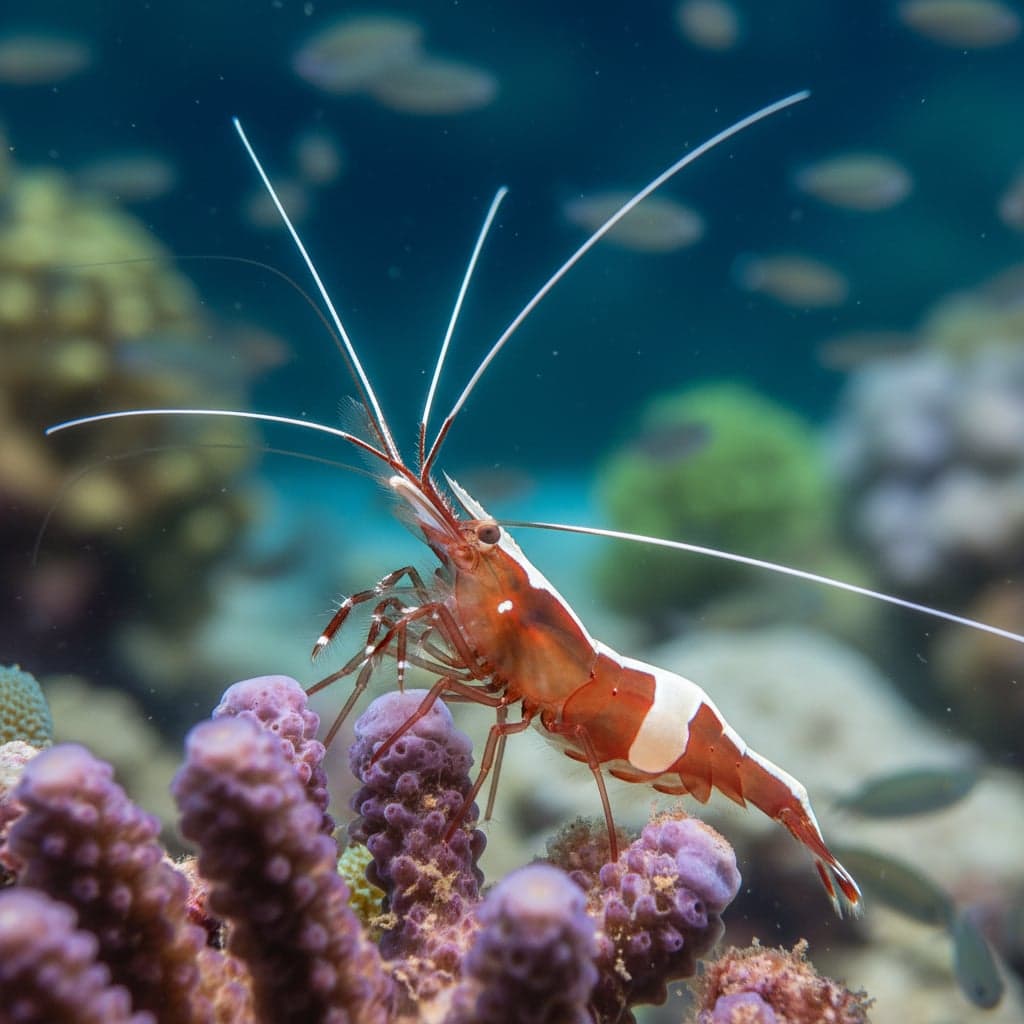
Coral-safe and mostly reef-safe with sessile inverts because it does not graze polyps; the mouthparts and hunting style target mobile prey. Useful against bristleworms and many small pest snails — often a welcome trait. A poor choice when the display is built around micro-shrimp, micro-crabs or a carefully cultured pod population you need for a mandarin; those systems want a less thorough sand predator. For a standard mixed reef that can spare the odd tiny invert, the Timor is one of the better “useful and pretty” beginner wrasses.
Breeding
Halichoeres timorensis is a protogynous hermaphrodite and pelagic spawner. Larval rearing is beyond normal home aquaria, so trade specimens are wild-collected. Sex change in the genus means a long-kept female may transition if no male is present — interesting biology, not a breeding plan. Do not expect home-raised fry from sand-diving pairs.
Common Health Issues
Hardy when sand, lid and diet are right. Ich and velvet still follow shipping stress; quarantine every fish. Jump injuries and sand-substrate scrapes happen when the bed is too coarse or too shallow for a clean dive. Sudden “disappearances” are often successful buries or successful jumps — search sand and floor before restocking.
A Timor sold for a bare-bottom nano with no lid is a poor choice: the adult needs sand depth, swim room and sealed covers. Prove feeding in QT with a place to dive, keep prepared foods coming after the pest buffet ends, and this active Halichoeres is a hardy, useful reef wrasse. Deny the sand or treat pest-eating as the entire diet, and the beginner reputation evaporates.