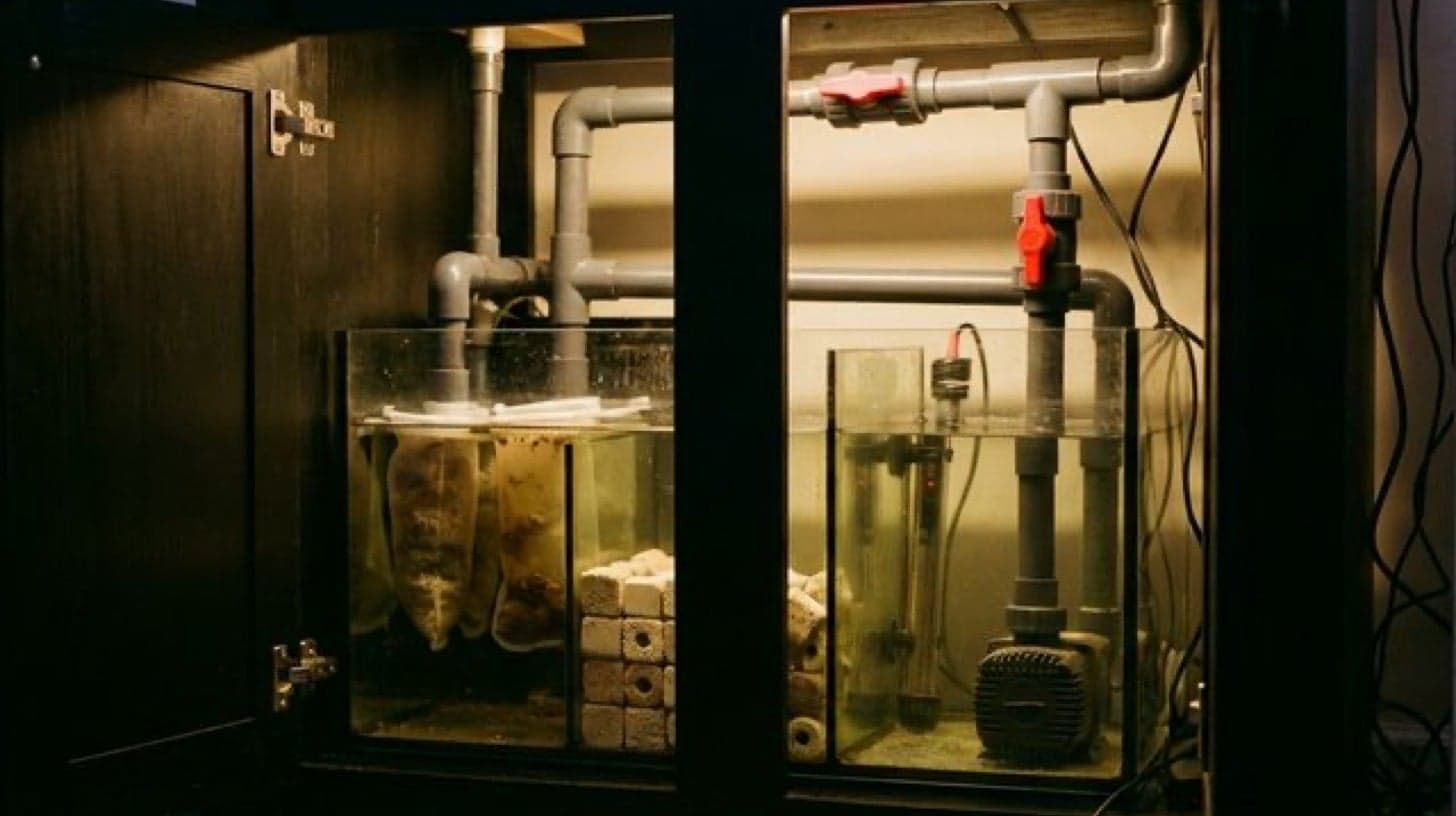
Protein Skimmer
How protein skimmers work, sizing for marine and high-bioload tanks, air vs needle-wheel designs, and maintenance for consistent foam production.

Protein skimmer
A protein skimmer removes dissolved organic waste before it breaks down into nitrate and phosphate. It is the cornerstone of marine filtration and increasingly popular on high-bioload freshwater and discus systems where water clarity matters.
How it works
Water and fine bubbles mix inside the skimmer body. Hydrophobic organic molecules stick to bubble surfaces, rise as foam, and collect in a cup you empty regularly. The cleaned water returns to the tank or sump.
Tank water ──► bubble column ──► foam ──► collection cup
                    │
                    └── cleaned water back to system
Unlike mechanical filters that trap solid debris, skimmers target dissolved waste — the invisible load that fuels algae and cloudy water.
Types
| Style | Placement | Notes |
|---|---|---|
| In-sump | Sump chamber | Most common on reef tanks; quietest |
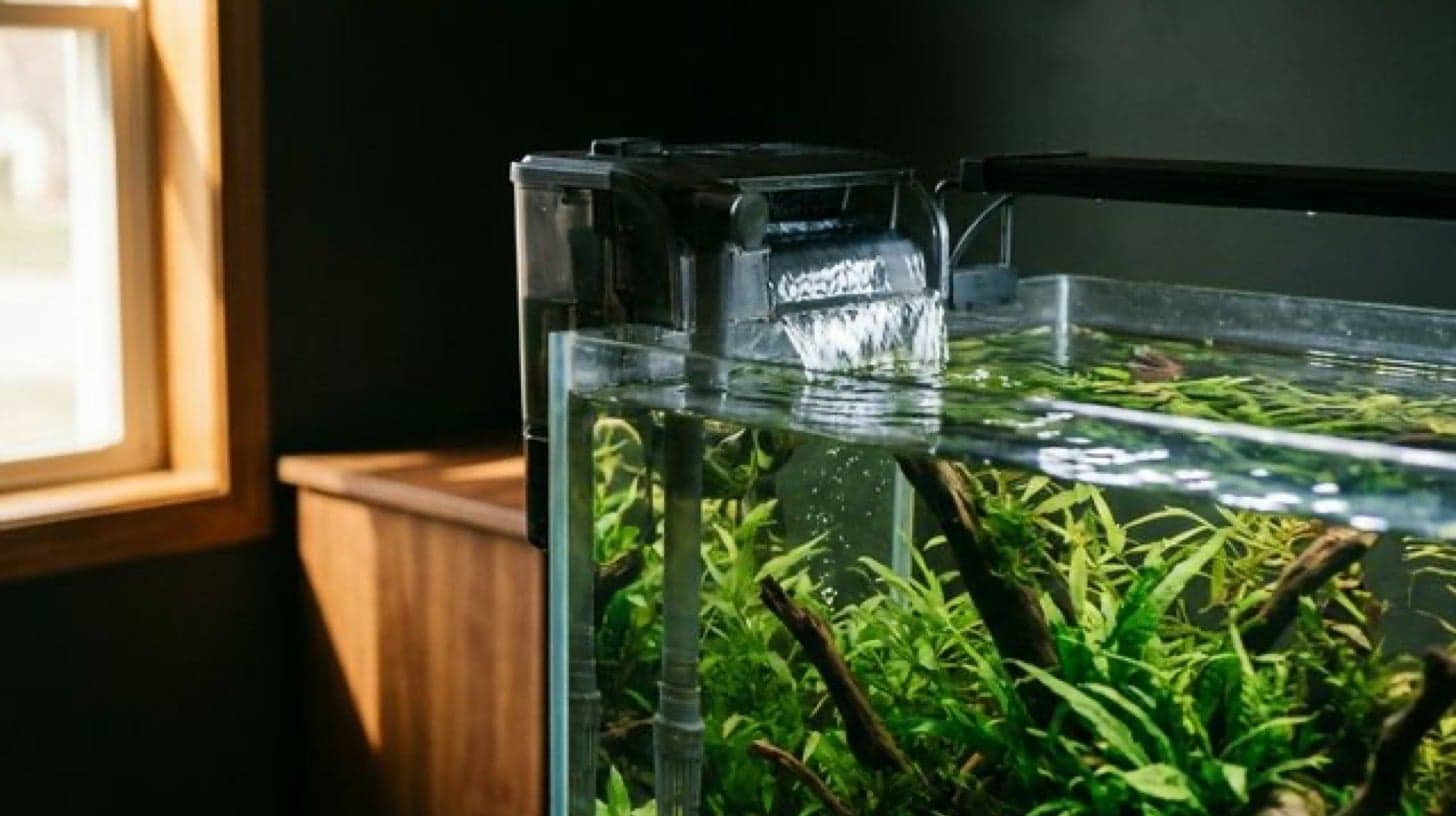
| Hang-on (HOB) | Tank rim | Good for all-in-one or no-sump setups |
| In-tank nano | Display or sump | Small reef and quarantine tanks |
| External recirculating | Outside sump | High-capacity; common on large systems |
Air-driven vs needle-wheel
- Air-driven (counter-current) — reliable, simple, lower power; common on sumps
- Needle-wheel / mesh-wheel — finer bubbles, higher efficiency; popular on reef-ready systems
Sizing
Skimmers are rated by tank volume and bioload, not flow alone.
| System | Guidance |
|---|---|
| Fish-only marine | Manufacturer rating is usually adequate |
| Mixed reef (LPS) | Size up one step |
| SPS dominant / heavy feeding | Size up two steps or choose recirculating model |
| Freshwater high-bioload | Treat as marine-equivalent bioload |
Rule of thumb: If the cup fills daily with dark skimmate, the skimmer is working. If it stays empty for weeks on a fed reef, it may be undersized or needs cleaning.
Setup tips
- Break-in period — new skimmers need 1–2 weeks to produce consistent foam; adjust water level slowly
- Water level — follow manufacturer depth in the sump; too high or low kills foam
- Position — after mechanical filtration, before return pump chamber
- Pair with sump — see sump for chamber layout
- Reef chemistry — skimming lowers alkalinity slightly on heavy systems; test regularly — see reef chemistry
Maintenance
- Empty cup — daily on active reefs, weekly on light systems
- Clean neck and body — monthly with plain water; avoid soap
- Inspect pump / impeller — every 3–6 months
- Replace air stones (air-driven models) — when bubble size increases noticeably
Pros & cons
Advantages
- Removes dissolved organics before they become nitrate
- Improves water clarity and oxygenation
- Essential for stable reef chemistry
Considerations
- Marine-focused; freshwater benefit is situational
- Requires tuning and regular cup cleaning
- Adds noise if poorly tuned or air-driven in open rooms
- Takes sump space
Frequently asked questions
Do I need a skimmer on a small or fish-only tank?
Not necessarily. Under about 40 litres, water changes usually export waste faster than a skimmer sized for the tank can. Fish-only systems can run without one on a heavier water change schedule, though a skimmer makes a heavily stocked tank noticeably more stable.
Why is my new skimmer overflowing constantly?
New skimmers routinely overflow for one to two weeks while surfactants from the fresh system settle. Run it with the collection cup off or the outlet returned to the sump, and adjust gradually. If it persists beyond a fortnight, the cause is usually a residue — additives, food oils, or a treatment left in the water.
Should it run 24/7?
Yes, with one exception: switch it off while dosing most medications and additives, or the skimmer strips them out before they act. Set a reminder to switch it back on — a skimmer left off is a common cause of a slow water-quality decline nobody can explain.