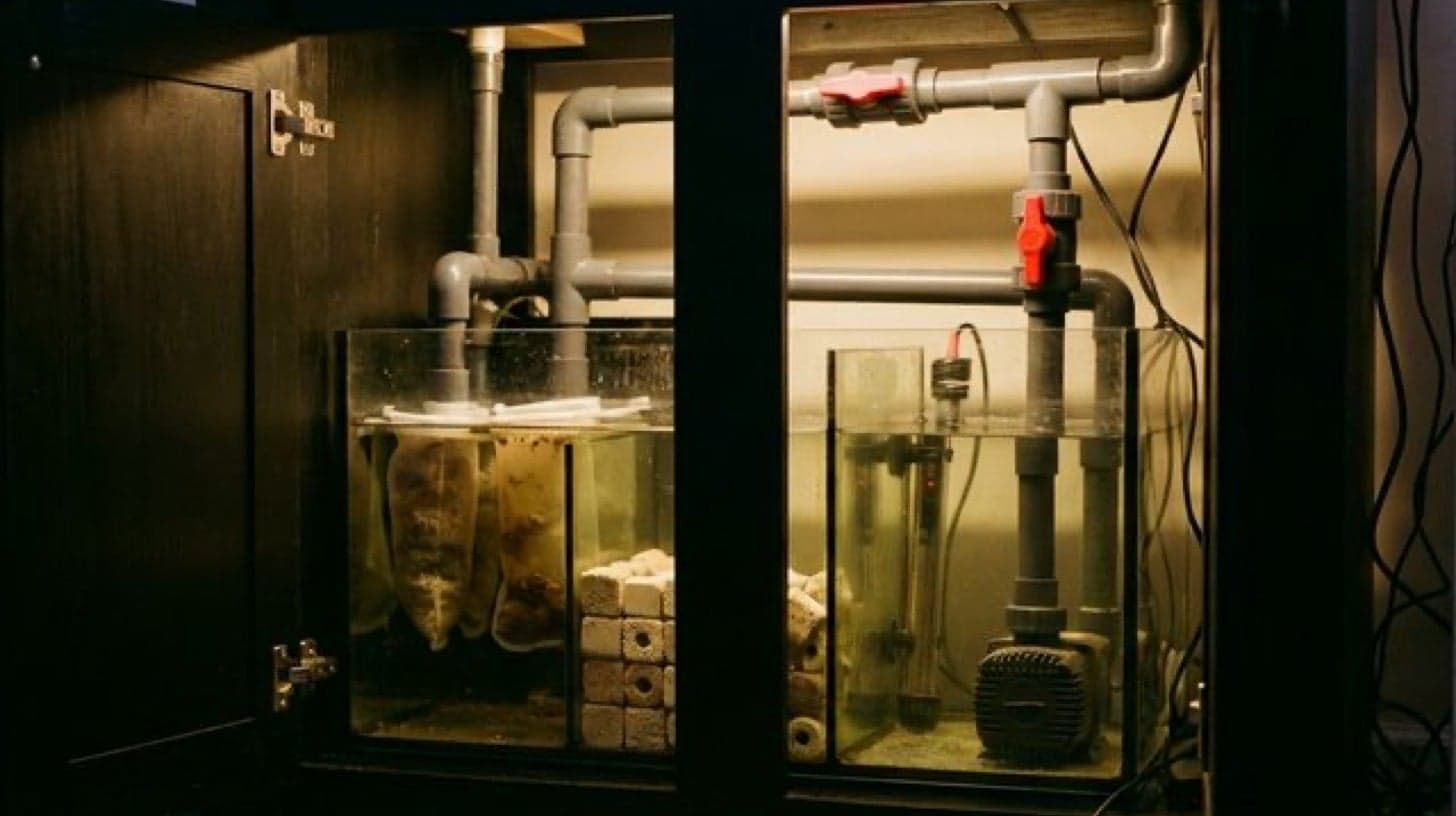
UV Sterilizer
UV sterilisers for aquariums — how UV-C kills free-floating pathogens and algae spores, flow rate vs contact time, bulb life, and when they help (and when they do not).

UV sterilizer
A UV steriliser passes tank water past a UV-C lamp that damages the DNA of free-floating algae, bacteria, and parasites. It is a supplement to good filtration and quarantine — not a replacement for treating sick fish in the display tank.
How it works
Water flows through a quartz sleeve around a UV bulb. UV-C light disrupts microorganisms that pass close enough, for long enough. Effectiveness depends on contact time, flow rate, water clarity, and bulb age.
Pump ──► UV chamber ──► lamp + quartz sleeve ──► back to tank
              │
              └── kills free-floating organisms in the water column
UV does not treat fish already infected on the body, parasites buried in substrate, or biofilm on surfaces.
Clarifier vs steriliser mode
| Mode | Flow rate | Effect |
|---|---|---|
| Clarifier | Higher flow | Controls green water and free algae spores |
| Steriliser | Lower flow (longer contact) | Reduces free-floating bacteria and some parasites |
Manufacturers publish recommended flow ranges — exceeding them reduces UV effectiveness to near zero.
When a UV helps
- Green water (suspended algae bloom) — often clears within days at clarifier flow
- Repeated bacterial blooms in overstocked or poorly maintained tanks (after fixing root cause)
- Large systems with high turnover where supplemental pathogen control is desired
- Pond-style setups and commercial systems
When it does not help
- Ich on fish — the parasite lives on the fish and in substrate; UV only catches free swimmers briefly
- Fin rot, fungus on fish — treat the fish directly; see fin rot and white fuzzy patches
- Substitute for quarantine — always quarantine new fish
- Dirty water — turbidity blocks UV; polish water mechanically first
Installation
- Placement — inline after mechanical filtration so water is clear
- Direction — follow arrow; some units are directional
- Bypass — optional valve to reduce flow for steriliser mode
- Never look at lit bulb — UV-C damages eyes and skin
Maintenance
- Replace bulb every 6–12 months — bulbs dim before they burn out; label install date
- Clean quartz sleeve — monthly with soft cloth; mineral or biofilm coating blocks UV
- Check O-rings — leaks are common after bulb changes
- Unplug when servicing — never change bulbs while powered
Pros & cons
Advantages
- Effective against green water and free-floating algae spores
- Reduces bacterial load in the water column
- Low ongoing cost aside from bulb replacement
Considerations
- Does not cure established fish disease
- Beneficial bacteria in filter media are unaffected (not pumped through UV in most setups)
- Wrong flow rate wastes money — too fast = no effect
- Bulb and sleeve maintenance required
Frequently asked questions
Will UV clear green water?
Yes — this is what UV does best. Free-floating algae passes through the unit and is killed directly, and most green water blooms clear within three to five days. It does nothing for algae attached to glass or plants, which never enters the unit.
Does UV kill the beneficial bacteria in my filter?
No. The bacteria that matter live on surfaces in the filter and substrate, not drifting in the water column, so they never pass through the lamp. UV only affects what is suspended in the flow.
How often does the bulb need replacing?
Every six to twelve months depending on the model, and this is easy to miss: the bulb keeps emitting visible light long after its UV output has fallen below a useful level. A lamp that looks fine can be doing nothing. Note the install date somewhere you will see it.