Best Aquarium Safe Super Glue for Aquascaping
Discover the best aquarium-safe super glue for aquascaping. Ensure strong bonds without risking aquatic life; make your aquascapes stand out.
Aquarium Safe Super Glue: Essential Guide for Aquascapers
In the exciting realm of aquascaping, where creating stunning underwater landscapes is an art form, choosing the right adhesive is essential. Whether you're securing rocks, attaching moss to driftwood, or building structures, the adhesive must hold firm and be safe for aquatic life. This guide explores the adhesives favored by aquascapers, focusing on their safety in aquariums. By the end, you'll understand how to use these glues effectively to craft beautiful aquascapes without risking the health of your fish and plants.
What Makes an Adhesive Safe for Aquariums?
When picking an adhesive for aquascaping, safety for aquatic life is critical. Aquarium-safe adhesives should be non-toxic and not release harmful substances into the water. They need to be strong enough to handle aquarium conditions and flexible to withstand slight movements and currents.
Epoxy putty and cyanoacrylate-based super glue gel are popular choices for their quick setting times and strong bonds that don't alter water chemistry or harm the aquarium's inhabitants. Selecting the right glue ensures your aquascaping work is both impressive and eco-friendly.
Quick Guide: Is Super Glue Gel Safe for Aquariums?
Absolutely, super glue gel, especially the cyanoacrylate-based type, is safe for aquariums. It's popular in aquascaping due to its strong bonding and quick-drying properties, crucial for keeping decor in place swiftly.
Cyanoacrylate cures upon contact with water by forming a strong, water-resistant bond, making it ideal for aquarium use without endangering fish or plants. As a result, super glue gel is a reliable choice for aquascapers needing to attach plants, rocks, and structures securely with minimal hassle.
Exploring Aquascaping Glues: Options and Applications
Super Glue Gel for Aquatic Environments
There are numerous benefits to using super glue gel in aquariums. Its main advantage is its ability to bond quickly in wet conditions, crucial during aquascaping. It allows rapid assembly and ensures the stability of your aquascape's components.
In aquascaping, super glue gel is perfect for attaching smaller plants or securing elements like rocks or stones. Use it sparingly, ensure surfaces are clean and dry, and monitor water interactions to avoid cloudiness during curing.
Epoxy Putty: A Durable Choice for Underwater Structures
Epoxy putty is another excellent adhesive choice. Known for creating robust bonds, it’s great for large, heavy objects, or when you need to sculpt or fill gaps.
In aquascaping, epoxy putty secures rocks and driftwood, providing a lasting solution that can withstand underwater currents and weight. Mix the putty until it's uniform in color, press it onto the components for bonding, and allow for ample curing time. Once cured, it's safe and poses no threat to aquatic life.
Attaching Moss and Other Plants to Driftwood
Attaching moss to driftwood is a common and essential aquascaping task. Secure attachment ensures plants don't float away and thrive in their environment. For those interested in learning about different attachment strategies, you might consider exploring methods like Master Ryoboku Aquascape: Driftwood Aquarium Art.
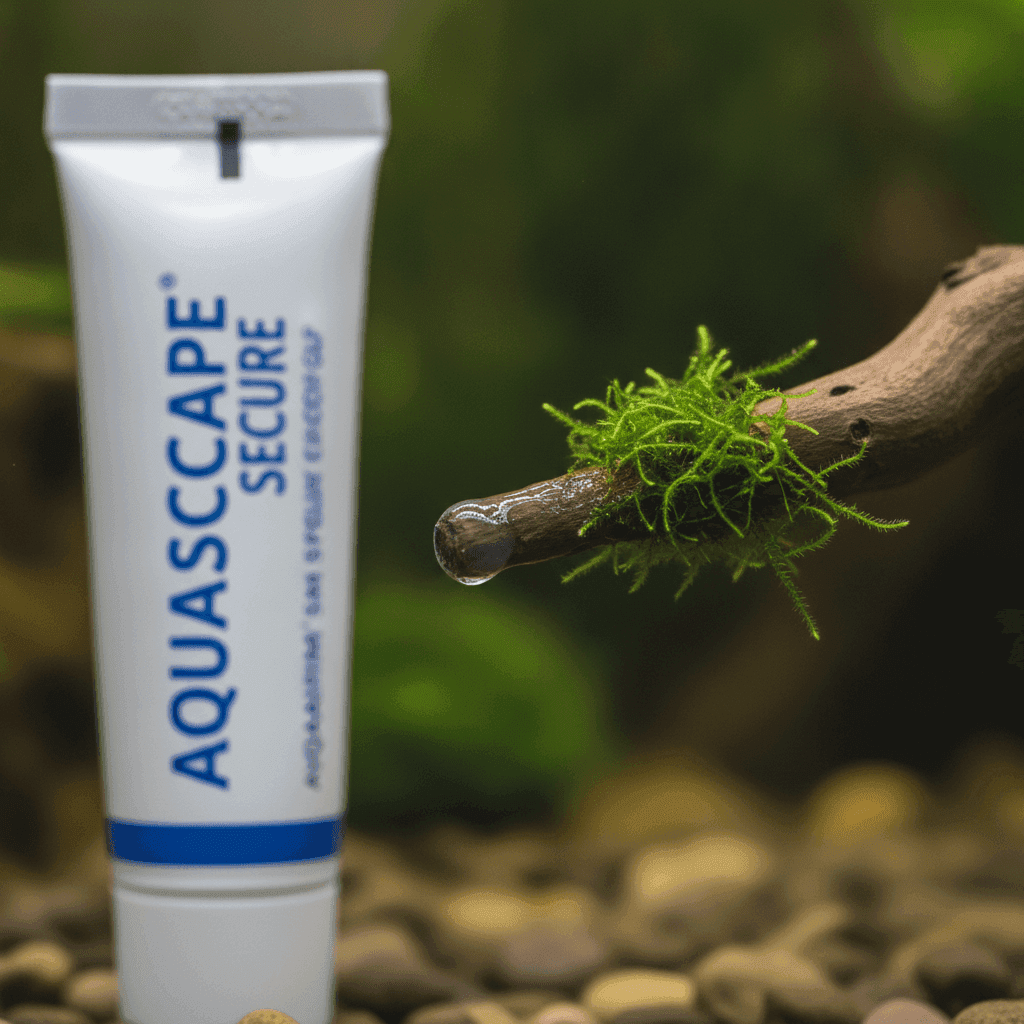
Apply a small amount of aquarium-safe super glue to the moss, then press it against the driftwood until it sets. Avoid excess glue to prevent smothering the plants. This technique enhances your aquascape by letting moss grow naturally and cover surfaces appealingly.
Practical Steps: How to Glue Plants and Structures in Your Aquarium
Here’s a simple step-by-step guide for using glue effectively in aquascaping:
-
Prepare Surfaces: Clean driftwood, rocks, and plant roots with tank water to remove debris. Dry surfaces for better adhesion.
-
Choose the Right Glue: Use super glue gel for small attachments and epoxy putty for larger structures.
-
Apply Glue Safely: For plants, use a tiny dot of glue to minimize chemical exposure. Quickly press the plant or structure in place.
-
Cure Fully: Allow the adhesive to cure fully. Super glue gels set within minutes, while epoxy putty may take several hours.
For those new to aquascaping, enhancing your skills can be beneficial. You may want to check out Aquascaping for Beginners: A Step-by-Step System (Low-Tech + High-Tech Paths) to dive deeper into creating stunning underwater landscapes.
Avoiding Common Mistakes with Aquascaping Glue
Using adhesives incorrectly can lead to poor results or harm your aquarium. Common mistakes include applying too much glue, causing foaming or using unsuitable glues leading to water cloudiness. Pick products labeled as aquarium-safe, follow instructions closely, and test small areas first to avoid widespread issues.
If mistakes occur, like incomplete curing or detachment, assess the situation and reapply adhesive as needed, ensuring surfaces are clean and prepared properly.
Safeguard Your Aquascaping with Environmentally Friendly Adhesives
Selecting non-toxic, environmentally friendly adhesives is crucial for your aquarium’s health. They prevent harmful chemicals from leaching and support responsible aquascaping practices. Ensure adhesives comply with safety standards and are free from harmful additives. Balancing aesthetics with environmental responsibility expands your creative potential while protecting your aquatic friends.
Enhancing Your Underwater Landscape with the Right Aquascaping Glue
In the nuanced world of aquascaping, choosing the right adhesive significantly impacts your success. Super glue gel and epoxy putty are versatile, effective, and safe for creating and maintaining aquascapes. By focusing on their specific attributes and uses, you can enhance your designs while ensuring the safety and longevity of your aquatic environment. Whether building intricate layouts or simply attaching a sprig of moss, these tools let you explore creative options while maintaining a thriving underwater habitat.
FAQ: Common Questions About Aquarium Safe Glues
Is super glue safe to use directly in my tank?
Yes, super glue gel is safe for aquariums. Apply small amounts and ensure it's fully cured before extensive water exposure.
What is the best way to attach moss to rocks or driftwood?
Super glue gel is recommended for attaching moss. Apply sparingly to the moss and press it onto the desired surface until secure.
Can epoxy putty harm my fish or plants?
When used correctly and allowed to cure, epoxy putty is safe for fish and plants, forming a strong underwater bond.
How long does it take for aquarium glue to cure?
Super glue gel generally cures within minutes, while epoxy putty needs several hours to harden fully.
Are there any alternatives to super glue and epoxy putty?
Yes, alternatives like natural string or aquarium-specific silicone can be used, each with its benefits and drawbacks. For more creative techniques, check out Dutch Aquascape: Master Plant Grouping & Trimming.