Snakeheads in the Aquarium: Species, Sizes and the Law
Snakeheads are air-breathing predators, several are illegal to own, and the small ones are not small. Which species suit a home tank, and what to check before you buy one.
Snakeheads in the aquarium
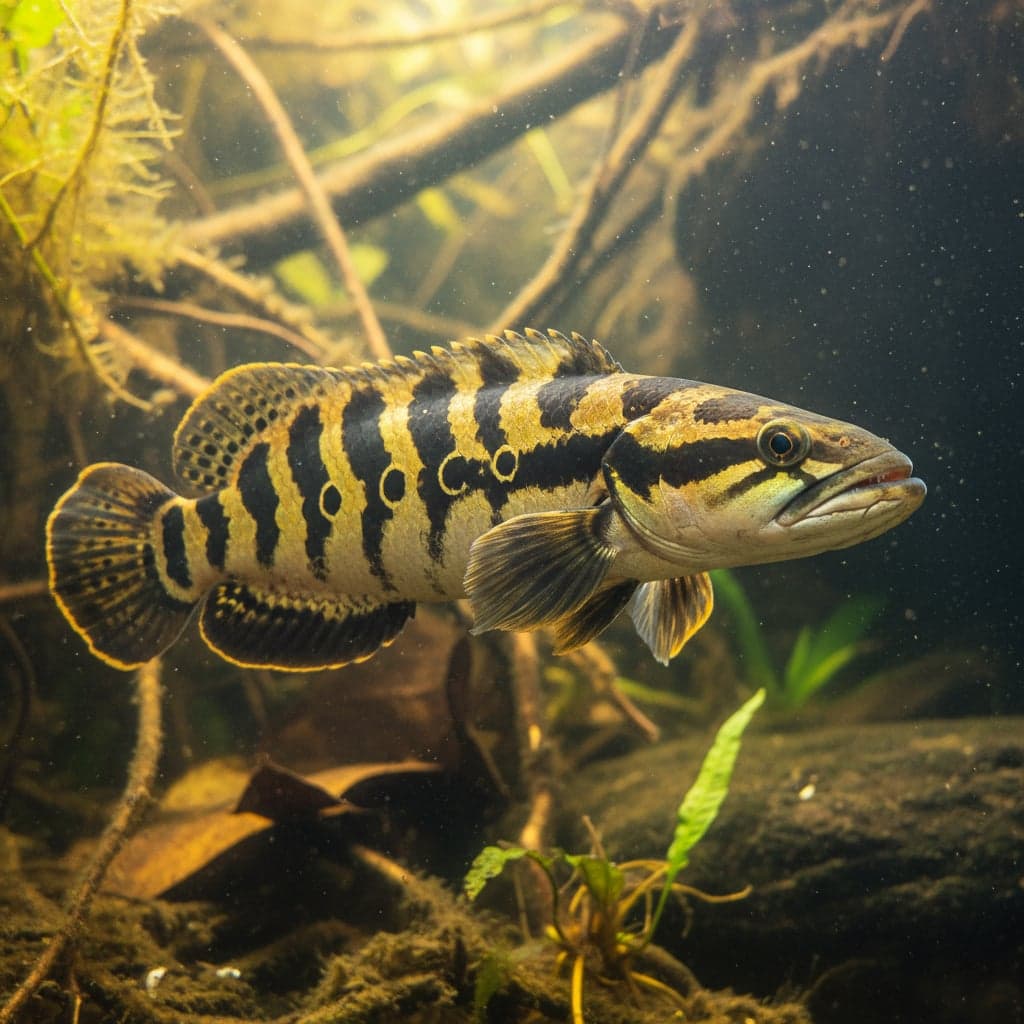
Snakeheads have a reputation that runs ahead of them. Most of it comes from one species, the northern snakehead, which established itself in North American waterways and earned the whole genus a place on the injurious wildlife list. The fish actually sold to aquarists are mostly smaller, tropical, and nothing like the animal in the headlines — but the legal position follows the genus, not the individual species, so it applies to all of them.
That is the first thing to settle, because it is the one that cannot be fixed later with a bigger tank.
Before anything else: check whether you can legally keep one
In the United States, every species in the genus Channa has been listed as injurious wildlife under the Lacey Act since 2002. That bans importation and interstate transport, and a number of states prohibit possession outright. Elsewhere the picture is patchier and moves: individual species have been added to invasive-species lists in Europe in recent years, and national rules differ.
The practical version: this is a group where the law is specific, varies by where you live, and is not something a retailer can be assumed to have checked for you. Confirm it for your own jurisdiction and for the actual species, not for "snakeheads" in general.
The species kept in aquaria
| Species | Adult size | Min tank | Temperature | Temperament |
|---|---|---|---|---|
| Golden Cobra SnakeheadChanna aurantimaculata | 40cm | 300L | 15-25°C | Aggressive |
| Fire & Ice Snakehead: Channa pyrophthalmus | 6-8 inches (15-20 cm) | — | 23-28°C | Predatory |
| Rainbow Snakehead: Channa bleheri | 5-7 inches (13-18 cm) | — | 18-25°C | Predatory |
| Peacock Snakehead: Channa pulchra | 10-12 inches (25-30 cm) | — | 20-25°C | Highly Aggressive |
| Assamese Snakehead: Channa stewartii | 25 cm (10 inches) | — | 18-24°C | Aggressive |
| Ocellated Snakehead: Channa pleurophthalma | 40-45 cm | — | 24-28°C | Predatory |
| Rao's Snakehead: Channa andrao | 12-13 cm (4.5-5 inches) | — | 24-28°C | Predatory |
| Burmese Spotted Snakehead: Channa ornatipinnis | 10-12 inches (25-30 cm) | — | 18-25°C | Predatory |
Two things stand out in that table. The first is the size spread — roughly 13cm at the small end to 45cm at the large, which is the difference between a tank you can sensibly keep in a living room and one you cannot. The second is that the diet column says the same thing for every one of them.
What they all share
They breathe air. Snakeheads have a suprabranchial organ and must surface to use it. The tank is filled short of the rim so there is an air gap, and it gets a close-fitting, weighted lid — they are powerful jumpers and will leave through a gap you would not think twice about. This is the single most common way a snakehead is lost.
They are predators, not community fish. They hunt by ambush and they judge tank mates by whether they fit. A snakehead that ignores its tank mates as a juvenile may not as an adult, and maturity also brings territoriality. Plan a species tank; anything that survives alongside is a bonus rather than a design.
They pair off and then defend. Several of the dwarf species are kept as pairs, and a settled pair will hold territory against everything else in the tank, including other snakeheads. Stocking one is a different exercise from stocking a shoaling species — you are arranging a small number of strong personalities, not a group.
Cooler than you expect. Several of the species here, the golden cobra included, come from subtropical water and want a seasonal drop rather than a constant tropical 25°C. Check the temperature column above against the heater you already own.
Choosing one
If you want the group's looks without its largest demands, the dwarf species — rainbow and Rao's — stay under about 20cm and are the usual starting point. If you want one of the large patterned species, the golden cobra and the ocellated snakehead are the ones people come for, and both need a tank measured in hundreds of litres with a lid to match.
Start from the profiles below for the species that interests you. Each covers the parameters, the feeding and the temperament in detail.