Gourami Species: Which Ones Are Actually Different Fish
Gold, blue and opaline gouramis are one species under three names. A guide to which gouramis are genuinely distinct, how big each gets, and which ones fight.
The names on the tanks are not all different fish
A shop can stock gold gourami, blue gourami, opaline gourami and three-spot gourami on the same aisle, at four prices, looking like four fish. They are one species: Trichopodus trichopterus. The colours are cultivated forms of the same animal, and the care sheet is identical for all of them — same adult size, same water, same temperament, same problems at maturity.
The honey gourami is in the same position. Fish sold as red robin, red flame or sunset gourami are colour forms of Trichogaster chuna.
This matters when you are stocking, because buying "a gold and an opaline" is buying two of one territorial species rather than diversifying.
The species compared
Reading that table
The size spread is the main decision. Gouramis run from the licorice gourami at around 4cm to the kissing gourami at 25-30cm, which is a large fish by any community-tank standard and a very different proposition from the small Trichogaster species that share the common name.
Temperament splits along genus lines more than size. The Trichopodus species — gold, blue, opaline, moonlight — are listed as semi-aggressive, and that is about maturity rather than disposition: they are fine as juveniles and become territorial as adults, particularly males toward each other. The small Trichogaster species and the sparkling gouramis stay peaceful.
The shy end is a real category. Chocolate and licorice gouramis are not beginner fish that happen to be small. They want soft, acidic, often blackwater conditions and are outcompeted for food in a busy community tank. They are specialist fish kept in species setups, and the table's size column under-describes how different their requirements are.
What all gouramis need
They are labyrinth fish. They breathe air at the surface using a suprabranchial organ, which is why they came to be sold as fish that tolerate poor water — they can take oxygen from the air when the water runs low. That is survival, not a husbandry standard. What it does mean practically is that they need unobstructed access to the surface, and that the air above the water should not be much colder than the water itself.
Beyond that they want calm water and something to break up sightlines. Most are slow, deliberate fish with long ventral filaments; strong flow and fin-nipping tank mates both cause problems.
Where to start
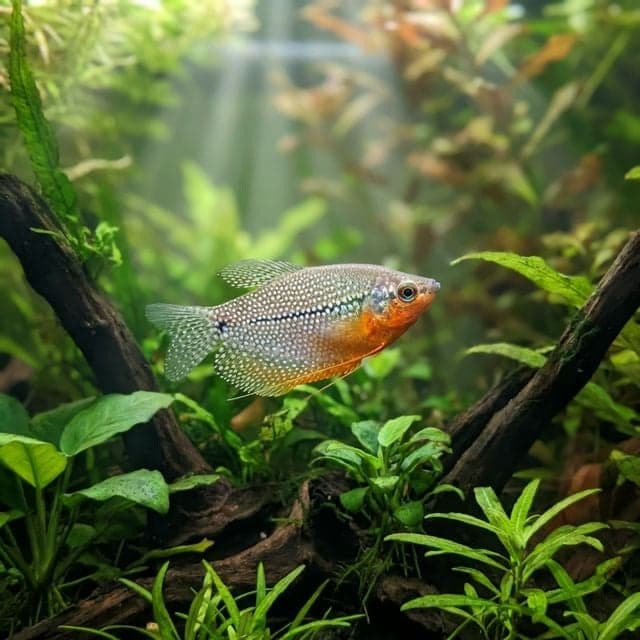
For a community tank, honey gourami if you want small and peaceful, pearl gourami if you want a centrepiece that will not start fights. For a species tank, the chocolate and licorice gouramis are the interesting end of the group and the demanding one.
Full parameters, feeding and breeding notes are in the individual profiles below.