Redfin Fairy Wrasse
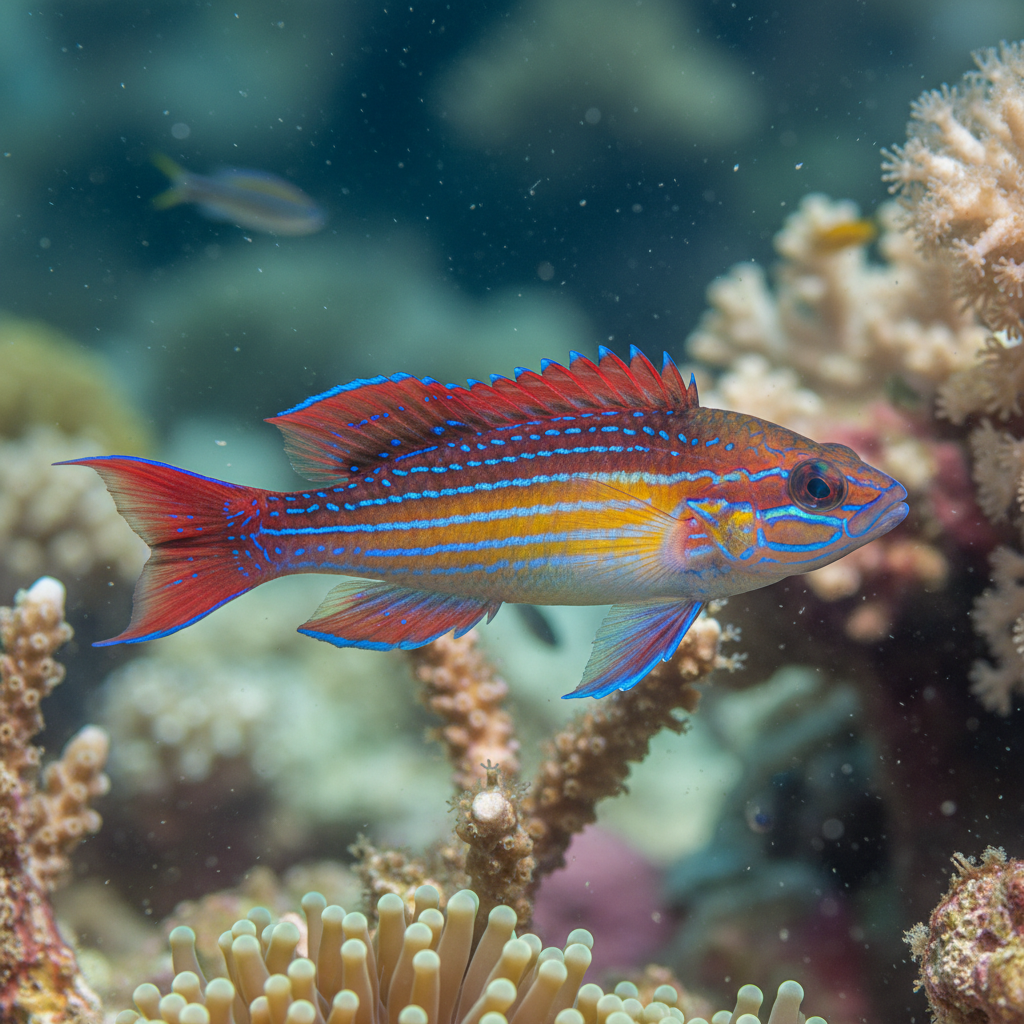
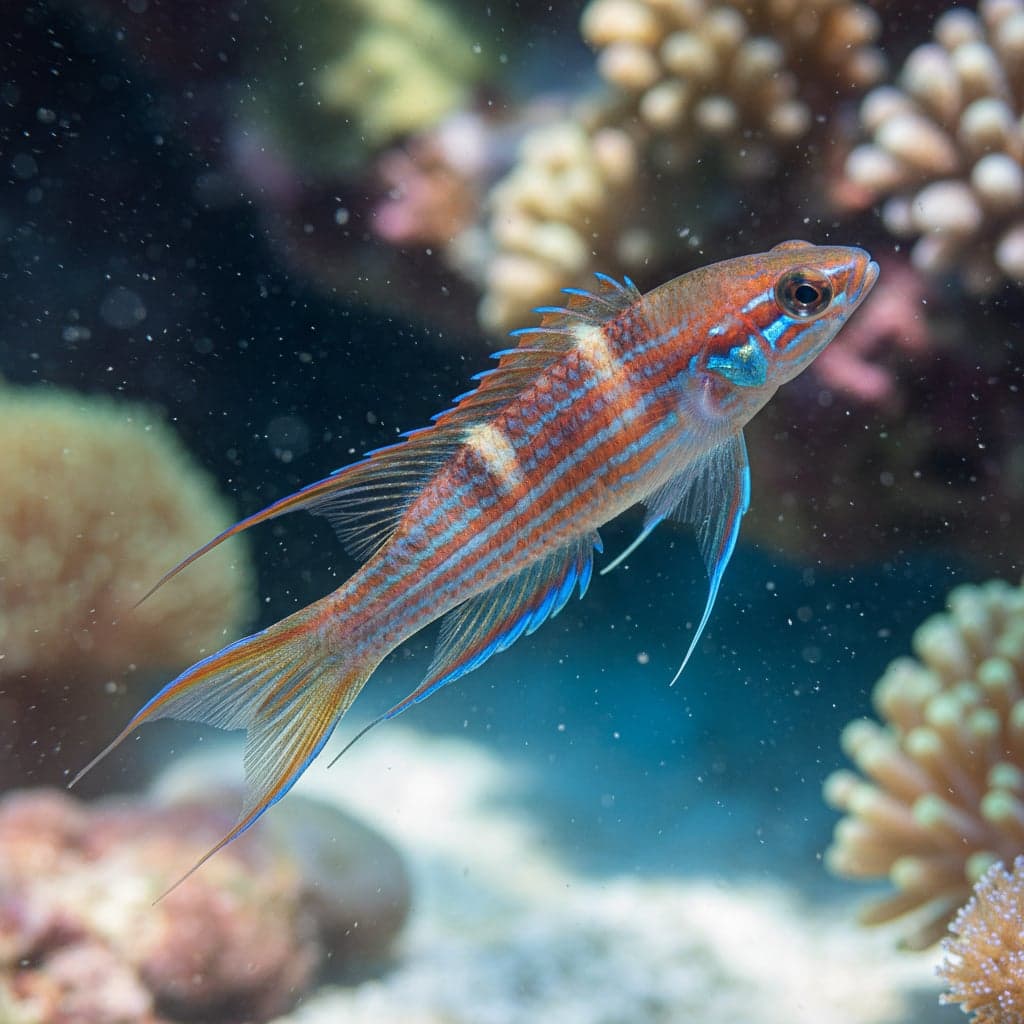
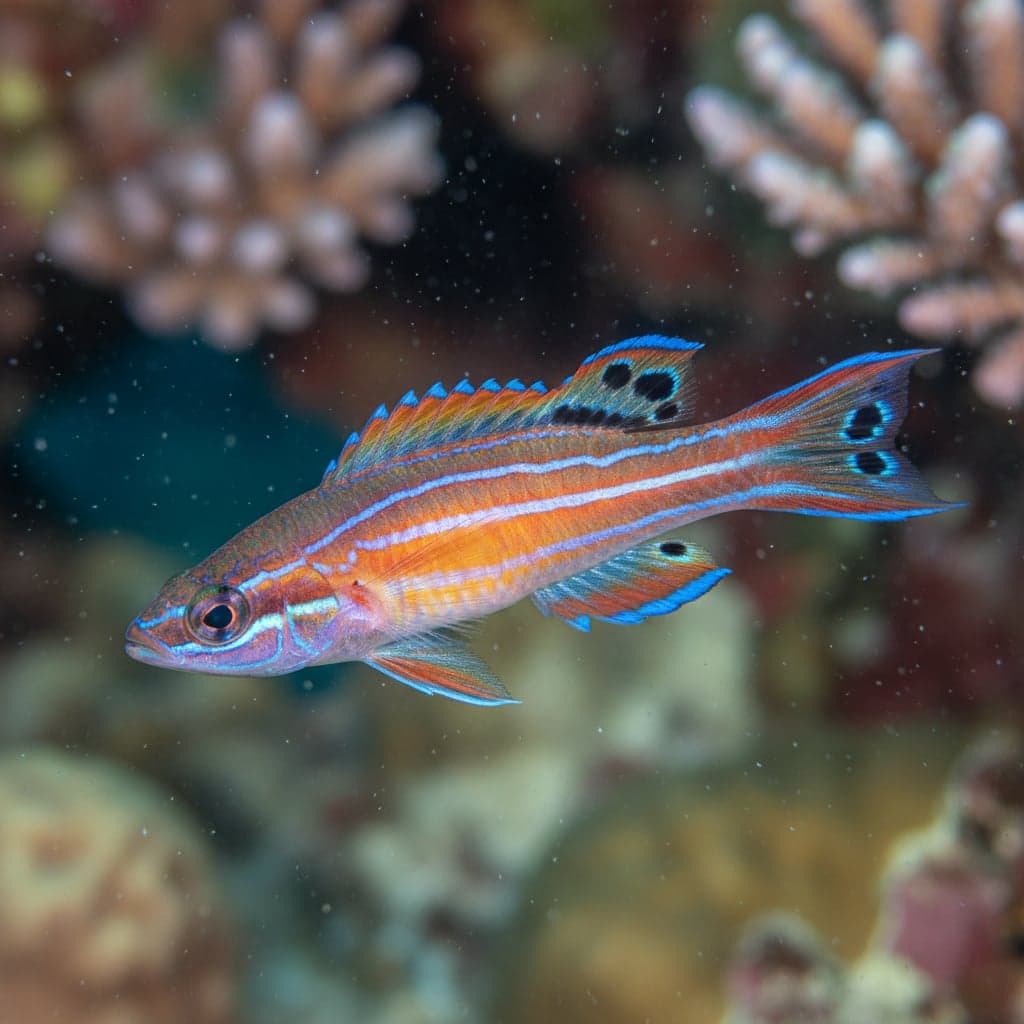
The Redfin Fairy Wrasse (Cirrhilabrus rubripinnis) is a vivid magenta-and-red reef wrasse — peaceful, hardy and fully reef-safe for a community reef.
Redfin Fairy Wrasse
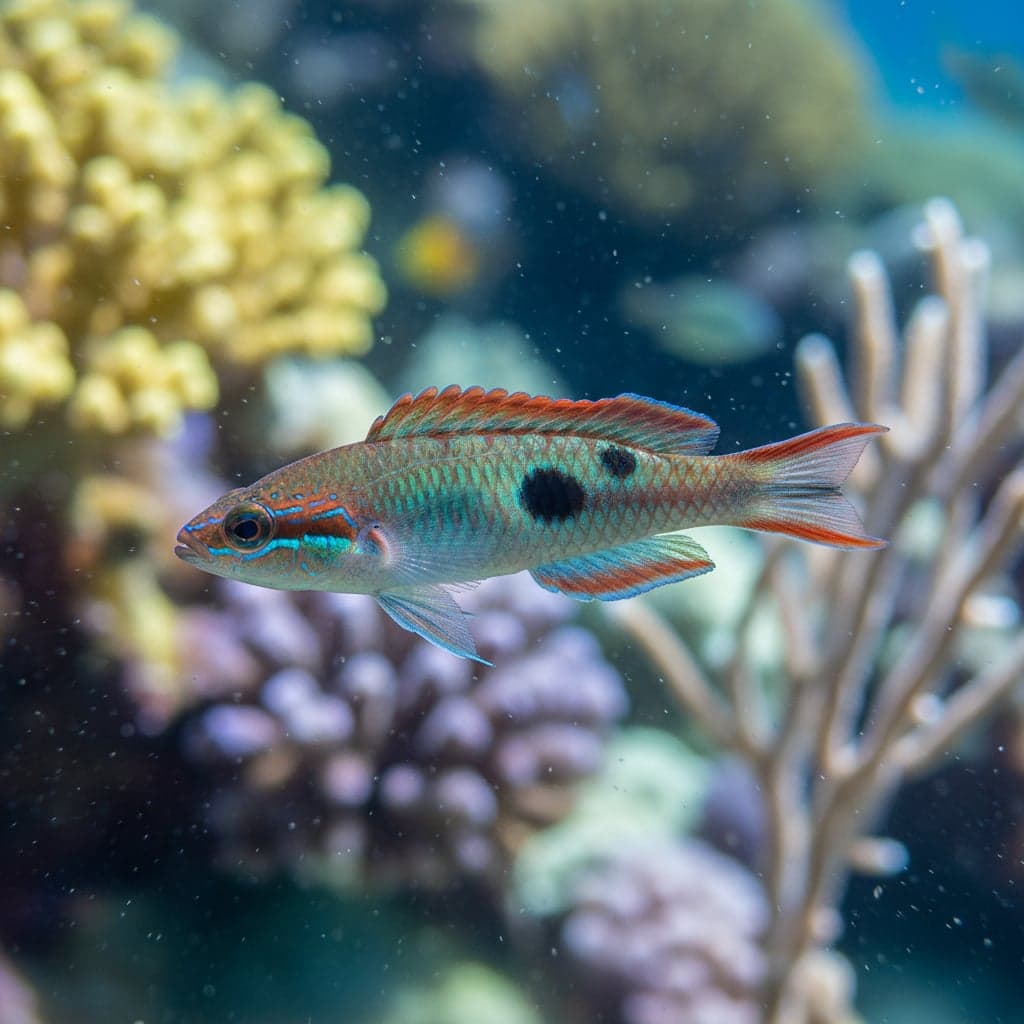
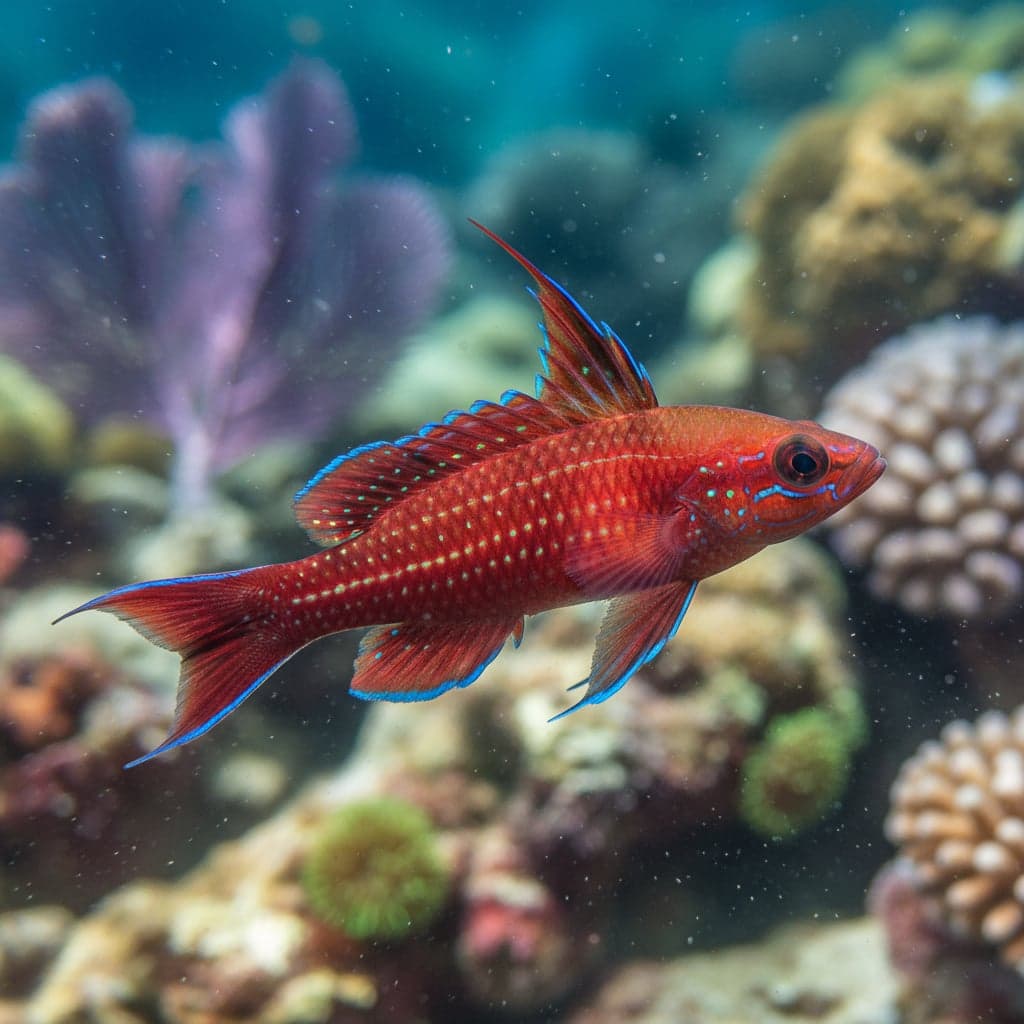
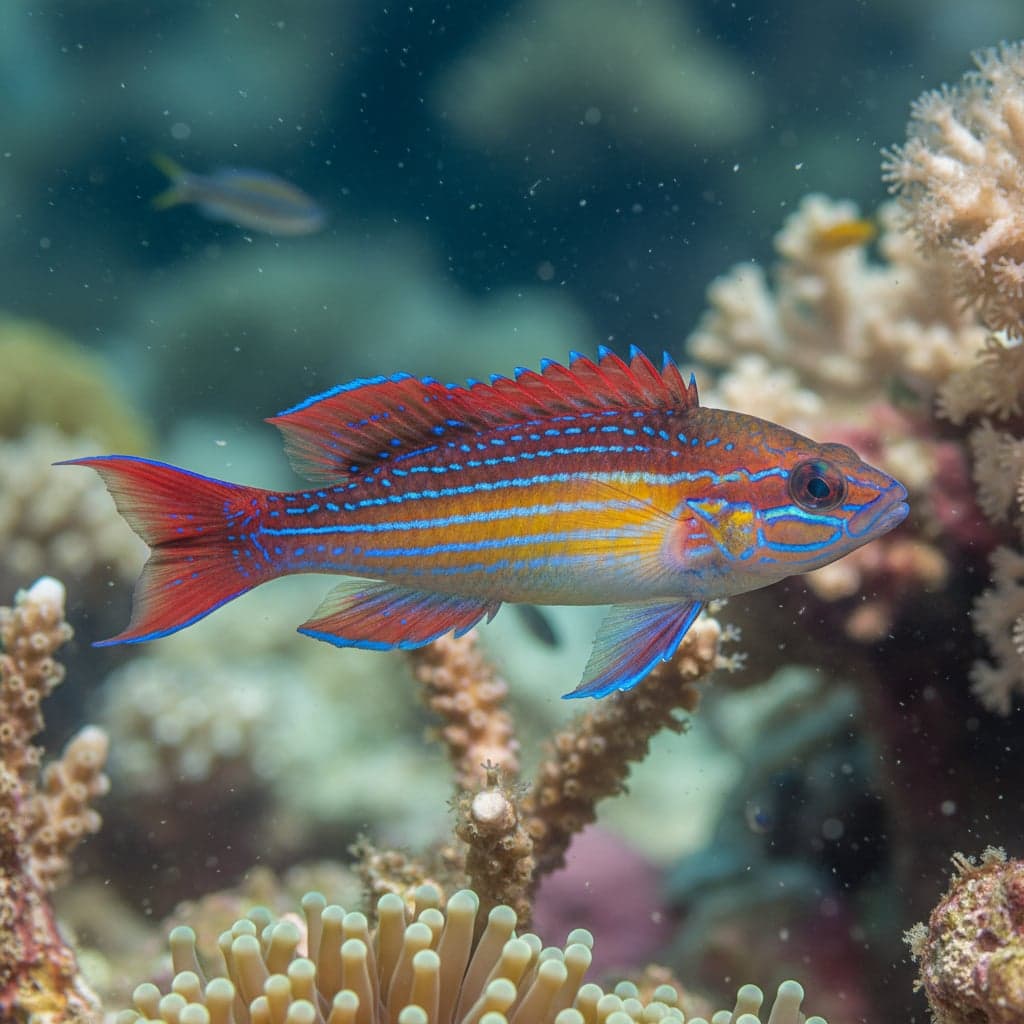
The Redfin Fairy Wrasse (Cirrhilabrus rubripinnis) is a western Pacific fairy wrasse that earns its place on colour alone and keeps it on manners. Terminal males show a magenta-purple body, a yellow flank patch and brilliant red fins that flare when they display; females and initial-phase fish stay a gentler pink. Active mid-water swimmers, fully reef-safe with corals and ornamental inverts, they bring constant motion without the polyp risk of butterflies or the invert appetite of hawkfish.
Like other Cirrhilabrus, it is at its most spectacular as a male with several females — frontmatter lists shoaling because wild fish aggregate, but a home tank almost never means a school of males. One male and a small harem, or a single male in a peaceful reef, is the realistic plan. The other non-negotiable is a sealed lid: fairy wrasses are among the hobby’s most reliable jumpers.
Natural Habitat & Origin
Cirrhilabrus rubripinnis ranges through the Philippines and nearby western Pacific reefs, living in loose aggregations over slopes and rubble where current delivers zooplankton. Males hold display stations above the rock and court harems of females; the colour flare is signalling, not aggression toward corals. Depth and rubble structure give night shelter — fairy wrasses do not sleep in open water.
In the aquarium recreate mid-water cruise space above the rock, plus crevices and overhangs for night cover. A solid rock wall with no open swimming lane produces a stressed fish that paces the glass and launches at the surface. Leave a clear “display lane” from front to back so the male can flare without colliding with branching coral every third second.
Care Requirements
Stable marine conditions: salinity around 1.024–1.026, pH 8.1–8.4, temperature about 24–26°C (75–79°F). Adults reach roughly 8 cm (about 3 inches). Around 115 litres (30 US gallons) works for a single male or a small harem if the footprint gives real open water; taller columns without length still feel cramped to a mid-water wrasse. Larger is kinder once you add anthias, other wrasses or assertive clownfish.
A gap-free lid is essential, not optional décor. Fairy wrasses jump when startled, when chasing food at the surface, during night startle responses, and sometimes for no reason a keeper can name. Mesh covers, overflow screens and sealed cable cut-outs matter more than almost any other “beginner” detail on this species. Quarantine new arrivals anyway — hardy does not mean pathogen-free. Marine ich (Cryptocaryon irritans) and velvet (Amyloodinium ocellatum) ride in with wild Pacific wrasses as readily as with tangs. Treat in QT, not on the display; see medications.
Flow should move food through the water column. A dead-calm nano forces the fish to hunt the substrate and lose the planktonic feeding pattern that keeps weight and colour on. Moderate to strong turbulent flow with surface agitation matches the slope habitat better than a single weak powerhead.
Track salinity and temperature in the Aquarium Tracker so small systems do not silently drift while the wrasse still looks vivid on day one of a bad week.
Diet & Feeding
Micro-carnivore / zooplankton feeder. Wild fish pick drifting crustaceans from the current all day. In captivity that means frequent small meaty meals, not one large evening feed: frozen mysis, enriched brine shrimp, finely chopped seafood, cyclops or similar small frozen items, and quality small marine pellets or flakes. Several offerings a day suit the fast metabolism and keep colours saturated — pale, washed-out males are often underfed mid-water fish losing to faster tankmates at the one daily feeding.
Prove conversion in QT before display. A newly imported fairy wrasse that ignores pellets but snatches mysis is normal; one that ignores everything for days is a QT problem to solve under observation, not a “it will eat once it settles on the reef” gamble. Enrich frozen foods with a marine vitamin soak if the fish arrived thin. Body shape tells the truth: a pinched belly behind the pectorals is hunger or parasites, not a sleek wild look.
Leave some natural pod population on live rock if the system supports it — supplementary grazing between meals reduces frantic glass-hunting — but do not expect a sterile, over-cleaned tank to feed a planktivore on hope alone.
Behavior & Temperament
Peaceful toward unrelated reef fish of similar assertiveness. Males display and may gently spar with other male fairy wrasses; keep a single male unless the tank is large and species or colour forms are chosen carefully. A male with several females is the classic Cirrhilabrus arrangement and matches wild harem structure better than stuffing multiple flashy males into 115 litres.
By day it swims busily in open water; at night it shelters in rock, often in a mucus cocoon. That cocoon is normal sleep behaviour, not disease. Do not rearrange rock at lights-out or you will flush a sleeping wrasse into panic and a lid test. Toward corals and sessile inverts it is indifferent — the mouth is built for plankton, not polyps.
Frontmatter “shoaling” describes wild aggregation, not a license for six males in a community reef. Aggression inside displaying males is the common captive outcome when that label is taken literally.
Tank Mates
Good companions are other peaceful reef fish: clownfish, gobies, firefish, cardinalfish, anthias, other small wrasses and similar. Avoid aggressive or boisterous species that claim the entire water column — large dottybacks, territorial damsels and hyper-aggressive triggers turn a fairy wrasse into a hiding, fading fish. Multiple fairy wrasse species can often share a large tank if added together and if only one dominant male colour form owns the display lane; adding a second flashy male months later is how wars start.
It is fully reef-safe: corals, clams and ornamental shrimp are not on the menu because the feeding mode is mid-water plankton picking, not substrate crushing or polyp grazing. That makes it one of the best colourful additions to a true reef. It is a poor choice only when the tank has no lid, no open water, or tankmates that will starve it at feeding time — the fish is beginner-friendly on chemistry and unforgiving on jump prevention.
Breeding
Cirrhilabrus rubripinnis is a pelagic spawner. Aquarium courtship and spawning rises are occasionally observed in established harems, but rearing the tiny planktonic larvae is difficult and rarely achieved at home. Trade specimens are wild-collected. Sex change occurs in the genus (protogyny); a group of females may produce a male over time if the terminal male is lost — do not assume every pink fish stays female forever in a long-lived tank.
Common Health Issues
Hardy once eating and covered, but still a wild marine import. Ich and velvet follow stress from shipping, poor oxygen and jumping injuries. Quarantine every fish. Secure the lid. Feed frequently enough that mid-water metabolism is met. Sudden losses overnight are often jump escapes, not mysterious disease — check the floor and sump before restocking.
A redfin sold as a “nano centrepiece” for an open-top 40 litre cube is a poor choice: the adult needs open swim space, a harem or peaceful community, and a lid that actually seals. Prove feeding in QT, give the male room to display, and this magenta-and-red Cirrhilabrus is a brilliant, reef-safe beginner wrasse. Skip the lid or stock it under a bully damsel, and the colour never gets a chance to matter.