Whip Fin Fairy Wrasse
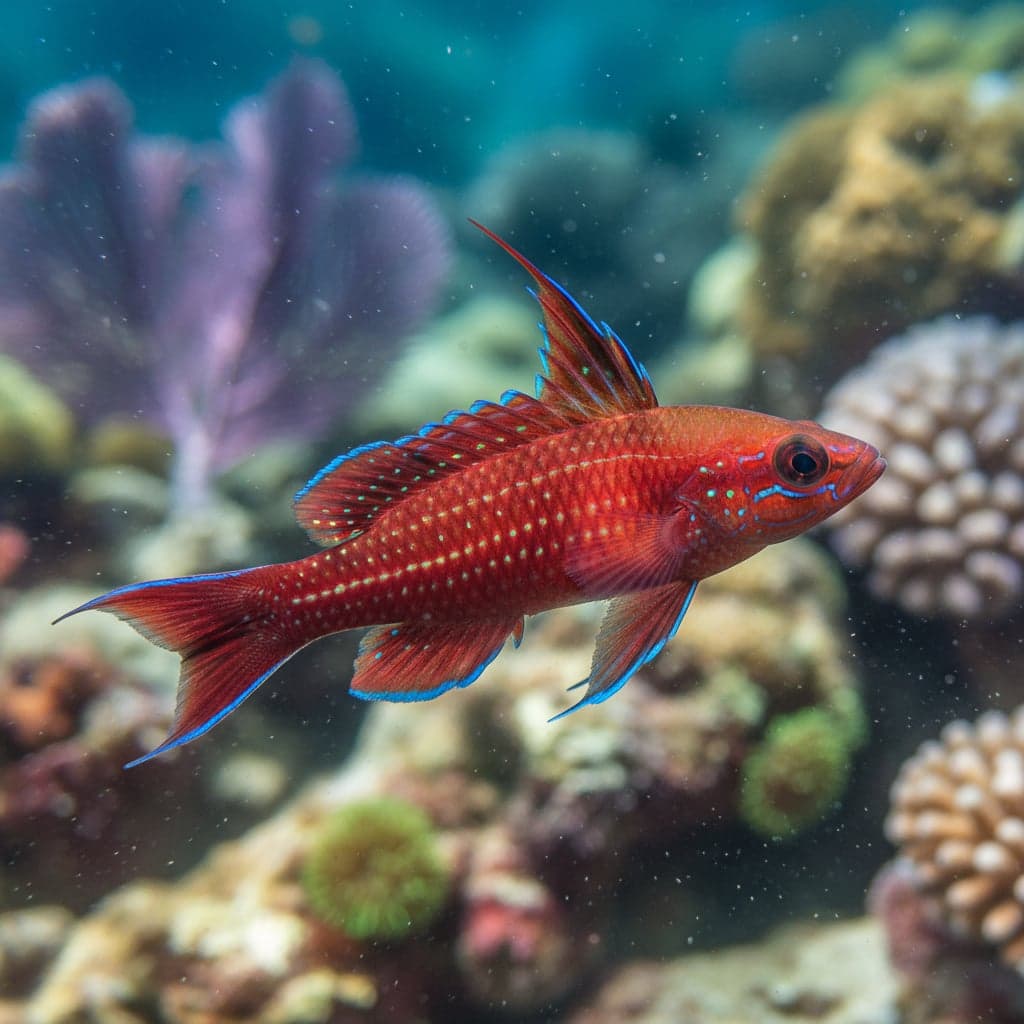
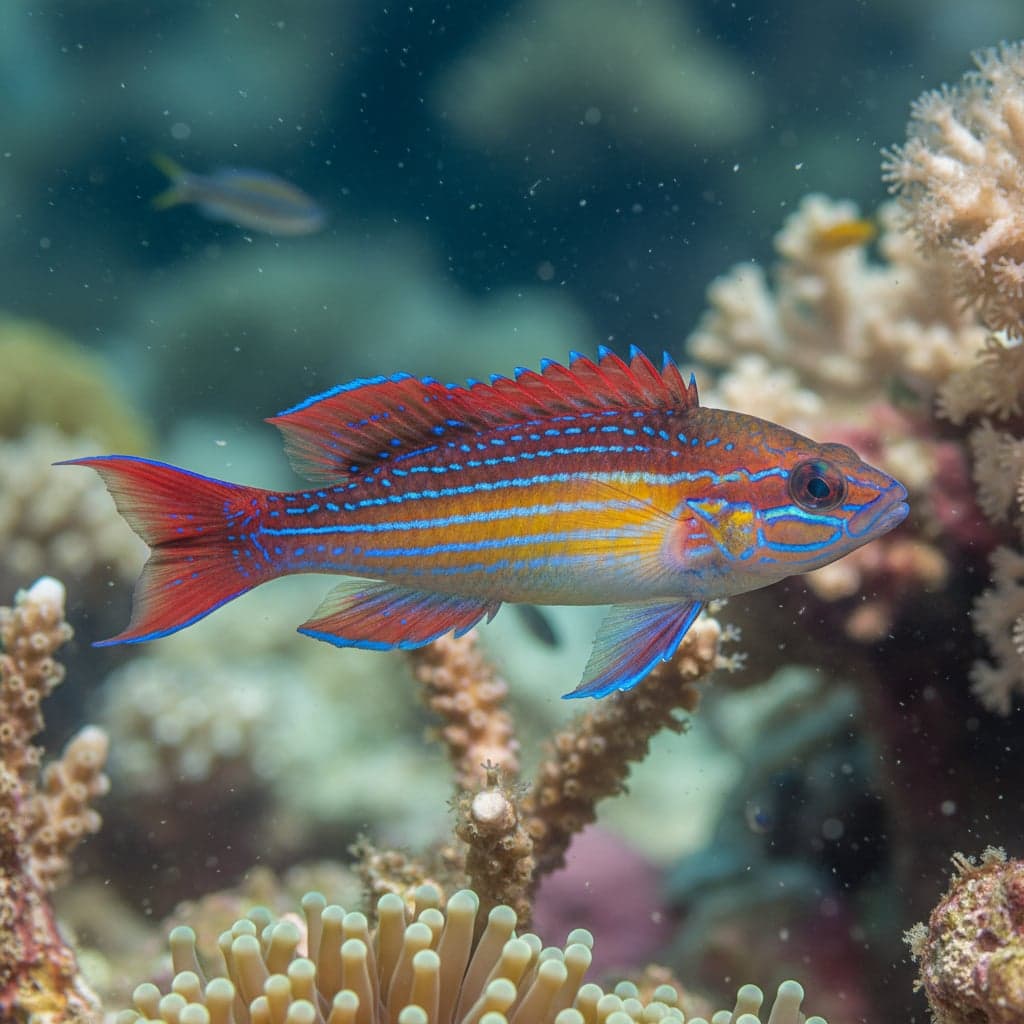
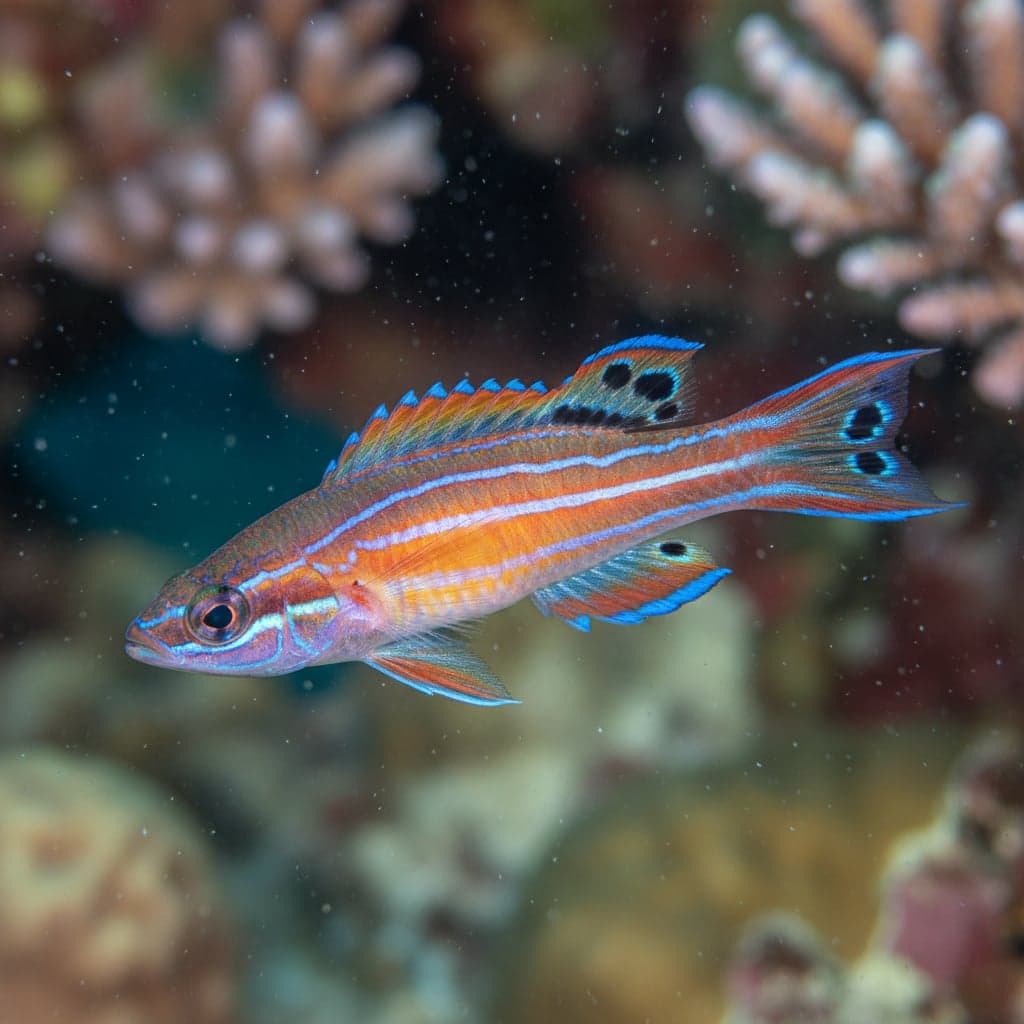
The Whip Fin Fairy Wrasse (Cirrhilabrus filamentosus) is a colourful, reef-safe fairy wrasse whose males trail a long dorsal filament — peaceful and ideal for a community reef.
Whip Fin Fairy Wrasse
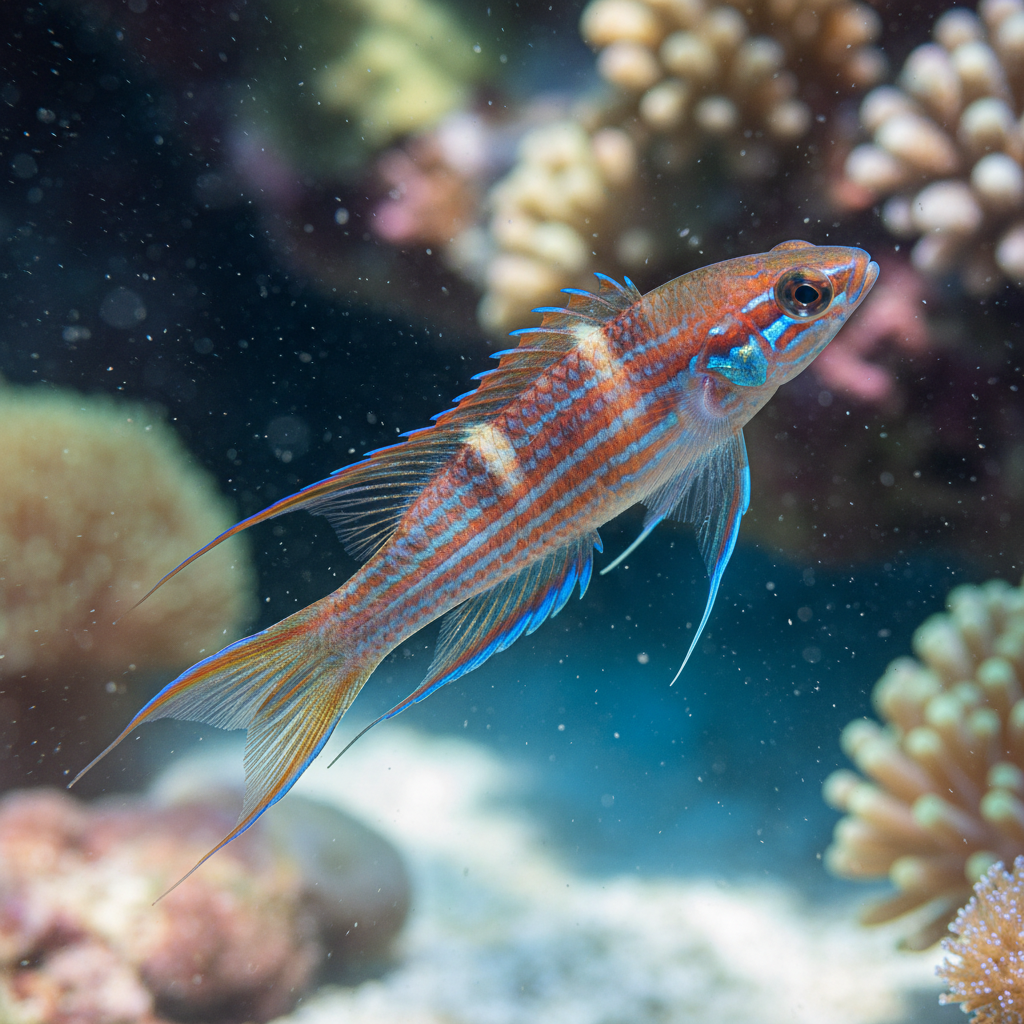
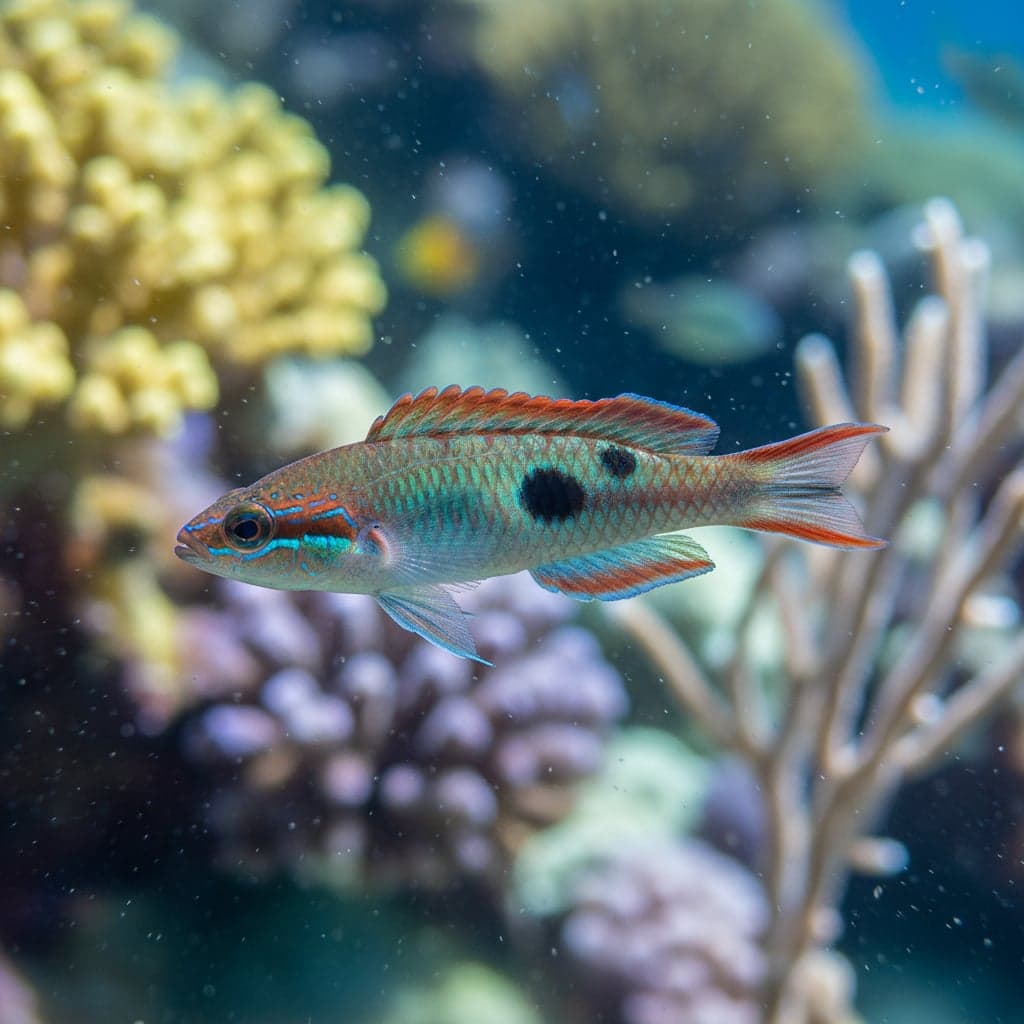
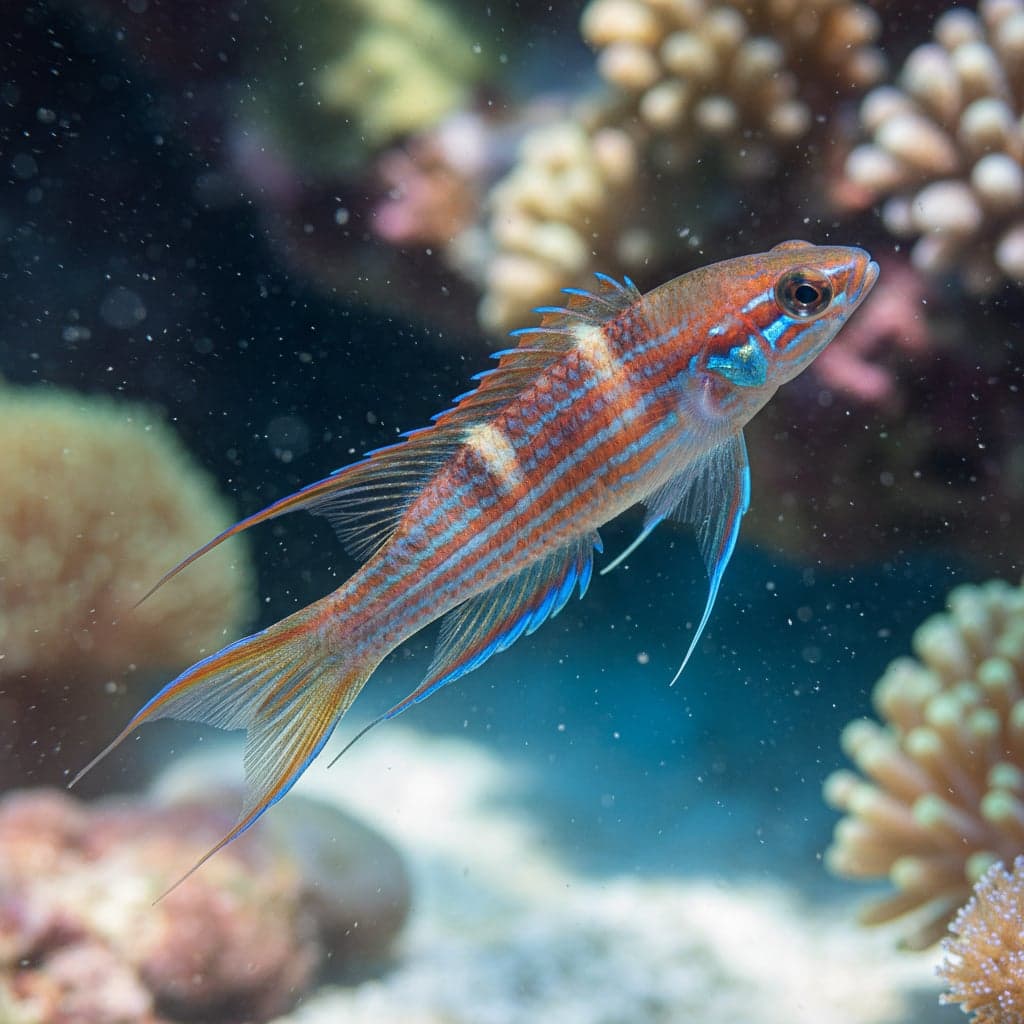
The Whip Fin Fairy Wrasse (Cirrhilabrus filamentosus), also sold as the filamented fairy wrasse, is a mid-water colour fish built for a peaceful reef. Mature males carry the namesake: a long, whip-like filament trailing from the dorsal fin, raised and flared when the fish displays. Body colour runs red and green with iridescent sheen under reef lighting; females stay softer rose without the exaggerated filament. Adults reach about 10 cm (4 inches).
It is hardy once settled, fully reef-safe with corals and ornamental invertebrates, and active enough to read as a centrepiece without the aggression of larger wrasses. Frontmatter lists shoaling because wild fish form loose aggregations and harems; in a home aquarium that usually means one male with one or more females — not a school packed into 115 litres.
Natural Habitat & Origin
Cirrhilabrus filamentosus occurs in the western Pacific over reef slopes, rubble patches and current-washed ledges where zooplankton drifts past. Males hold display stations above the structure and court harems of females; both sexes work the water column for copepods and other plankton rather than picking at coral tissue.
In the aquarium recreate that geometry: open mid-water swimming space above the rock, enough caves and overhangs for night shelter, and moderate-to-strong flow that keeps food suspended. A heavily cave-packed maze with no clear flight path produces a skulking fish that never shows the filament. Fine sand under the rock is fine; the fish is not a sand-sifter, but many fairy wrasses bury or wedge into cover when startled.
Care Requirements
Stable marine water: salinity about 1.024–1.026, pH 8.1–8.4, temperature 24–26°C (75–79°F). The listed minimum of around 115 litres (30 US gallons) works for a single male or a small harem if the footprint gives swimming length, not just height. Larger systems show better colour and less male–male tension if you ever try more than one male.
A gap-free lid is non-negotiable. Fairy wrasses are committed jumpers — startled by lights-out, a net, or a sudden chase — and the filamented male is no exception. Screen overflow boxes and filter intakes; a fish that wedges into a sump overnight is a common loss mode.
Quarantine new arrivals even though the species is beginner-friendly. Marine ich (Cryptocaryon irritans) and marine velvet (Amyloodinium ocellatum) still hit stressed imports. Observe and feed in QT before the display; copper and related therapeutics belong in a hospital tank, not on a mixed reef — see medications and a proper quarantine protocol.
Use the Aquarium Tracker to log salinity and temperature; chronic nitrate creep and heater faults show up as dull colour and clamped fins before the fish stops eating.
Diet & Feeding
Micro-carnivore. Wild intake is zooplankton in the current. In captivity offer frequent small meals: frozen mysis, enriched brine shrimp, finely chopped seafood, and quality small marine pellets or flakes. Several feedings a day match a fast metabolism better than one evening dump that faster fish clear first.
Colour tracks diet and calm. A male that fades after introduction usually needs more frequent planktonic foods and less competition at the surface, not a different “colour food” brand. Live pods in a mature system help between meals but should not be the only plan — prove the fish takes frozen in QT.
Marine diets and feeding schedules cover timing for active mid-water feeders. Watch belly fullness behind the pectorals; a thin fairy wrasse that still rushes the glass is losing the food race.
Behavior & Temperament
Peaceful toward unrelated reef fish. Males display and may gently spar with other male Cirrhilabrus; keep a single male unless the tank is large and heavily broken by rock. A male with several females is the classic setup that keeps the whip fin and body colour at peak.
By day it works open water; at night it shelters in rock and often sleeps in a mucus cocoon — normal, not disease. Avoid boisterous damsels, large predators and food-hogging triggers that pin it in a cave. Introduce after the community is settled, or with other peaceful mid-water fish of similar energy so it is not the only moving target.
Tank Mates
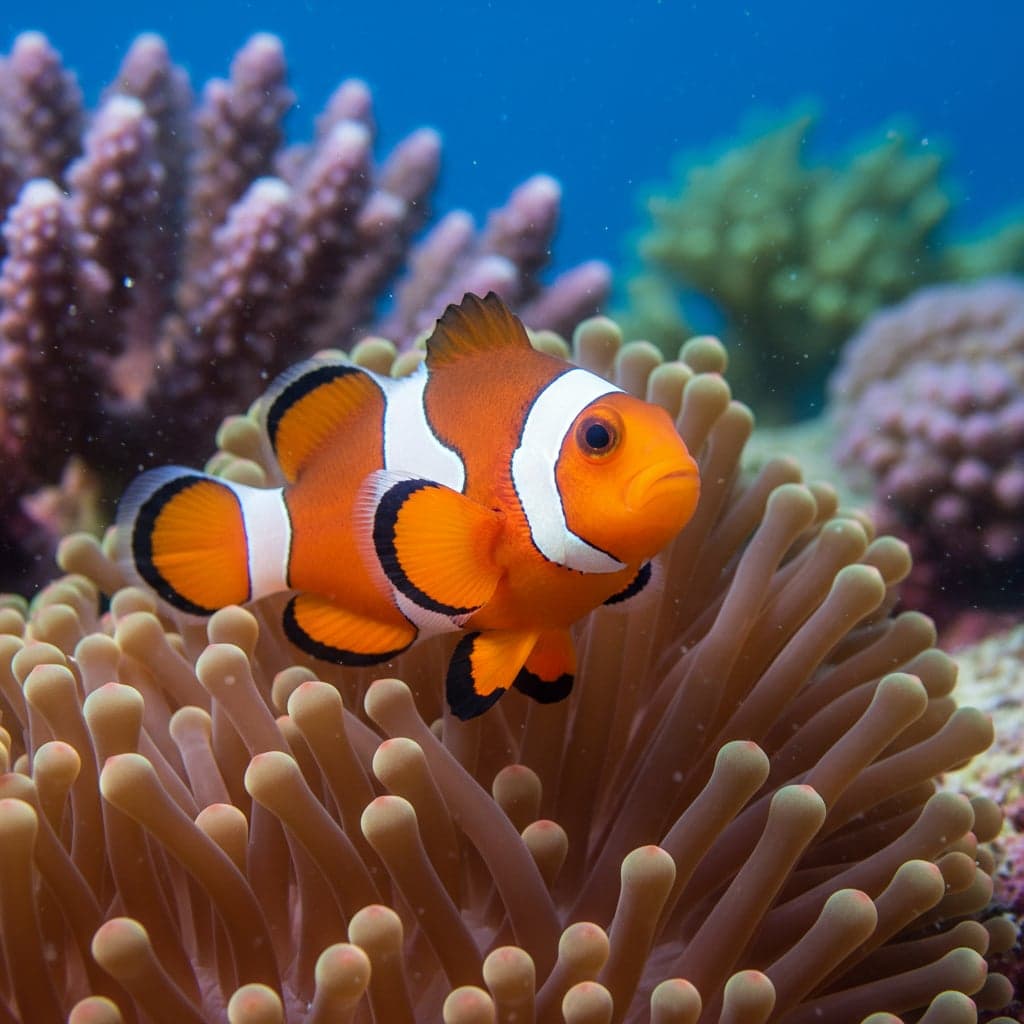
Good companions: common clownfish, gobies, cardinalfish, anthias, peaceful smaller wrasses and similar community reef fish. Multiple fairy wrasse species can share a large system if added with care — ideally together or with clear swimming lanes — but two large males of similar look will quarrel in a small box.
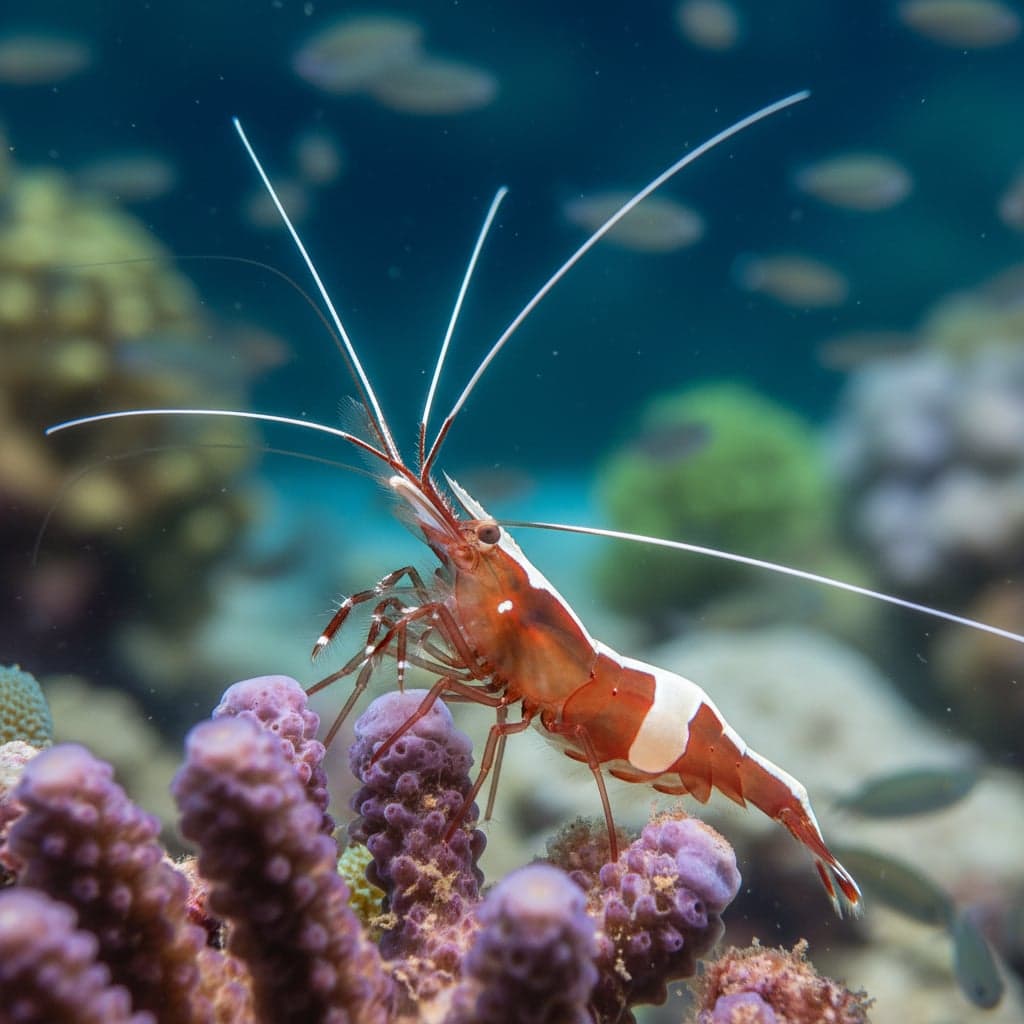
Fully reef-safe: it does not eat coral polyps, clams or ornamental shrimp. That makes it one of the cleanest colourful additions for a soft- or stony-coral reef where temperament, not diet risk, is the only planning constraint.
Breeding
Pelagic spawner. Aquarium courtship and egg release are occasionally seen; rearing the tiny planktonic larvae is rarely achieved at home. Trade specimens are almost always wild-collected. There is no reliable captive-bred pipeline that removes quarantine duty.
Common Health Issues
Hardy once eating and covered, still a marine import. Marine ich and velvet follow shipping stress and poor oxygen. Jumping is the other common killer — seal the lid before you blame disease. Quarantine, frequent small feedings, stable salinity and a harem or single-male plan keep this species in the beginner-friendly column.
Given open mid-water, a sealed canopy and planktonic meals on a short schedule, the whip-fin male is a reef-safe colour fish that earns its filament — active, peaceful and honest about needing room to display rather than a nano cave to hide in.