Red Velvet Fairy Wrasse
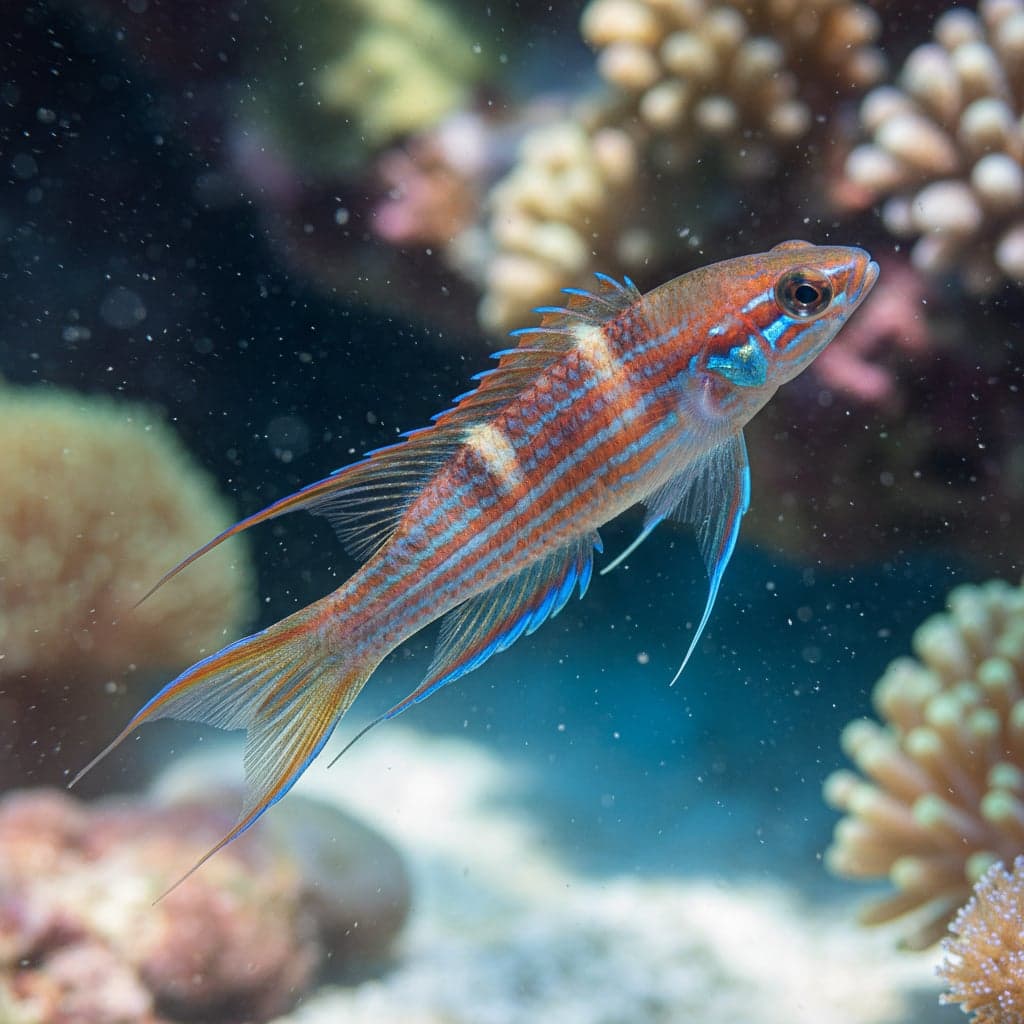
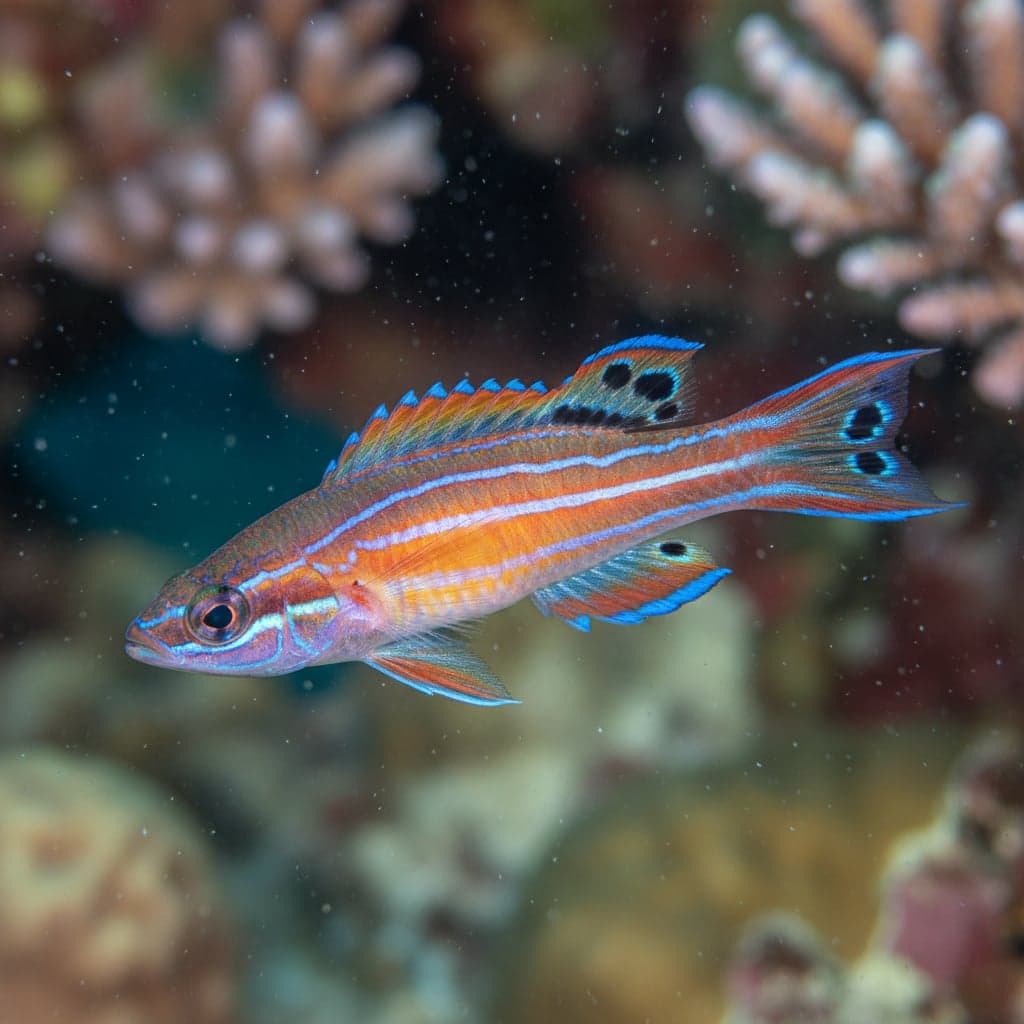
The Red Velvet Fairy Wrasse (Cirrhilabrus rubrisquamis) is a deep-red, reef-safe fairy wrasse from the Maldives — peaceful, hardy and brilliant in a community reef.
Red Velvet Fairy Wrasse
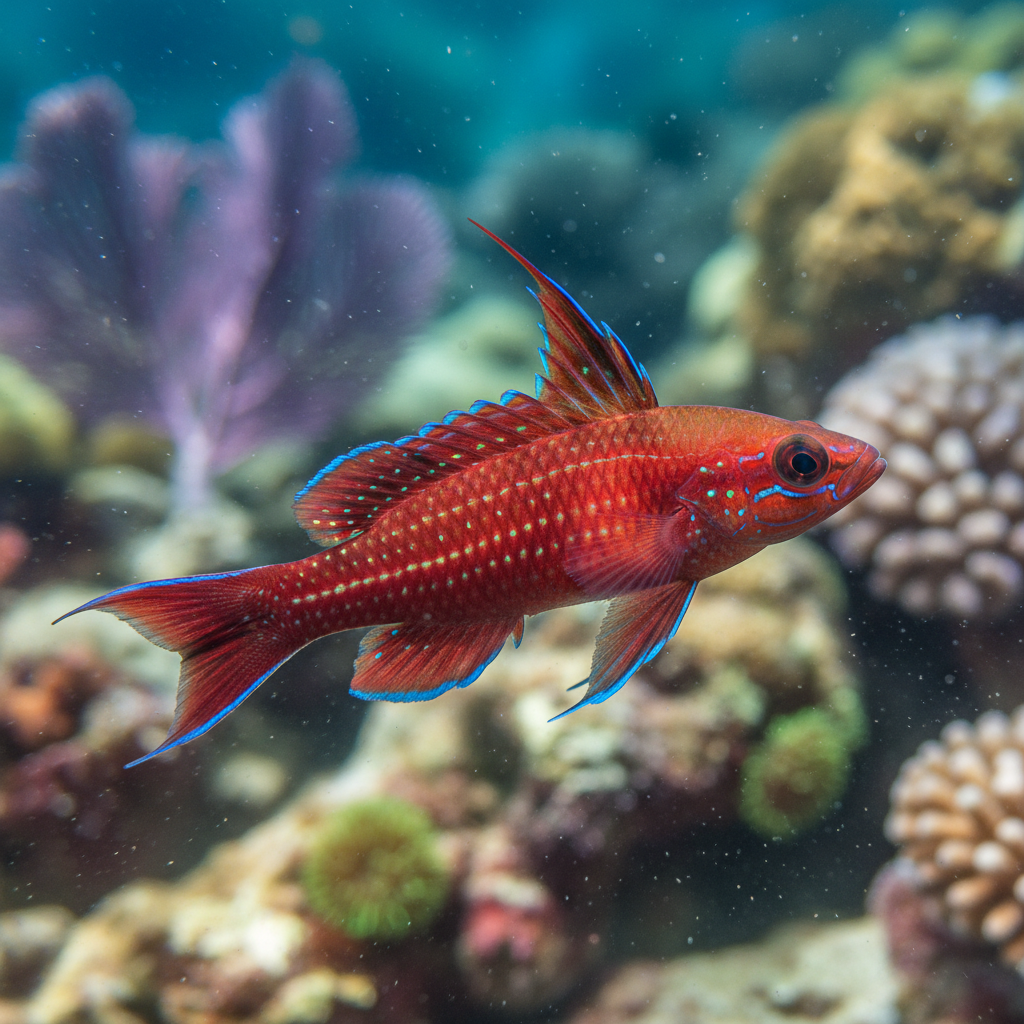
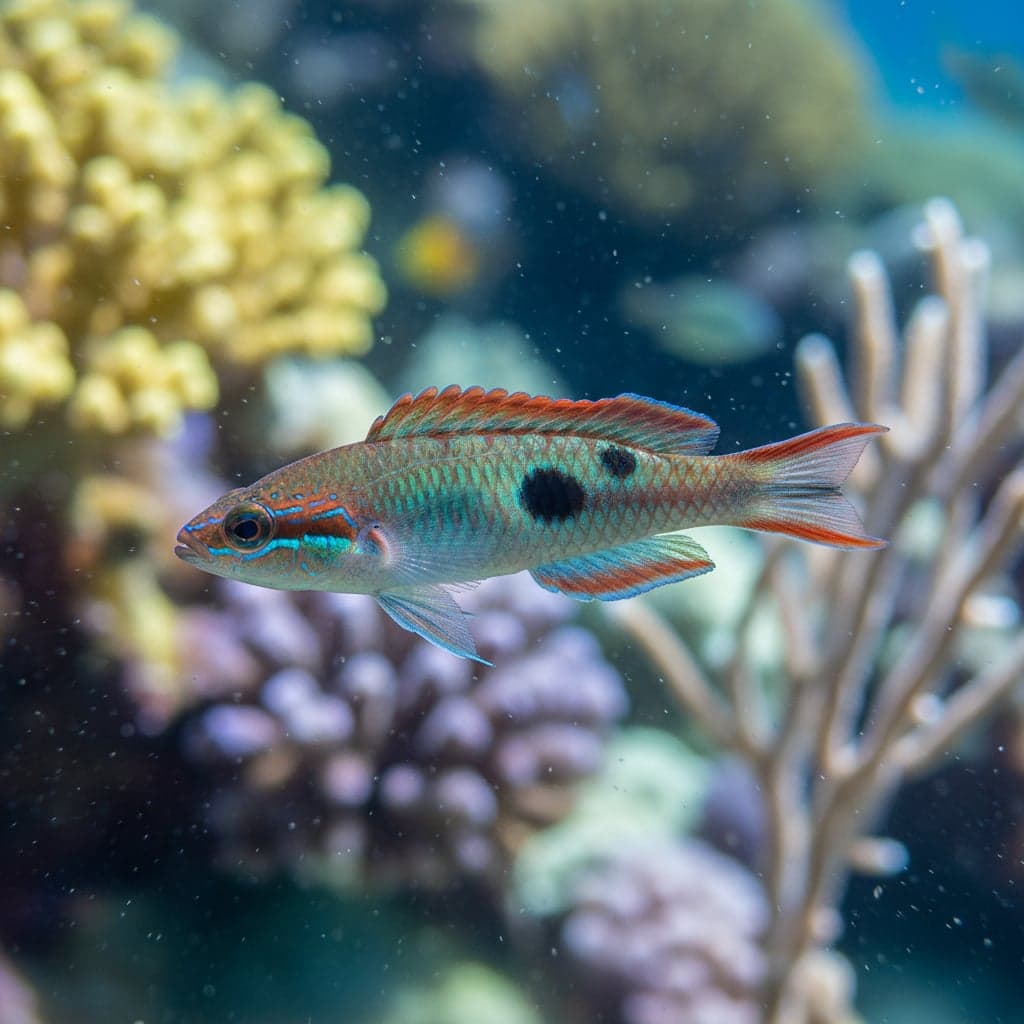
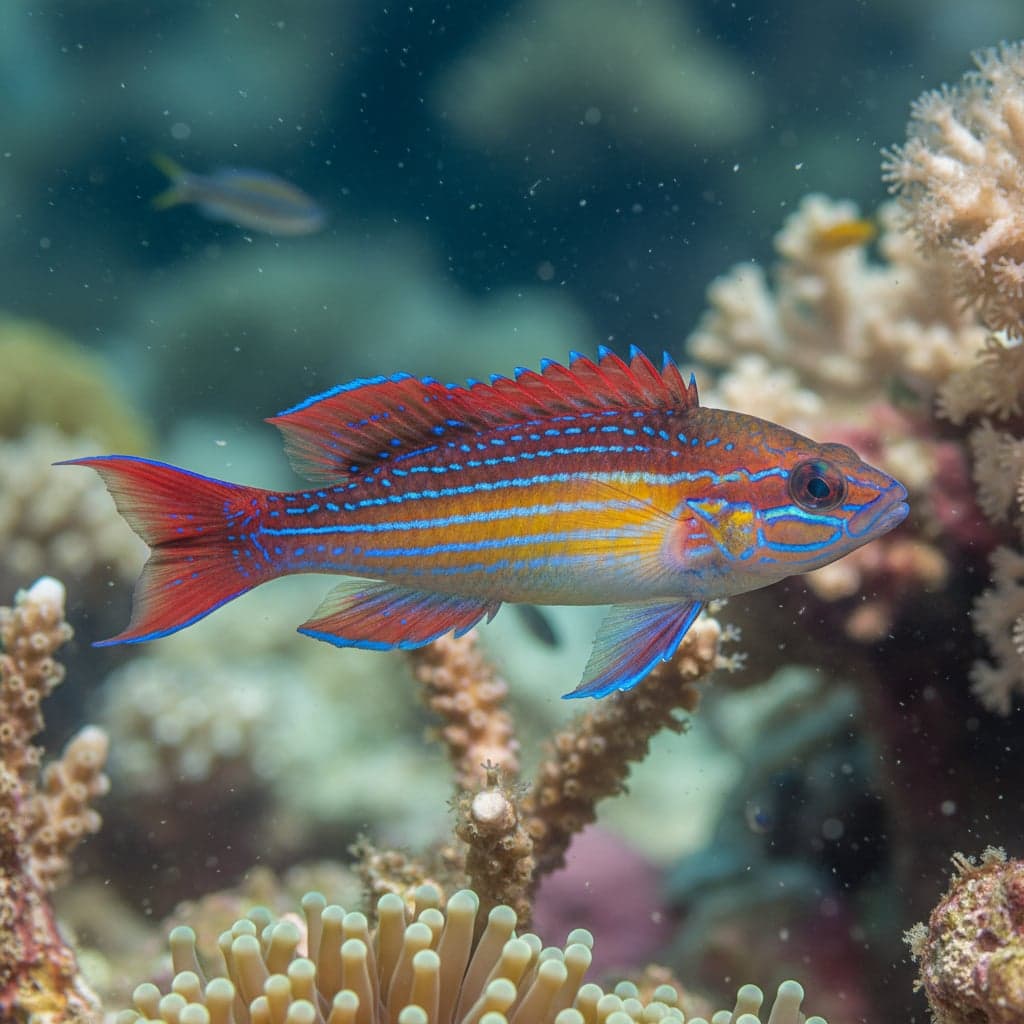
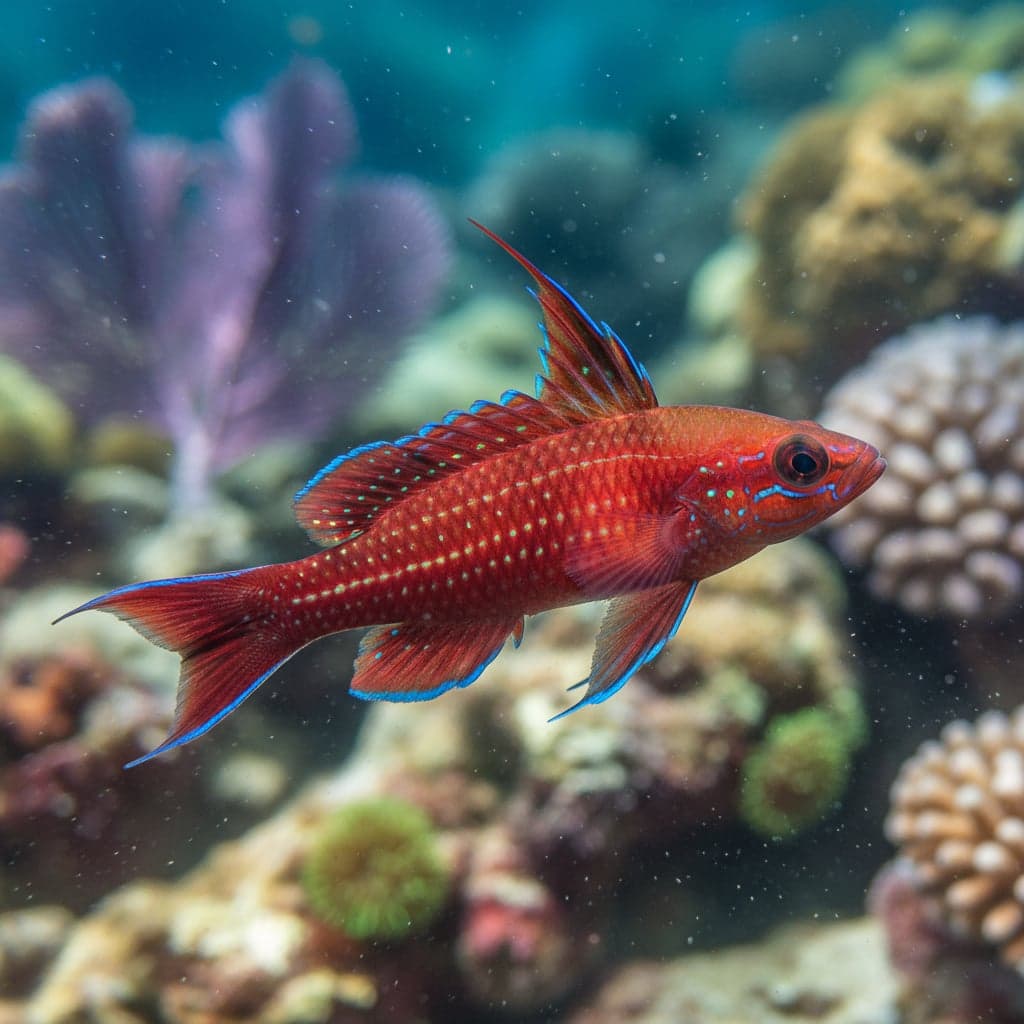
The Red Velvet Fairy Wrasse (Cirrhilabrus rubrisquamis) is a compact Indian Ocean fairy wrasse sold for saturated colour rather than size. Males show a rich, velvety red along the upper body shading to white or pale below; the red intensifies hard when the fish displays. Females stay a softer rose. Adults reach about 8 cm (3 inches) — smaller than many Cirrhilabrus, which is why a 115-litre footprint can work when swimming length is honest.
Active, hardy once settled, and fully reef-safe with corals and ornamental invertebrates. Frontmatter lists shoaling because wild fish form loose aggregations and harems; in captivity that usually means one male with one or more females, not a crowd of males in a nano.
Other red fairy wrasses appear in shops under overlapping trade names. Confirm C. rubrisquamis (Maldives / western Indian Ocean provenance is a useful clue) rather than assuming every deep-red male is this species — husbandry is similar across the genus, but temperament between large males is not interchangeable.
Natural Habitat & Origin
Cirrhilabrus rubrisquamis is associated with Maldives and neighbouring western Indian Ocean reefs, working slopes and rubble where zooplankton drifts in the current. Males display above the structure to harems of females; both sexes feed in open water rather than on coral tissue.
In the aquarium give mid-water flight space above the rock, caves and overhangs for night cover, and flow that keeps food suspended. A cave-only aquascape with no clear swimming lane keeps the male pale and hidden. Fine sand is optional substrate; the fish is not a sand-sifter, but cover to dive into when startled still matters.
Care Requirements
Stable marine parameters: salinity about 1.024–1.026, pH 8.1–8.4, temperature 24–26°C (75–79°F). Around 115 litres (30 US gallons) or more suits a single male or a small harem if the tank is long enough for continuous mid-water laps. Larger systems show better colour and make multi-species fairy wrasse mixes more realistic.
Seal the lid. Fairy wrasses jump — lights-out startle, netting, or a chase from a damsel is enough. Screen overflows and filter intakes. A missing fish that “vanished overnight” often dried on the floor or wedged in a sump.
Quarantine remains wise for a beginner-labelled fish. Imports still carry marine ich (Cryptocaryon irritans) and velvet (Amyloodinium ocellatum). Feed and observe in QT; keep copper and similar drugs out of the display reef — see medications and a quarantine protocol.
Log salinity and temperature in the Aquarium Tracker; colour washout after a heater fault or salinity swing is easier to catch with a history than with memory.
Diet & Feeding
Micro-carnivore on zooplankton in the wild. Offer frequent small meals: frozen mysis, enriched brine shrimp, finely chopped seafood, and quality small marine pellets or flakes. Several feedings a day beat one large evening meal that faster fish clear first.
Display colour is the diet-and-calm meter. A washed-out male after introduction usually needs more planktonic feedings and less surface competition, not a miracle colour flake. Live copepods in a mature reef help between meals; still prove frozen acceptance in QT before display.
Marine diets and feeding schedules cover routines for active mid-water feeders. Watch fullness behind the pectorals — a thin wrasse that still begs at the glass is losing the food race.
Behavior & Temperament
Peaceful toward unrelated community fish. Males may display and lightly spar with other male fairy wrasses; keep one male unless the system is large and visually broken. A male with several females is the setup that keeps velvet-red at peak.
By day it works open water; at night it wedges into rock and often sleeps in a mucus cocoon — normal labrid behaviour. Avoid aggressive damsels, large predators and food monopolisers. Introduce into a calm community, or with other peaceful mid-water fish of similar energy, so it is not endlessly chased into cover.
Tank Mates
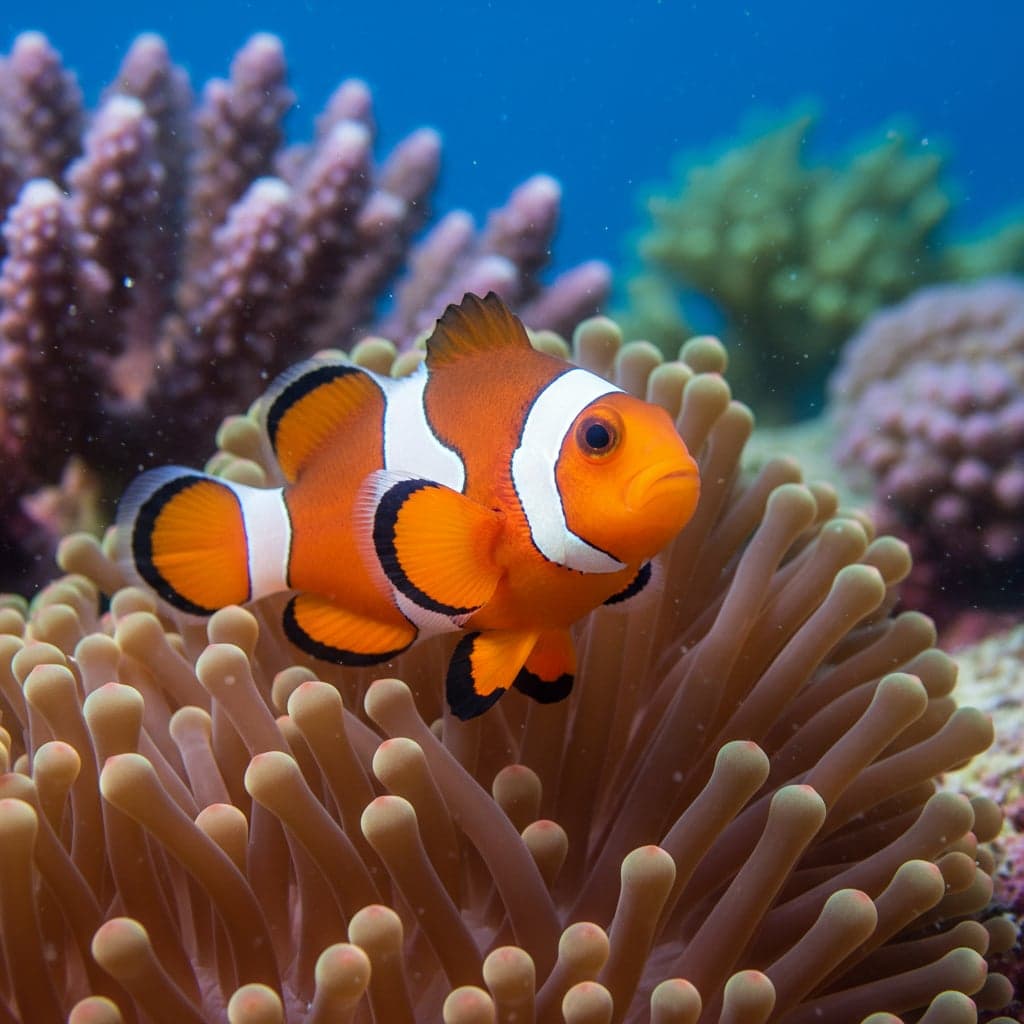
Good companions: common clownfish, gobies, cardinalfish, anthias, other peaceful small wrasses and similar reef community fish. Multiple Cirrhilabrus species can share a large tank if added carefully; two flashy males of similar size in a small box will quarrel.
Fully reef-safe with corals, clams and ornamental shrimp — it hunts plankton, not polyps or clean-up crew. That clean reef-safe claim is why fairy wrasses remain a better colour choice than many angels or butterflies for mixed reefs.
Breeding
Pelagic spawner. Courtship and egg release are occasionally seen in home reefs; rearing planktonic larvae is rarely successful outside specialist setups. Trade fish are typically wild-collected. Captive breeding does not remove the need to quarantine.
Common Health Issues
Hardy when eating and covered, still vulnerable to ich and velvet after shipping, and to death by jumping if the canopy leaks. Quarantine, frequent small feedings, stable salinity and a single-male or harem plan keep it in the beginner-friendly column.
Given mid-water space, a sealed lid and planktonic meals on a short schedule, C. rubrisquamis is a reef-safe red accent that earns the velvet name when the male is calm enough to display — small enough for modest systems, not small enough to excuse a lid gap or a bare QT skip.