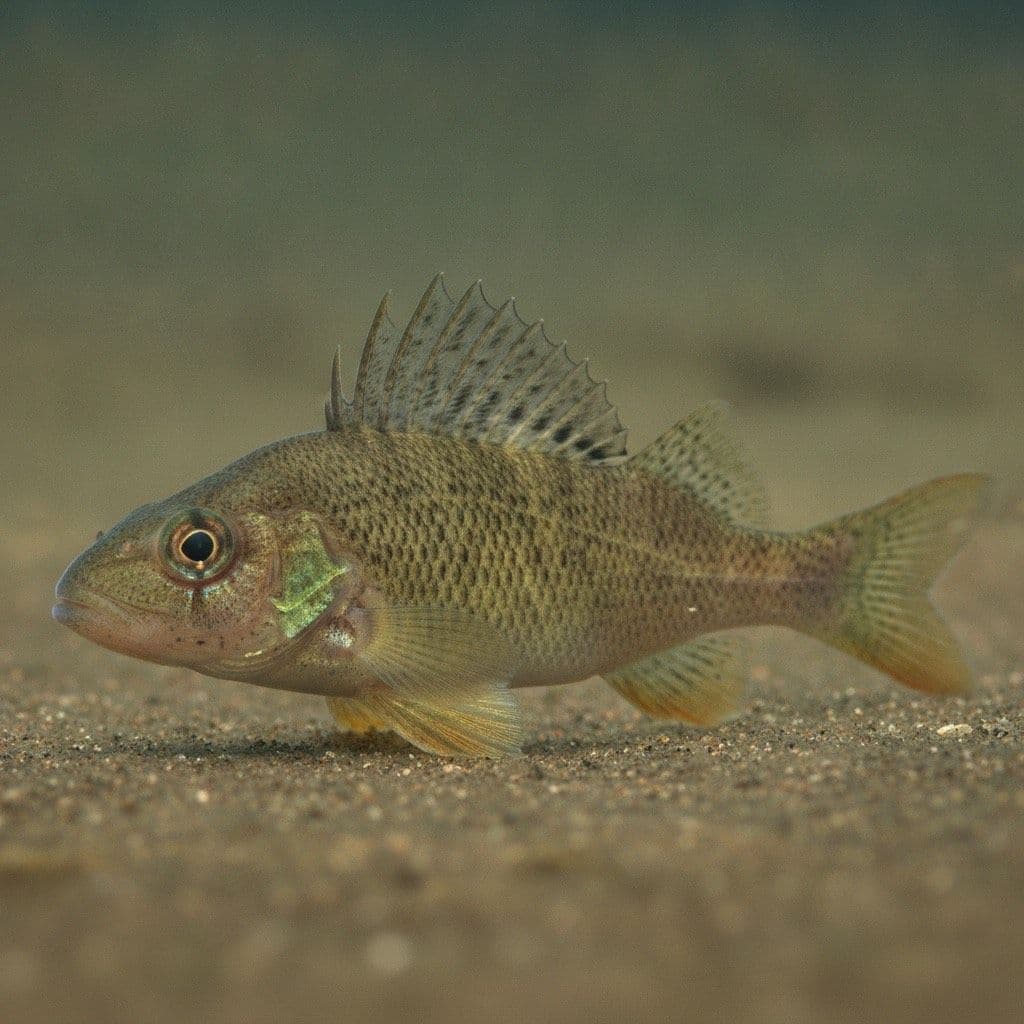
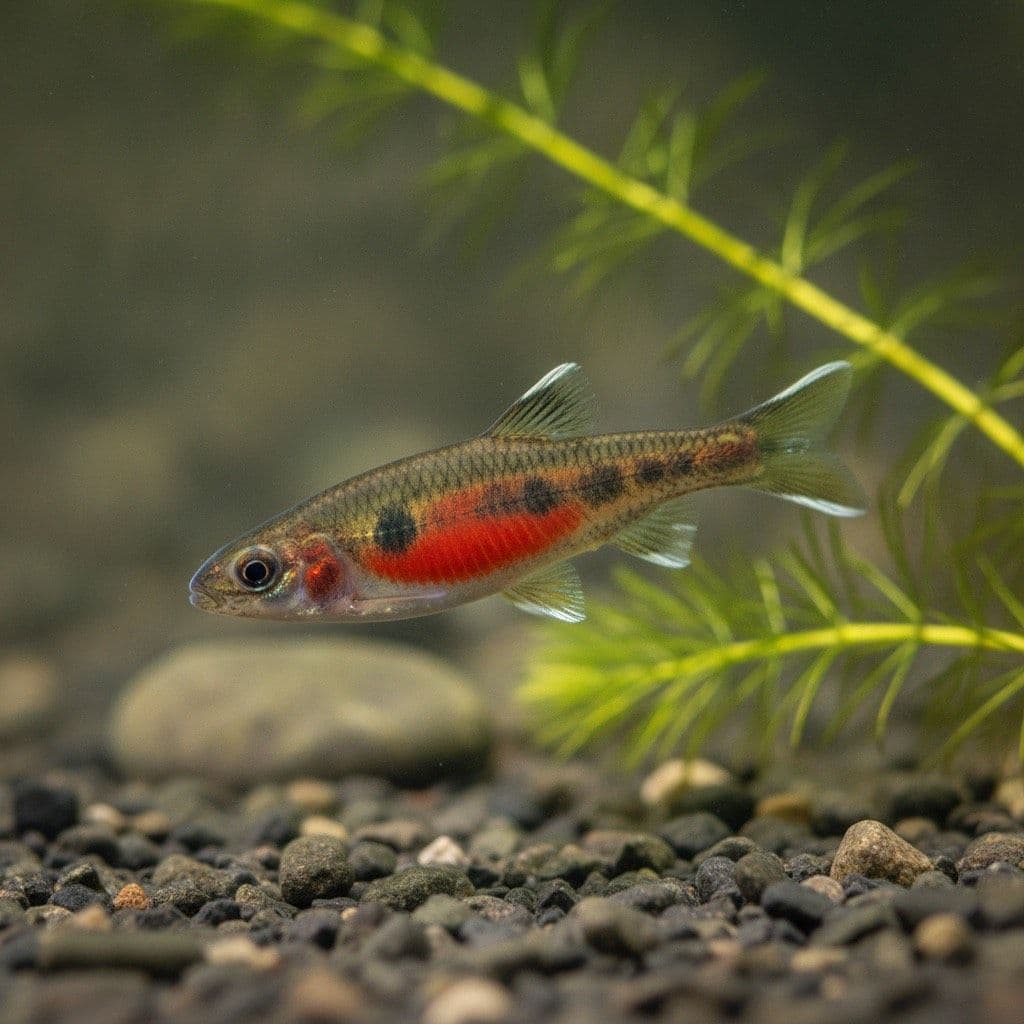
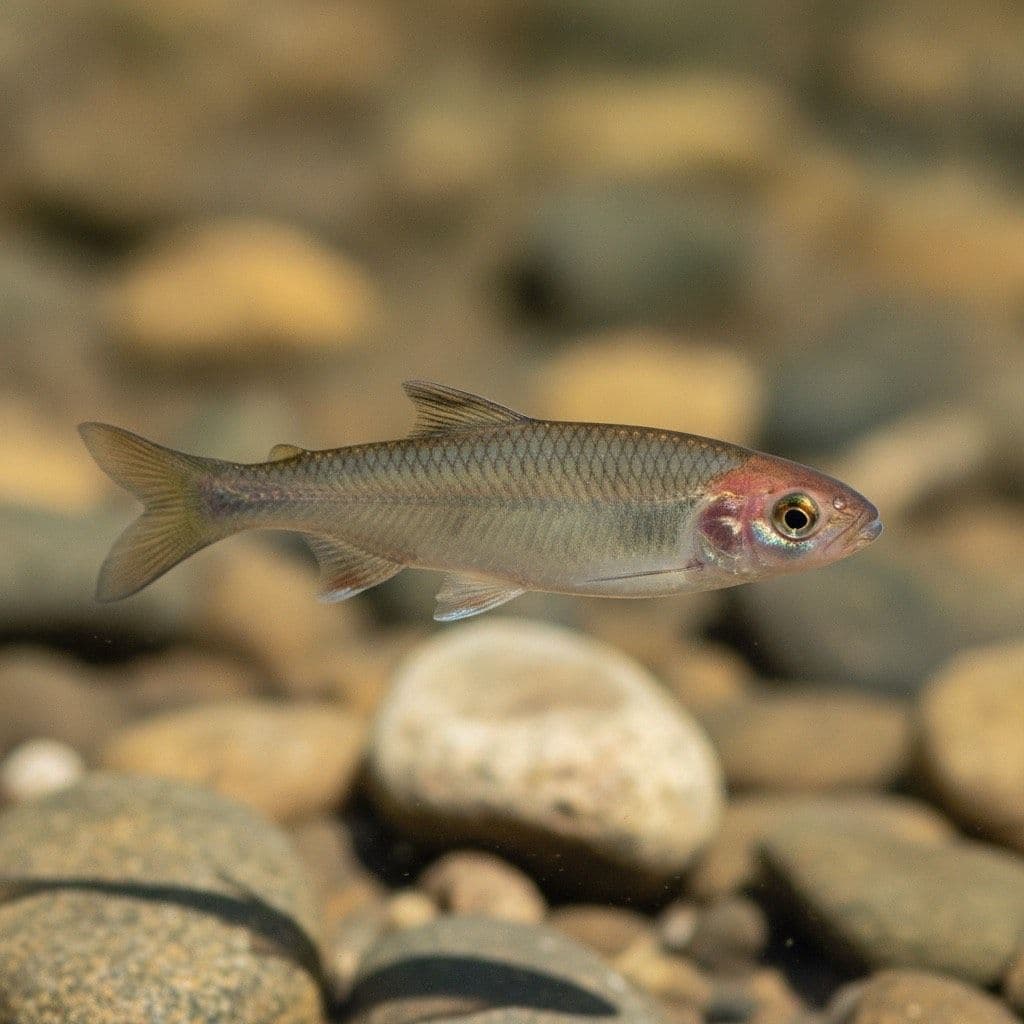
Bluegill: Lepomis macrochirus
North America's best-known sunfish: a hardy, intelligent, deep-bodied fish for large native-species tanks and ponds, reaching about 20 cm.
Also known as: bluegill sunfish · Lepomis macrochirus
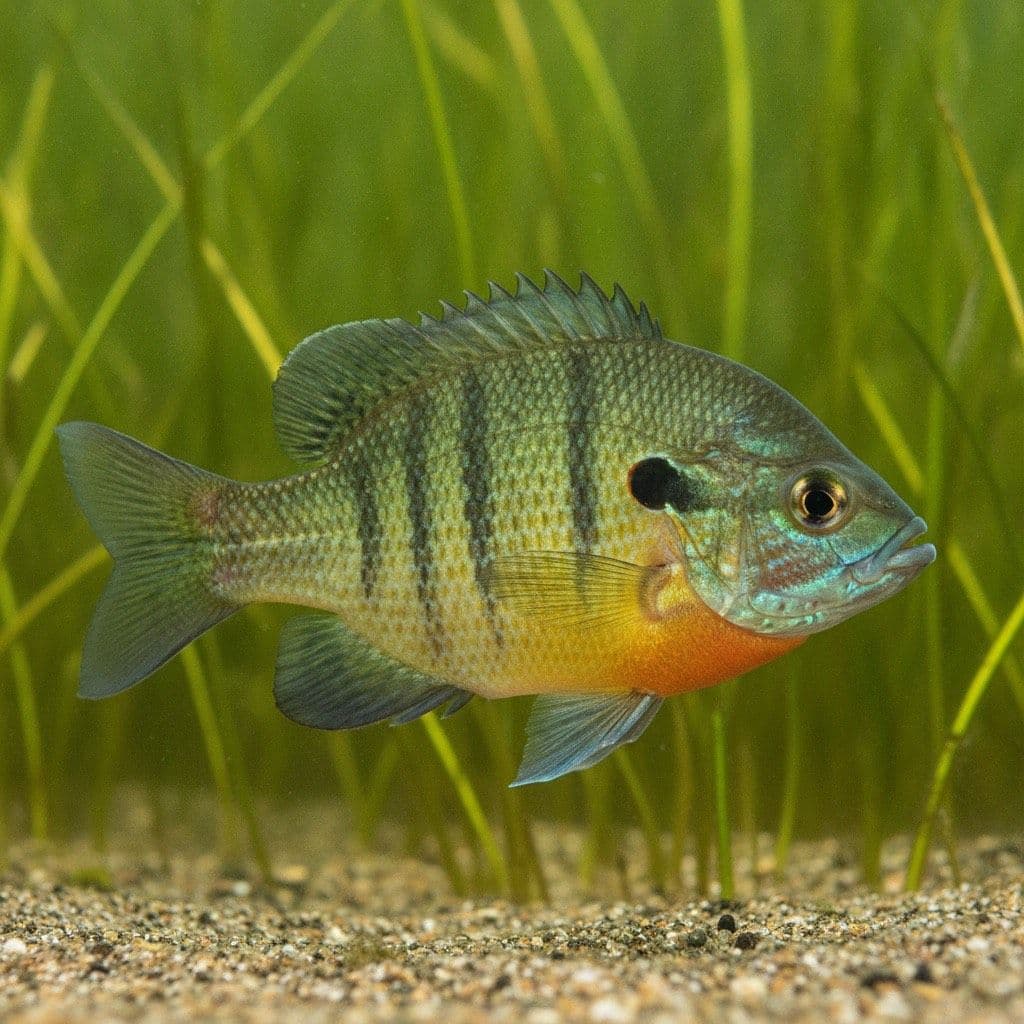
Bluegill
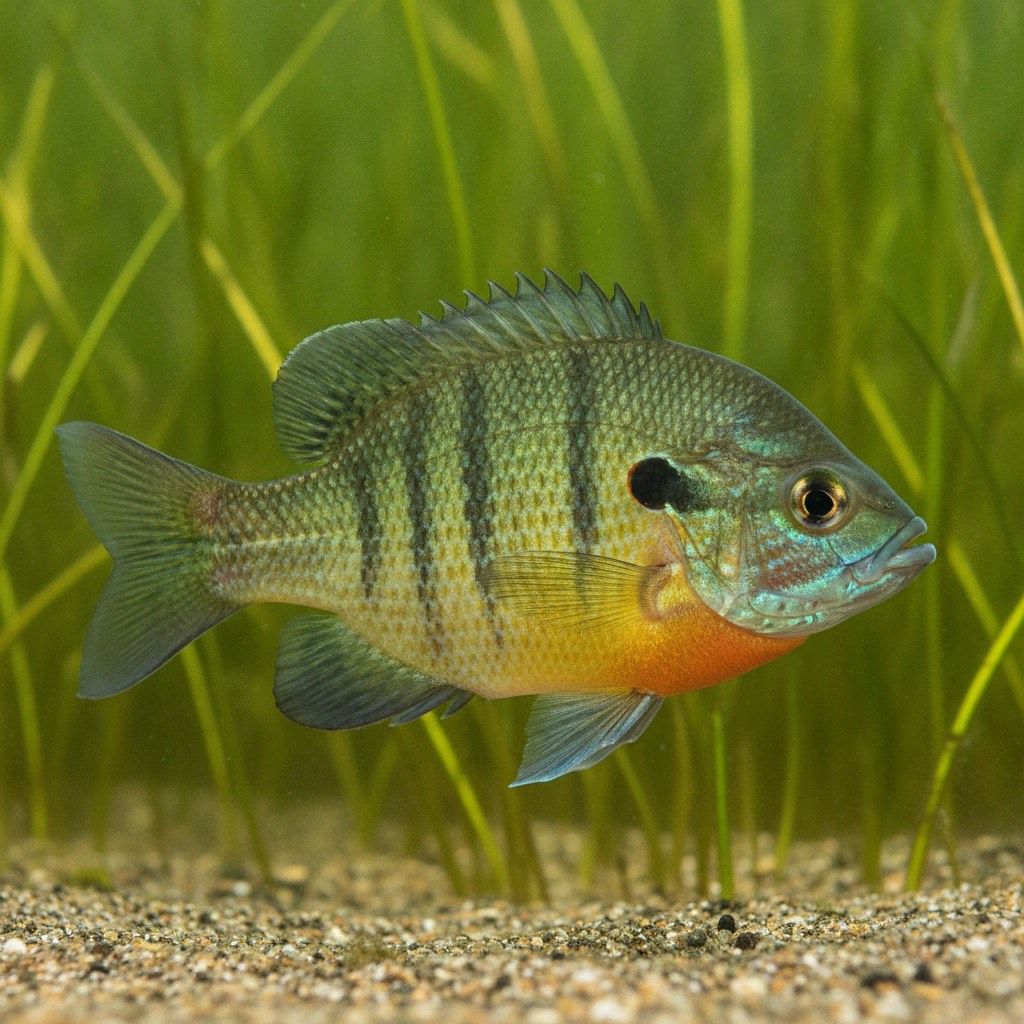
The Bluegill (Lepomis macrochirus) is the most familiar sunfish in North America. It is a deep, flat-sided fish with a blue-green back, dark vertical bars on the flanks, a yellow-orange breast, and a solid dark "ear" spot at the back of the gill cover. Breeding males darken and develop a rusty-orange chest.
FishBase gives a common length of about 19 cm total length, and most aquarium fish settle at 15-20 cm; exceptional wild fish grow larger. That is still a big fish, and it grows steadily from the small juveniles often sold, so plan the tank for the adult from the start.
Natural Habitat & Origin
Bluegills are native to the St. Lawrence, Great Lakes and Mississippi basins, from Quebec to northern Mexico. They live in lakes, ponds, reservoirs and sluggish streams, favouring deep weed beds. They have been introduced widely around the world, and several countries report harm to native fish after introductions, so never release one.
Care Requirements
A single adult needs at least 400 litres, and a pond or a larger tank is better for a group. Bluegills are extremely tolerant of temperature, from near-freezing to warm summer water; 10-26°C is comfortable, with no heater needed indoors. Neutral to slightly alkaline, moderately hard water suits them.
Use strong filtration, plenty of plants or other cover around the sides and back, and open swimming space. Bluegills are greedy, messy feeders, so regular water changes are essential.
Diet & Feeding
In the wild Bluegills eat snails, small crayfish, insects, worms and small fish. In the aquarium they quickly learn to take carnivore pellets, and they should also get frozen foods such as bloodworm, mysis, krill and chopped prawn. They are known for learning to recognise their owner and begging at the front of the tank.
Behavior & Temperament
Bluegills are intelligent and full of character, but territorial, particularly when breeding, and they eat any fish small enough to swallow. Keep them singly, as a group in a large tank or pond, or with other robust fish of similar size.
Tank Mates
- Pumpkinseed or other sunfish, in a large tank or pond (not in the EU, where the Pumpkinseed is banned)
- Robust native fish too large to be eaten
Avoid small fish, shrimp and delicate species.
Breeding
In late spring and summer, males gather in colonies in shallow water and each fans out a round nest in the substrate. Females spawn in the nests, and males guard the eggs for about a week, then the fry for a short time after hatching. Ponds are the most practical place to breed them.
Sexing
Adult males are more colourful than females, with a darker, bluer body and a rusty-orange to red chest in the breeding season, and the dark ear flap is usually larger. Females are paler, with a yellowish chest. Juveniles cannot be sexed reliably, which is another reason to buy a few young fish and let pairs form if you plan to keep more than one.
Seasons and Temperature
Bluegills cope with a far wider range of temperatures than most aquarium fish, from winters under pond ice to warm summer shallows. That toughness means they rarely need a heater indoors, but they still benefit from a seasonal swing: a cooler winter followed by warmer spring water is what brings males into colour and triggers nest building. In a heavily stocked tank, warm summer water carries less oxygen, so add an air stone in hot weather.
Common Health Issues
Bluegills are hardy. Problems come mainly from poor water quality in an undersized or overstocked tank, so give them space and keep up with water changes. Quarantine wild-caught fish, which frequently carry parasites.