Rosyface Shiner: Notropis rubellus
A slim, fast-swimming North American minnow whose males blush rose-red in spring; an active schooling fish for a cool, flowing native-species tank.
Also known as: Notropis rubellus
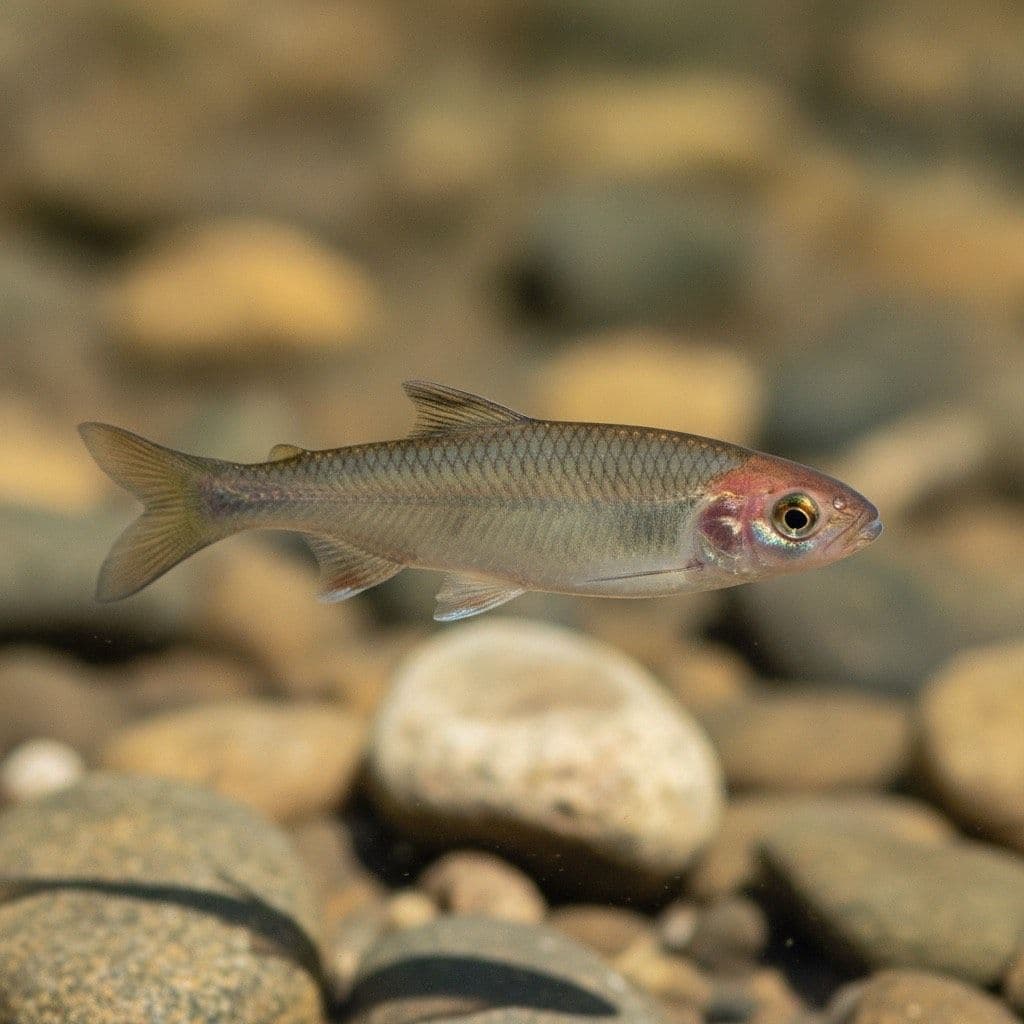
Rosyface Shiner
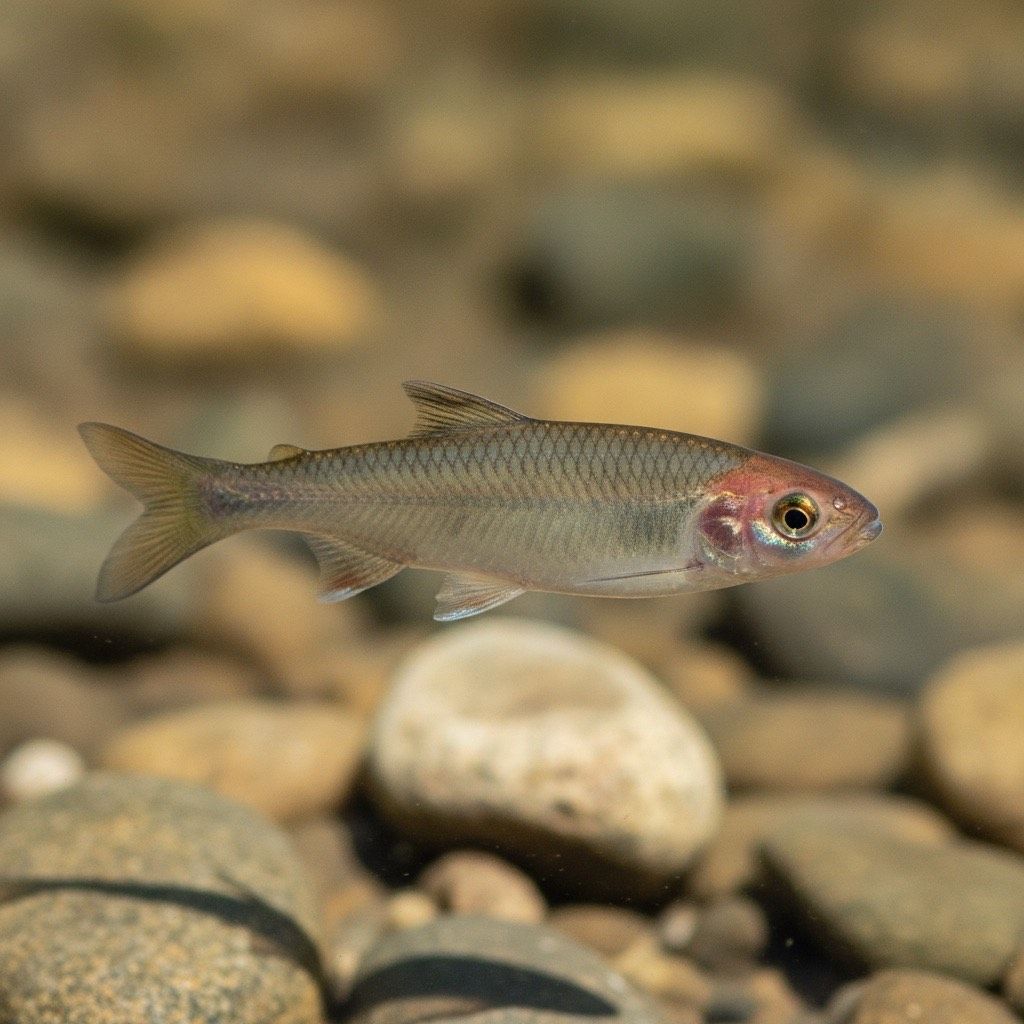
The Rosyface Shiner (Notropis rubellus) is a slender, silvery minnow from eastern North America. For most of the year it is a plain, streamlined fish with an iridescent stripe along the side. In spring, breeding males flush a rosy red across the head and the front of the body, which gives the species its name.
It usually reaches 6-7 cm, with a recorded maximum of 11 cm total length. Its streamlined build tells you how it lives: it is a strong swimmer made for moving water.
Natural Habitat & Origin
Rosyface Shiners are widespread in Atlantic drainages from the St. Lawrence in Quebec to Virginia, and in the Great Lakes, Hudson Bay and Mississippi basins from Quebec and Manitoba south to North Carolina, Alabama, Arkansas and Oklahoma. They live in rocky runs and flowing pools of small to medium rivers, and are common in clear upland streams with a fast current. FishBase gives a natural temperature range of 5-24°C.
Care Requirements
Keep Rosyface Shiners cool, clean and well oxygenated, at 10-22°C. Because they are active open-water swimmers kept in groups, length matters: a tank at least 90 cm long, about 110 litres, suits a school. A current along the length of the tank, from a powerhead or strong filter, keeps them in condition and shows off their schooling.
Use a gravel or cobble substrate, a few rocks, and leave open swimming space in the middle. A lid is advisable, as shiners can jump when startled. Take wild fish only where collection is legal, and never release aquarium fish.
Diet & Feeding
This is a short-lived fish, with a recorded maximum age of about three years, that feeds on small invertebrates. In the aquarium it takes flake and small pellets readily, which makes it easier to keep than darters. Supplement with frozen and live foods such as daphnia, brine shrimp and bloodworm for colour and condition.
Behavior & Temperament
Rosyface Shiners are peaceful schooling fish. Keep them in a group of at least six to eight, and preferably more; a larger school is calmer and shows more natural behaviour. They swim in the mid and upper water in the current and rarely bother other fish.
Tank Mates
Good companions are other cool-water North American natives:
Avoid large predatory fish that would eat them.
Breeding
In the wild Rosyface Shiners spawn in spring over clean gravel, often over the nests of other minnows, scattering their eggs without guarding them. Spawning in the aquarium is uncommon but most likely after a cool winter and a gradual spring warm-up in a tank with gravel and good flow.
Sexing
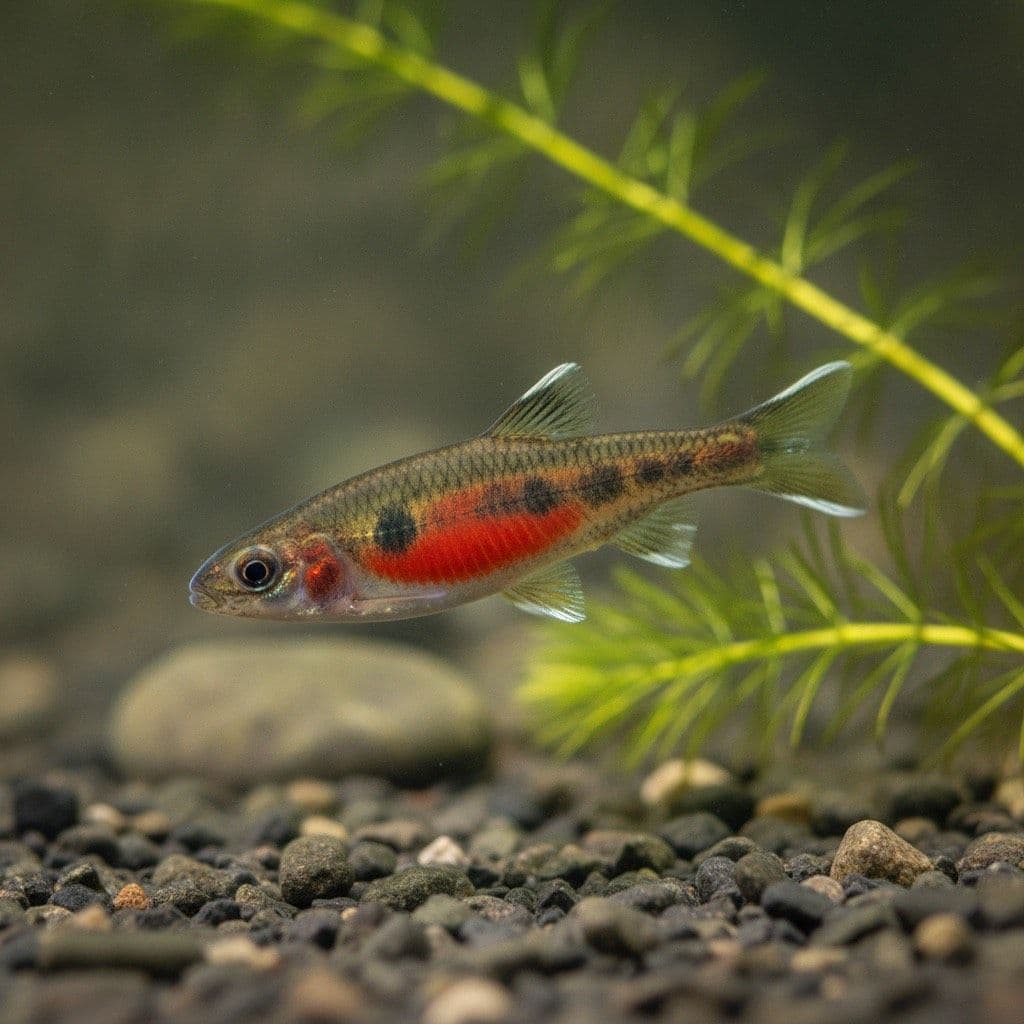
For most of the year males and females are hard to tell apart. In the spring breeding season, males develop the rosy red head and front body that give the species its name, along with tiny white breeding tubercles on the head. Females stay silver and become noticeably fuller-bodied as they fill with eggs.
Seasons and Temperature
Rosyface Shiners live in upland streams that stay cool even in summer. They cope with a wider range than darters, up to the low twenties, but warm water in a tank also means less oxygen, and fast swimmers like these feel it first. A winter drop to 10-12°C followed by a slow spring warm-up is what brings males into their rose-red breeding colour.
Common Health Issues
Rosyface Shiners are sensitive to warm, low-oxygen water, so heat is the main danger. Keep the tank cool and well aerated, change water regularly, and quarantine new fish, especially wild-caught ones, which can carry parasites.