Bleak: Alburnus alburnus
A bright silver, surface-shoaling fish of European rivers and lakes that needs a long, cool tank. Native across central and northern Europe, invasive in Iberia and Italy.
Also known as: common bleak · Alburnus alburnus

Bleak
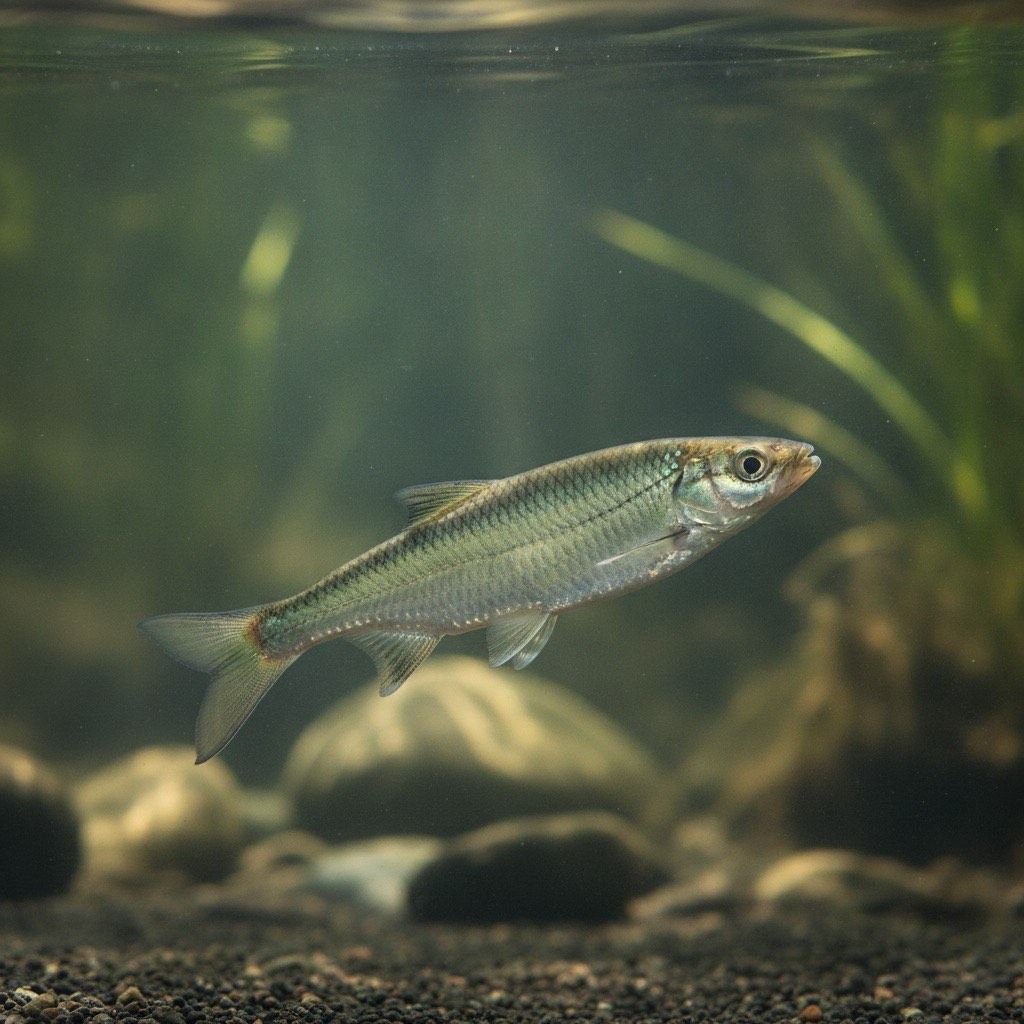
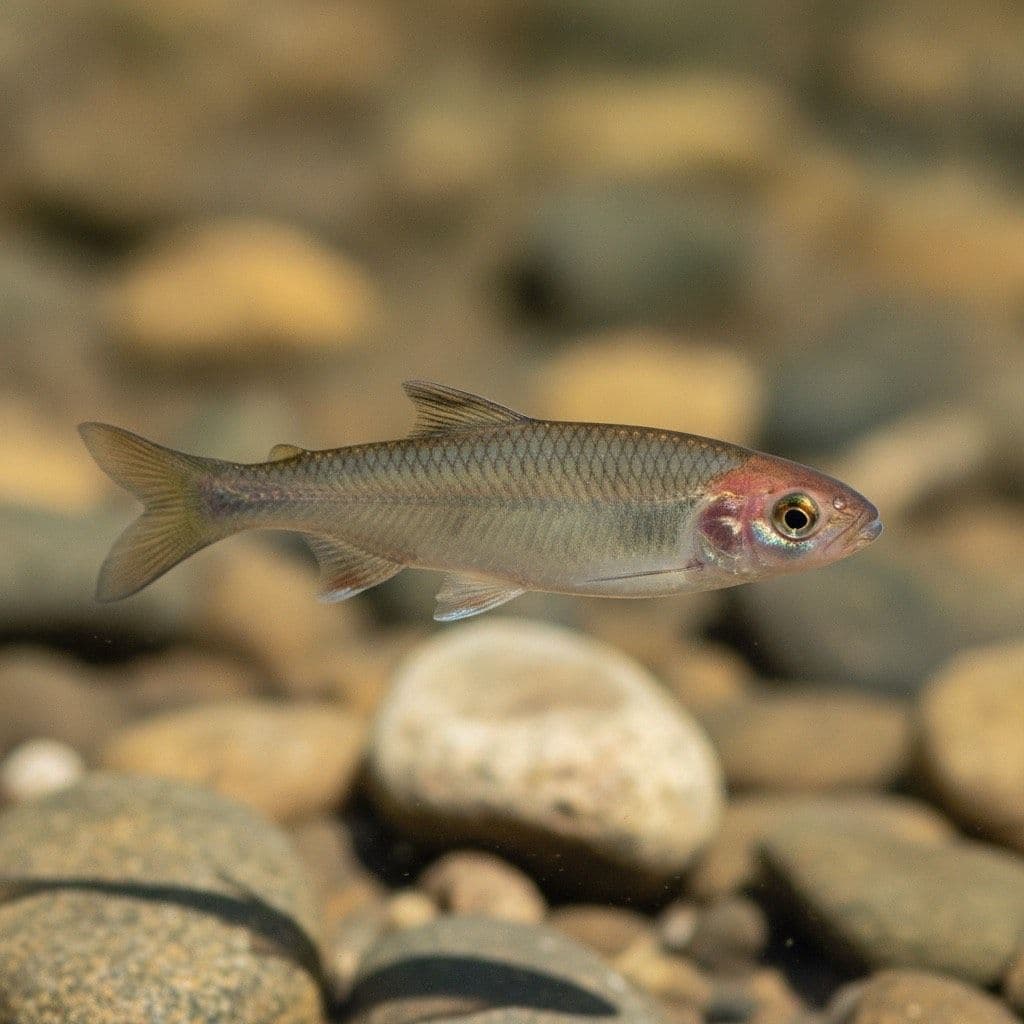
The Bleak (Alburnus alburnus) is a slim, bright-silver fish with a green-blue back and an upturned mouth, built for feeding at the surface. Its scales are so reflective that they were once collected to make the "pearl essence" used to coat artificial pearls.
FishBase gives a common length of about 15 cm total length, and most fish are 12-15 cm. Few aquarists keep Bleak, but a shoal in a long tank makes a striking display, flickering silver just below the surface.
Natural Habitat & Origin
The Bleak is native to most of Europe north of the Caucasus, the Pyrenees and the Alps, east to the Ural and Emba rivers. It is naturally absent from the Iberian Peninsula, Italy, the Adriatic and Aegean basins, Ireland, Norway, northern Scandinavia and most of Great Britain; in England it occurs mainly in the south and east.
It has been introduced to Spain, Portugal and Italy, where it is invasive and harms native fish, including through hybridisation. It lives in open water in rivers and lakes, where adults travel in shoals near the surface and gather in large groups in winter.
Care Requirements
Bleak are fast, active shoaling fish and need a long tank: at least 150 cm long, around 300 litres, for a shoal. Keep them cool, at 10-20°C, with neutral to slightly alkaline, moderately hard water and good oxygenation.
Leave plenty of open swimming space in the upper water, with plants and rocks around the edges. A tight lid is essential, as Bleak jump readily. A moderate current is welcome.
Collection of wild fish is regulated in most countries. Never release Bleak outside their native range, where they are an invasive species.
Diet & Feeding
In the wild Bleak feed mainly on plankton, small crustaceans and insects taken at or near the surface. In captivity they take flake and floating foods readily, and should also be offered daphnia, brine shrimp, bloodworm and small flying insects such as fruit flies.
Behavior & Temperament
Bleak are peaceful and should always be kept in a shoal of ten or more. Kept in small numbers they are nervous and prone to jumping. They occupy the upper water, which leaves the lower levels free for bottom fish.
Tank Mates
Other cold-water species that prefer the middle and bottom of the tank:
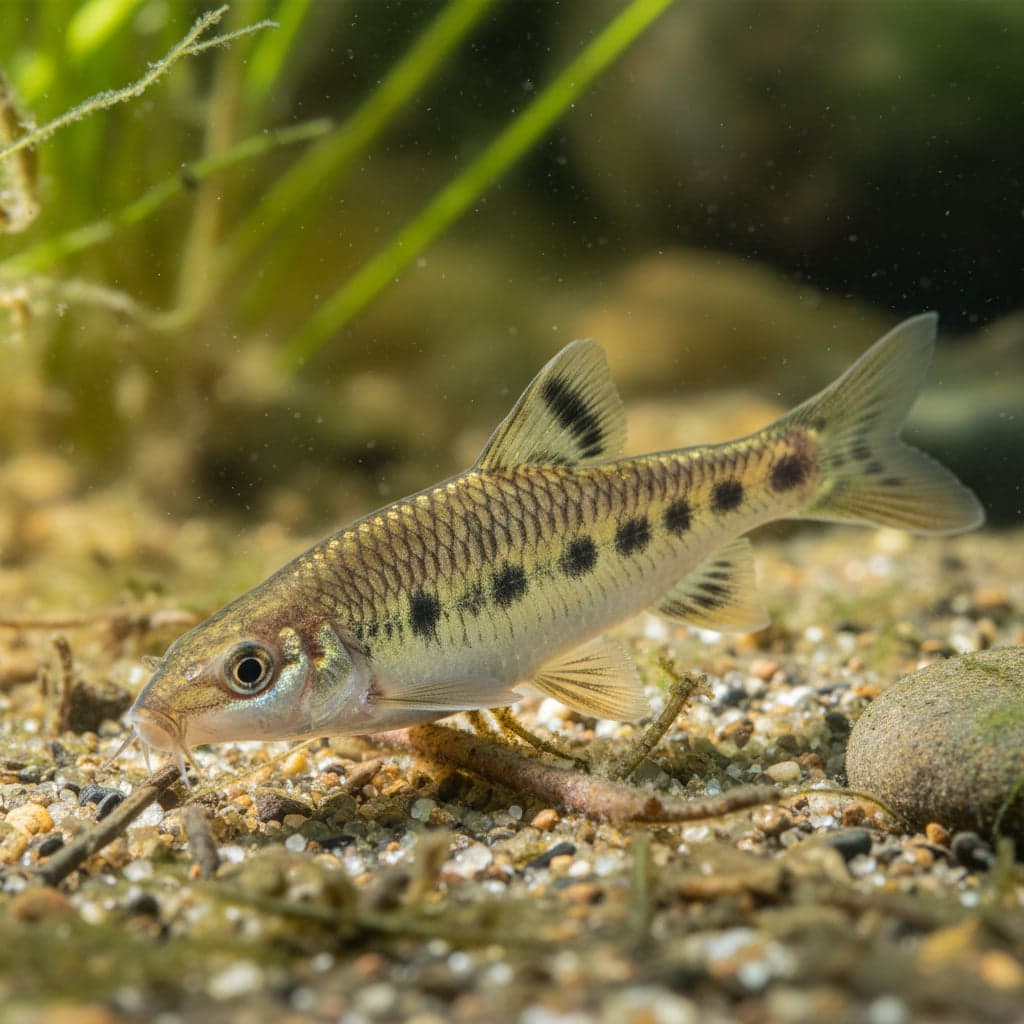
- Gudgeon
- European Minnow
- Tench, in a large tank
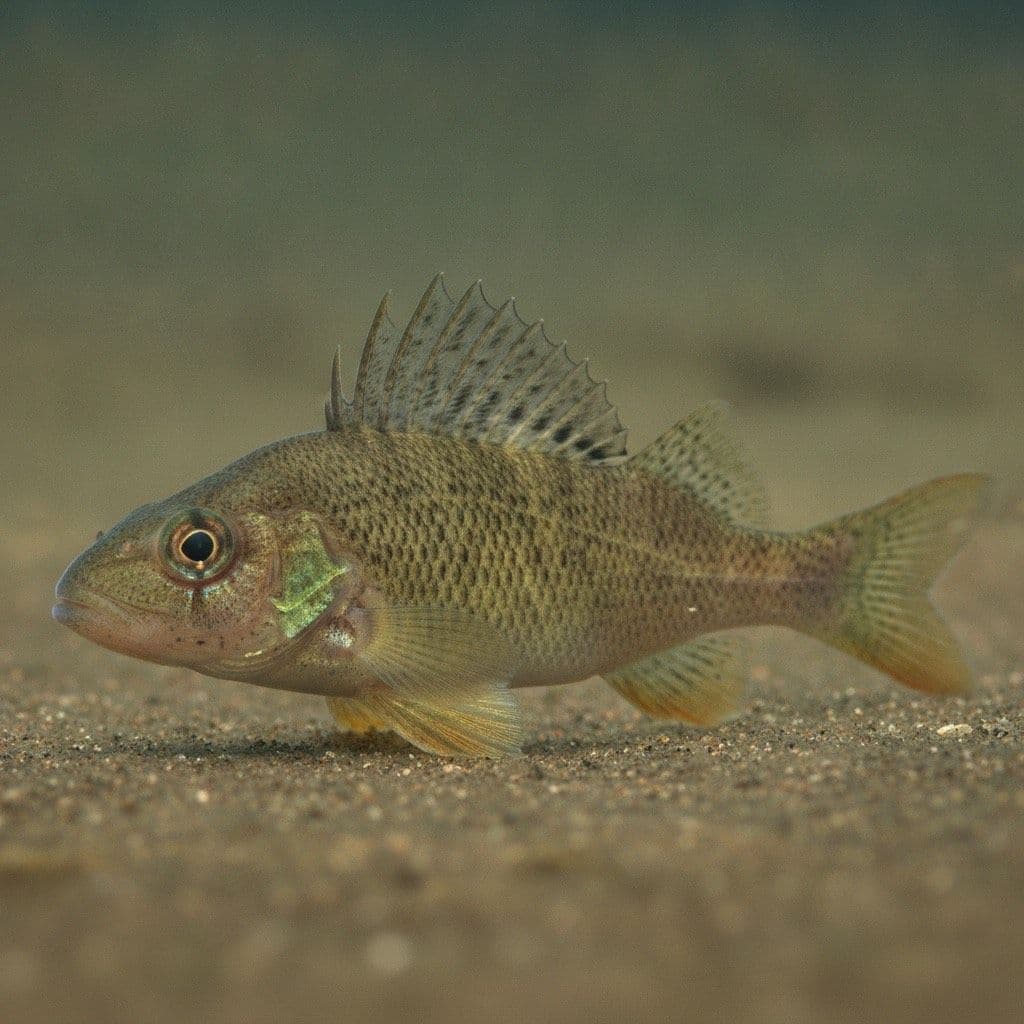
Avoid predatory fish such as perch and pike.
Breeding
Bleak spawn in late spring and early summer in shallow riffles or along stony shores, scattering sticky eggs with no parental care. Breeding in aquaria is rare; ponds and very large tanks with a cold winter give the best chance.
Seasons and Temperature
Bleak live near the surface, which in a tank is also the warmest water, so summer heat hits them first. In the wild they gather in large, quiet winter shoals in deeper water once temperatures fall; in the aquarium, letting the room cool to around 8-12°C in winter and keeping summer peaks below 20°C with extra aeration mirrors that cycle and keeps them lively. A long tank away from windows and radiators is the single most useful choice.
Common Health Issues
Bleak are sensitive to warm, poorly oxygenated water and to rough handling, which damages their delicate scales. Keep the water cool and clean, net them carefully, and quarantine new fish.