Rainbow Darter: Etheostoma caeruleum
A small North American stream fish whose males turn electric blue and orange in spring; a rewarding choice for a cool, fast-flowing native-species tank.
Also known as: Etheostoma caeruleum
Rainbow Darter
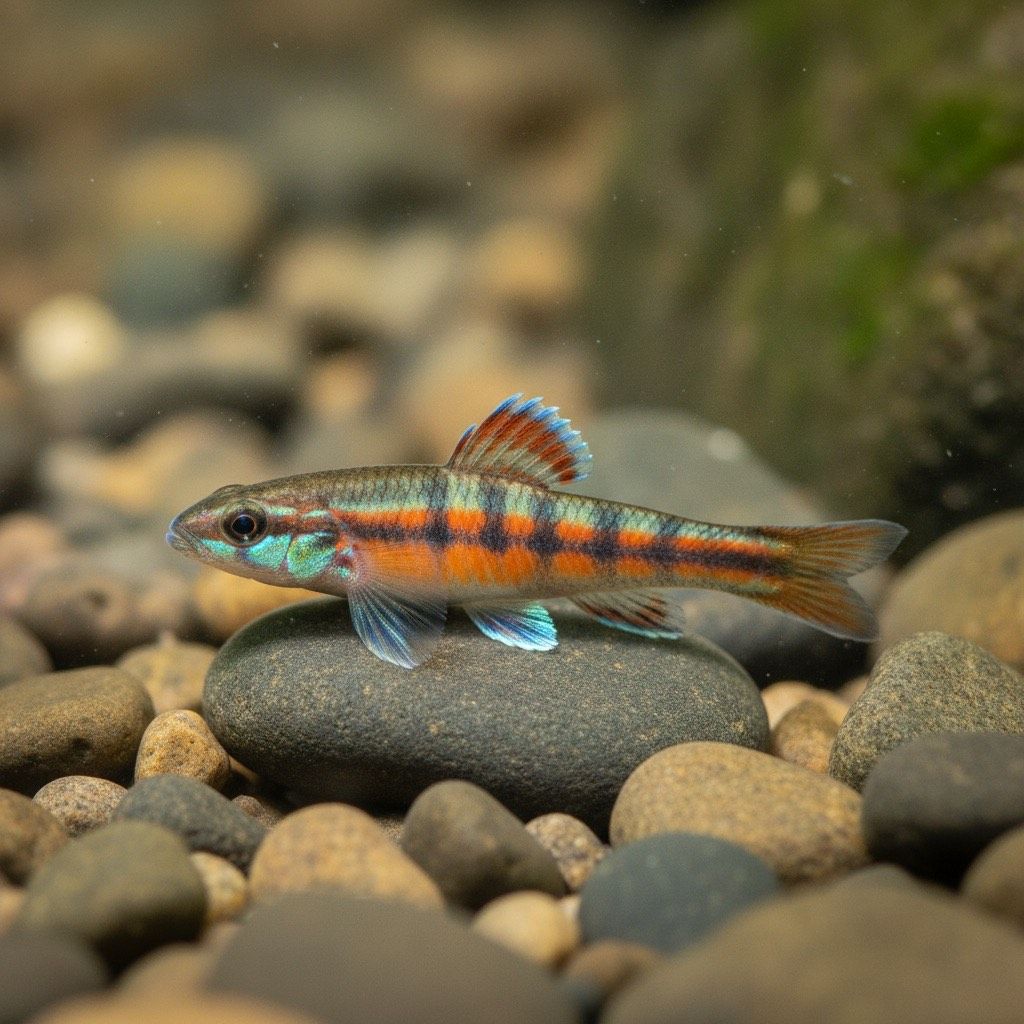
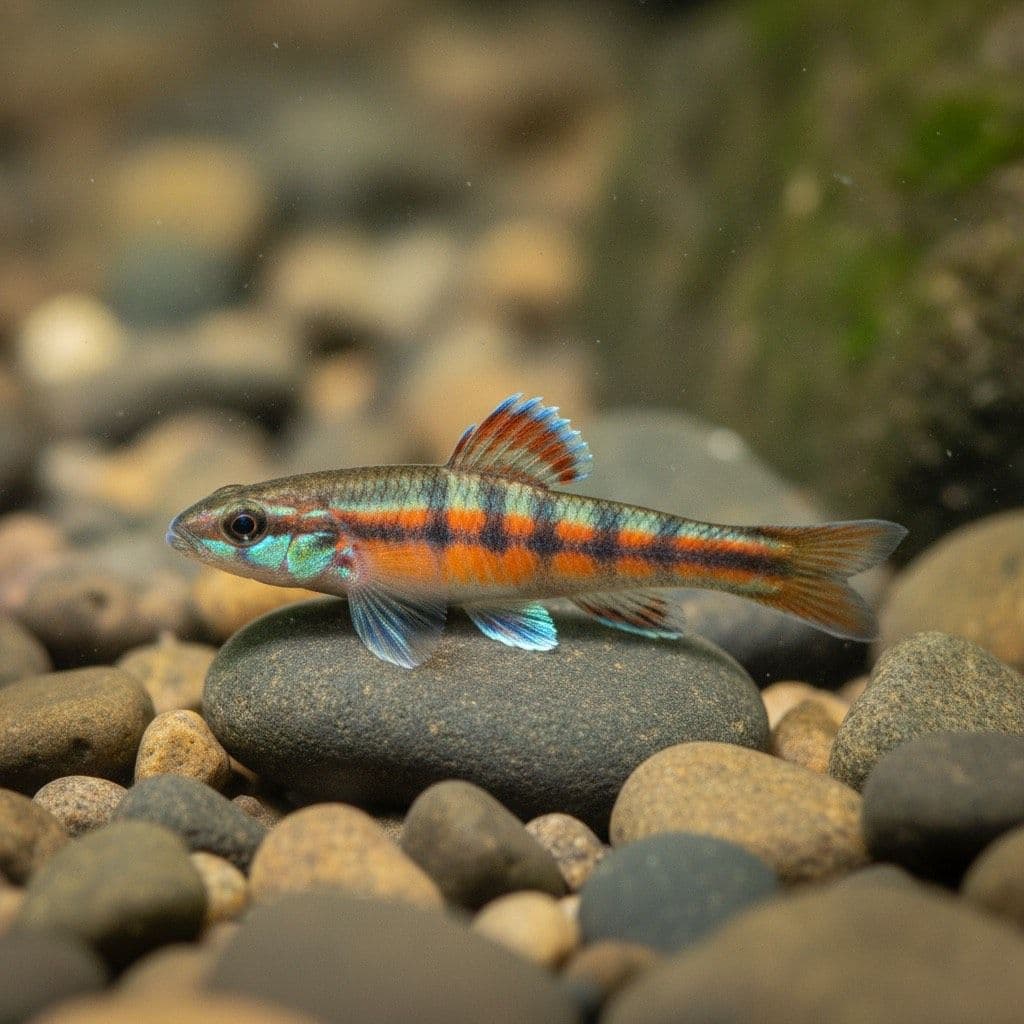
The Rainbow Darter (Etheostoma caeruleum) is a small perch relative from the streams of eastern North America, and one of the most colourful freshwater fish on the continent. In the spring breeding season, males develop bright blue-green bars on the flanks separated by vivid orange, with blue and orange bands through the fins. Females and non-breeding males are olive-brown with dark mottling.
It usually reaches about 5 cm, with a recorded maximum of 7.7 cm total length. Like all darters it has no swim bladder to speak of: it rests propped on its pelvic fins on the stream bed and moves in short, quick darts, which is where the family gets its name.
Natural Habitat & Origin
Rainbow Darters are widespread in the Great Lakes and Mississippi River basins, from southern Ontario south to northern Alabama and Arkansas, with isolated populations further south and in the upper Potomac drainage. They live in fast-flowing gravel and rubble riffles of creeks and small to medium rivers, where the water is cool, clear and rich in oxygen.
Care Requirements
This is a cold-water fish. FishBase gives a natural range of 4-18°C; in the aquarium, aim to keep it at 10-20°C and avoid summer temperatures above about 22°C, which may mean a cool room or a chiller. Neutral to slightly alkaline, moderately hard water suits it.
Oxygen and flow matter more than tank size. A tank with a 60 × 30 cm base, around 75 litres, suits a small group, set up as a stream: a bed of rounded gravel and cobbles, a few flat stones, and a powerhead or strong filter return driving water along the length of the tank. Keep the water very clean, as stream fish tolerate pollution poorly.
Collection laws for native fish differ from state to state and province to province, and some darters are protected. Only take fish where it is legal, and never release aquarium fish into the wild.
Diet & Feeding
In the wild Rainbow Darters eat midge larvae, caddisfly larvae, mayfly nymphs and fish eggs picked from among the stones. In the aquarium they rarely accept flake or pellets. Feed live or frozen foods: bloodworm, blackworm, brine shrimp, mysis and daphnia, dropped where the fish can find them on the bottom.
Behavior & Temperament
Darters are peaceful towards other species. Males are territorial with each other, especially in breeding colour, but give each other space in a tank with enough stones to break up the floor. They spend their time perched on rocks watching for food, which makes them far more engaging than their size suggests.
Tank Mates
Choose other cool-water stream fish that will not outcompete darters for bottom food:
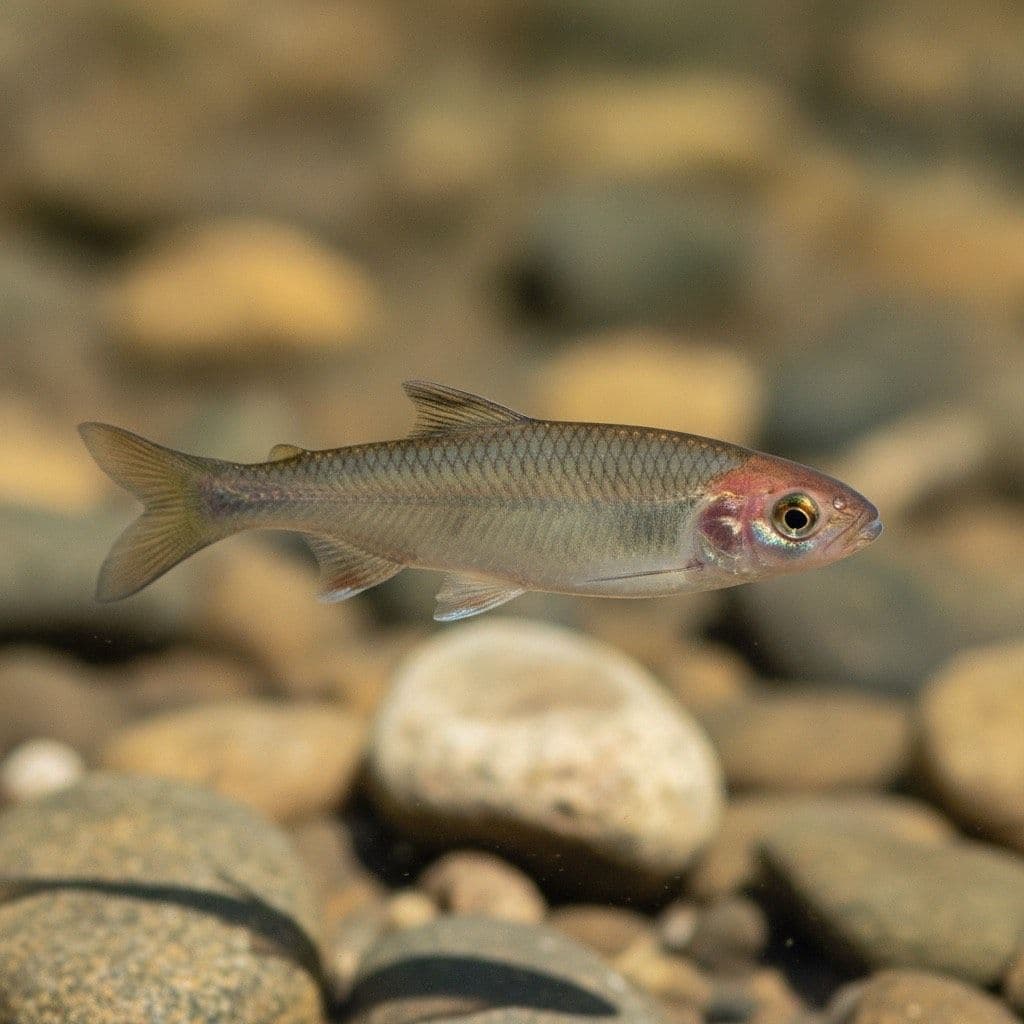
- Rosyface Shiner
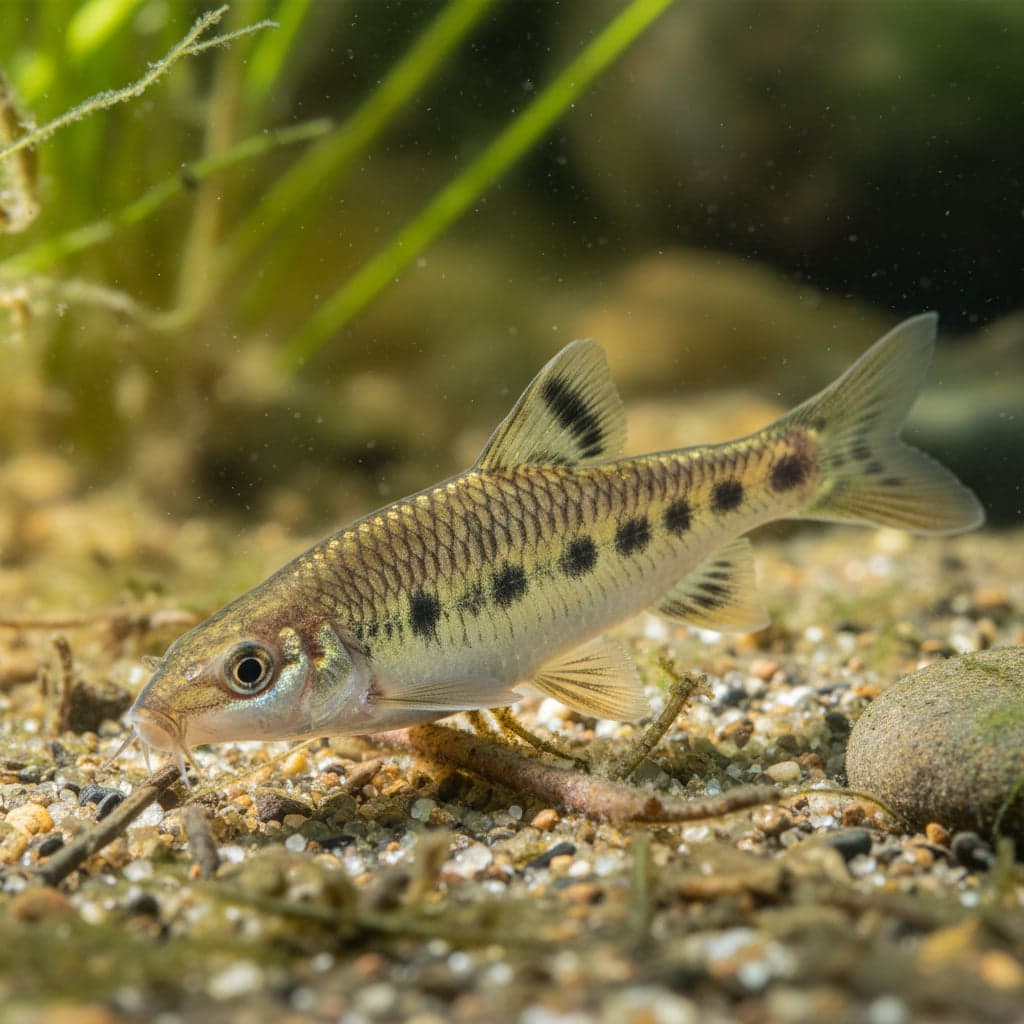
- Rosy Minnow
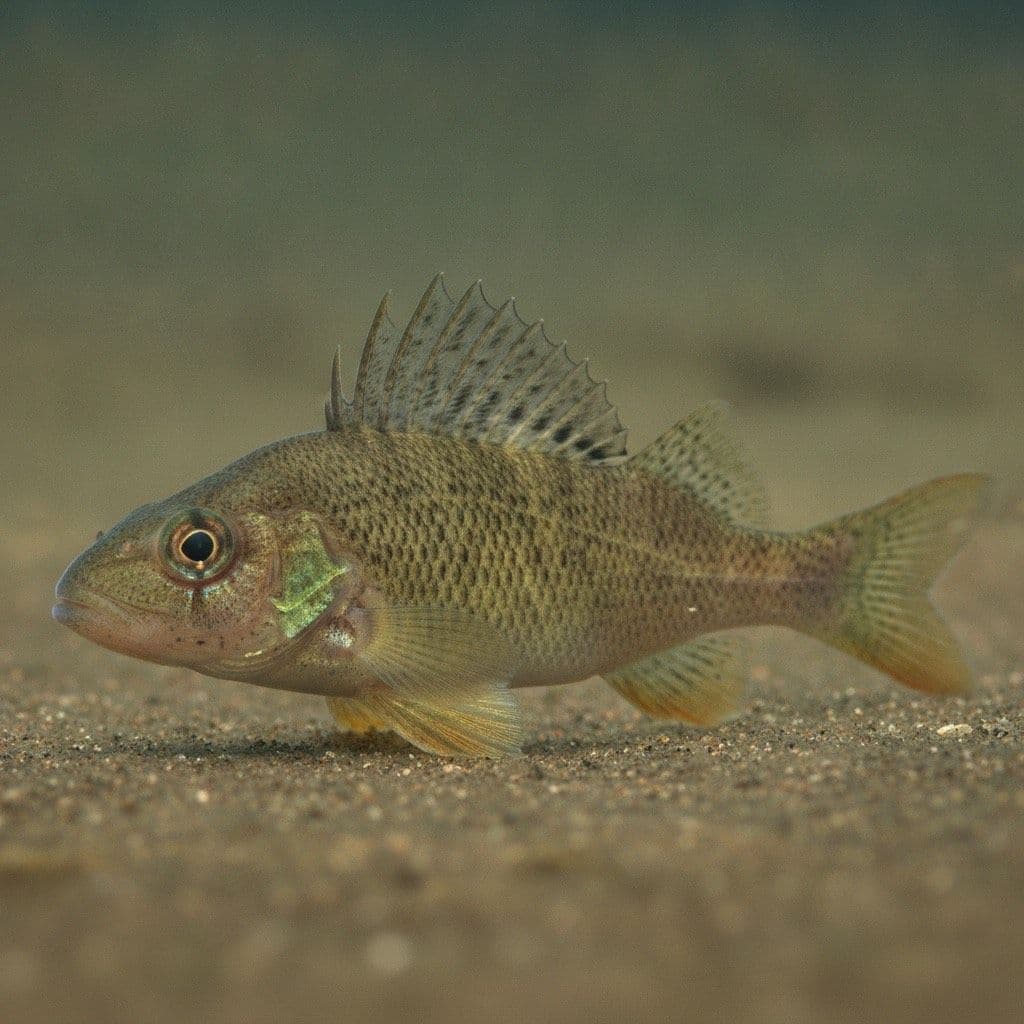
- Other small darters
Avoid large or predatory fish, and fast surface feeders that clear all the food before it reaches the bottom.
Breeding
Rainbow Darters spawn in spring on gravel riffles. A male follows a female until she dives into the gravel, partly burying herself, and the pair spawn together; the eggs are left in the gravel with no parental care. In the aquarium, breeding is most likely after a cool winter period followed by a gradual rise in temperature and day length.
Seasons and Temperature
Rainbow Darters are fish of cold riffles, and their colour is seasonal. Males fade to olive-brown through summer and autumn and only develop the full blue and orange after a cool winter. An unheated tank in a cool room that drops to around 10°C in winter, then warms slowly with the room in spring, gives them that cycle. In summer, heat is the risk: above about 22°C oxygen falls just as their need rises, so add an air stone and keep the tank out of sunlight.
Common Health Issues
Most losses come from warm or poorly oxygenated water, or from starvation when fish are offered only dry food. Keep the tank cool, the flow strong and the water clean, and feed live or frozen foods every day.