Greenside Darter: Etheostoma blennioides
One of the largest darters, a bright green, blenny-faced riffle fish from eastern North America that suits a cool, fast-flowing native tank.
Also known as: Etheostoma blennioides

Greenside Darter
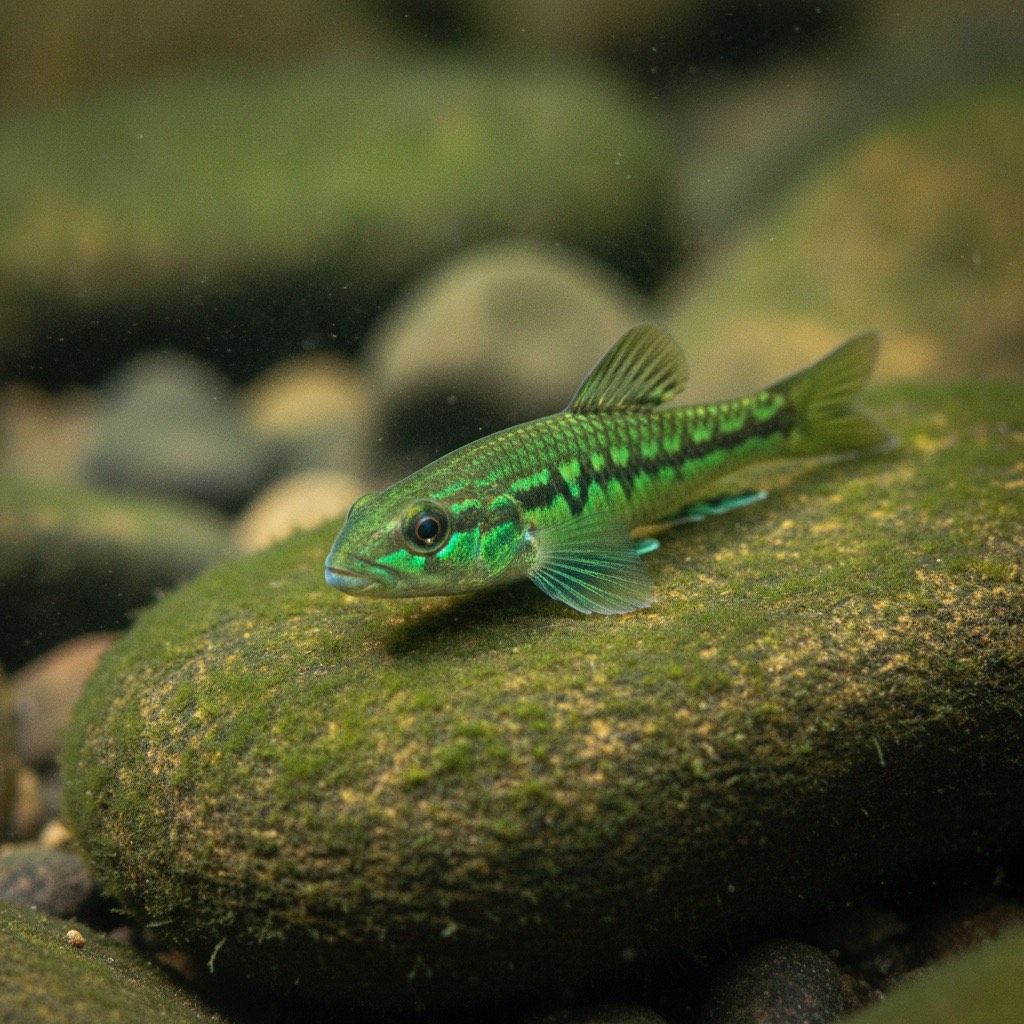
The Greenside Darter (Etheostoma blennioides) is one of the largest darters. Its species name means "blenny-like", after its blunt, rounded snout and big eyes set high on the head. Breeding males are a rich emerald green, with W- or U-shaped green bars along the flanks and green fins; females and young are yellow-olive with brown markings.
Most adults are 7-10 cm long. FishBase gives a common length of 5.5 cm and a maximum of 17 cm, though fish of that size are exceptional.
Natural Habitat & Origin
The species is found across the Great Lakes and Mississippi River basins, from New York and Maryland west to Kansas and Oklahoma, and from Ontario south to Georgia, Alabama and Arkansas. It lives on rocky riffles of creeks and small to medium rivers, often where boulders are coated in algae and aquatic moss.
Care Requirements
Like other darters it is a cold-water fish. FishBase records a natural range of 4-18°C; keep it at 10-20°C in the aquarium and guard against summer heat. Neutral to slightly alkaline, moderately hard water suits it.
Because of its larger size, allow a tank with at least a 75 × 35 cm base, about 110 litres, for a small group. Set it up as a stream, with rounded cobbles, flat stones and some larger rocks, and a strong current running the length of the tank. Rocks with a growth of algae or moss give it foraging surfaces and spawning sites. Oxygen levels must stay high.
Collection of native fish is regulated differently from place to place, and some darter populations are protected. Only take fish where it is legal, and never release aquarium fish.
Diet & Feeding
Young Greenside Darters eat midge larvae and tiny crustaceans; adults take midge and blackfly larvae and other aquatic insects, especially mayflies and caddisflies. In captivity, feed live and frozen foods such as bloodworm, blackworm, mysis and brine shrimp. Dry foods are usually ignored.
Behavior & Temperament
It is peaceful with other species. Males hold small territories around favoured rocks and spar with one another, but rarely cause harm in a tank with enough cover. The Greenside Darter perches openly on stones and is less secretive than many smaller darters.
Tank Mates
Other cool-water stream species of similar size work well:
Avoid large predators and fish that monopolise food.
Breeding
Greenside Darters spawn in spring. The female attaches her eggs to algae or aquatic moss on rocks in the current, and the eggs are left without parental care. Recreating a cool winter followed by a slow spring warm-up is the best way to trigger spawning in captivity.
Sexing
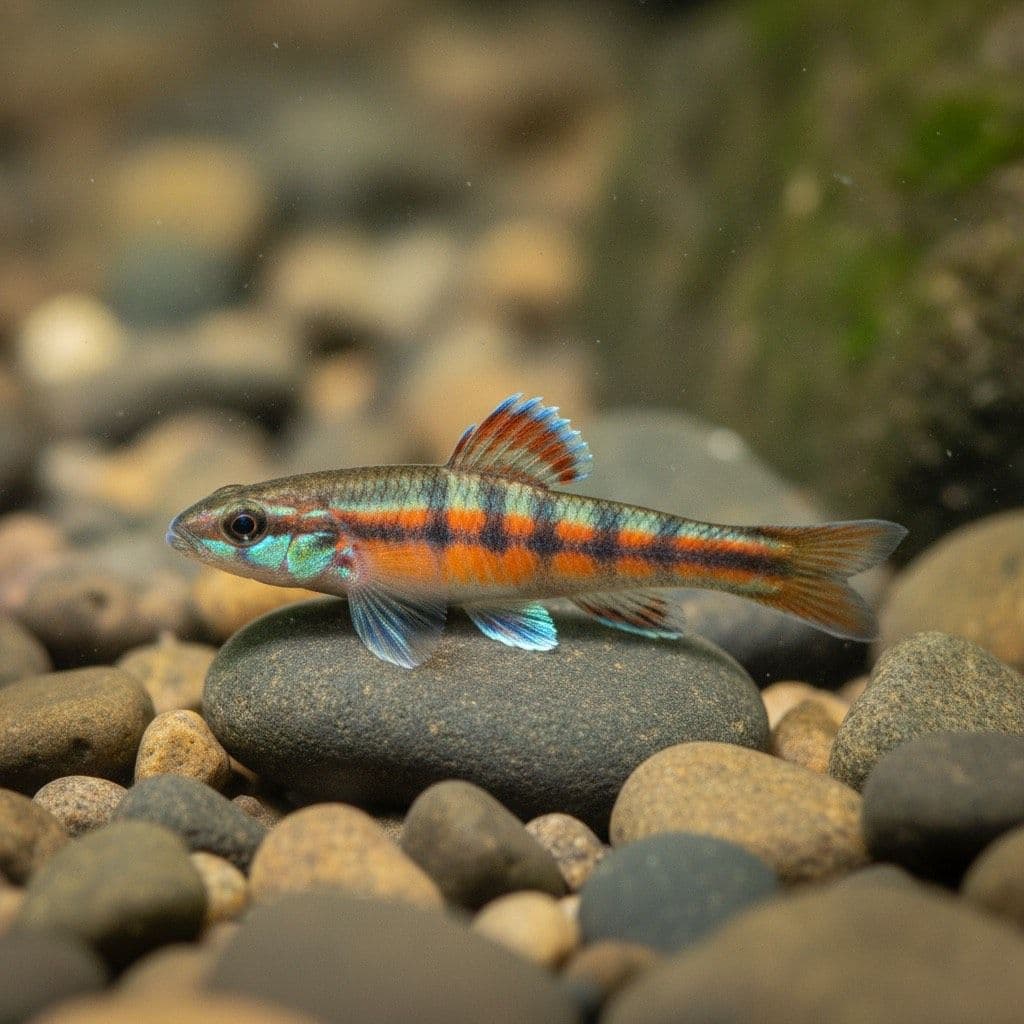
Outside the breeding season the sexes look much alike, although males are usually larger. In spring the difference is clear: males turn a deep, even green with bold green bars and green fins, while females stay yellow-olive with brown blotches and look rounder in the belly when carrying eggs. Buying a small group is the easiest way to end up with both sexes.
Seasons and Temperature
Greenside Darters live in fast riffles where the water stays cool and saturated with oxygen. In the tank, the two go together: every degree of summer warming lowers oxygen just as a darter's needs rise. Keep them below about 20°C, run extra flow or an air stone in hot weather, and let the tank cool in winter; the spring warm-up that follows is what triggers males to colour up and spawn.
Common Health Issues
Warm, poorly oxygenated water and a diet of dry food cause most problems. Keep the tank cool and fast-flowing, change water regularly, and feed live or frozen foods daily.