Pumpkinseed: Lepomis gibbosus
A brilliantly patterned North American sunfish for large native tanks and ponds. Banned from keeping and sale in the EU as an invasive species.
Also known as: pumpkinseed sunfish · Lepomis gibbosus

Pumpkinseed
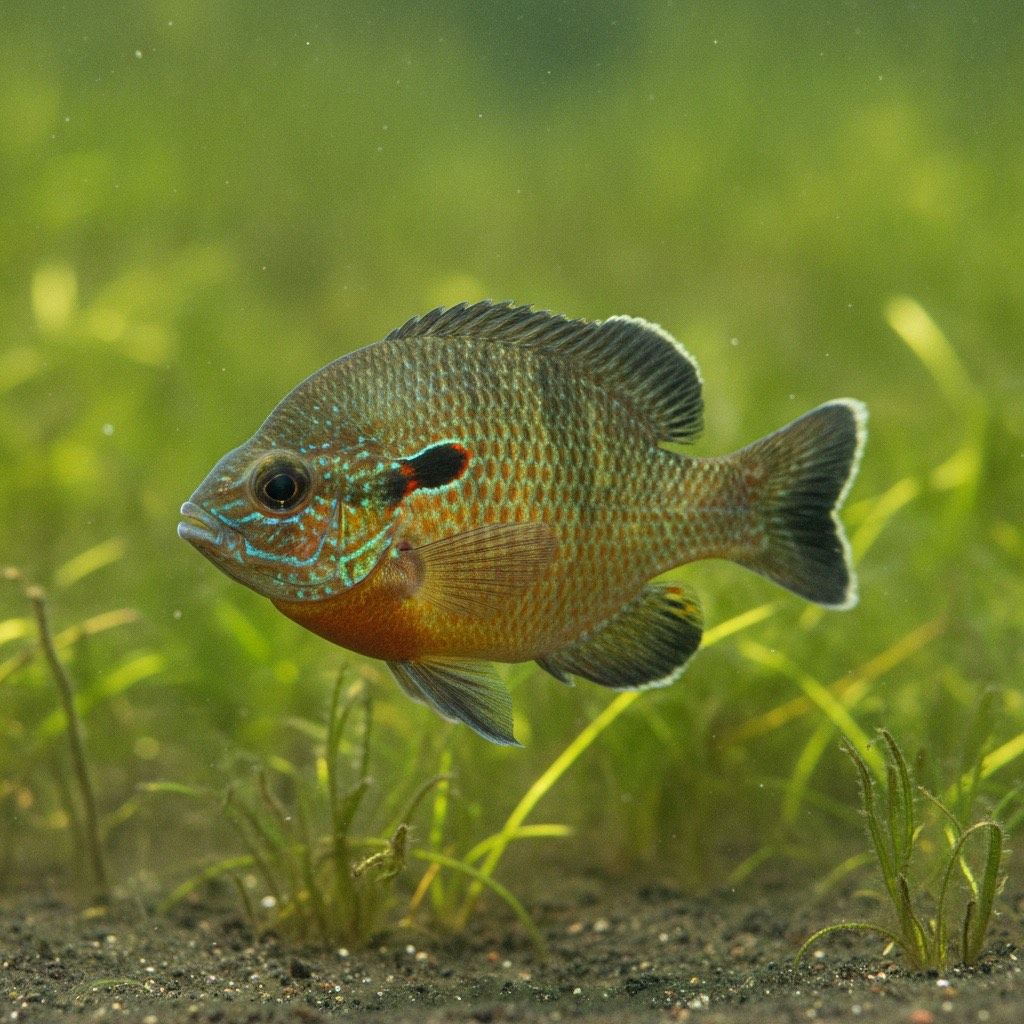
The Pumpkinseed (Lepomis gibbosus) is one of North America's most colourful freshwater fish. Its deep, round body is covered in orange and gold spots over an olive-blue background, with wavy blue lines across the cheeks and a black gill flap tipped with a bright red-orange spot.
Most adults are 10-20 cm long, and exceptional wild fish grow larger. Juveniles are sold at a few centimetres, so plan the tank for the adult.
Legal status in Europe: the Pumpkinseed is on the EU list of invasive alien species of Union concern. Since 2019 it has been illegal to import, keep, breed, sell or release it anywhere in the EU. This profile is for keepers within its native range in North America.
Natural Habitat & Origin
The Pumpkinseed is native to eastern North America, from New Brunswick south to Georgia and west through the Great Lakes and Mississippi basins. It lives in vegetated lakes and ponds and in quiet pools of creeks and small rivers.
It has been introduced to western North America and much of Europe, where it competes with native fish and eats their eggs. That is why it is banned in the EU. Never release a Pumpkinseed, or any aquarium fish, into the wild.
Care Requirements
This is a large, cool-water fish. A single adult needs at least 300 litres, and a larger tank or a pond is better, especially for a pair. It tolerates a wide temperature range; 10-24°C suits it, and it does not need a heater indoors. Neutral to slightly alkaline, moderately hard water is ideal.
Provide plenty of plants, real or artificial, around the edges and some wood or rock for cover, with open space in front. Pumpkinseeds are messy eaters, so strong filtration and regular water changes are essential. In their native range, many keepers house them in garden ponds, where they overwinter under ice.
Diet & Feeding
Pumpkinseeds are carnivores. In the wild they eat insects, snails, small crustaceans, small fish and the eggs of other fish. In captivity, feed a quality carnivore pellet alongside frozen foods such as bloodworm, mysis, krill and chopped prawn. Most individuals learn to take pellets quickly.
Behavior & Temperament
Pumpkinseeds are bold and inquisitive but territorial, especially when breeding. They will eat any fish small enough to fit in their mouths. Keep them singly, as a pair, or with fish of similar size in a large tank or pond.
Tank Mates
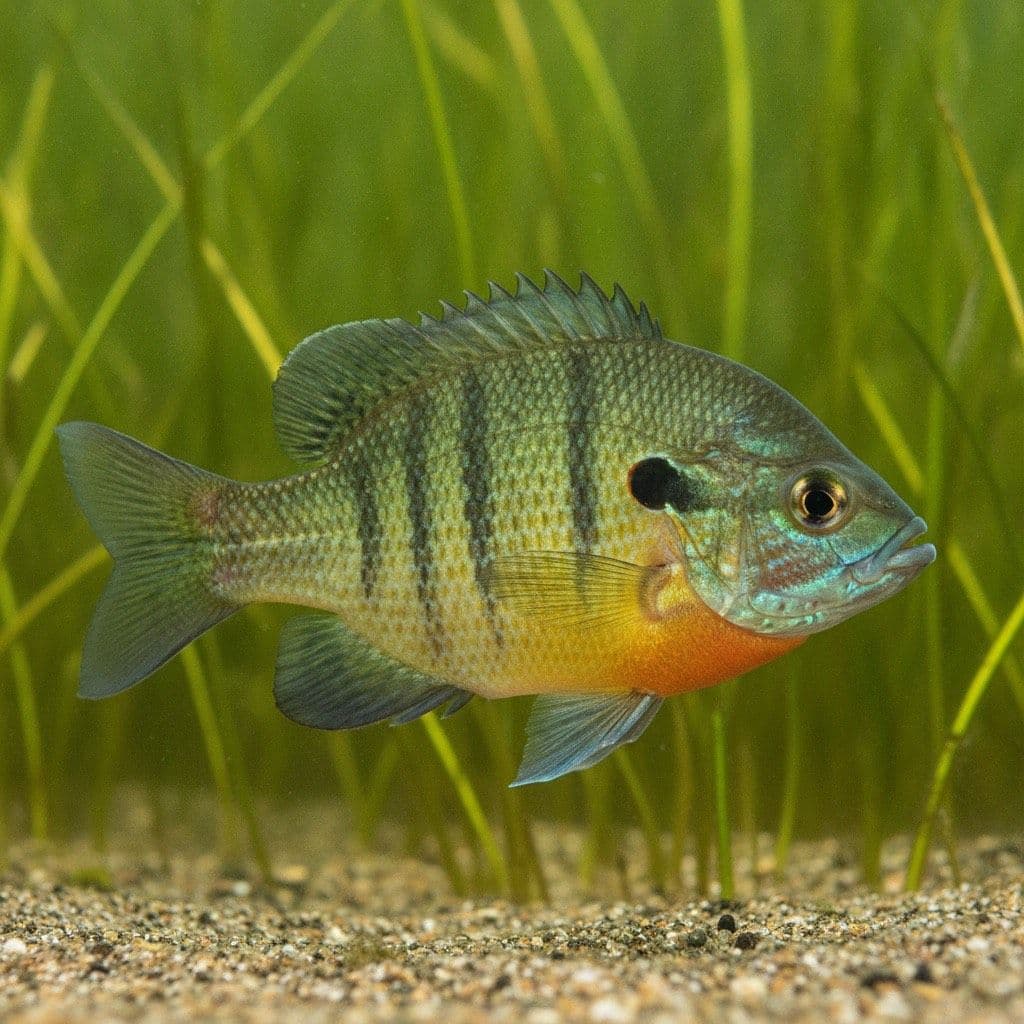
- Bluegill or other sunfish, in a large tank or pond
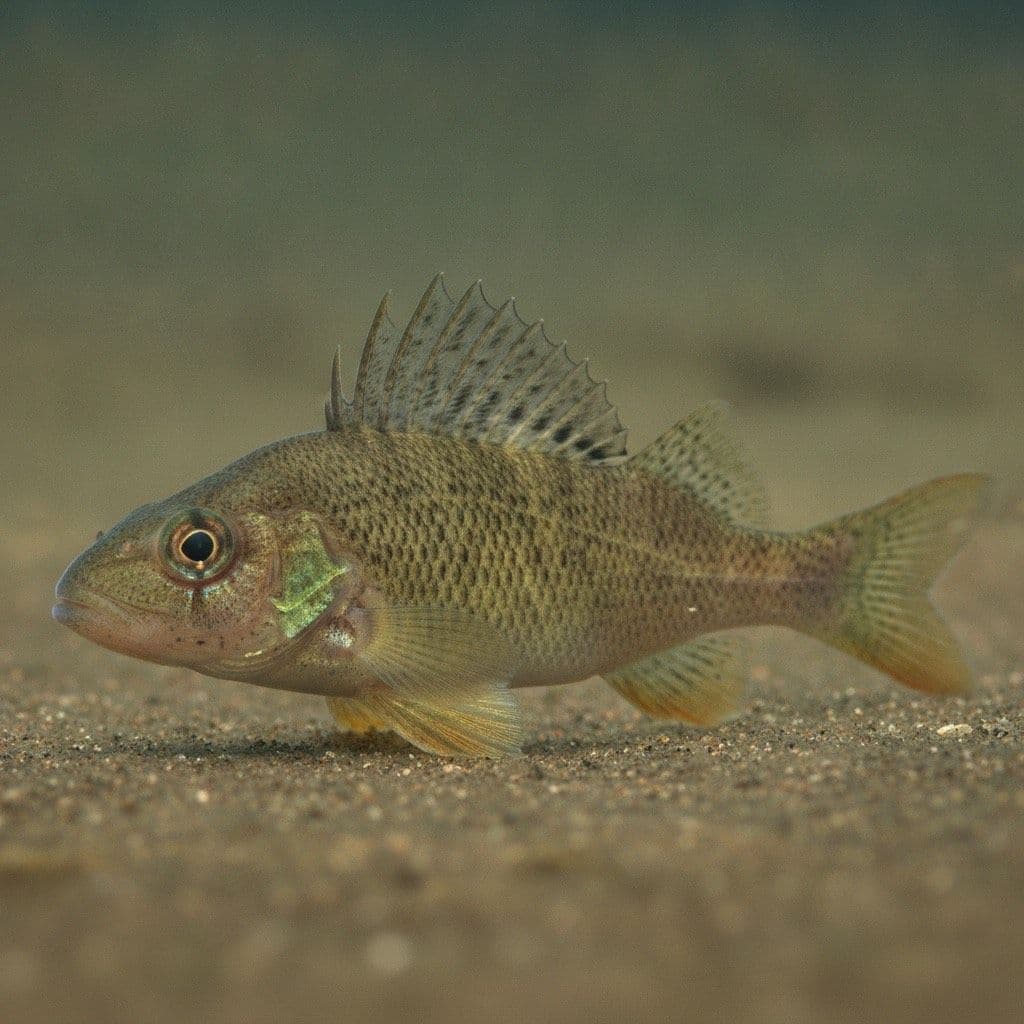
- Robust native fish too large to be eaten
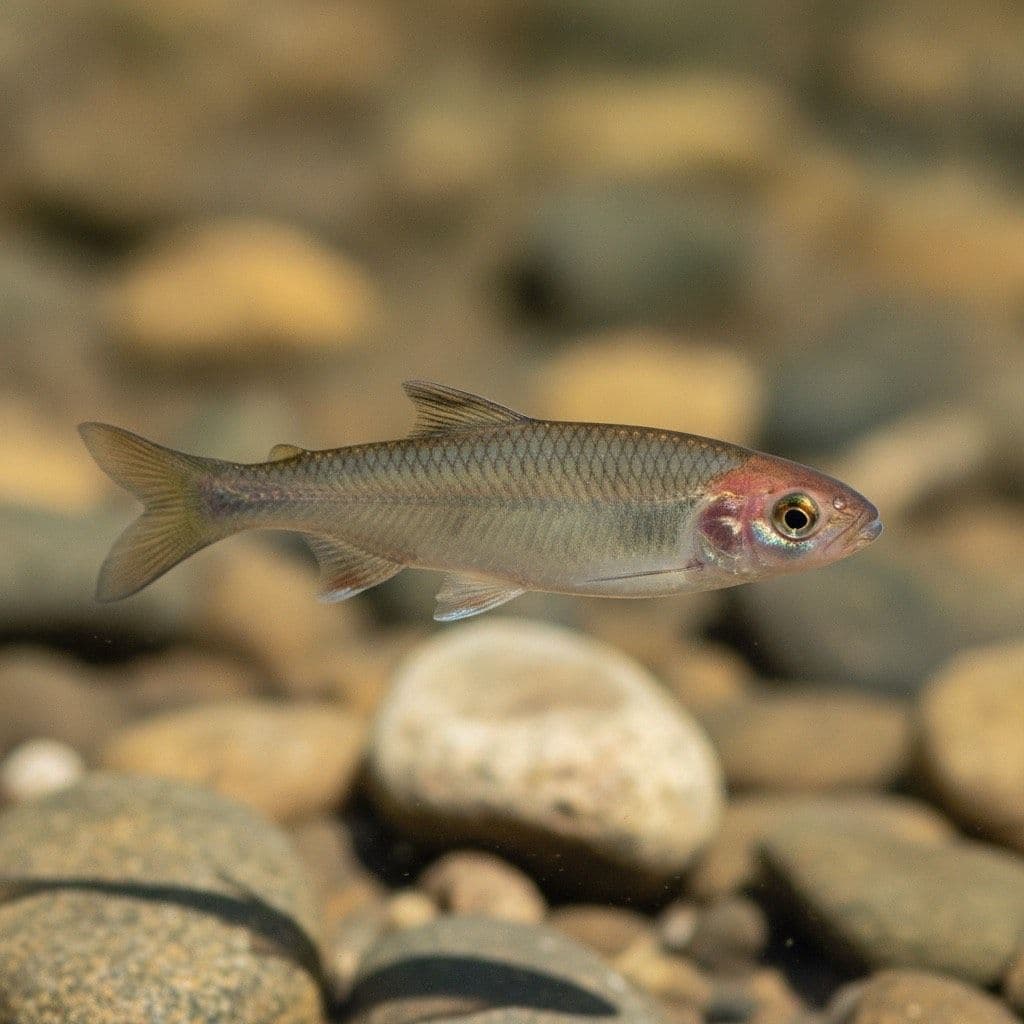
Avoid small fish, shrimp and slow, long-finned species.
Breeding
In spring, males dig shallow, round nests in the substrate in shallow water and court females into them. After spawning, the male guards the eggs for about a week and the young for around 11 days after hatching, chasing off anything that comes near. Breeding is most likely in ponds or large tanks after a cool winter.
Sexing
Males are the more brightly coloured sex, with a stronger orange spotting and a more vivid red-orange spot on the ear flap, and they darken further when guarding a nest. Females are paler and plumper when ready to spawn.
Seasons and Temperature
Pumpkinseeds overwinter under ice in their native ponds and breed as the shallows warm in late spring. An indoor tank without a heater usually gives them enough of a seasonal swing; what matters most is avoiding a long, hot summer in a small tank, where warm water and a large carnivore's waste combine to strip oxygen. Extra aeration in hot weather and a cooler room in winter keep them in the best condition.
Common Health Issues
Pumpkinseeds are hardy. Poor water quality from overfeeding and weak filtration is the main problem, so keep up with water changes. Quarantine wild-caught fish, which often carry parasites such as black spot and yellow grub.