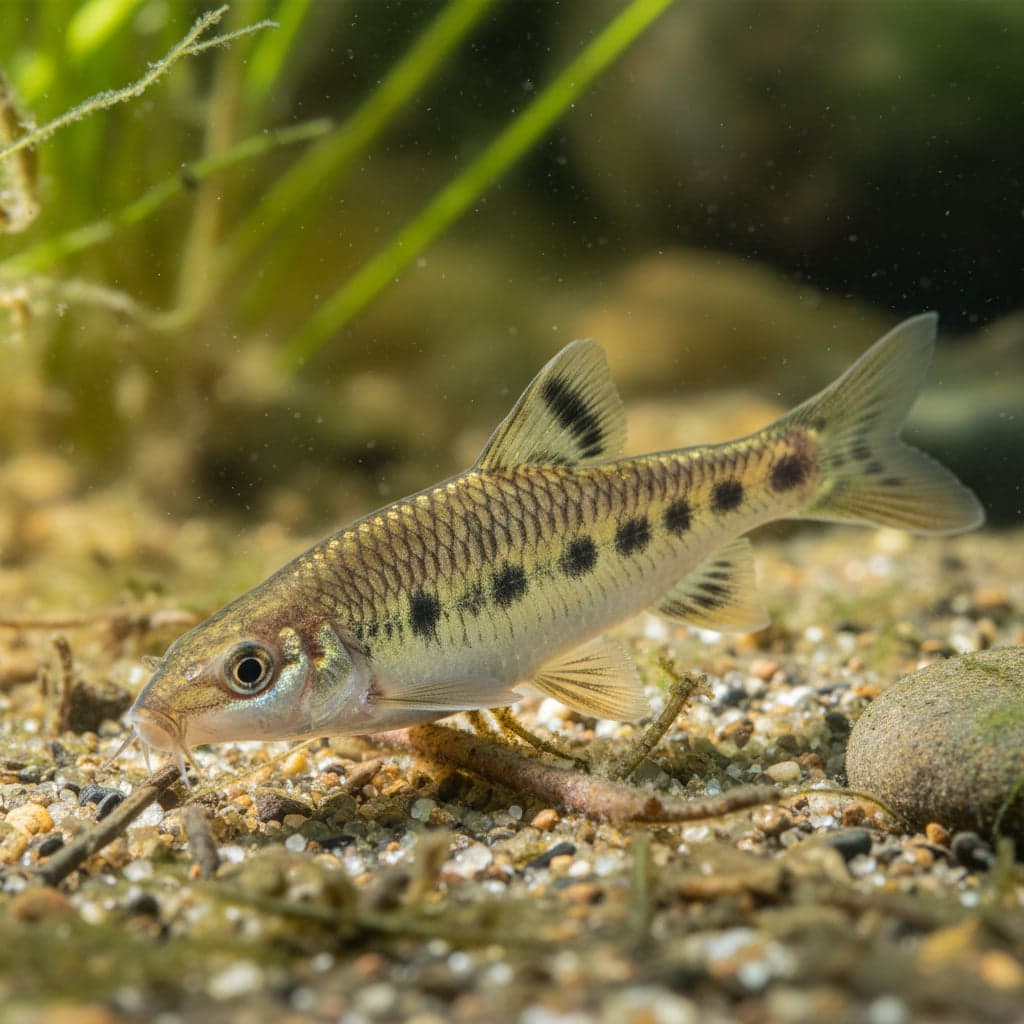
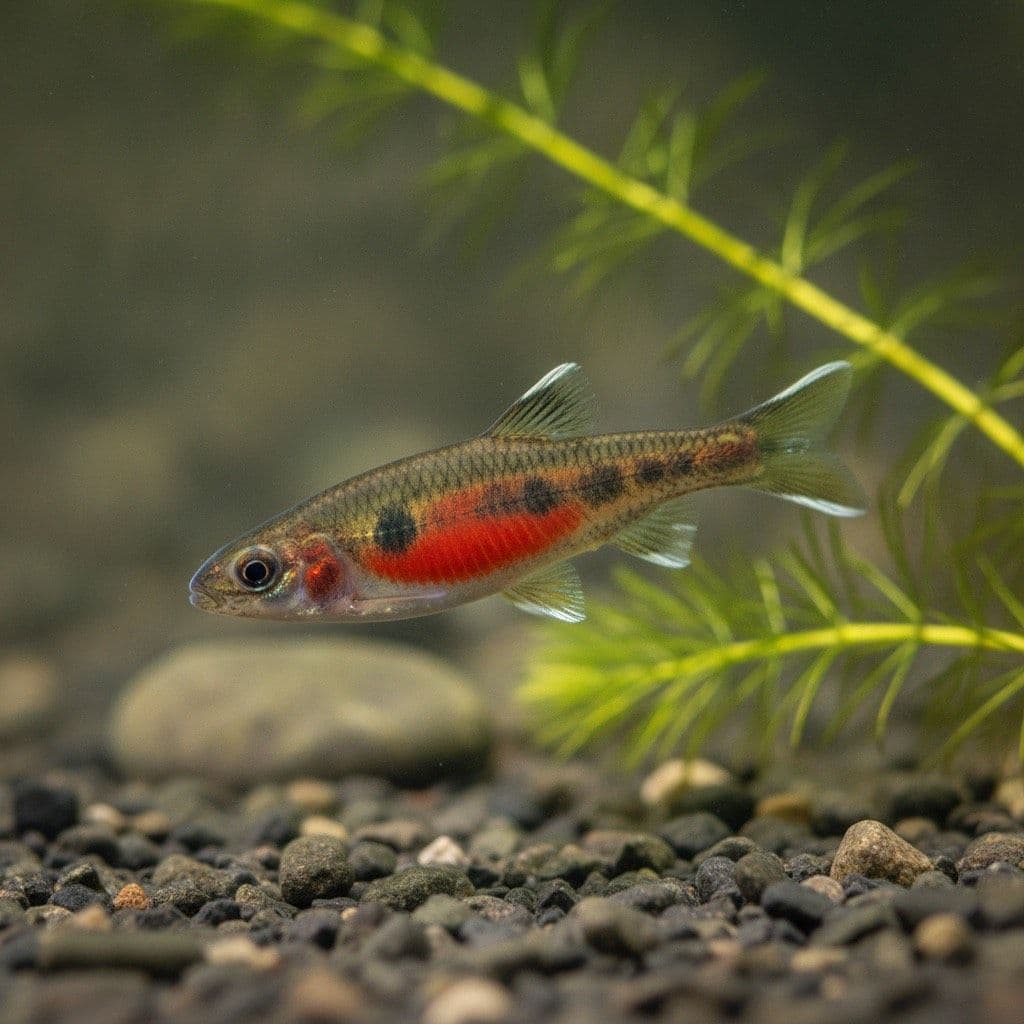
Ruffe: Gymnocephalus cernua
A small, spiny, bottom-dwelling perch from Europe and northern Asia, suited to a cool native-species aquarium. Invasive in the North American Great Lakes.
Also known as: Eurasian ruffe · pope · Gymnocephalus cernua
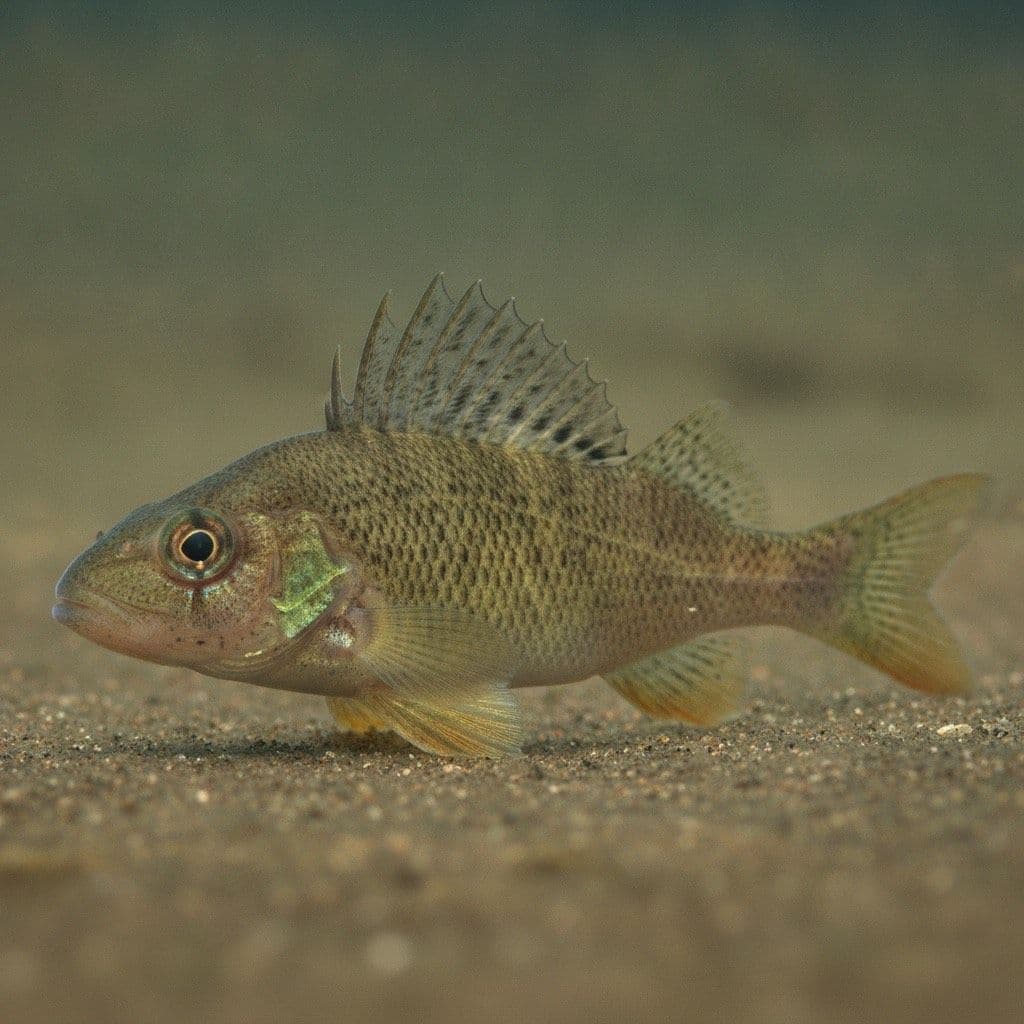
Ruffe
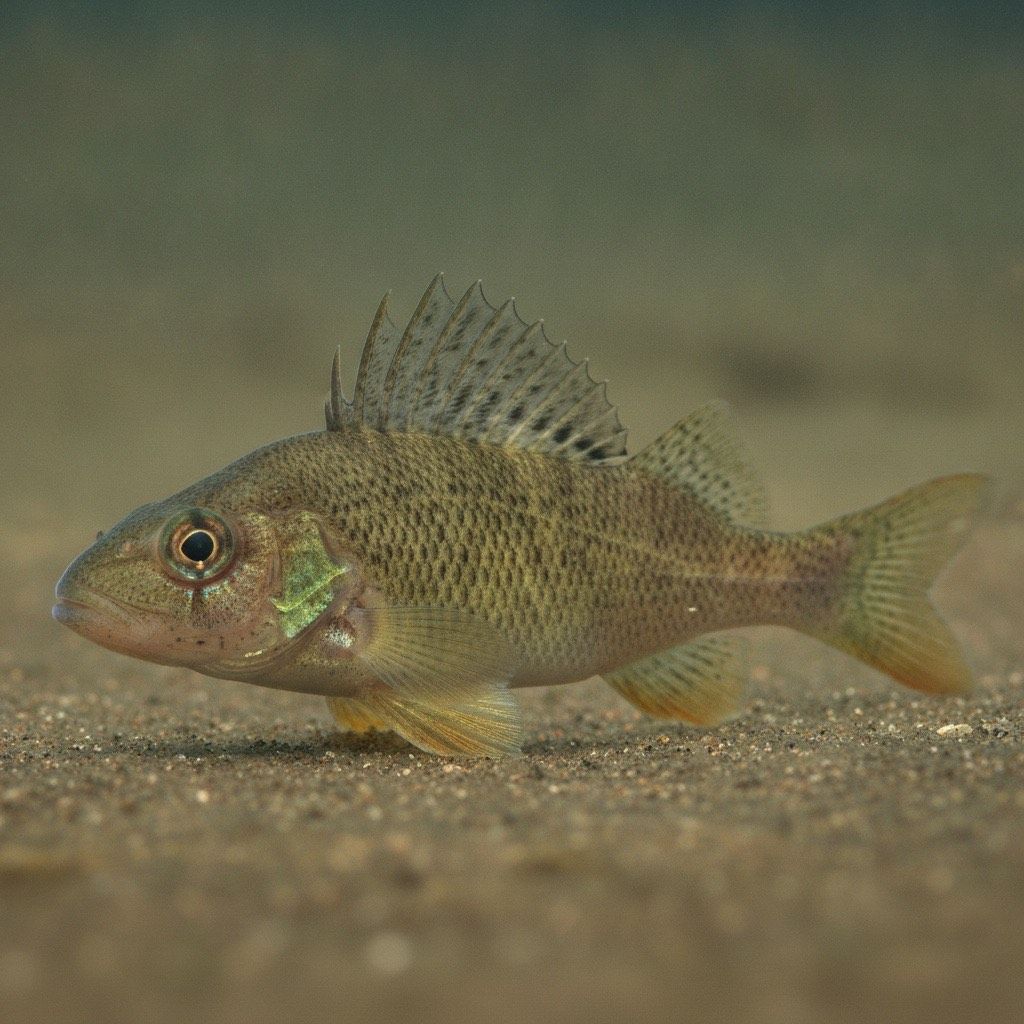
The Ruffe (Gymnocephalus cernua), known in parts of England as the "pope", is a small member of the perch family. It has a sandy-olive body covered in fine dark speckles, a large, continuous spiny dorsal fin, big glassy eyes and a head covered in the sensory pits that give the genus its name. Its skin is coated in thick slime.
FishBase gives a common length of 12 cm total length, and most fish are 10-15 cm; exceptional fish grow larger.
Natural Habitat & Origin
The Ruffe is native to much of Europe and northern Asia: the Caspian, Black, Baltic and North Sea basins, Great Britain, Scandinavia north to about 69°N, and east through Siberia. It is native to England; populations in Scotland and Wales were introduced.
It favours still or slow-flowing water with a soft bottom, in lowland rivers, nutrient-rich lakes and the brackish lower reaches of large rivers. Its sensitive head pits help it feed in turbid, dimly lit water.
Introduced into the Great Lakes of North America in ship ballast water in the 1980s, it has become an invasive species there. Never release a Ruffe outside its native range.
Care Requirements
Keep the Ruffe cool, at 8-20°C, with neutral to slightly alkaline, moderately hard water. A tank of at least 150 litres suits a small group. Use a soft sand substrate, dim or shaded lighting, and plenty of cover from rocks, wood and plants. Gentle to moderate flow is enough, but oxygen levels must stay high.
Check the local rules before collecting fish. In some countries moving or keeping Ruffe is restricted because of its invasive status elsewhere.
Diet & Feeding
Ruffe eat zooplankton, midge larvae, worms and small crustaceans, and larger individuals take fish eggs and small fish. In captivity, feed live and frozen foods: bloodworm, blackworm, mysis, daphnia and chopped earthworm. Many learn to take sinking pellets. Feed in the evening, when they are most active.
Behavior & Temperament
Ruffe are shoaling fish and are calmer in a small group. They are mostly peaceful towards fish they cannot swallow but will eat very small fish and fry. They are most active at dusk and night, and spend the day resting near cover on the bottom.
Tank Mates
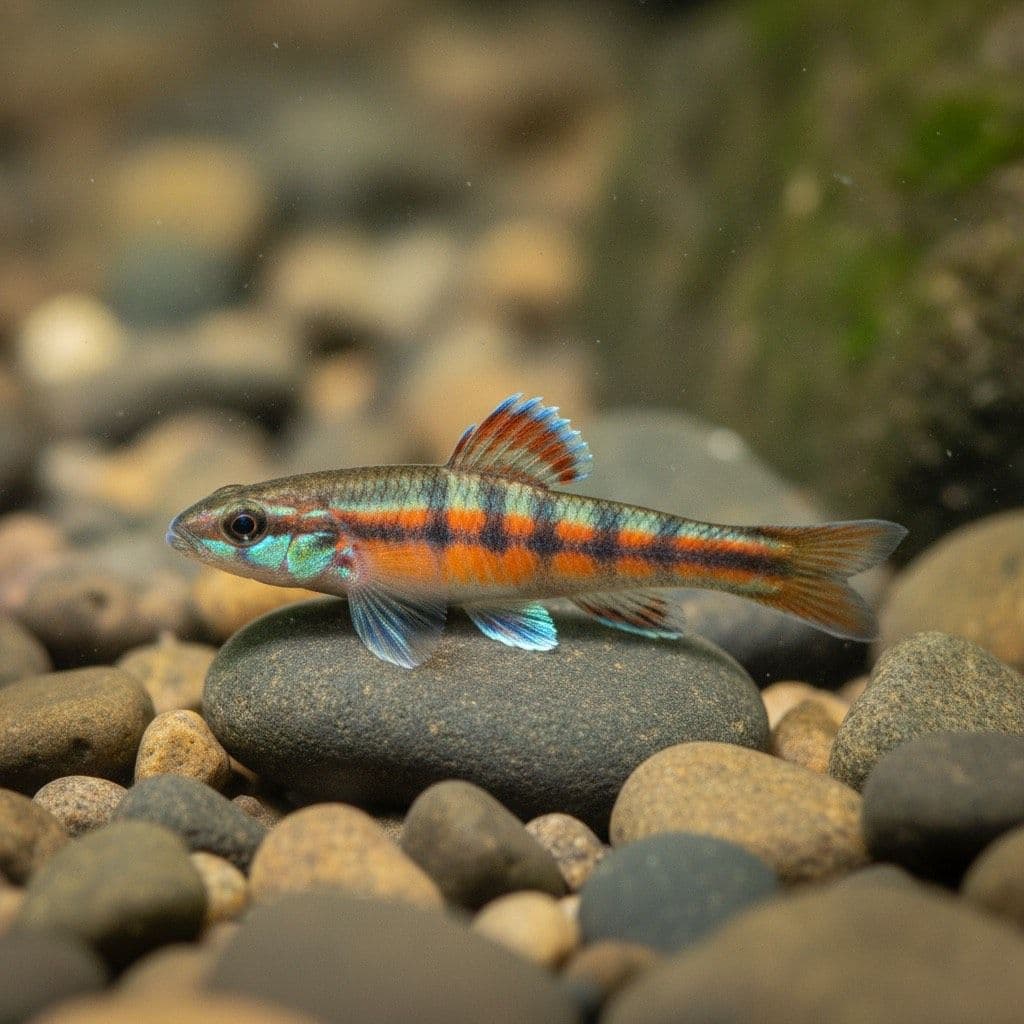
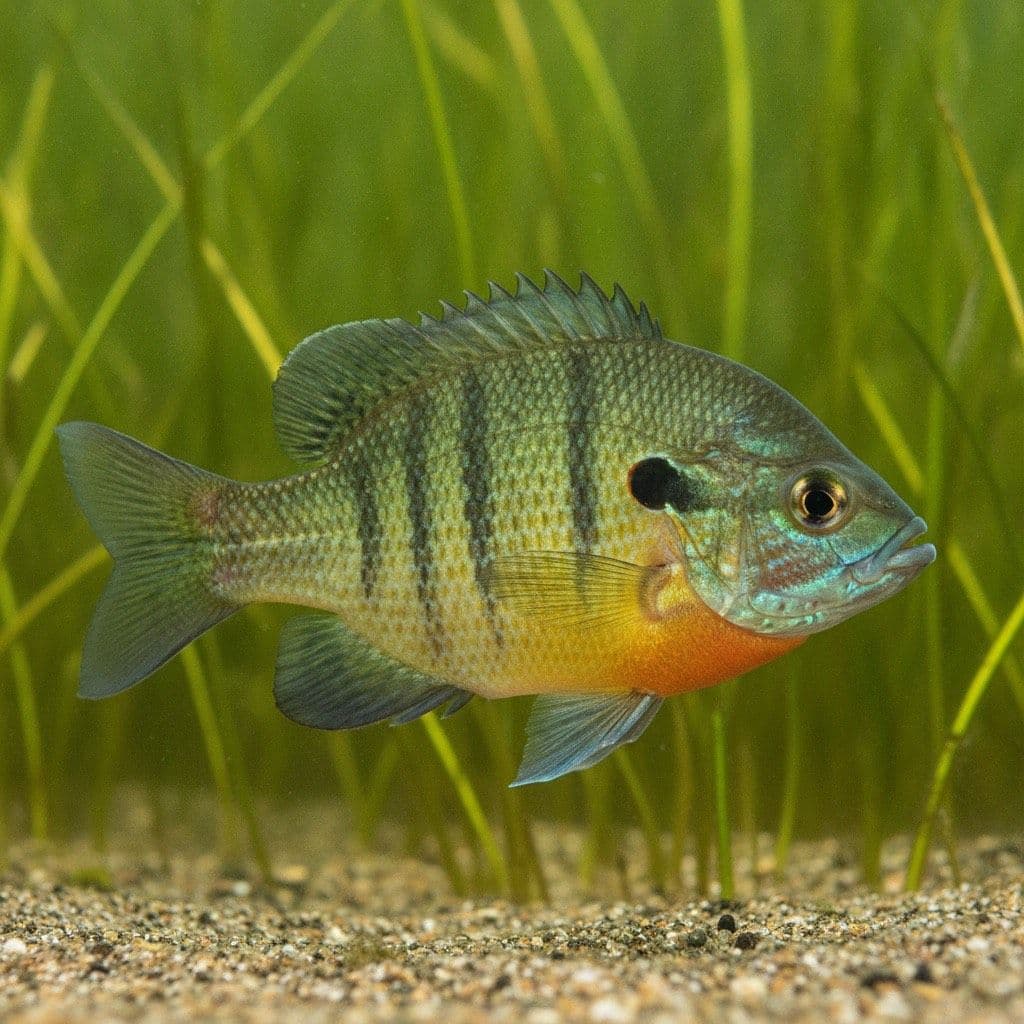
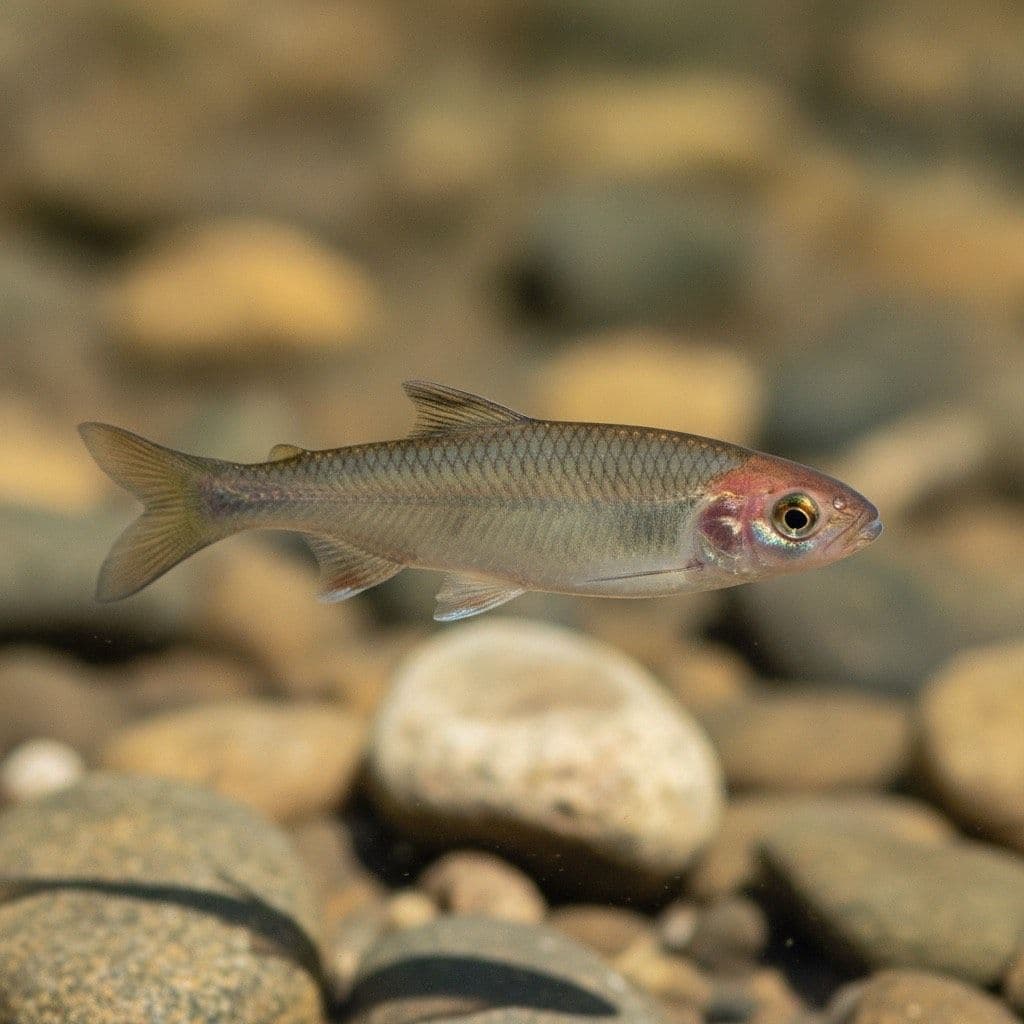
Choose robust cold-water species too large to be eaten:
Avoid tiny fish and shrimp.
Breeding
Ruffe spawn in spring, scattering sticky white to yellow eggs over stones, plants or wood in shallow water, usually no deeper than about 3 m. There is no parental care. Captive breeding is rare and needs a cold winter period.
Sexing
Ruffe are difficult to sex. Males and females share the same speckled pattern and spiny dorsal fin, and there is no reliable colour difference. In late winter and spring, females carrying eggs become noticeably deeper and rounder in the belly, which is the most practical clue. Keeping a small group gives the best chance of having both sexes.
Seasons and Temperature
Ruffe are winter-active fish that keep feeding in cold water, and in the wild they spawn early, as temperatures rise through spring. They are among the less heat-tolerant fish here: FishBase gives a natural range of 10-20°C, so a room that stays cool in summer, or a chiller, matters more for Ruffe than for most. Dim light and cool, oxygen-rich water are what keep them active and feeding.
Common Health Issues
Ruffe are hardy in cool, clean water. Warm water causes stress and disease. Their slime coat is protective, so handle them as little as possible and use a soft net.