European Minnow: Phoxinus phoxinus
Europe's classic small stream fish: a lively, cold-water schooling minnow whose males turn red-bellied and gold in spring. Ideal for an unheated native tank.
Also known as: Eurasian minnow · common minnow · minnow · Phoxinus phoxinus
European Minnow
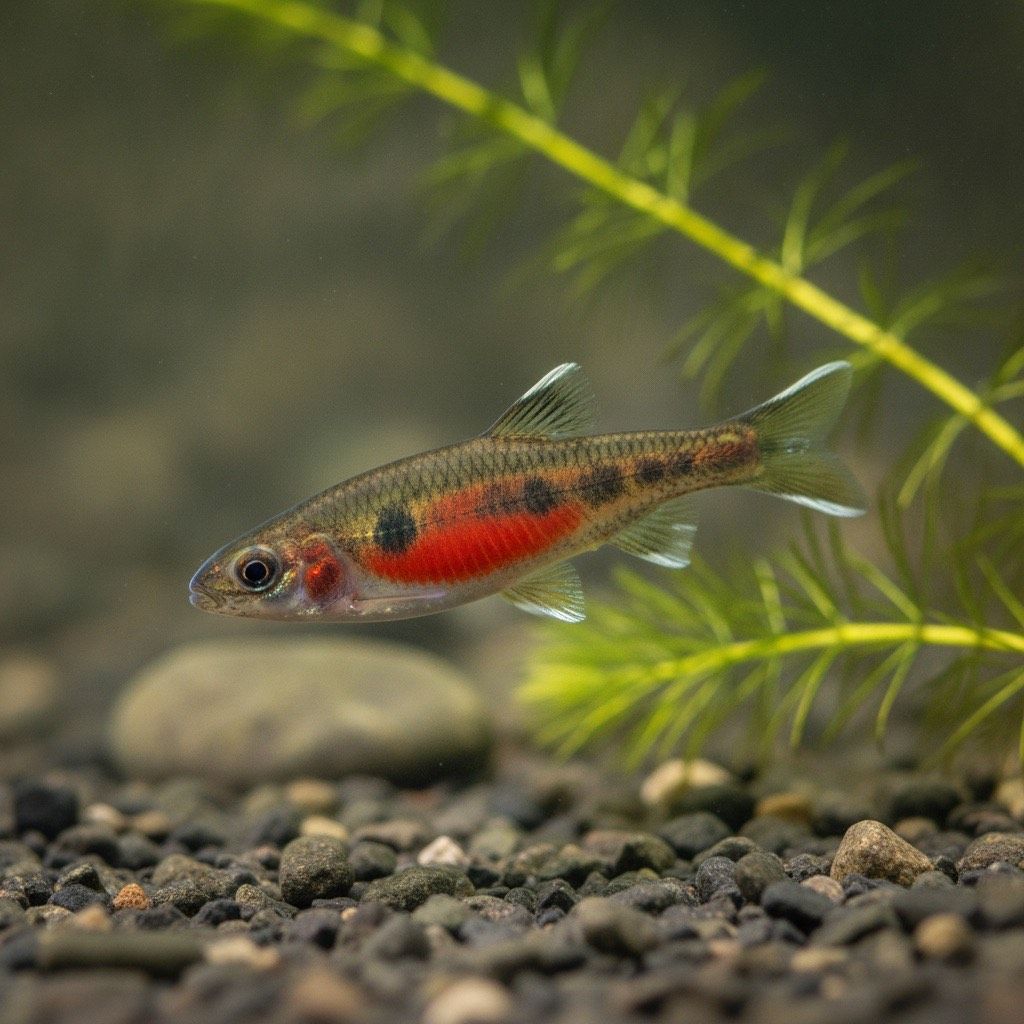
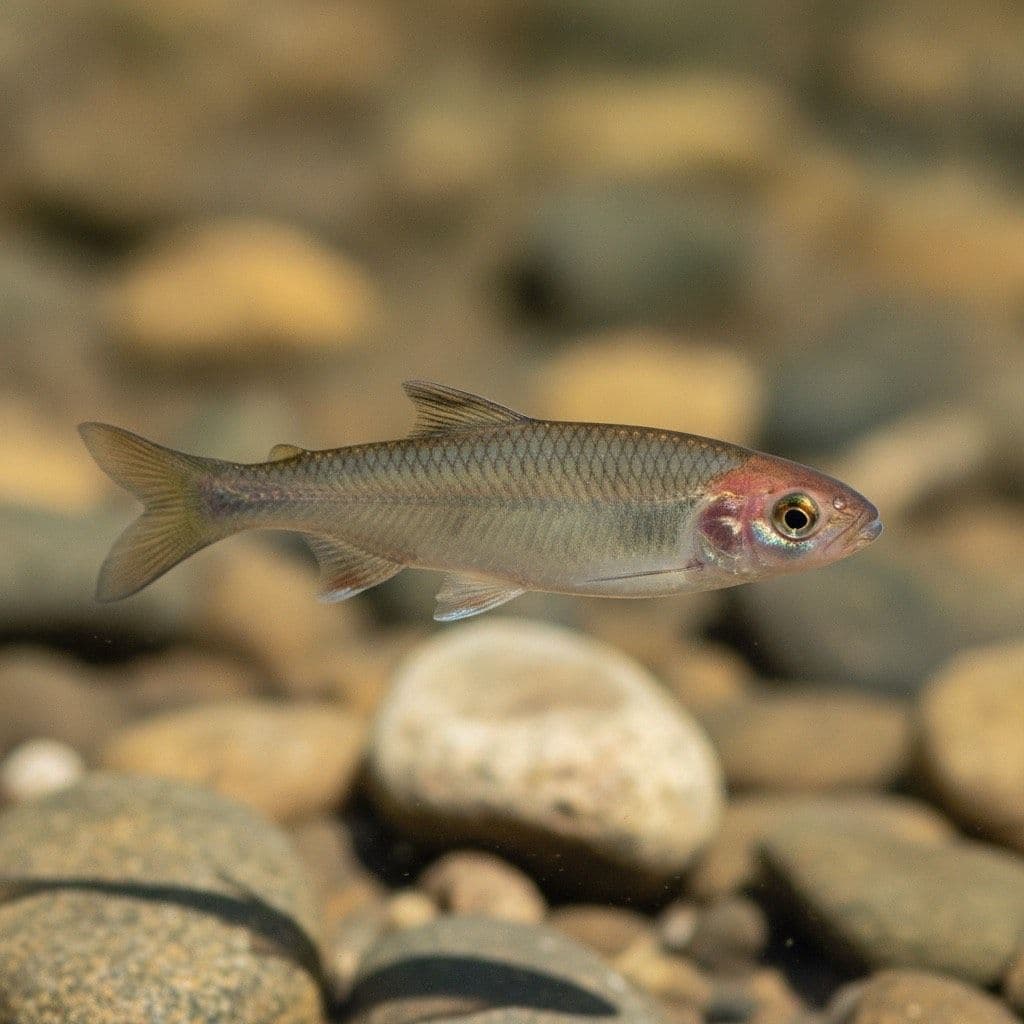
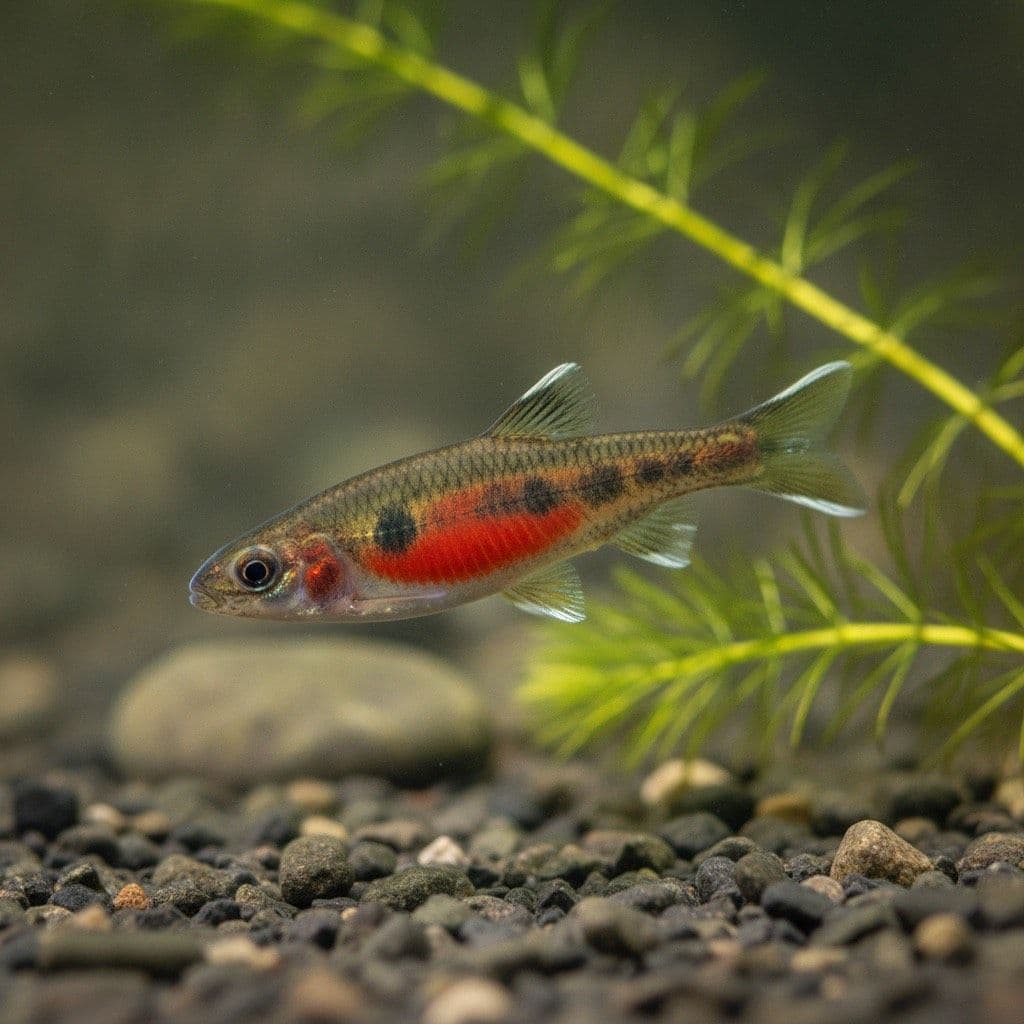
The European Minnow (Phoxinus phoxinus) is the small fish most people picture when they hear the word "minnow": a slim, olive-bronze fish with a row of dark blotches along the side, often seen in shoals in clear streams. In spring, breeding males transform, with a black throat, a scarlet belly, gold flanks and white-edged fins.
It is usually 6-8 cm long, with a recorded maximum of 14 cm total length. It is one of the best native fish for an unheated aquarium.
Natural Habitat & Origin
The species ranges across Eurasia, from the Garonne in France eastward through the Atlantic, North Sea and Baltic basins, and on to the Amur and Anadyr drainages and Korea. It is native across most of Britain. Recent research has split some European populations into separate Phoxinus species, so fish from southern Europe may belong to a close relative.
It lives in cold, well-oxygenated water, from small, fast-flowing streams to large northern rivers and clear lakeshores, usually over gravel.
Care Requirements
Keep European Minnows cold: 4-18°C is their natural range, and they are stressed by warm summer water, so a cool room is essential and a chiller can help. Neutral to slightly alkaline, moderately hard water suits them.
As active schooling fish, they need length. A tank at least 90 cm long, about 110 litres, suits a group, with a gravel or pebble substrate, some rocks, hardy cold-water plants, and good water movement from a strong filter or powerhead. Oxygen levels must stay high. A lid is advisable.
Before collecting wild fish, check the local rules; in many places taking fish requires permission from the landowner or a licence. Never release aquarium fish or move fish between waterways, which spreads disease.
Diet & Feeding
In the wild minnows eat algae, plant debris, snails, small crustaceans and insects. In captivity they take flake and small pellets readily, and do best with frozen and live foods such as daphnia, bloodworm and brine shrimp several times a week.
Behavior & Temperament
Minnows are peaceful, busy shoaling fish. Keep a group of at least eight to ten; a larger shoal is calmer and more natural. They move through the whole tank, often facing into the current.
Tank Mates
Choose other cold-water natives that like the same conditions:
- Gudgeon
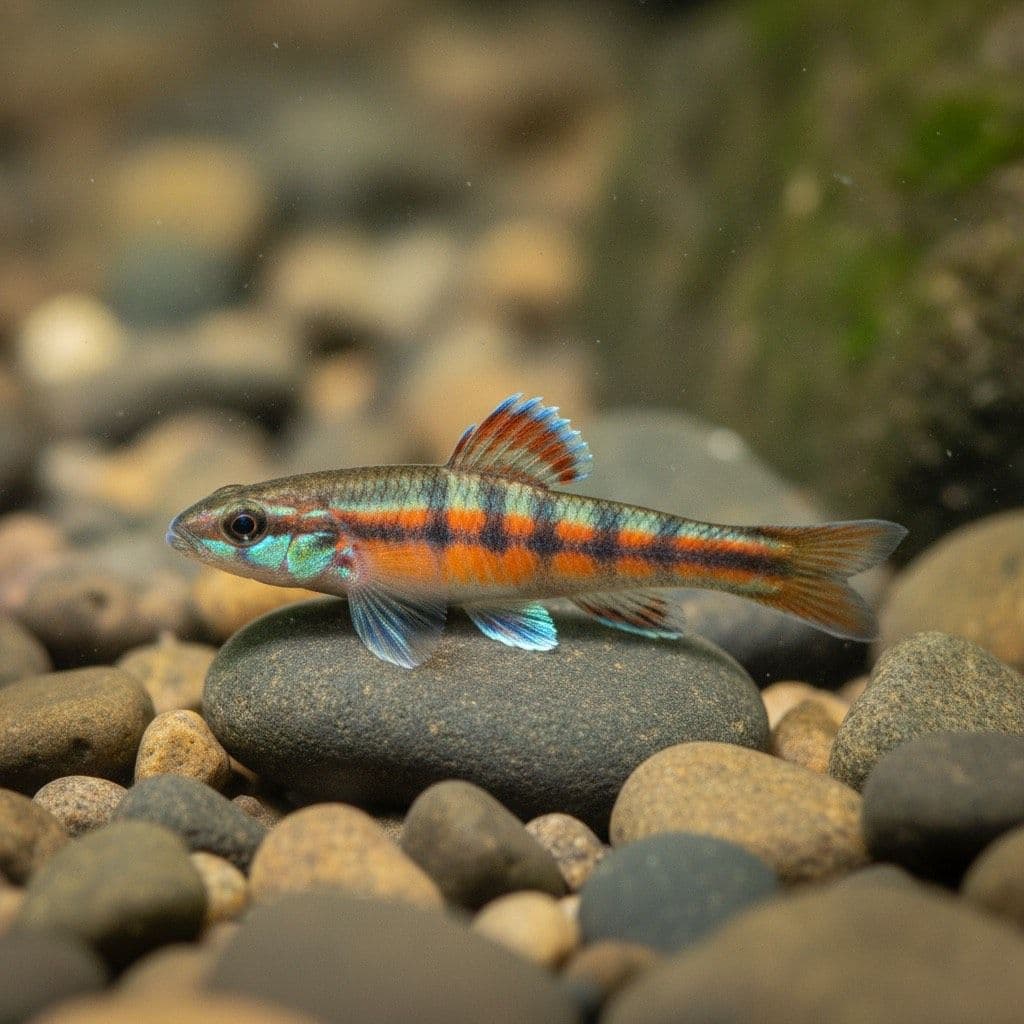
- Stickleback, in a larger tank
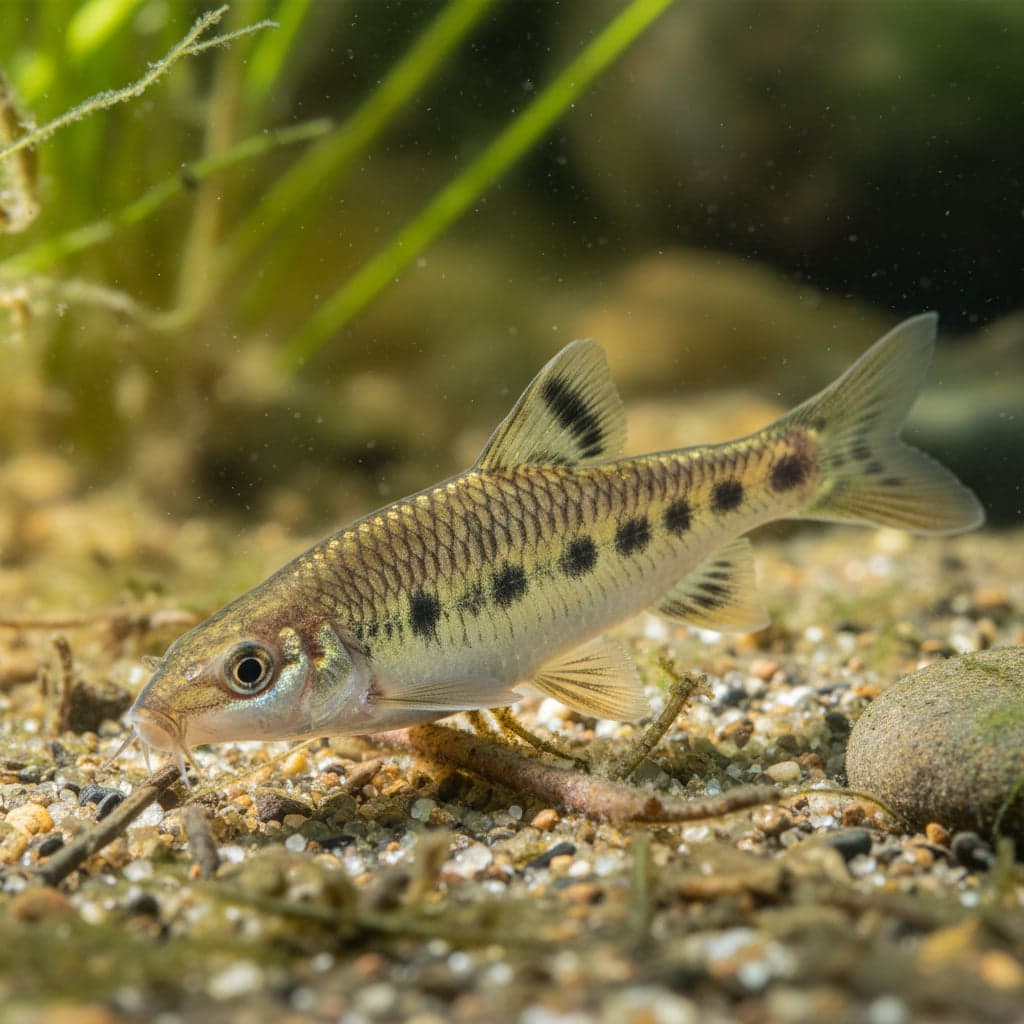
- Stone loach and other small bottom fish
Avoid predatory fish such as perch, and tropical species.
Breeding
Minnows spawn in late spring over clean gravel in flowing water or along lake shores, scattering adhesive eggs with no parental care. At 18°C the eggs hatch in four to five days. Breeding in aquaria is most likely after a genuinely cold winter followed by a gradual rise in temperature and day length.
Seasons and Temperature
Minnows are true cold-water fish, comfortable down to a few degrees above freezing, and their spring colour depends on a cold winter. Letting an unheated tank drift down to 6-10°C in winter, then warm slowly with the room in spring, often brings males into full red-bellied breeding dress. The upper limit is the problem: above about 20°C they become stressed and gasp at the surface, so a cool room is essential through summer.
Common Health Issues
Warm water and low oxygen are the main risks. Minnows are otherwise hardy. Quarantine wild-caught fish, which can carry parasites, and keep the water cool, clean and moving.