Ruby Green Cichlid: Haplochromis sp. "Ruby Green"
An undescribed Victorian haplochromine from the Lake Kyoga system in Uganda: males flash emerald and ruby red, and it is one of the more peaceful cichlids of the Lake Victoria region.
Also known as: Haplochromis ruby green · ruby green hap
Ruby Green Cichlid
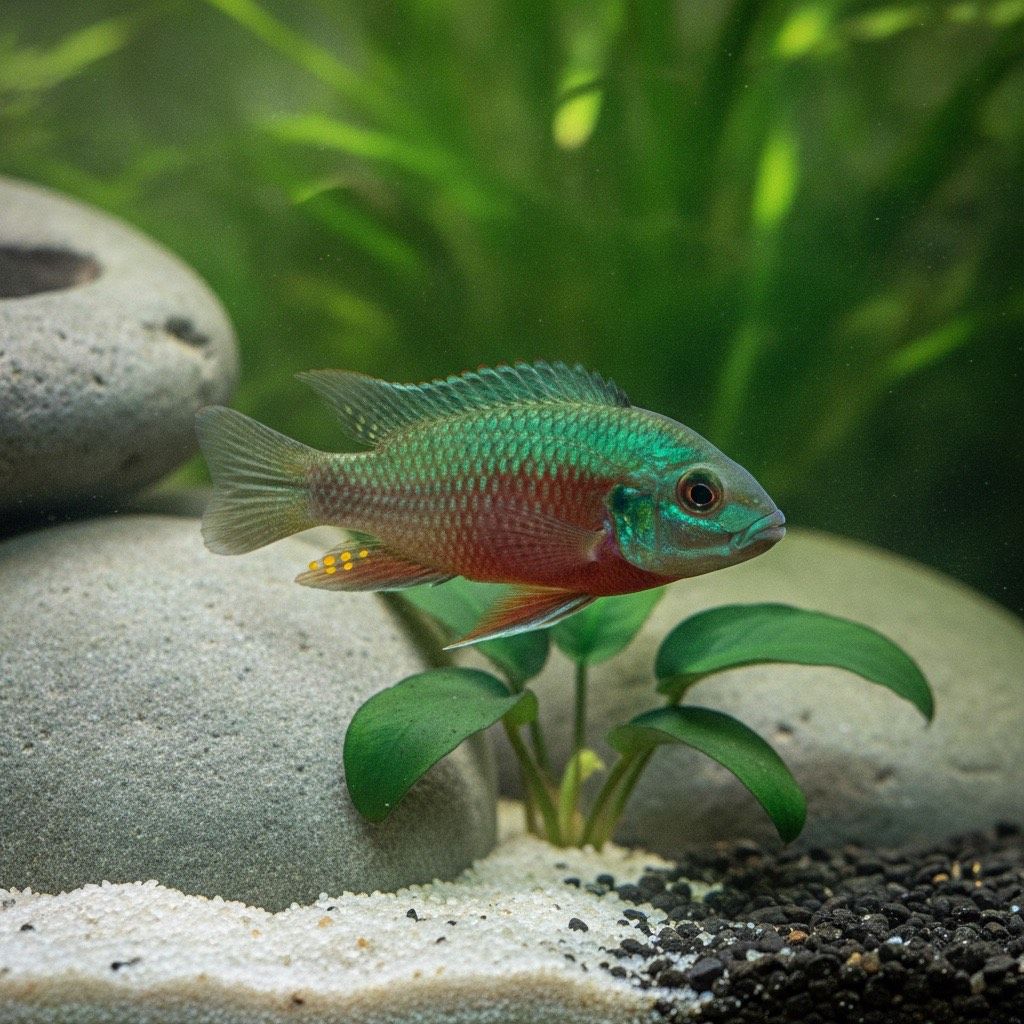
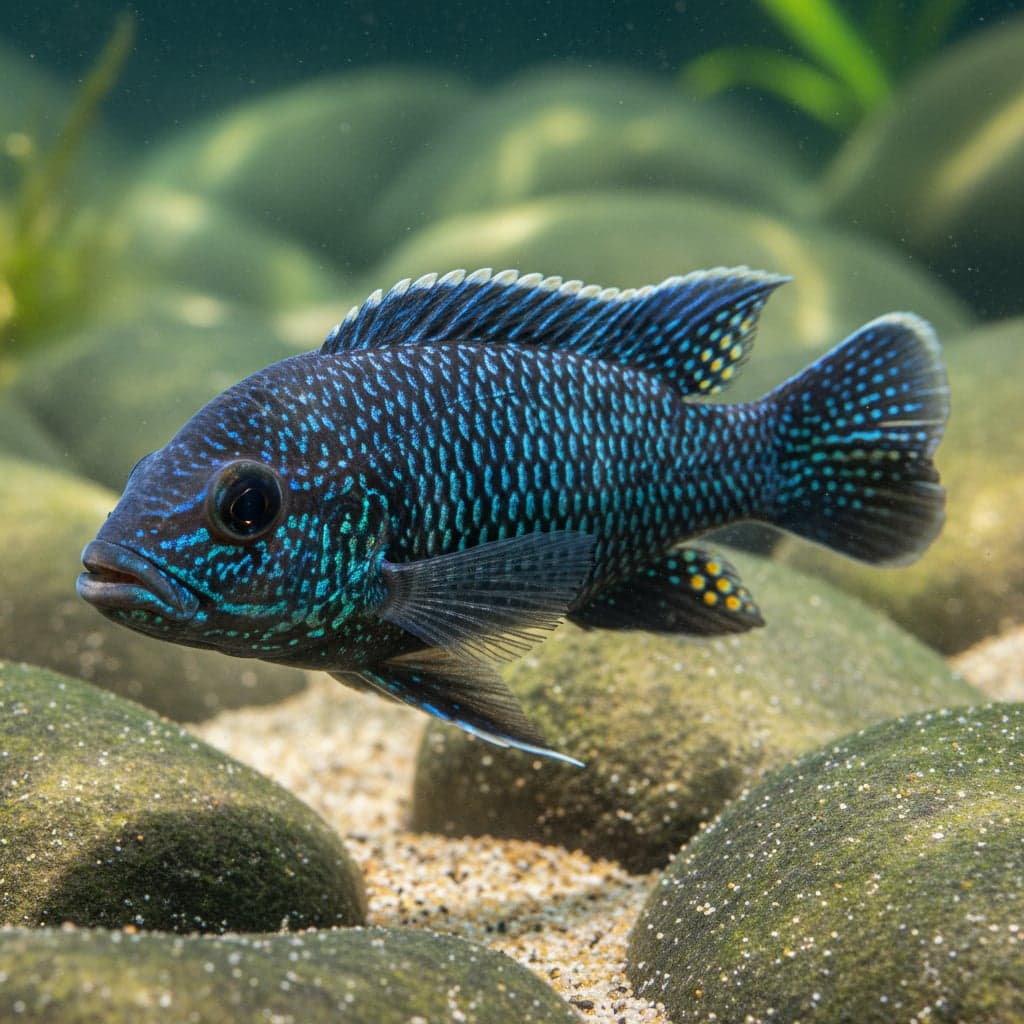
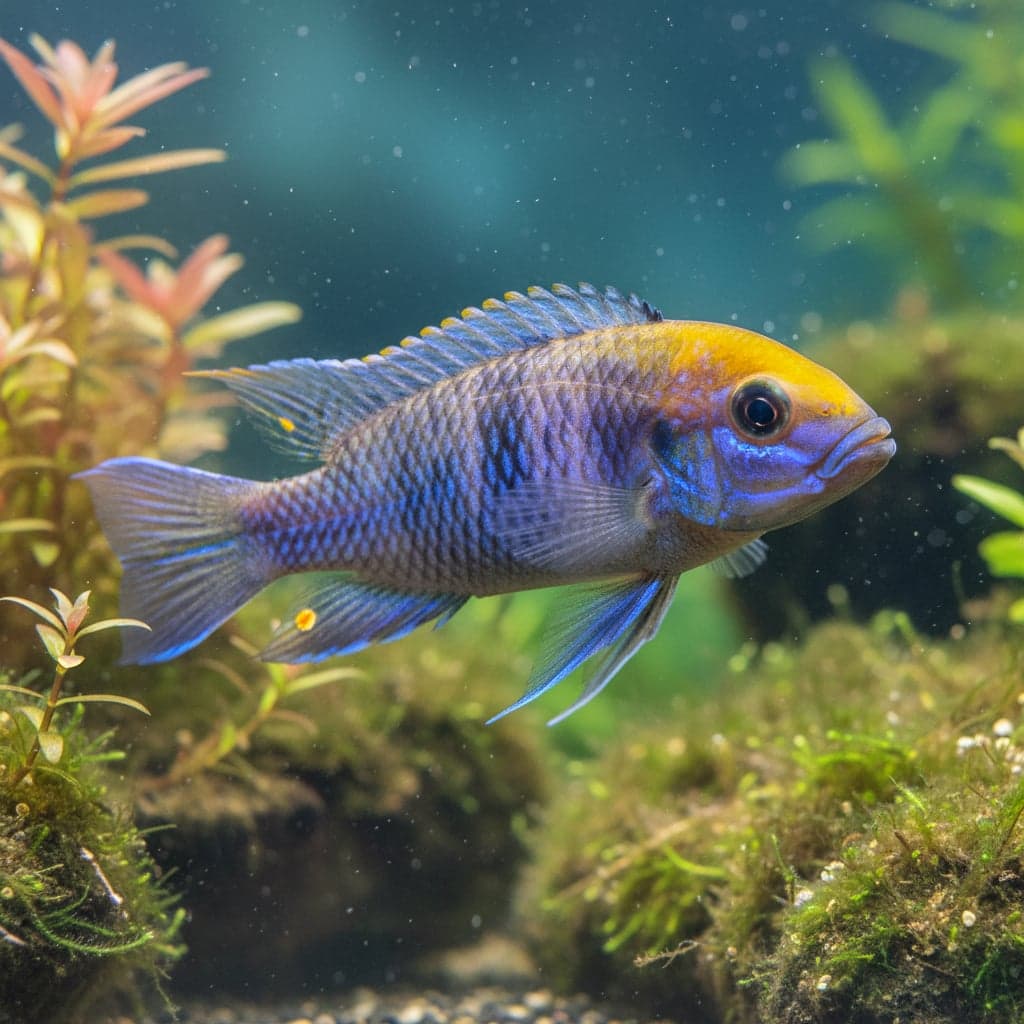
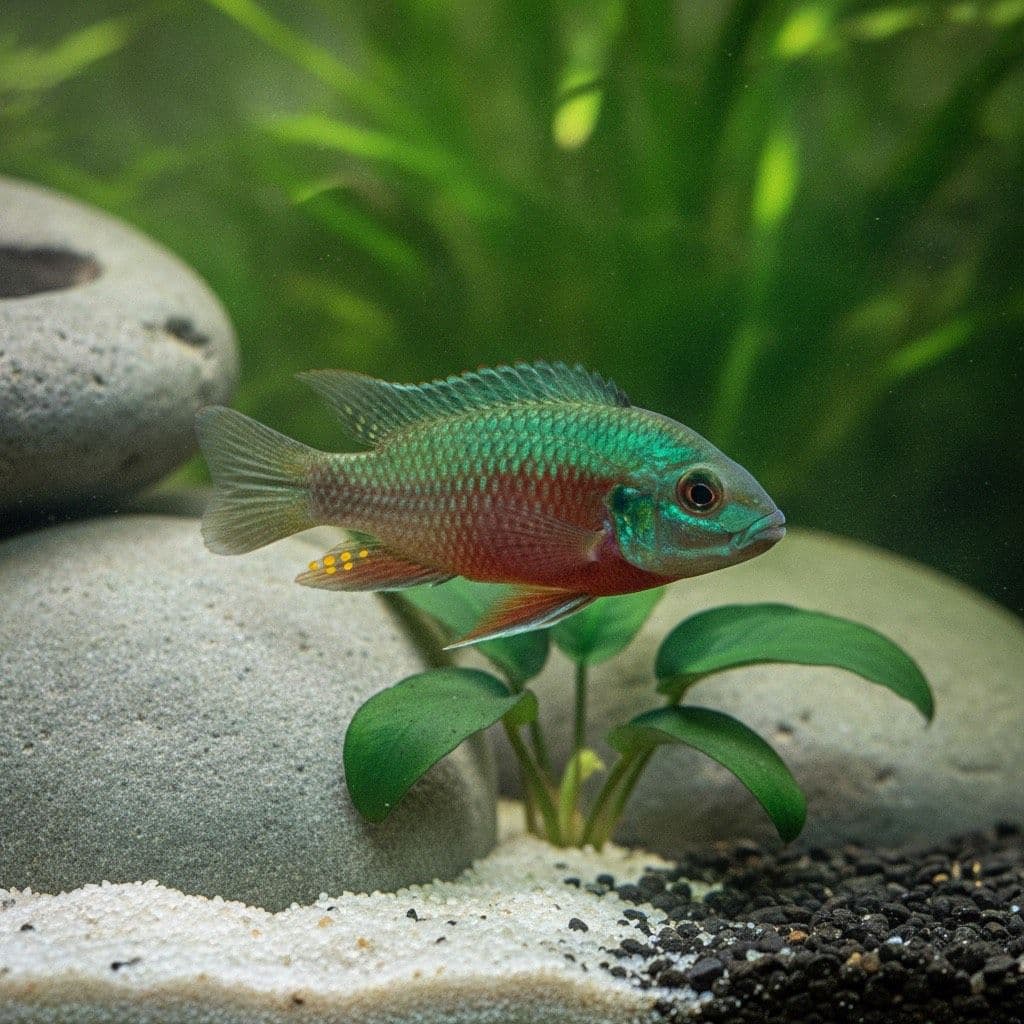
The Ruby Green Cichlid (Haplochromis sp. "Ruby Green") is a small haplochromine cichlid that has not yet been formally described, so it is known by its trade name. Dominant males are among the most colourful fish of the Lake Victoria region: an emerald-green body shading into a deep ruby-red throat, chest and flanks, with egg spots on the anal fin. Females are silvery-brown.
Males reach about 10 cm and females around 7-8 cm, making this one of the more manageable Victorian cichlids for the home aquarium.
Natural Habitat & Origin
The species comes from the Lake Kyoga system in Uganda, including Lake Nawampasa. Kyoga lies on the Victoria Nile, downstream of Lake Victoria, and its cichlids belong to the same young, rapidly evolved group of haplochromines as Lake Victoria's own. It lives along heavily vegetated shorelines, and has also been recorded from flowing water.
Many Lake Victoria region cichlids declined sharply after the introduction of Nile perch. Captive populations of species like this one are an important record of that lost diversity, so keep aquarium stock pure and avoid crossing it with other haplochromines.
Care Requirements
A tank of at least 200 litres suits a group of one male to several females. Water should be warm, hard and alkaline: 24-28°C, pH 7.2-8.5, with moderate to high hardness. Good filtration and weekly water changes of 30-50% keep nitrate low, which matters for plant-eating cichlids.
Provide rockwork with caves and broken lines of sight so subordinate fish can escape the dominant male, and leave open swimming space at the front. Hardy plants such as Anubias and Java Fern tied to rock usually survive.
Diet & Feeding
The Ruby Green is mostly herbivorous. Base its diet on a quality spirulina or vegetable flake or small pellet, and add blanched vegetables such as spinach and peas. Small amounts of frozen foods such as daphnia and brine shrimp are fine as a treat, but avoid a diet heavy in rich, meaty foods, which is linked to bloat in herbivorous African cichlids. Feed small portions once or twice a day.
Behavior & Temperament
Keepers describe the Ruby Green as one of the more peaceful Victorian cichlids: fully grown males are noticeably less aggressive than those of most related species. It is still a territorial haplochromine. Keep one male with three or more females so no single female takes all his attention, and do not keep two males in a small tank.
Tank Mates
Choose fish of similar size and temperament that need the same hard, alkaline water:
- Other peaceful Lake Victoria region cichlids of different colouring, in a large tank
- Robust catfish such as Synodontis species
Avoid keeping it with similar-looking haplochromines, which risks hybridisation, and with very aggressive Malawi mbuna.
Breeding
Like other haplochromines, the Ruby Green is a maternal mouthbrooder. The male displays his colours and leads a ripe female to a cleared site, where she lays her eggs and takes them into her mouth. She carries them for around three weeks without feeding, then releases fully formed fry that can eat crushed flake and baby brine shrimp. Moving a holding female to a quiet tank a few days before release improves fry survival.
Sexing and Colour
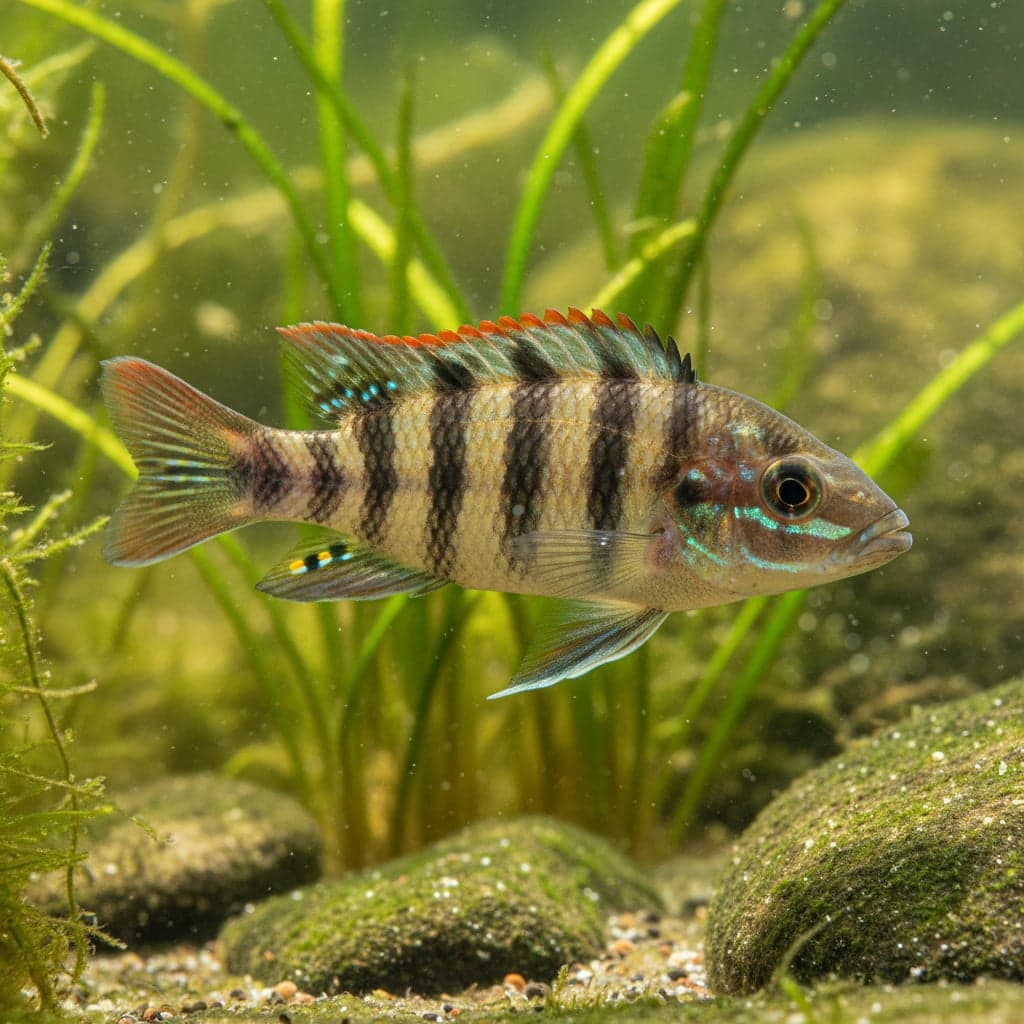
Only the dominant male shows the full emerald and ruby colouring. Subordinate males stay drab and can look much like females, which are silvery-brown with little colour. Young fish all look alike, so the usual approach is to buy a group of juveniles and let one male colour up, then keep him with three or more of the females. Colour also depends on condition: a vegetable-rich diet, stable hard water and a tank without a bullying tank mate bring out the best in him.
Common Health Issues
The main risk is bloat, a serious condition in herbivorous African cichlids linked to a rich diet, overfeeding and poor water quality. Keep the diet mostly vegetable-based, feed modestly, and keep nitrate low with regular water changes. Quarantine new fish before adding them.