Yellow Belly Albert: Haplochromis aeneocolor
A small, colourful haplochromine from Lake George and the Kazinga Channel in Uganda, listed as Vulnerable, with males in yellow, blue and red.
Also known as: Astatotilapia aeneocolor · Haplochromis aeneocolor · yellow belly albert cichlid

Yellow Belly Albert
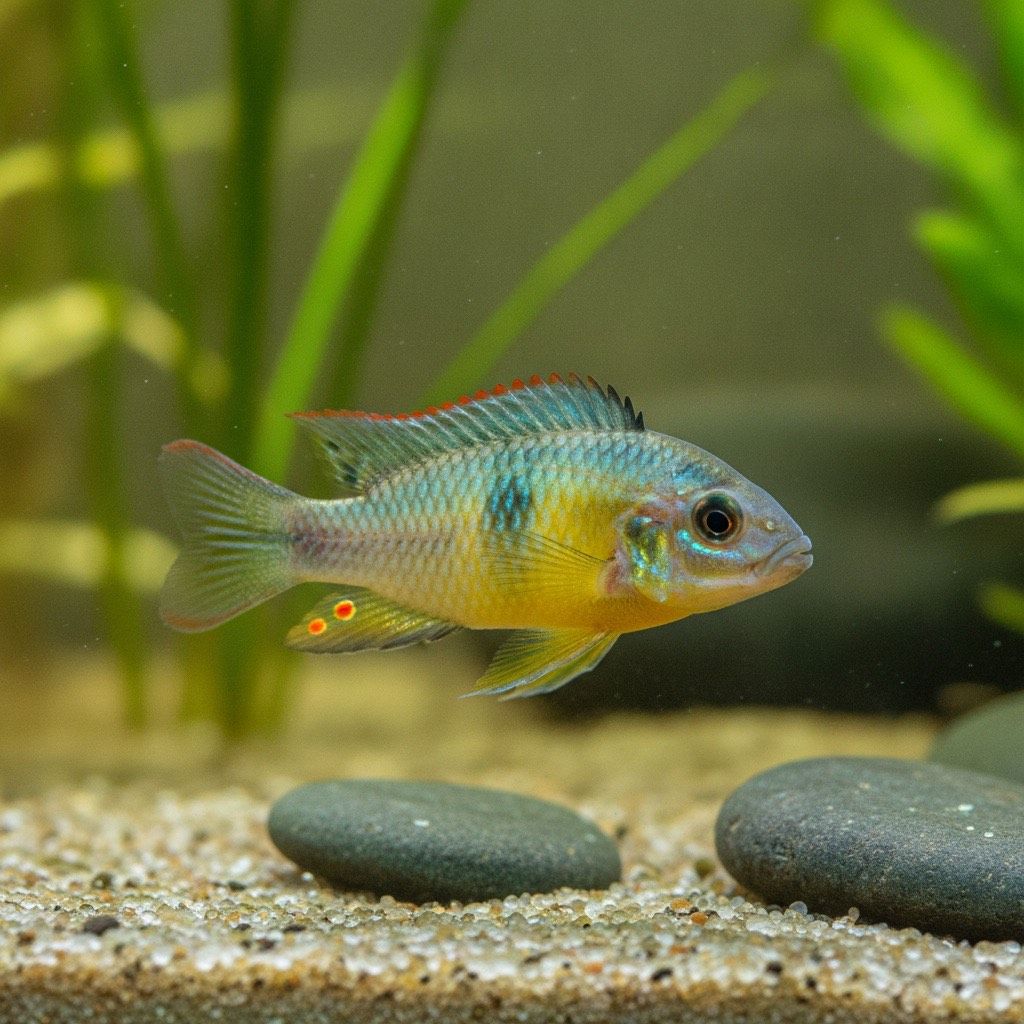
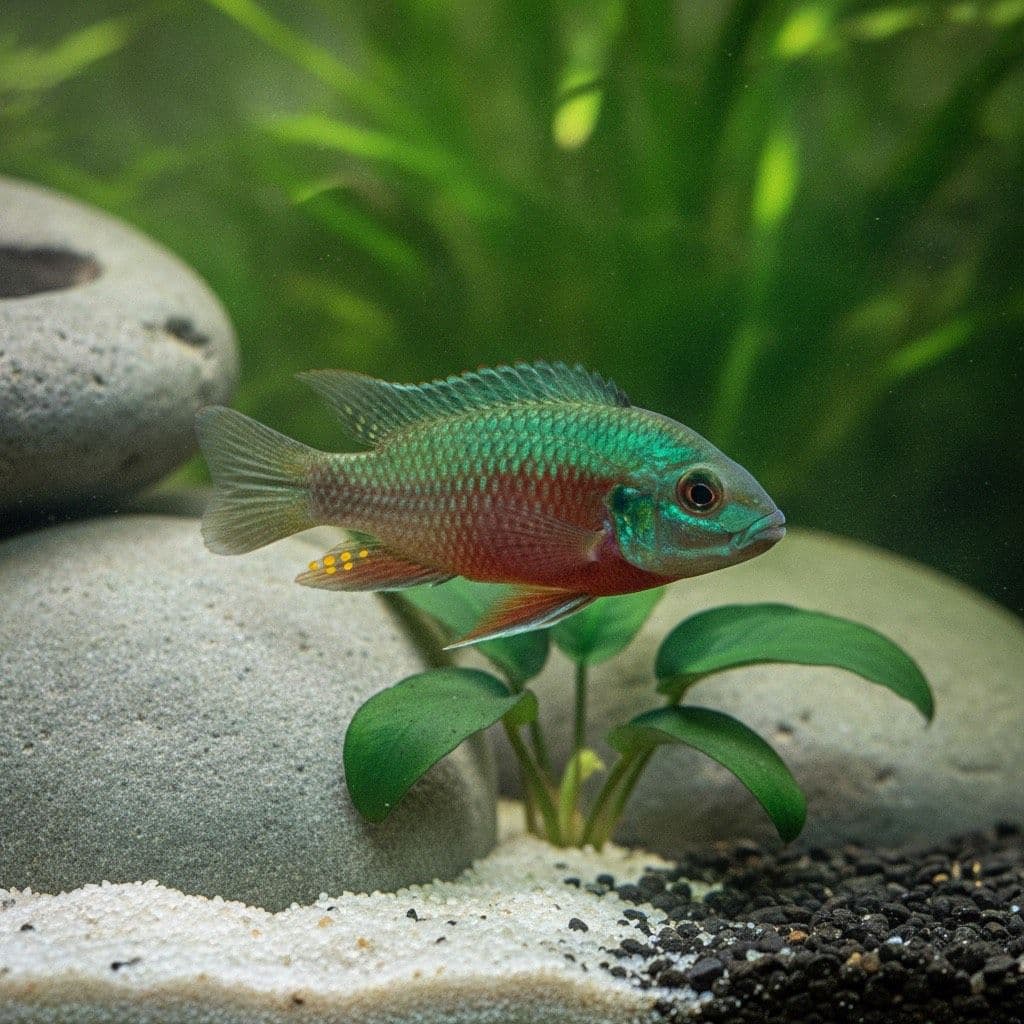
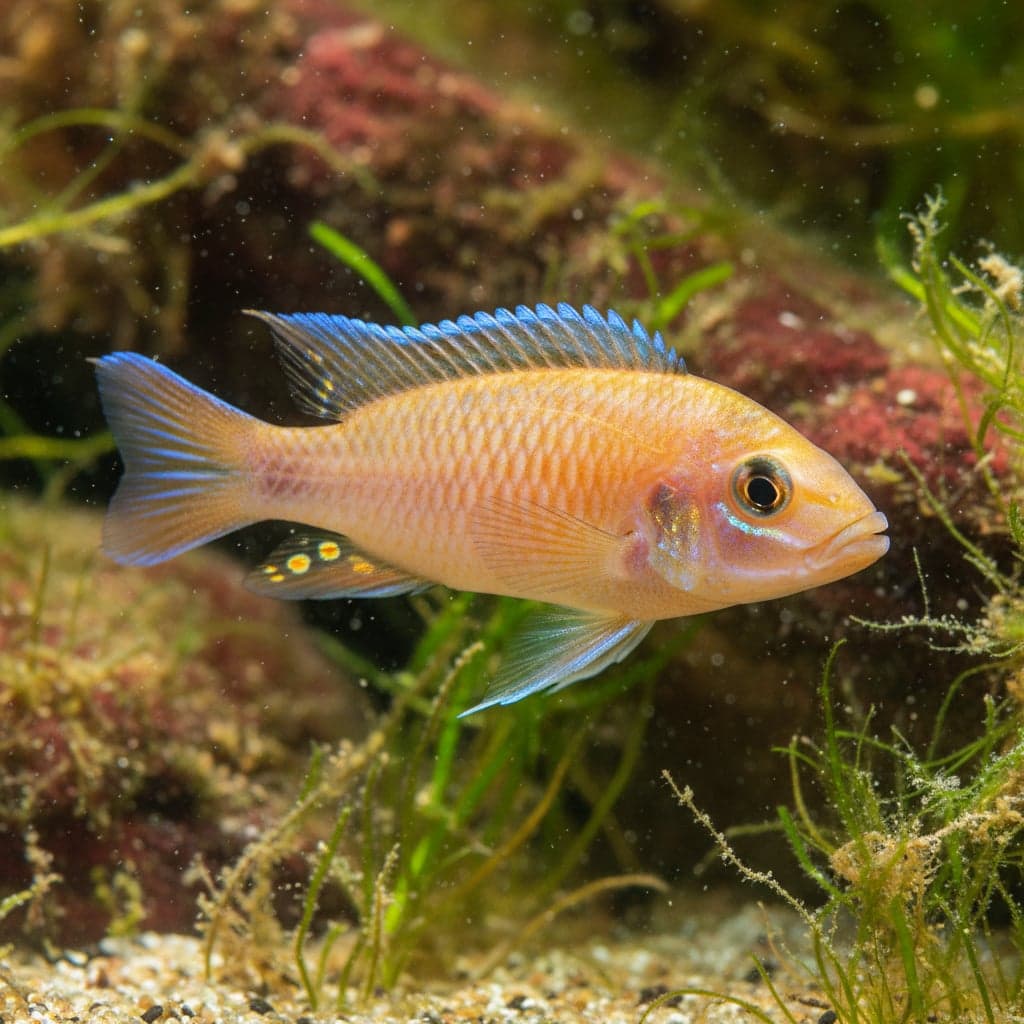
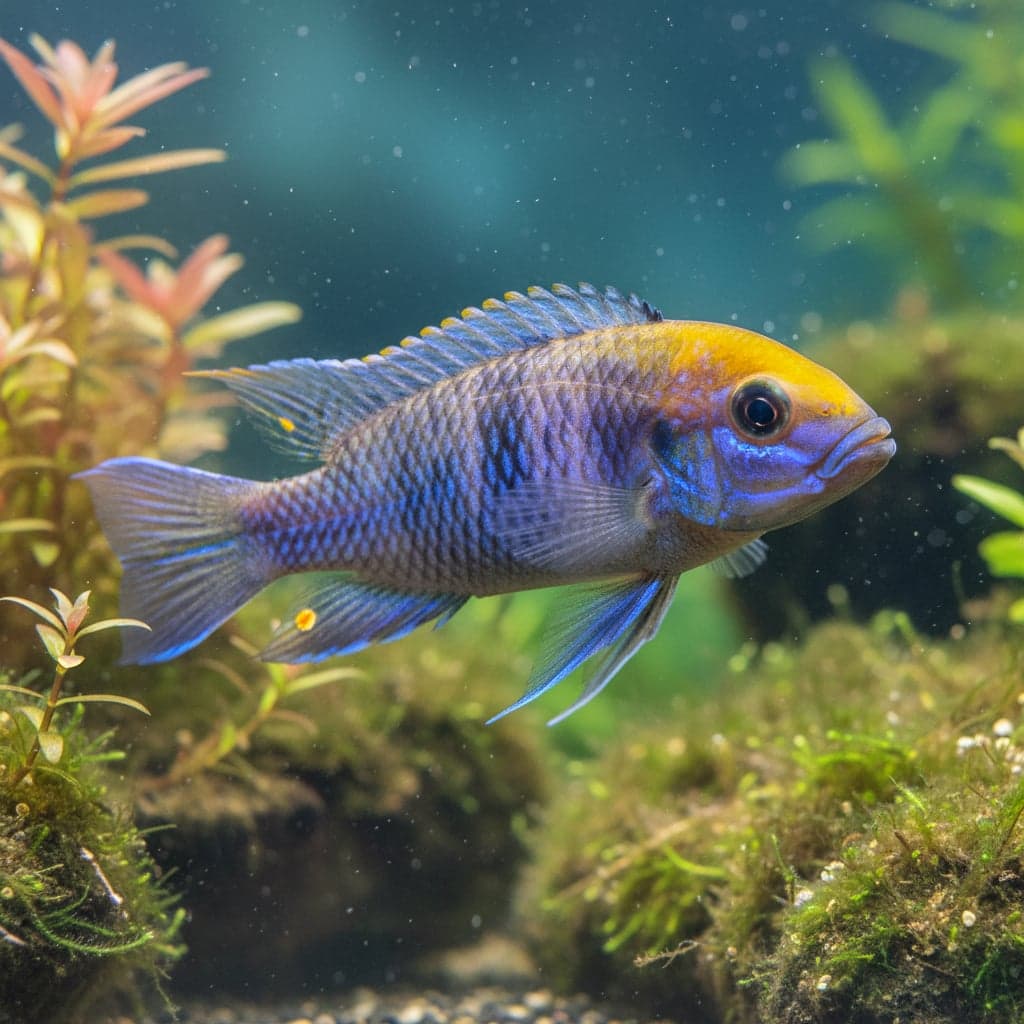
The Yellow Belly Albert (Haplochromis aeneocolor, often sold as Astatotilapia aeneocolor) is a small haplochromine cichlid from western Uganda. Its trade name comes from the male's bright yellow belly, set against a blue-green back and red-edged fins with prominent egg spots on the anal fin. Females are silvery with a yellowish tinge.
FishBase records a maximum of 7.5 cm standard length, about 9 cm including the tail, so it is one of the smaller African cichlids and a good choice for a medium-sized tank.
Natural Habitat & Origin
Despite the name, this fish is not from Lake Albert. It is native to Lake George and the Kazinga Channel, which links Lake George to Lake Edward in western Uganda, with further records from rivers in the Democratic Republic of the Congo. These lakes belong to the Lake Victoria region, whose cichlids share a recent common origin.
In the wild it is common along papyrus-fringed shores and is never found offshore. The IUCN lists it as Vulnerable because of its small range, so captive-bred fish are the right choice, and keeping lines pure helps preserve it.
Care Requirements
A tank of at least 150 litres suits one male with several females. Water should be warm, hard and alkaline: 24-27°C, pH 7.5-8.5. Good filtration and regular water changes keep conditions stable.
Rockwork with caves, and some plants or artificial cover to break up the tank, gives females places to retreat. A sandy substrate suits its natural foraging.
Diet & Feeding
Wild fish feed largely on plant fragments and insect larvae, so the Yellow Belly Albert does well on a varied diet with plenty of vegetable matter. Offer a quality spirulina flake or small pellet as the staple, with frozen foods such as daphnia, brine shrimp and mysis a few times a week. Feed small amounts once or twice a day.
Behavior & Temperament
Males are territorial, particularly towards other males and similarly coloured fish, but the species is modest in size and temperament by African cichlid standards. Keep one male with three or more females to spread his attention, and give the tank enough rockwork to break lines of sight.
Tank Mates
Suitable companions share the same hard, alkaline water and are robust enough to hold their own:
- Other peaceful Lake Victoria region haplochromines with different colouring
- Small Synodontis catfish
Avoid similar-looking haplochromines to prevent hybridisation, and avoid aggressive Malawi mbuna.
Breeding
The Yellow Belly Albert is a maternal mouthbrooder and breeds readily in the aquarium. The male displays to a female, she spawns and collects the eggs in her mouth, and she holds them for about three weeks. The released fry are large enough for crushed flake and newly hatched brine shrimp. Moving a holding female to a separate tank shortly before release improves survival.
Sexing and Colour
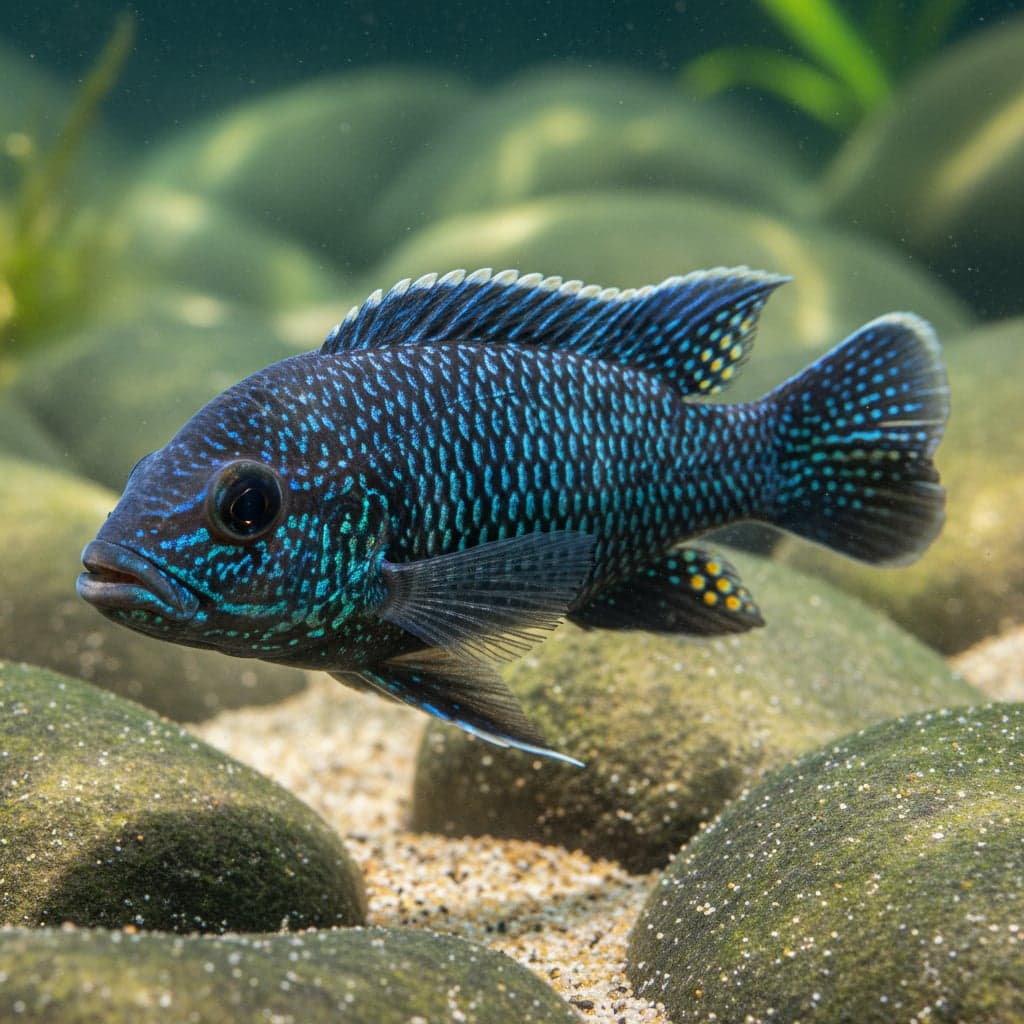
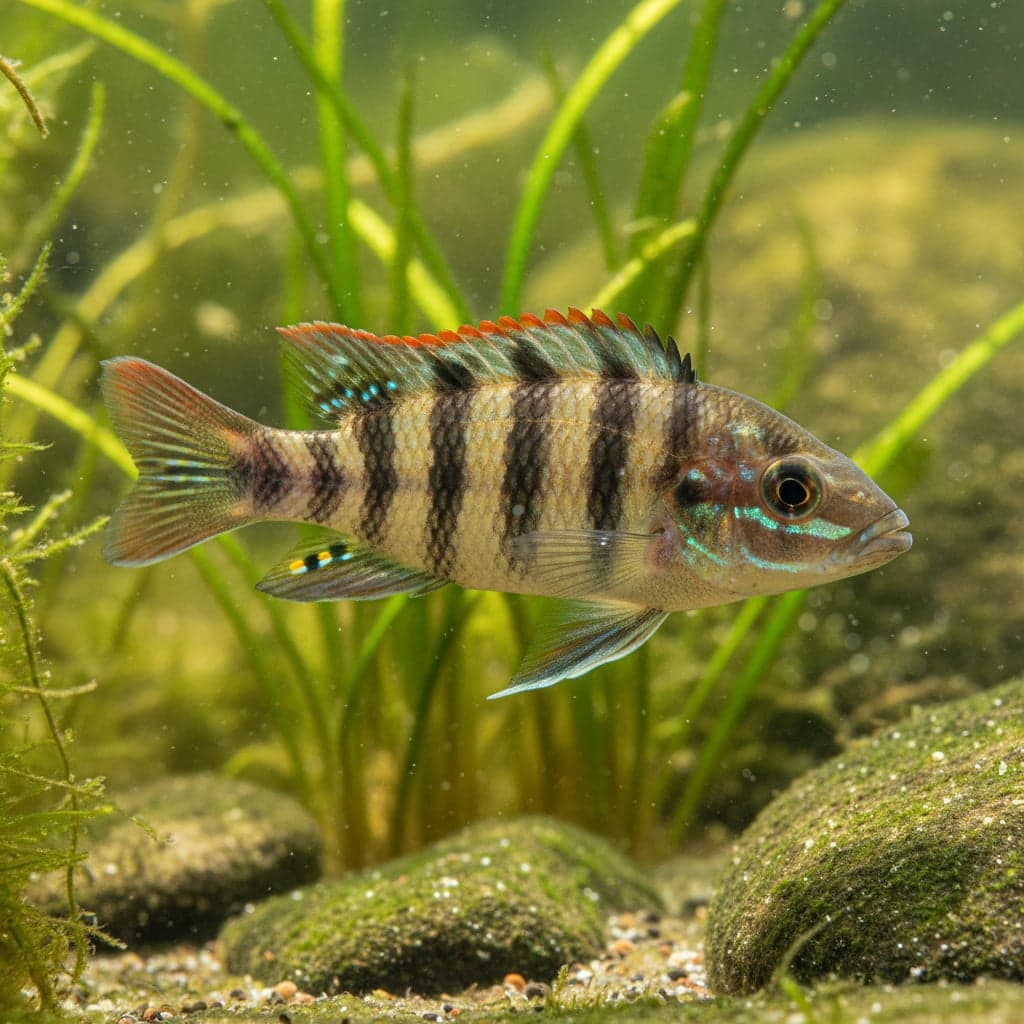
Mature males are unmistakable, with the bright yellow belly, blue-green back, red-edged fins and clear egg spots on the anal fin. Only the dominant male shows full colour; subordinate males stay drab, much like females, which are silvery with a faint yellow wash. Juveniles all look female, so buying a group of young fish and letting the colours develop is the usual way to end up with one male and several females.
Colour depends on condition. A varied diet with some carotenoid-rich foods, stable hard water and a tank without a bullying tank mate bring out the best in the male.
Common Health Issues
It is a hardy fish in good water. As with other African cichlids, poor water quality and a very rich diet can lead to bloat, so feed a balanced, vegetable-rich diet in modest amounts, keep nitrate low, and quarantine new arrivals.