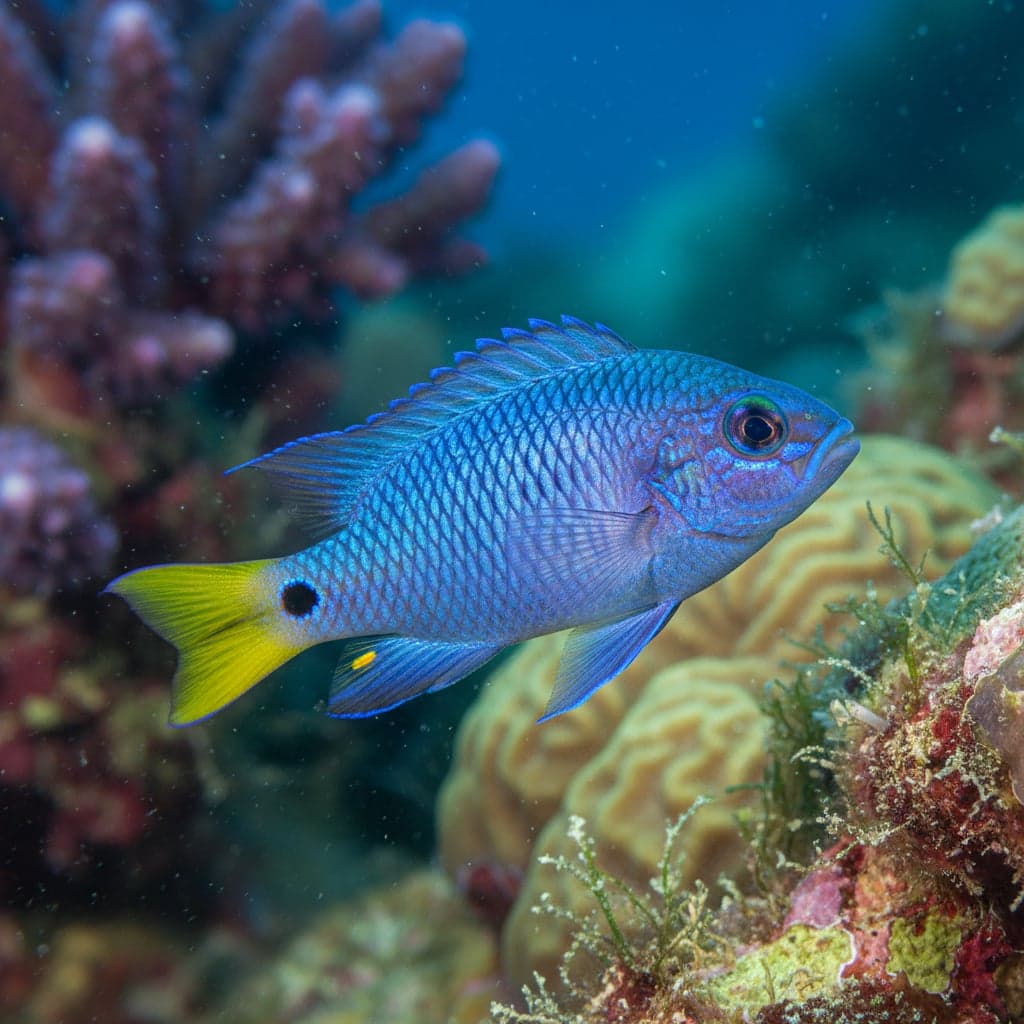
Sunface Damselfish
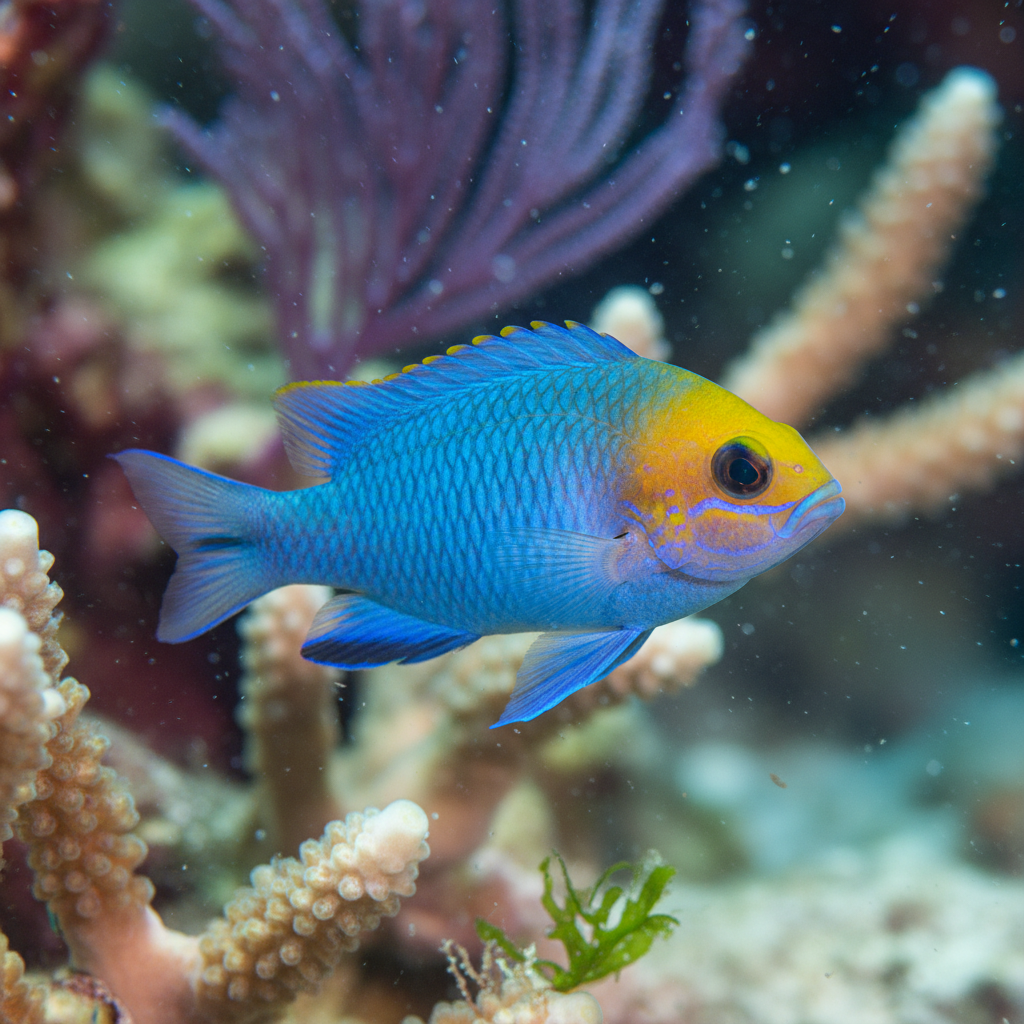
The Sunface Damselfish (Chrysiptera talboti), or Talbot's damsel, is a small, delicately coloured reef fish — hardy, reef-safe and one of the most peaceful damsels.

Sunface Damselfish
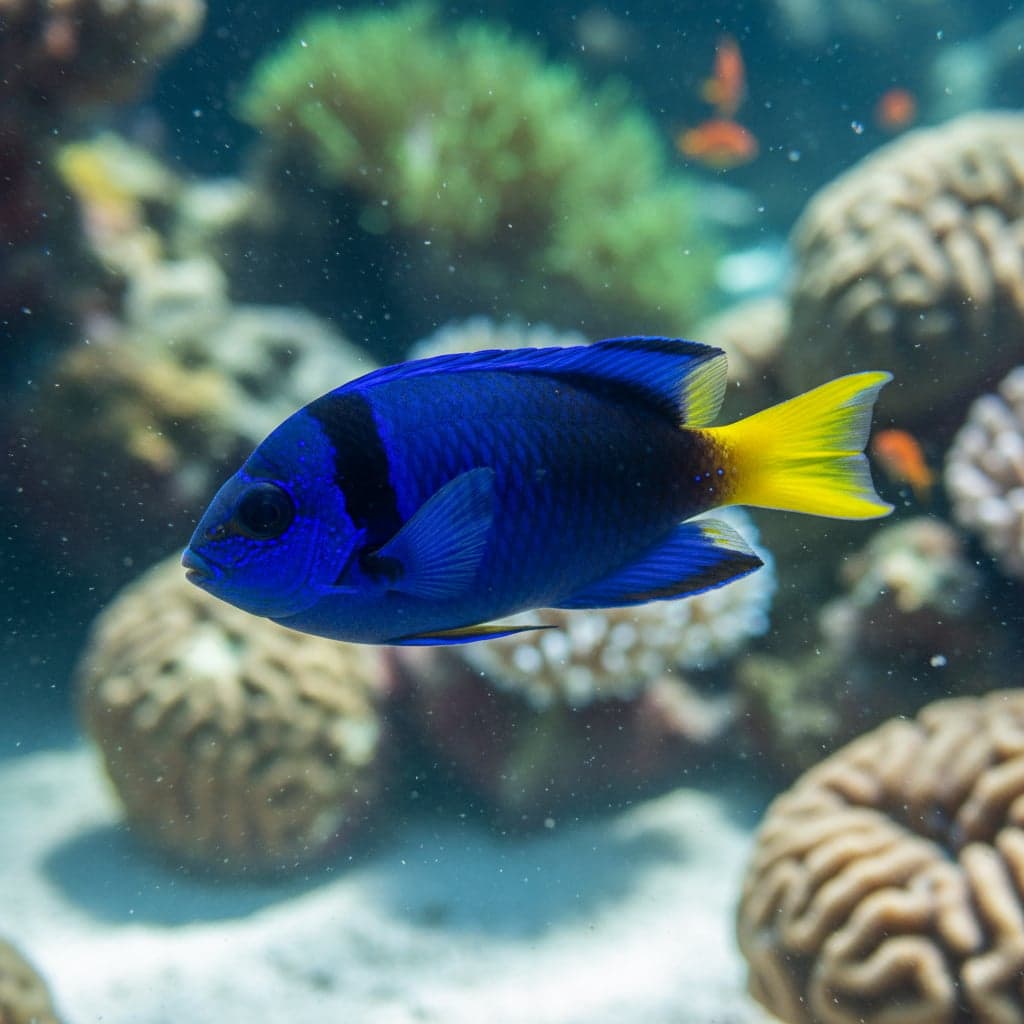
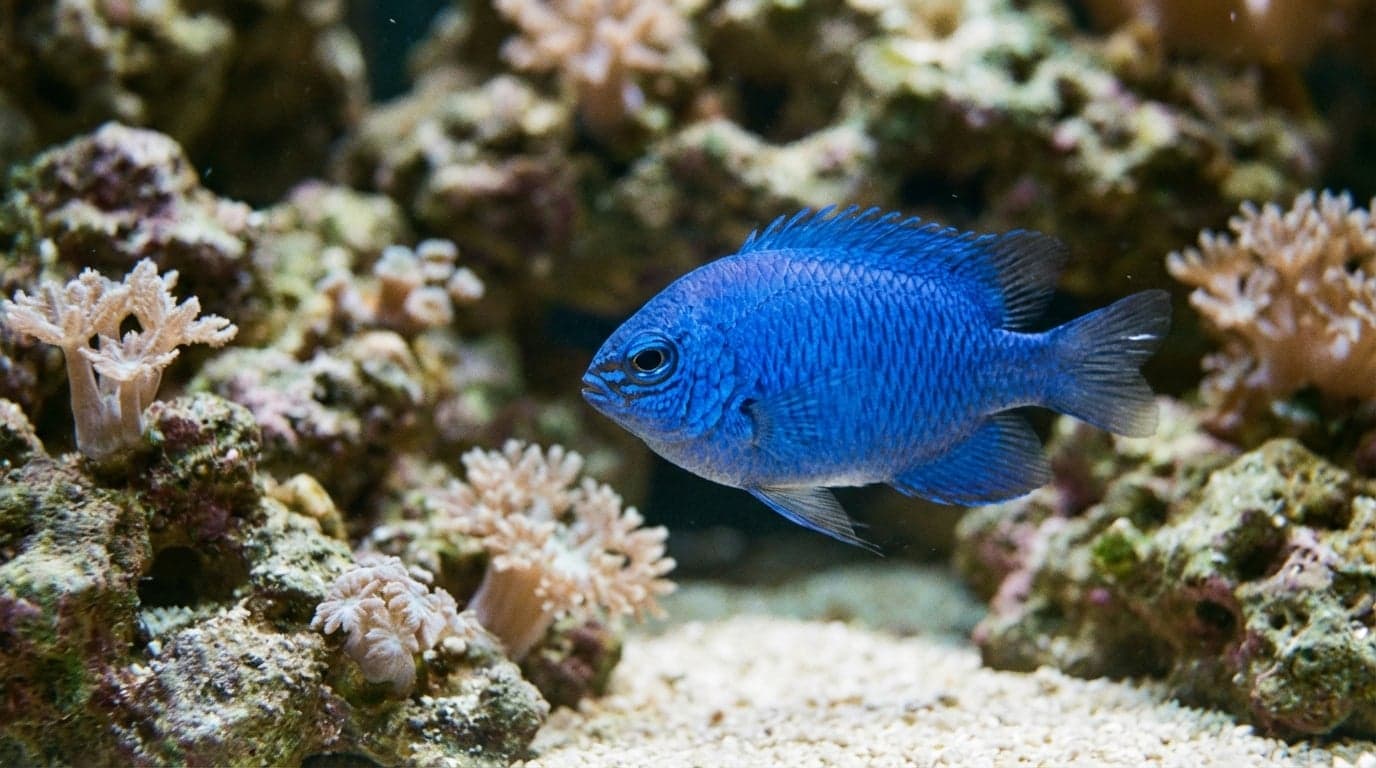
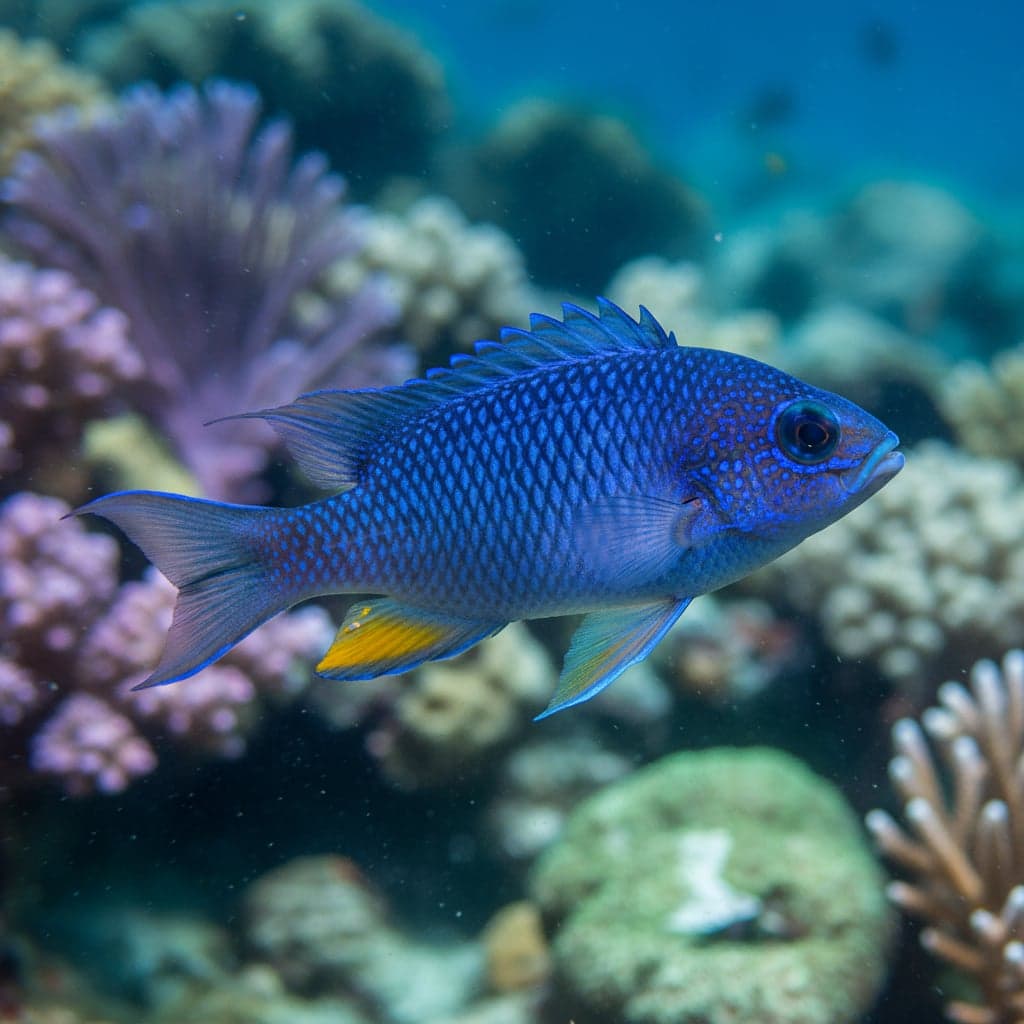
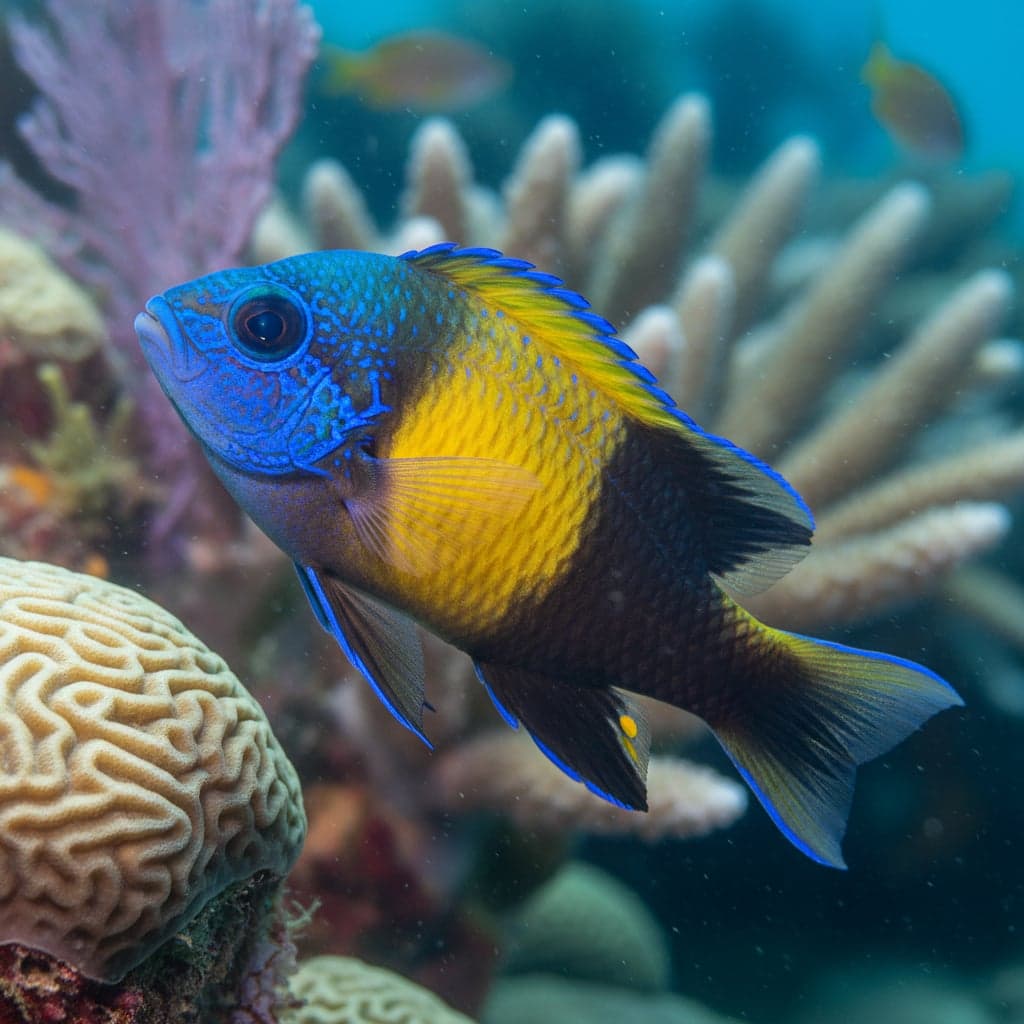
The Sunface Damselfish (Chrysiptera talboti), sold as Talbot's damsel, is the damsel people wish the rest of the family behaved like. The body runs from soft lavender-pink through pale yellow over the head and nape, with a neat black spot on the soft dorsal — colour that reads delicate without being washed out under reef lighting. At roughly 6 cm (2.5 inches) adult size it is a small pomacentrid, and unlike the blue damsels that earn the family's reputation it is genuinely mild with tankmates.
That temperament is the whole point of buying one. Most damsels are cheap, hardy and then permanently territorial. The Sunface keeps the hardiness and drops most of the attitude, which is why a small group can often share a tank — an option you should not assume with a yellow-tail blue or a generic blue damsel.
Natural Habitat & Origin
Chrysiptera talboti is a western Pacific reef fish, recorded from the Philippines, Indonesia, Papua New Guinea, the Solomon Islands and neighbouring island groups. It lives on reef slopes and rubble patches rather than the most exposed crest, hovering a short distance above the substrate in loose aggregations and picking zooplankton from the water column. When threatened it drops straight into the nearest crevice or branching coral head.
That ecology translates cleanly into aquarium layout. It wants live rock with real holes and overhangs, not a bare glass box with a handful of decorative pieces, and enough open water just above the rock for the hovering feeding style it uses in the wild. It is not a mid-water cruiser like an anthias and not a cave hermit either — think of it as a fish that parks near structure and works the water immediately above it.
Care Requirements
Stable marine chemistry matters more than chasing exotic numbers. Target salinity around 1.024–1.026 specific gravity, pH 8.1–8.4, and temperature 24–26°C (75–79°F). Ammonia and nitrite must stay at zero; keep nitrate modest with regular water changes — see nitrite and nitrate and ammonia if you are still learning the nitrogen cycle on a new system.
At 6 cm the fish itself is small, and a single specimen can live in around 75 litres (20 US gallons) if the rockwork is dense and the rest of the stocking is calm. A small group needs more volume and more discrete shelter so fish are not forced to share one cave. Flow should be moderate and broken by rock rather than a single blast from a powerhead; damsels handle current, but constant turbulence that pins them to the glass is stress for no gain.
It is a forgiving beginner fish in the sense that it survives imperfect acclimation better than butterflies or many wrasses. It is not a licence to skip cycling, quarantine or parameter stability — those failures still kill damsels, just more slowly than they kill sensitive species.
Use the Aquarium Tracker to log salinity, temperature and nutrients against your own readings so drift shows up before the fish does.
Diet & Feeding
In the wild the Sunface is primarily a zooplankton feeder with some grazing on surface films and algae. In the aquarium it is an undemanding omnivore. Offer frozen mysis and enriched brine shrimp, small marine pellets or flakes, and foods that include marine algae or spirulina so the plant side of the diet is not ignored. Variety beats any single “damsel food.”
Feed small amounts two or three times a day rather than one heavy meal. The fish is an eager feeder and will take food from the water column quickly; the risk is not refusal but overfeeding that fouls a small tank. If you keep a group, watch that the same bold individual does not monopolise every feeding — scatter food so subordinate fish get a share. Marine diets and feeding schedules cover the broader pattern.
Colour holds when the diet is varied and the fish is not chronically stressed. A Sunface that goes dull and hides constantly is usually telling you about water quality or aggression in the tank, not asking for a colour-enhancing flake.
Behavior & Temperament
Unusually among common damsels, this species is peaceful enough for a genuine community reef. It does not routinely chase clownfish off anemones, shred gobies or wage war on every new arrival. It will still defend a favoured crevice if pressed, and a male guarding eggs becomes more assertive, but day to day it is mild-mannered.
Frontmatter and shop labels sometimes call it a shoaling fish. That oversells it. In the wild it forms loose aggregations near structure; in the aquarium a small group of three to five often works in a larger system if rockwork creates multiple territories, but they do not school like chromis or swim as a tight pack. Buy a group for the look of several pastel damsels working the same rock pile, not because the species requires a shoal to feel secure.
Activity sits in the lower to mid water, always oriented to rock. A fish that never leaves one hole is usually being bullied or newly imported and terrified; give it cover and calm tankmates and it should start hovering and feeding in the open within days.
Tank Mates
Good companions are other peaceful reef fish: common clownfish, firefish, smaller wrasses such as the six line, pyjama cardinalfish, and quiet anthias in an appropriately sized system. It can share space with relatively timid species precisely because it does not usually harass them.
Avoid the obvious mismatch of large predatory wrasses, triggers and aggressive dottybacks that will treat a 6 cm damsel as a target. Mixing it with highly territorial damsels in a small tank is how you recreate the problem this species is meant to avoid — the Sunface loses that contest. Add damsels after more peaceful fish are established if you must mix types, and give the Sunface room to retreat.
It is fully reef-safe with corals and ornamental invertebrates. It does not nip LPS or soft corals for food, does not bother ornamental shrimp, and leaves snails and crabs alone. That is the clean reef-safe claim, not the hedged version many butterflies require.
Breeding
Like other damselfish, C. talboti lays demersal adhesive eggs on a cleaned rock face, shell or similar surface. The male guards and fans the clutch until hatch. Rearing the pelagic larvae past the planktonic stage is rarely achieved in a home aquarium; almost all trade fish are wild-collected. If a pair spawns in a display tank, enjoy the behaviour and expect the larvae to disappear into the filtration and the mouths of tankmates.
Common Health Issues
Hardiness is real, but marine parasites do not respect marketing. Marine ich (Cryptocaryon irritans) and marine velvet (Amyloodinium ocellatum) remain the main infectious risks, especially on freshly imported fish and after shipping stress. Run every new arrival through a proper quarantine protocol; treat for marine ich and velvet in a hospital system, not in a display reef where copper and many therapeutics will kill invertebrates — see medications.
Secondary problems are almost always husbandry: ammonia spikes on a new tank, chronic high nitrate, or bullying that keeps the fish from feeding. A Sunface that flashes, breathes hard or shows white spots needs isolation and diagnosis, not a copper dump into the show tank. Kept with stable water, a varied diet and calm company, it is one of the few damsels that earns both “beginner” and “community reef” without apology.