Guppy Breeding & Raising Fry
Gestation, brood size, stored sperm, and what fry actually need in their first six weeks — including why your shop-bought female is already pregnant.

Guppy breeding and raising fry
Breeding guppies is not something you do. It is something that happens to you.
If you keep both sexes in the same tank, they will breed, and no amount of planning will stop it. The useful skills are not "how do I get them to breed" — they are recognising what stage a female is at, deciding how many fry you actually want to survive, and growing out the ones you keep so they turn into decent adults rather than stunted ones.
Your female is already pregnant
This surprises people, so it goes first.
A female guppy stores sperm. After a single mating she retains viable sperm in folds of the ovarian tissue and uses it to fertilise successive broods for four to six months, sometimes longer. She does not need the male again.
Which means: a female bought from a shop, from a mixed tank, is almost certainly carrying. Isolating her at home does not produce a fry-free tank — it produces a brood in a few weeks and more after that. People who buy "females only" specifically to avoid breeding are routinely caught out by this.
It also means that if you are trying to breed a specific strain, buying a female from a mixed shop tank is close to useless. Her first several broods will be fathered by whatever male reached her in the shop. To get known parentage you need a virgin female — one raised from fry and separated from males before four weeks of age.
Sexing
Straightforward once the fish are five or six weeks old.
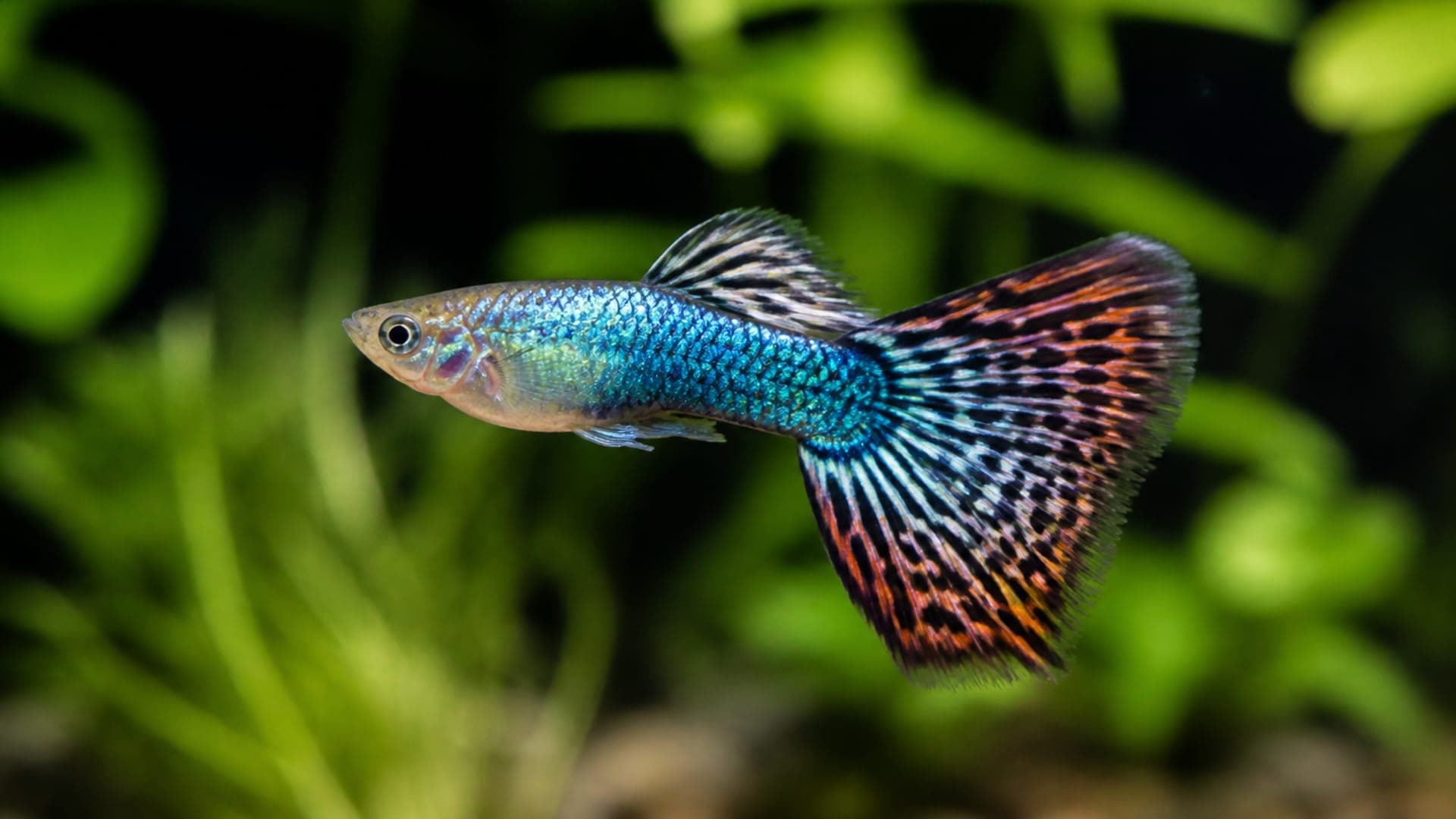
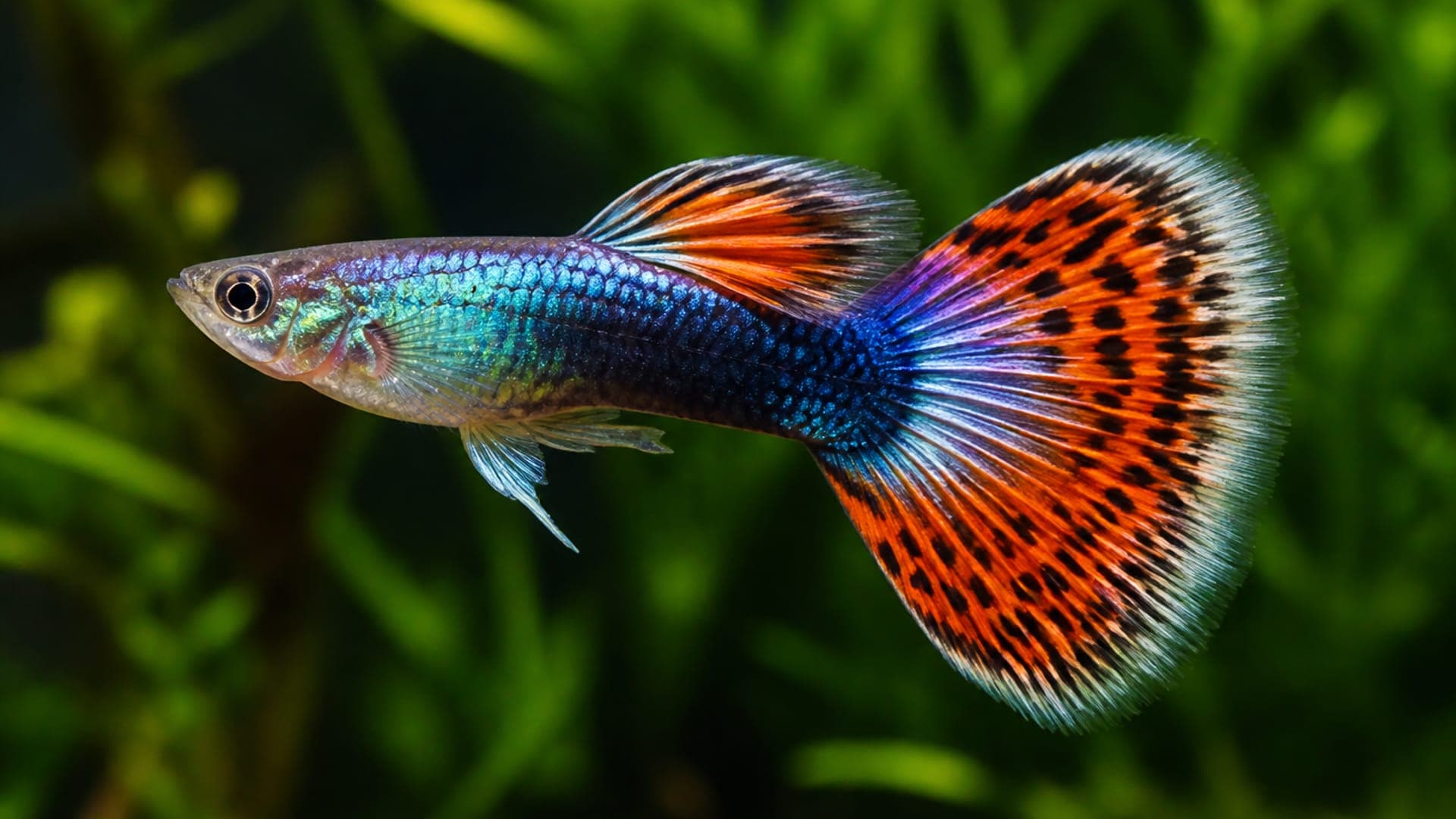
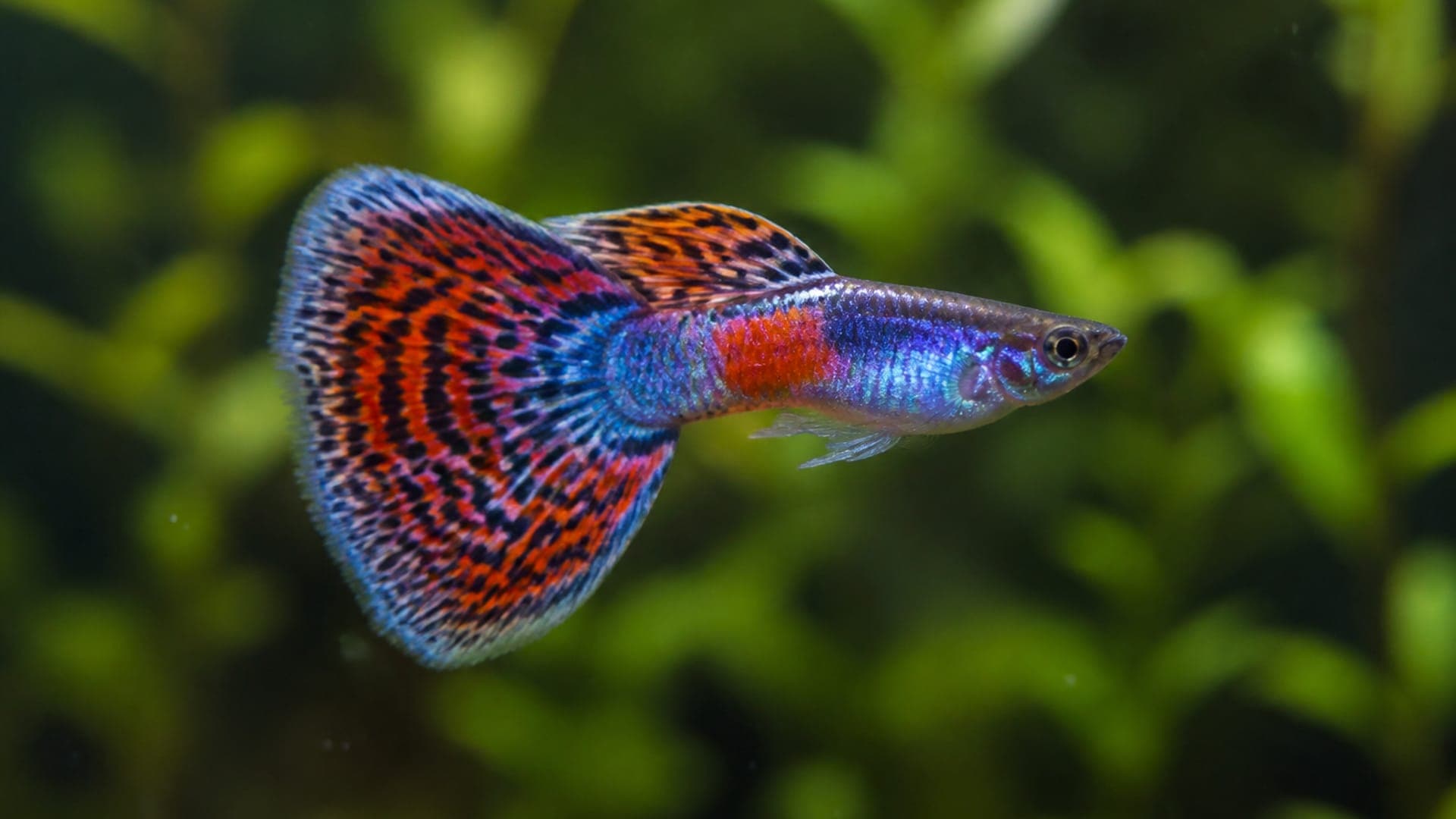
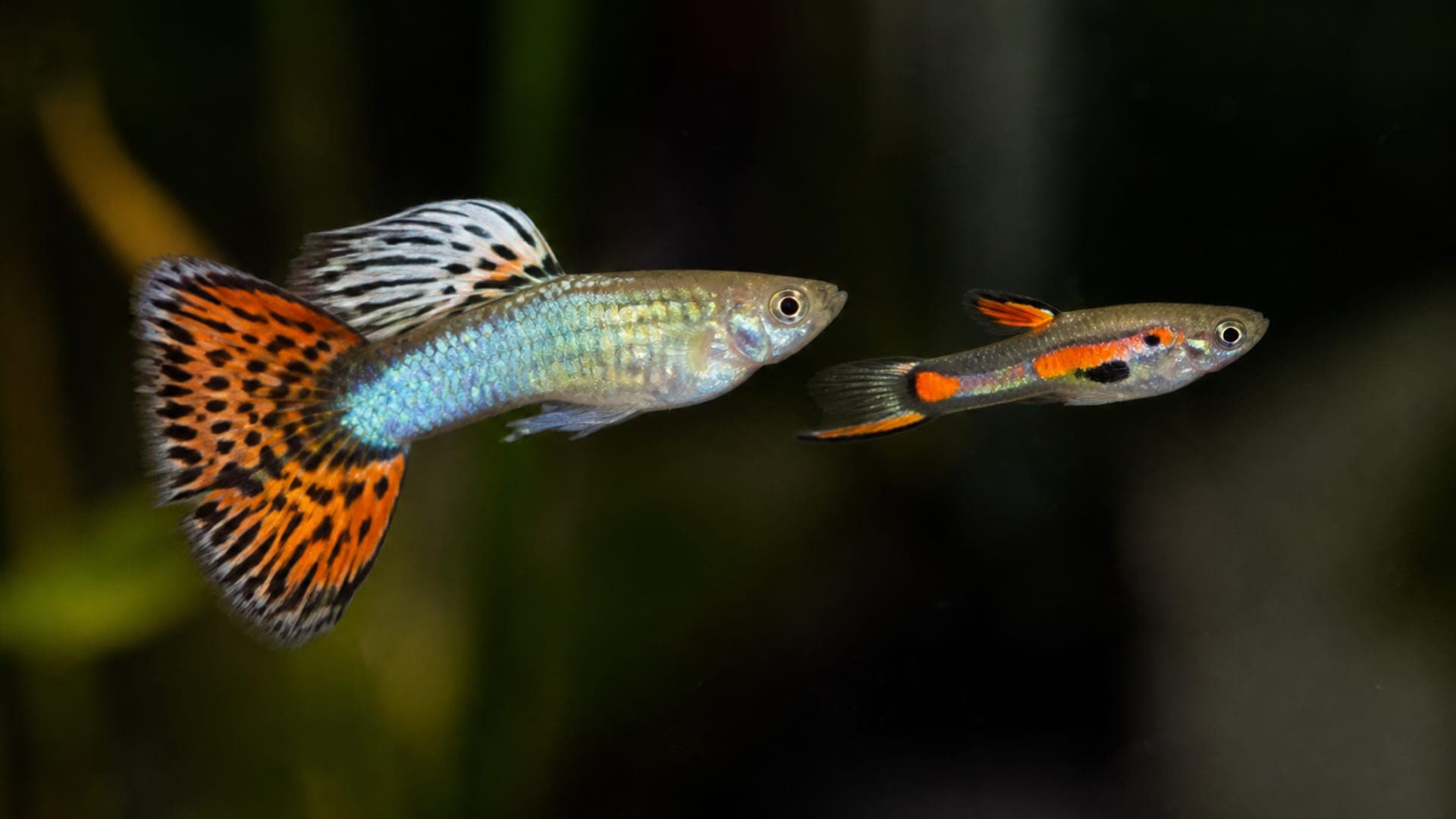
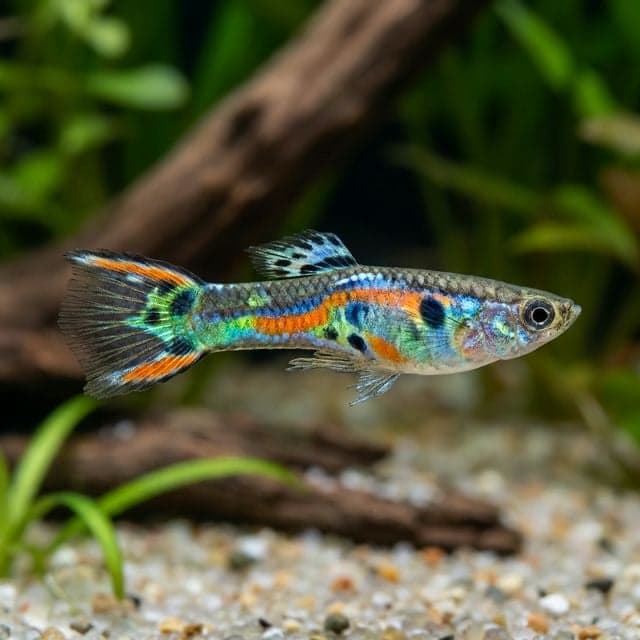
Males are smaller (3–3.5cm), far more colourful, and have a gonopodium — the anal fin modified into a narrow, rod-like structure used to transfer sperm. It is the definitive sign. It develops from around four to six weeks and is unambiguous by eight.
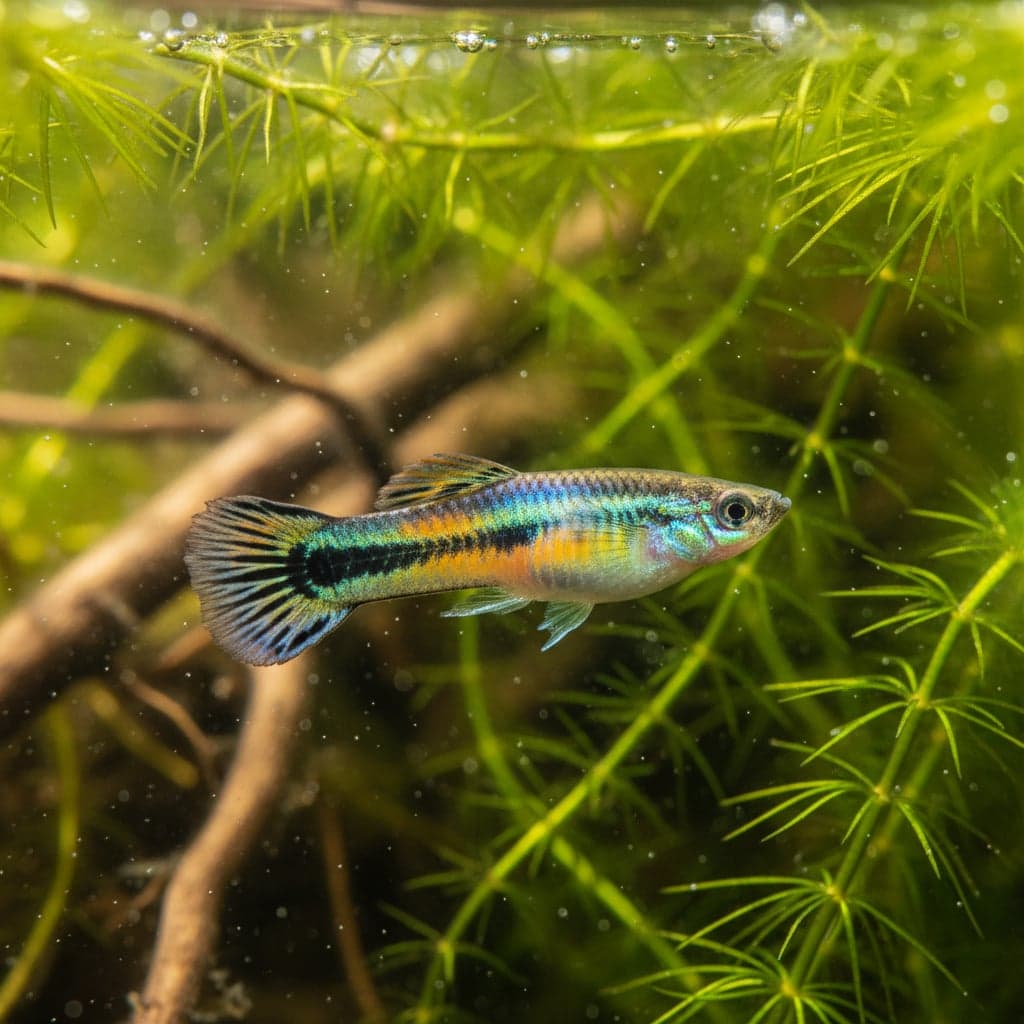
Females are larger (up to 6cm), plainer, with a normal fan-shaped anal fin and a dark gravid spot near the vent that darkens as a brood develops.
Before four weeks the fry are effectively unsexable by eye. Colour starts appearing in males from around three weeks and is the first usable hint, but the gonopodium is the thing to wait for. There is a week-by-week timeline, and the reasons colour misleads people, in male vs female guppies.
Gestation and reading a gravid female
Gestation runs 21–30 days, faster at higher temperatures. At 26°C expect around 22–24 days; at 22°C closer to 30. Consistency matters more than speed — temperature swings can cause premature drops.
Signs a female is close:
- The gravid spot goes from a faint grey smudge to dark, sometimes almost black. In pale or albino strains you can see the eyes of developing fry as tiny dark dots.
- Her abdomen squares off. A merely well-fed guppy is rounded; a near-term female develops a distinctly boxy profile when viewed from the side.
- She becomes withdrawn — hanging near the heater, behind equipment, or in the plants, and refusing food in the last day or two.
Brood size runs 20–60 fry, and scales with the size and age of the female. A young female's first brood may be five or six fry. A large mature female can deliver eighty. Broods arrive roughly monthly while she has stored sperm.
Whether to intervene at all
Adult guppies eat fry, including their own. This is not a malfunction — it is the mechanism that keeps a colony stable in a home aquarium, and in a well-planted tank it produces a self-limiting population of a sensible size without you doing anything.
Think carefully before overriding it. A single female's full output, all surviving, is more fish than most people have tanks for. The realistic options:
Do nothing, in a planted tank. Dense cover means a handful of fry per brood survive. The population drifts upward slowly and stabilises. This is the right answer for most people, and the fry that survive are the ones fast and alert enough to have earned it.
Heavy planting, deliberately. If you want more survivors without separate equipment, load the tank with fine-leaved and floating plants. Java moss is the classic — fry drop straight into it and are effectively invisible. Water sprite, hornwort, Amazon frogbit and Salvinia all work, with the floating species doubling as cover from above, where fry instinctively gather in the first days.
A separate grow-out tank. Move the fry, not the mother. A bare-bottomed 20–40L with a mature sponge filter and a heater is ideal: easy to keep clean, no substrate for uneaten food to rot in, and no predators.
A breeder box or trap. Worth being honest about — the small plastic V-shaped traps that suspend a near-term female over a slot are stressful. Confined females frequently abort broods or deliver prematurely, and a fish held in a 100ml compartment for a week is not having a good time. If you use one, add her only when she is clearly within a day or two of dropping, and remove her the moment she has. The larger mesh breeder boxes that hang in the tank are considerably better, and a densely planted tank is better still.
The first six weeks
Fry are around 6mm at birth, fully formed, free-swimming immediately and hunting food within hours. There is no yolk sac stage and no infusoria phase — this is what makes livebearers so much easier than egg-scatterers.
Food. They need small, frequent, protein-rich meals.
- Crushed flake, ground to dust between your fingers, works from day one.
- Baby brine shrimp (freshly hatched Artemia) produce visibly faster growth and better colour than anything else. Worth the hatchery setup if you are raising fry seriously.
- Microworms and vinegar eels are easy cultures to keep going and a good daily staple.
- Powdered fry food is a reasonable convenience option.
Feed three to four times a day, small amounts. See feeding fry for the general principles.
Water quality is the real limiter, not food. Heavy feeding in a small volume means ammonia, and fry are far less tolerant of it than adults. Small daily or every-other-day water changes — 10–20% — on a grow-out tank are normal, and they drive growth as much as the food does. Stunted guppies are almost always a water quality outcome rather than a feeding one, and a stunted fish never catches up.
Temperature. 24–26°C for grow-out is reasonable; it speeds development without the long-term cost, since they will not be at that temperature for long. Drop to 22–24°C once they are adult.
Hardness matters most here. Fry grown in soft water develop spinal deformities and never colour up properly. If you fix one thing before raising a brood, fix GH and KH.
Separating by six weeks
Males reach sexual maturity somewhere between eight and twelve weeks, but the gonopodium is functional earlier than it looks finished, and successful matings happen from around six to seven weeks.
If you are not separating sexes by six weeks, your grow-out tank starts producing its own second generation, and full-sibling matings compound quickly. Colour and vigour degrade within a few generations of unmanaged inbreeding — which is exactly how a tank of brilliant fancy guppies becomes a tank of drab grey ones in a year.
Sort them at five to six weeks: males one side, females the other. It takes twenty minutes and it is the difference between a maintained line and a deteriorating one.
Strains, and what happens when you mix them
Fancy guppy strains are line-bred, not naturally occurring. Their colour and fin patterns are held in place by selective breeding, and they are not stable when mixed.
Cross two strains and the first generation is often striking. Keep going without selection and by the third or fourth generation you are heading back toward wild-type — a smallish, grey-bodied fish with a modest tail and a little colour on the peduncle. That is the default the genetics fall toward once selection stops.
Maintaining a strain means selecting deliberately in every generation and culling the fish that do not meet it. That word is uncomfortable, and it is worth being straight about: keeping a line means most fry do not stay. If that is not something you want to do, keep a mixed colony for the fun of it and enjoy what turns up, or keep males only and buy your colour rather than breeding it. Both are perfectly good ways to keep guppies.
More on what the strains actually are in tail types and strains.
Fry and tank mates
Almost anything that fits a fry in its mouth will eat one, including the parents. If you want survivors in a community tank, cover is not optional.
Zebra danios are particularly effective fry hunters — fast, mid-water, and permanently interested. A danio group will hold guppy recruitment near zero, which is either a problem or exactly the population control you wanted, depending on your plans. Angelfish and any cichlid will clear a brood in an afternoon. Corydoras and cherry shrimp take very few and are safe companions for a breeding tank.
The full compatibility picture is in the guppy tank mate guide.