Guppy Temperature: Range, Heaters and Lifespan
Guppies are tropical fish and need a heater in almost every home. What the real range is, why running warm shortens their lives, and how to size a heater properly.
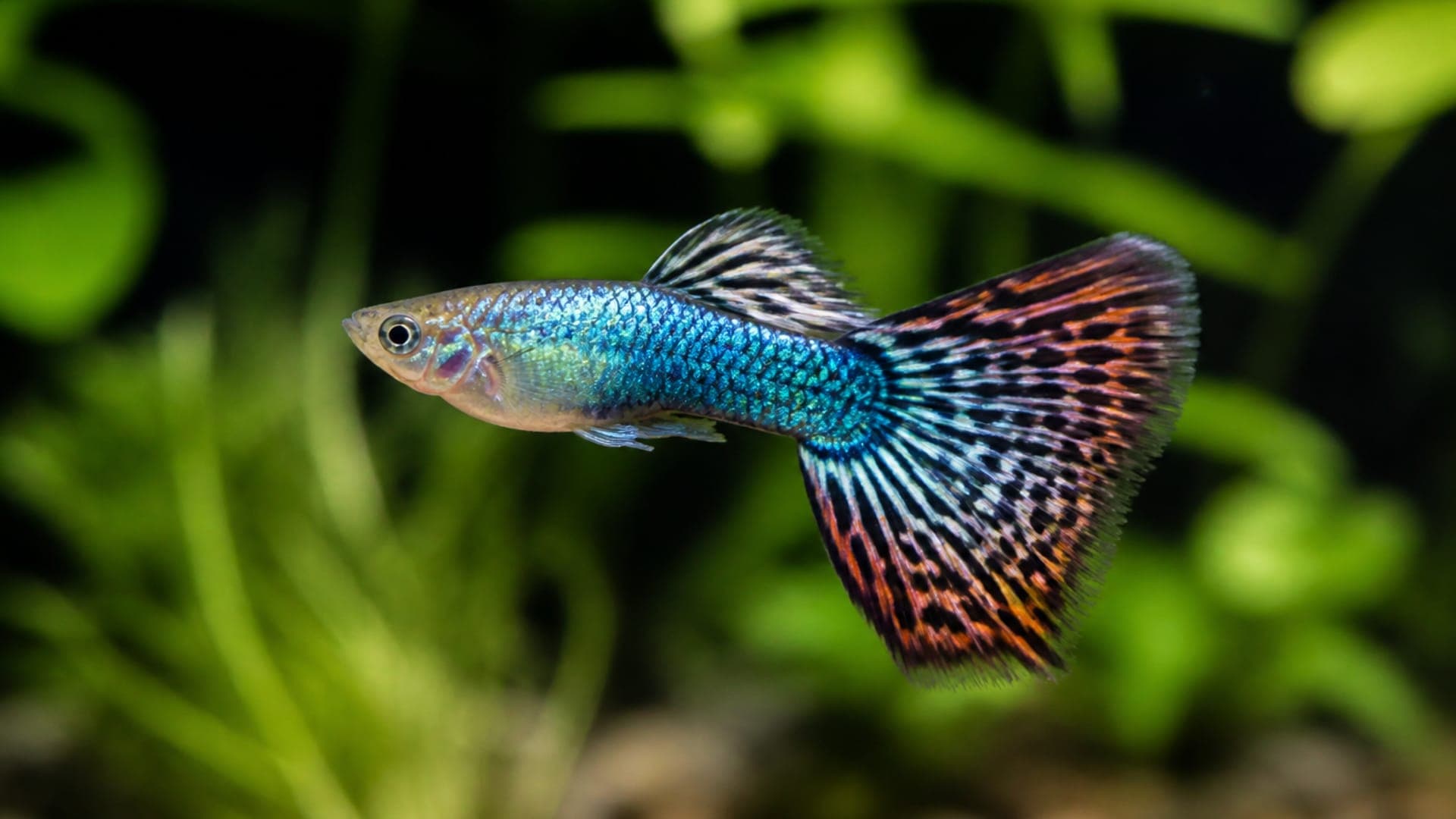
Guppies get sold as the fish you can keep in an unheated tank. It is one of the most persistent pieces of bad advice in the hobby, and it comes from a real observation misread: guppies survive room temperature. Surviving and thriving are different outcomes, and the gap between them is most of what people call "bad luck with guppies".
They are tropical. Trinidad, Tobago, Venezuela and Guyana are tropical places, and the streams guppies come from sit in the mid-twenties year round. A living room in an English winter does not.
The range, and where in it to sit
The survivable range is roughly 22–28°C (72–82°F). That is wider than most tropical fish tolerate, which is exactly why they got their reputation. The useful range is much narrower.
| Temperature | What happens |
|---|---|
| Below 20°C / 68°F | Immune function drops sharply. This is where fin clamping, white spot and columnaris outbreaks come from. |
| 22–24°C / 72–75°F | Slower metabolism, slower breeding, longest lifespan. A good choice for an all-male display tank. |
| 24–26°C / 75–79°F | The default target. Good colour, good appetite, reliable breeding, sensible lifespan. |
| 26–28°C / 79–82°F | Fast growth and fast breeding. Shorter lives, higher oxygen demand, less margin for error. |
| Above 28°C / 82°F | Oxygen becomes limiting. Fish hang at the surface and the tank stops forgiving mistakes. |
If you want one number, use 25°C. If you want a reason to pick something else, read on — the choice genuinely changes the fish you end up with.
Warm water is a trade, not an upgrade
Guppies are ectotherms: their metabolic rate tracks water temperature directly. Push the temperature up and everything speeds up at once — digestion, growth, colour development, gestation, ageing.
A tank at 28°C produces faster-growing, faster-breeding guppies that die younger. A tank at 23°C produces slower, longer-lived fish that breed less often. Neither is wrong. Breeders working a strain often run warm deliberately to shorten the generation time; someone who wants a display group to last runs cooler on purpose.
What people usually do instead is run warm by accident, then wonder why fish bought eight months ago are already looking old. See guppy lifespan for how much of the total this actually accounts for.
Warm water also holds less dissolved oxygen, while simultaneously raising the demand for it. At 28°C a heavily stocked, under-aerated guppy tank is running much closer to the edge than the same tank at 24°C, and a hot summer week is where that shows up.
Stability beats the target number
A tank held steadily at 23°C is a better tank than one that swings between 24 and 28 every day. Temperature swings suppress the immune system on their own, independently of where the average sits.
The usual sources of swing are worth knowing:
- No heater in a room that cools overnight. A 5°C drop between 10pm and 6am is common in an unheated room, and it happens every single night.
- An undersized heater cycling constantly and losing ground on cold nights.
- Large, cold water changes. Match the temperature of replacement water by hand — it is the most common self-inflicted swing.
- Direct sun, which can add several degrees to a small tank in an afternoon.
Small tanks swing hardest, because thermal mass scales with volume. This is one more reason the 20L "starter" guppy tank is a worse deal than it looks, on top of the stocking problems.
Do you actually need a heater?
Almost certainly yes. The honest test is not what the room feels like — it is what the tank reads at 6am in February.
Skip the heater only if the room genuinely holds above 22°C day and night, all year. That is true of some centrally heated flats and very few other places. A heater costs less than a single replacement group of fish, and it removes the one variable you cannot correct after the fact.
Sizing and fitting
Roughly 1 watt per litre for a normally heated room; step up to 1.5–2 W/L for a cold room, a conservatory, or a tank against an outside wall.
| Tank | Typical heater |
|---|---|
| 40L / 10 gal | 50W |
| 60L / 15 gal | 75W |
| 100L / 25 gal | 100–150W |
Two smaller heaters instead of one large one is the standard trick for anything above about 100L. If one sticks on, it cannot cook the whole tank; if one fails off, you keep half your heating. Put the heater near the filter outflow so heated water actually circulates rather than forming a warm pocket.
Buy a separate thermometer and do not trust the dial. Heater dials are frequently out by two or three degrees, and the dial is the part that never tells you it is wrong. A cheap glass thermometer at the opposite end of the tank from the heater is enough.
Temperature as a treatment
Raising temperature is a legitimate tool for white spot: the parasite's life cycle accelerates with heat, and only the free-swimming stage is vulnerable to treatment, so warmth shortens the wait. Guppies tolerate a slow rise to 28°C well.
Two cautions. Increase aeration at the same time, because you are cutting the oxygen ceiling exactly when the fish need more. And raise slowly — one degree per hour at most. Heat is not a treatment on its own for anything else, and it actively makes bacterial infections such as fin rot worse by speeding up the bacteria too.
Before you buy
- Assume a heater is required unless you have measured the room at 6am in winter.
- Target 24–26°C, and pick the cooler end if you want the fish to last.
- Size at ~1W per litre, more for cold rooms; split across two heaters above 100L.
- Buy a thermometer separately and trust it over the dial.
- Match water-change temperature by hand — it is the swing you control most easily.
- Temperature fixes nothing if the water chemistry is wrong: guppies still need hard, mineral-rich water.