Male vs Female Guppies: How to Tell Them Apart
Sexing guppies is easy once they are grown and genuinely difficult before four weeks. The gonopodium, the gravid spot, and how to sex a juvenile before it breeds in your grow-out tank.
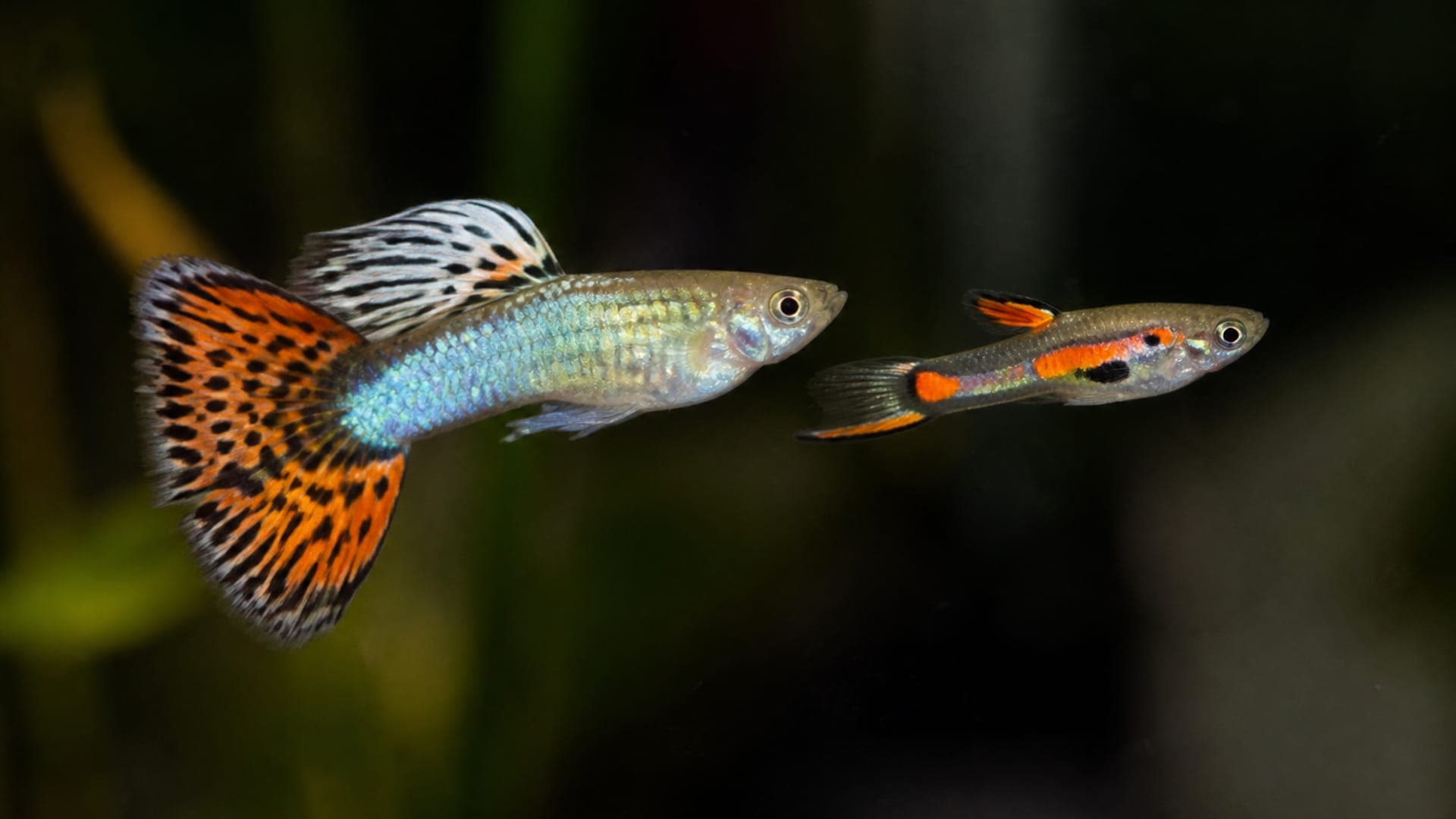
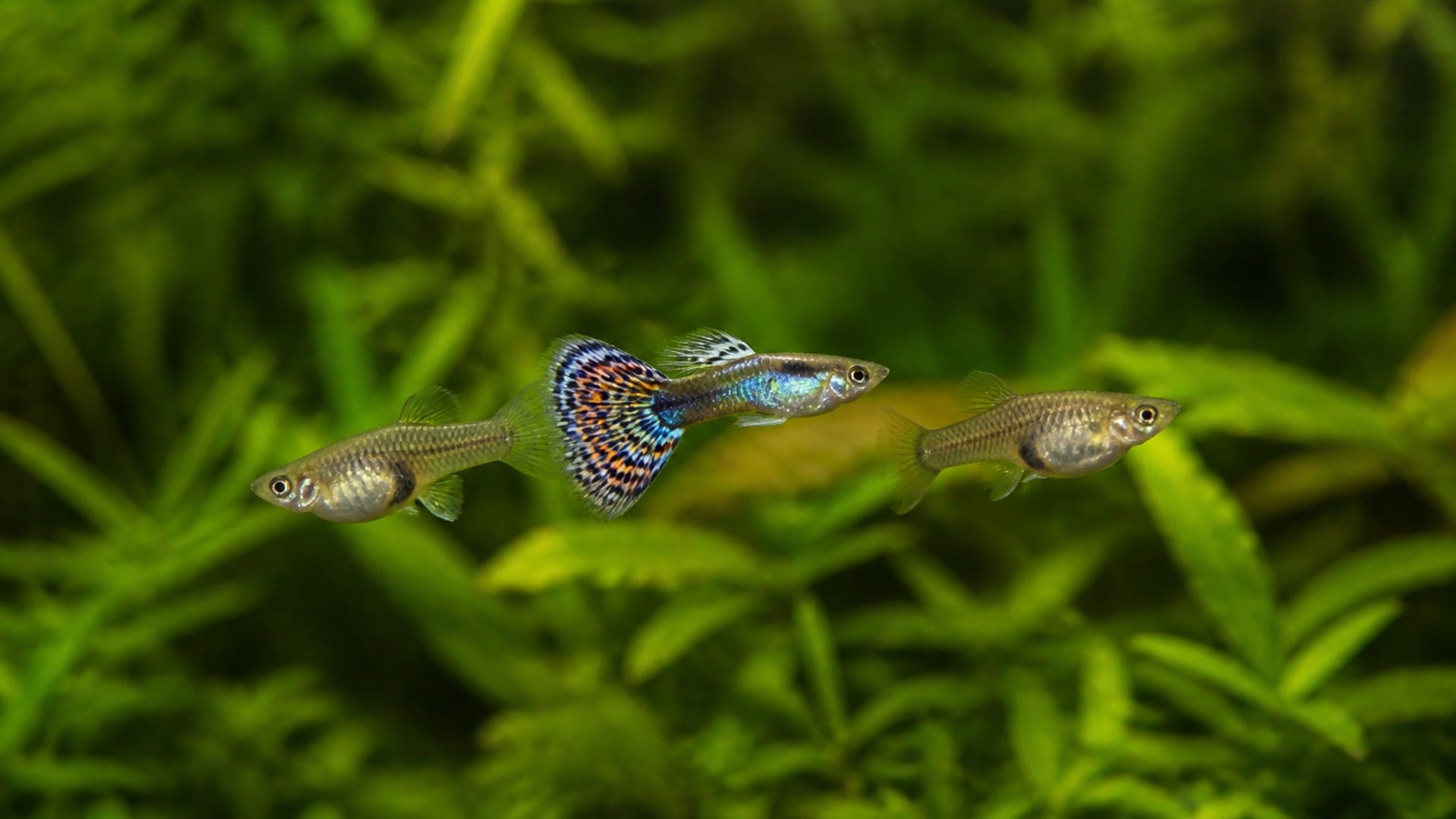
Adult guppies are among the easiest fish in the hobby to sex — the sexes look so different that beginners often assume they have been sold two species. Juveniles are a different problem entirely, and getting that one wrong is how a grow-out tank turns into a second population.
The differences at a glance
| Male | Female | |
|---|---|---|
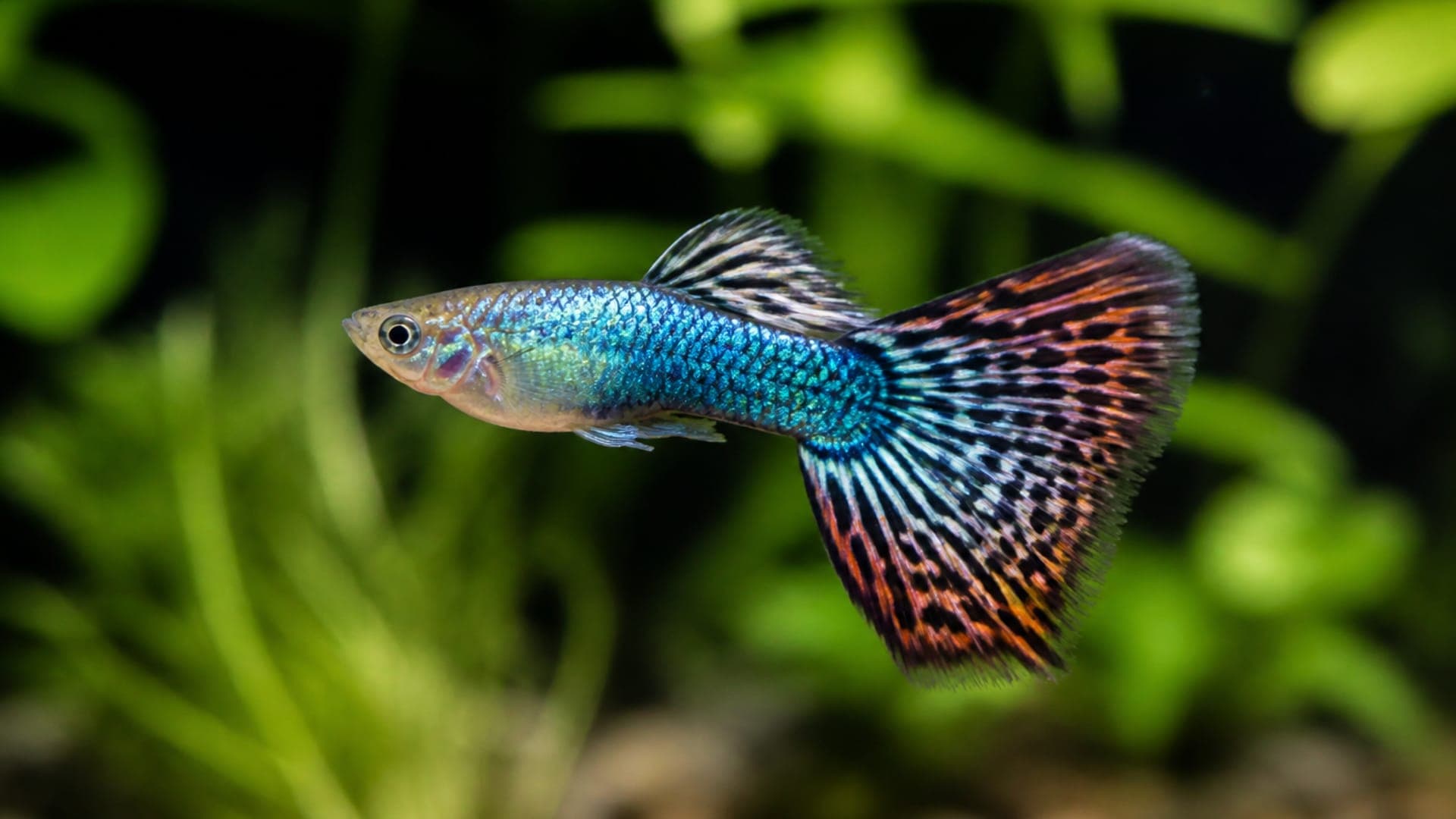
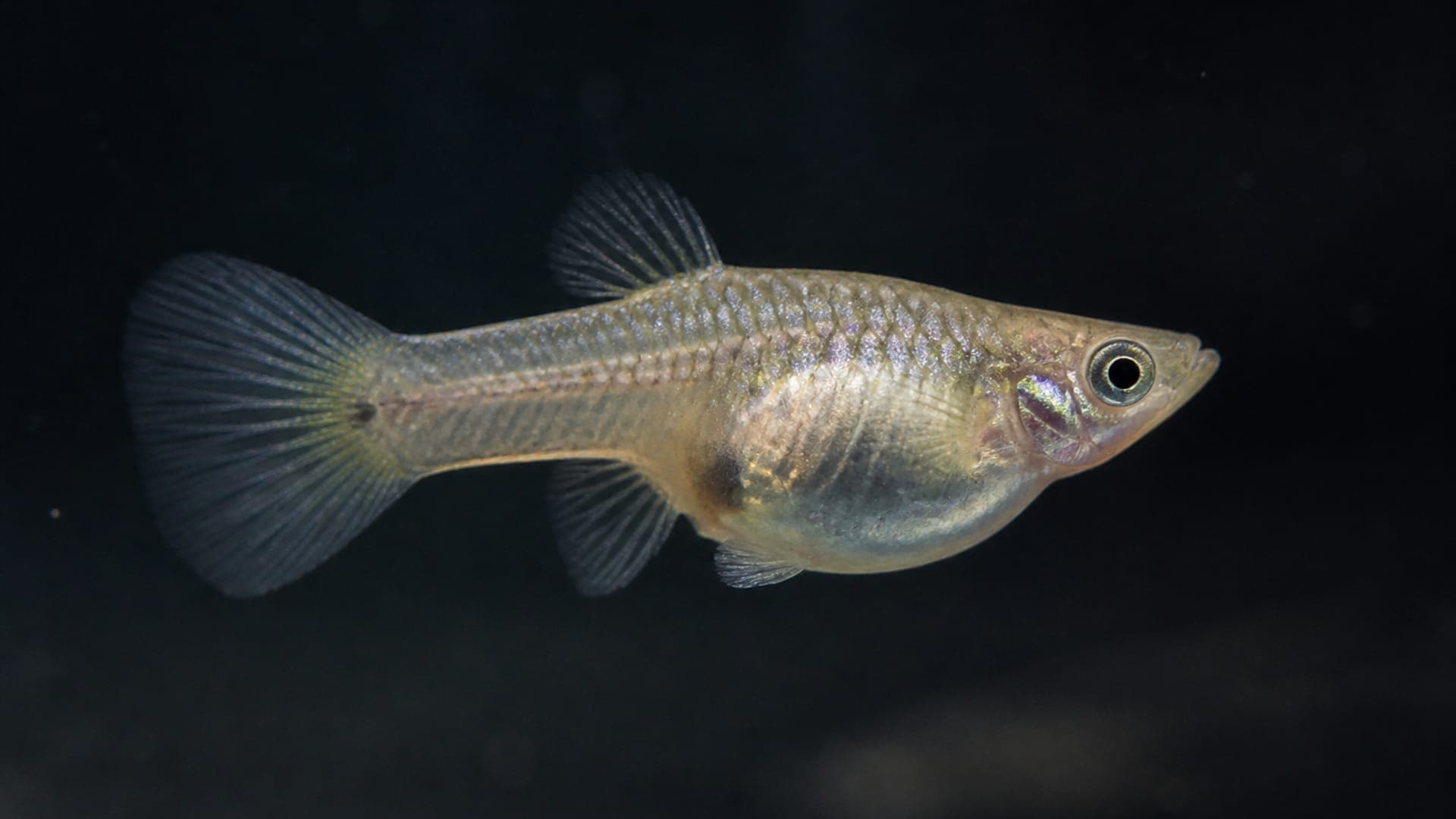
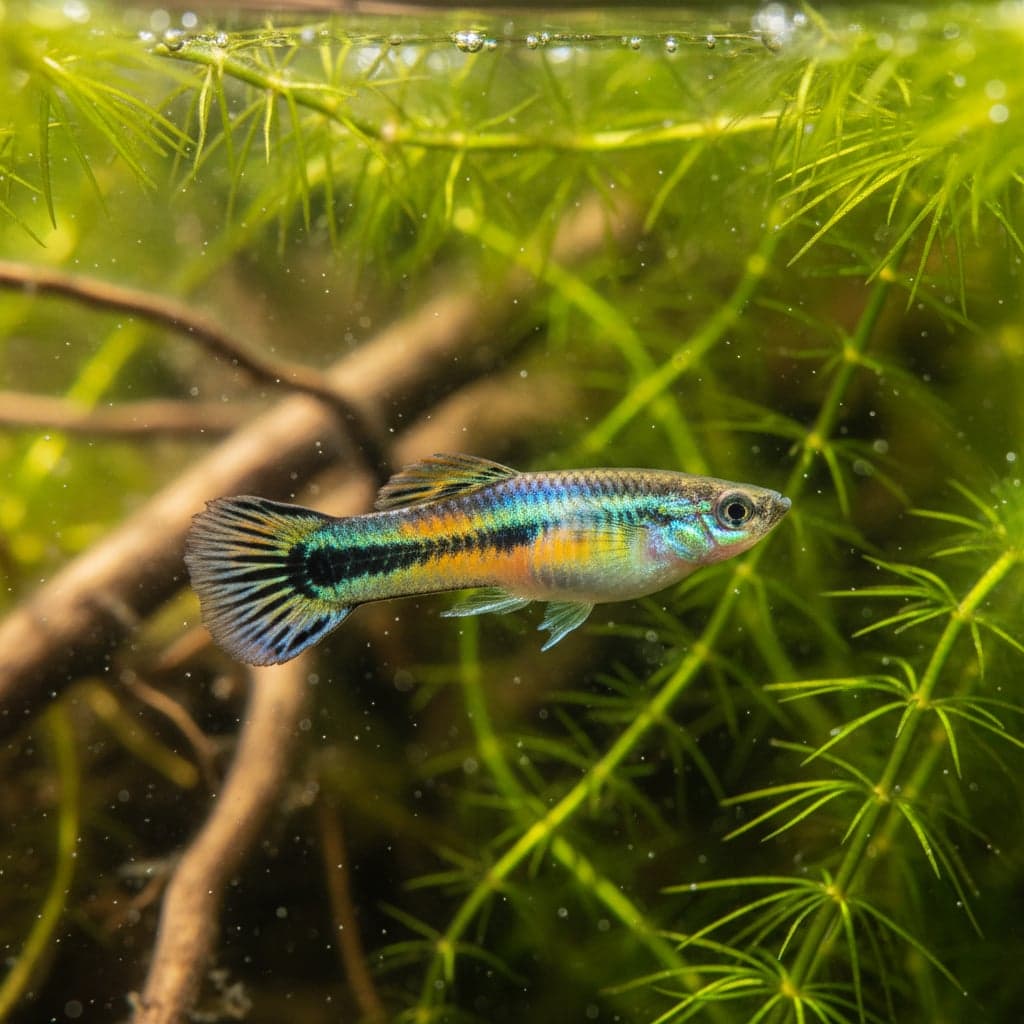
| Size | 3–3.5cm, slender | Up to 6cm, deep-bodied |
| Anal fin | Narrow rod — the gonopodium | Fan-shaped and triangular |
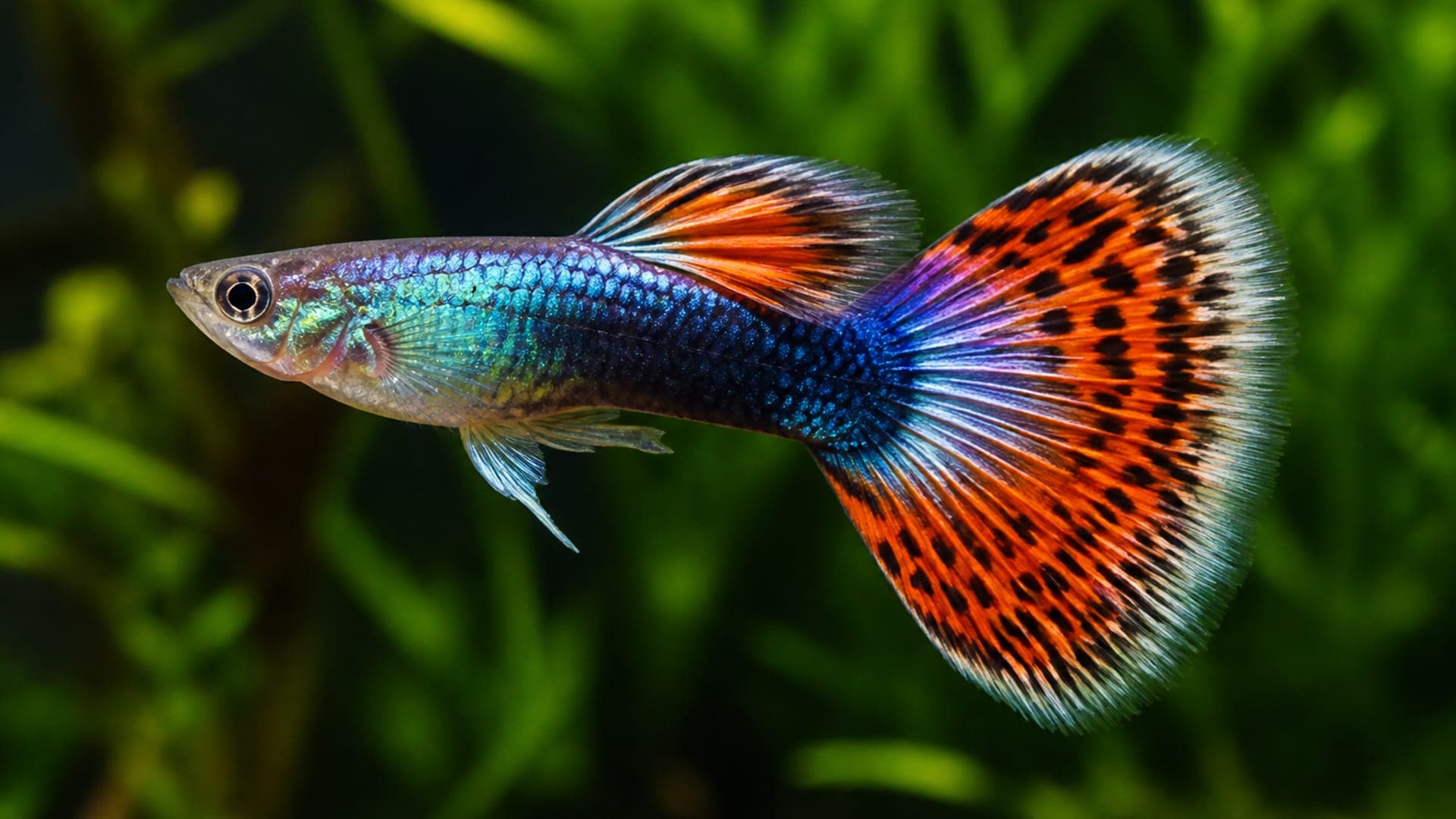
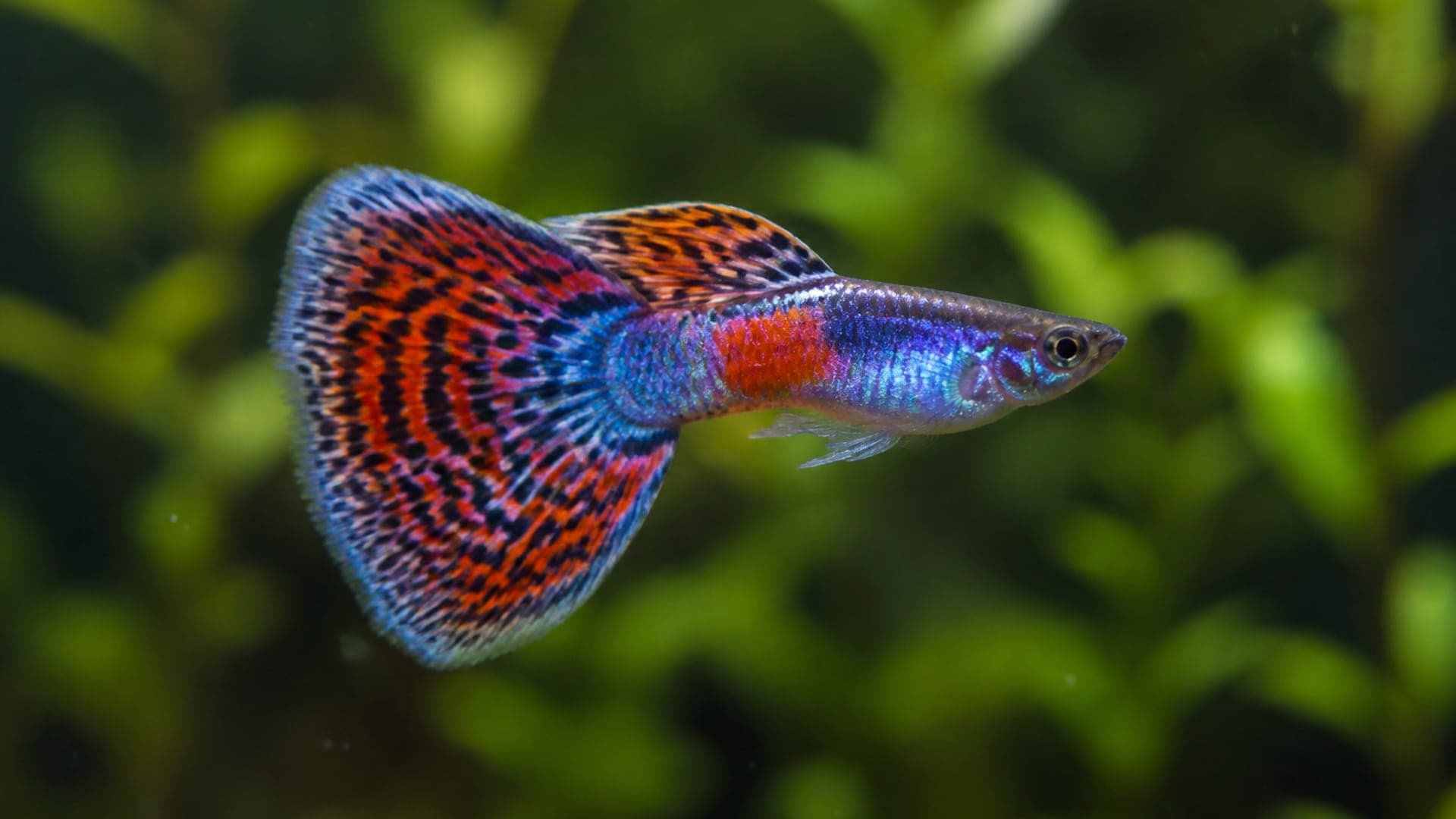
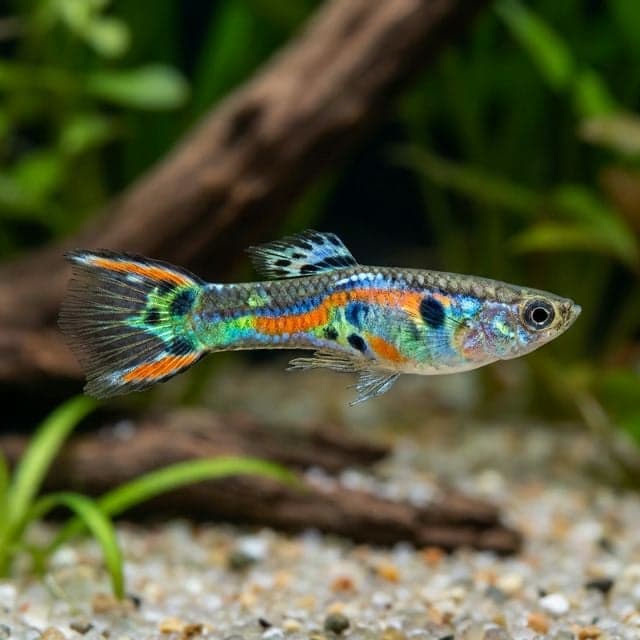
| Colour | Bright, patterned, iridescent | Usually plain silver-grey; tail may be coloured |
| Tail | Large and ornamental | Smaller and plainer in proportion |
| Gravid spot | Absent | Dark patch above the anal fin |
| Behaviour | Constantly displaying and pursuing | Grazing, avoiding, hiding when pressured |
The one reliable signal: the anal fin
Everything else is a hint. The anal fin is proof.
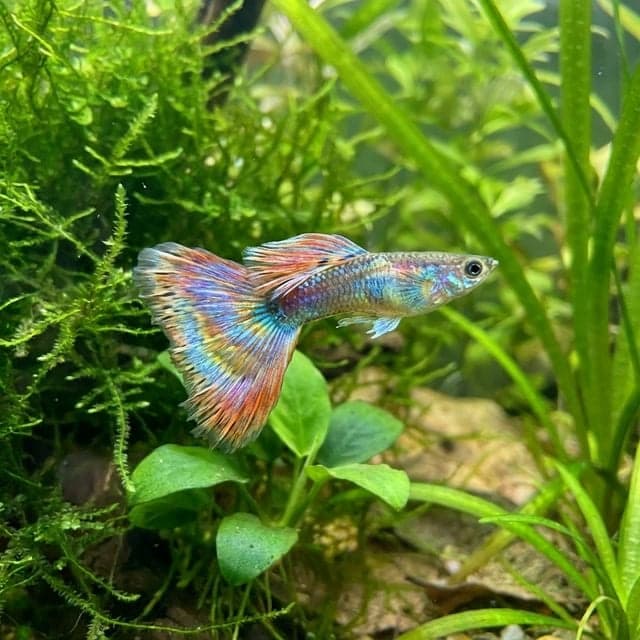
In males it is modified into a gonopodium — a narrow, stiff, rod-like structure used to transfer sperm. It sits just behind the belly, points backwards, and in a mature male it is unmistakable once you know to look. In females the anal fin stays a normal fan-shaped triangular fin.
This is the check to use, because it is structural rather than cosmetic. It does not depend on strain, diet, age beyond a point, or lighting.
The gravid spot — a dark patch on the female's abdomen just above the anal fin — is the second-best sign. It darkens considerably during pregnancy and is visible in most strains, but it is genuinely hard to see on albino, blonde and very pale fish, and absent-looking on a young female who has never been mated.
Why colour misleads people
The rule "males are the colourful ones" is broadly true and fails often enough to matter.
Modern fancy strains have been selected for colour in both sexes, so females in koi, albino and moscow lines can carry substantial colour, especially in the tail. Meanwhile a young male has not developed his adult colour yet, and a stressed or newly imported male in a bag looks washed out and grey.
The practical failure mode is buying "females" from a shop tank on the basis of colour and discovering later that the group was mixed. Check anal fins, in the tank, before you buy. Shop staff sorting a hundred fish quickly get this wrong regularly, and the consequence lands in your tank rather than theirs.
Sexing juveniles — the hard case
This is the part that actually matters, because guppies reach sexual maturity at two to three months and will breed inside a grow-out tank the moment they can.
The timeline is roughly:
- Weeks 0–3. Not reliably sexable by eye. Anyone claiming otherwise on a three-week fry is guessing.
- Weeks 3–4. The gravid spot begins to show on females as a faint dark smudge. This is usually the first usable signal, and it is easier to see on darker fish.
- Weeks 4–6. The male anal fin starts to narrow and elongate. Watch for the fin becoming pointed rather than fanned — the change in shape precedes the finished gonopodium by a couple of weeks.
- Weeks 6–8. Male colour develops and the gonopodium finishes forming. From here it is obvious.
Separate by six weeks if you are raising a brood and do not want an uncontrolled second generation. Sexing at four to five weeks and separating on a best guess is better practice than waiting for certainty at eight weeks, because the cost of a mistake is asymmetric: an extra male in the female tank produces a hundred fry, while an extra female in the male tank produces nothing.
A torch held behind the fish, or a white container viewed from above, both make the gravid spot far easier to read on young fish.
What it means for stocking
Sexing is not academic — the ratio it feeds into is the most important number in guppy keeping. Two to three females per male, never a lone pair; or a single-sex group. Full reasoning is in tank size and stocking, and the consequences of getting it wrong run through lifespan.
One thing to know before you plan around a female-only tank: shop females are almost always already pregnant. Guppies store sperm and can deliver broods for several months from a single mating, so an all-female group bought today will very likely still produce fry. That is not a failure of your sexing — see breeding and fry.
Before you buy
- Check anal fins in the shop tank rather than trusting the label or the colour.
- Expect a mis-sexed fish or two in any batch, and plan the ratio with margin.
- Assume any female you buy is carrying a brood.
- If you are raising fry, put the separation date in a calendar at week five.