Guppy Tank Size & Stocking Ratio
How many guppies fit in a 40L, 60L or 100L tank, why the 2:1 female-to-male ratio matters more than the number, and how fry turn stocking into a moving target.

Guppy tank size and stocking
Most guppy stocking advice answers the wrong question. People ask how many guppies fit in a tank, get a number, buy that many, and four months later have three times as many fish as they started with and no idea where the plan went wrong.
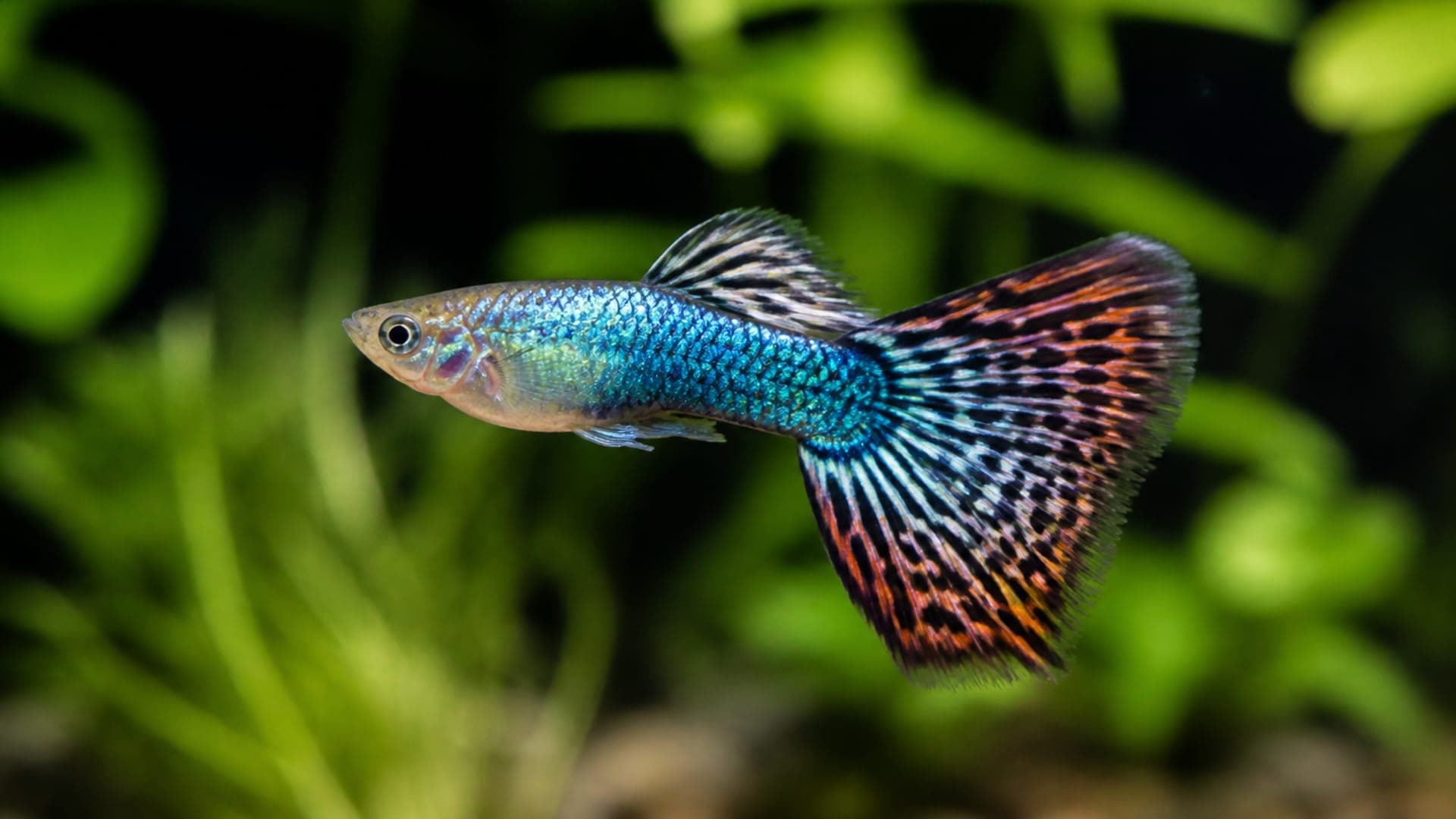
Guppies are not stocked the way other fish are stocked, because a group of guppies is not a fixed quantity. If you keep both sexes, you are not buying fish — you are starting a population. The useful questions are how many adults your filtration and surface area support, what sex ratio keeps the females alive, and what you intend to do with roughly forty fry a month.
The ratio matters more than the number
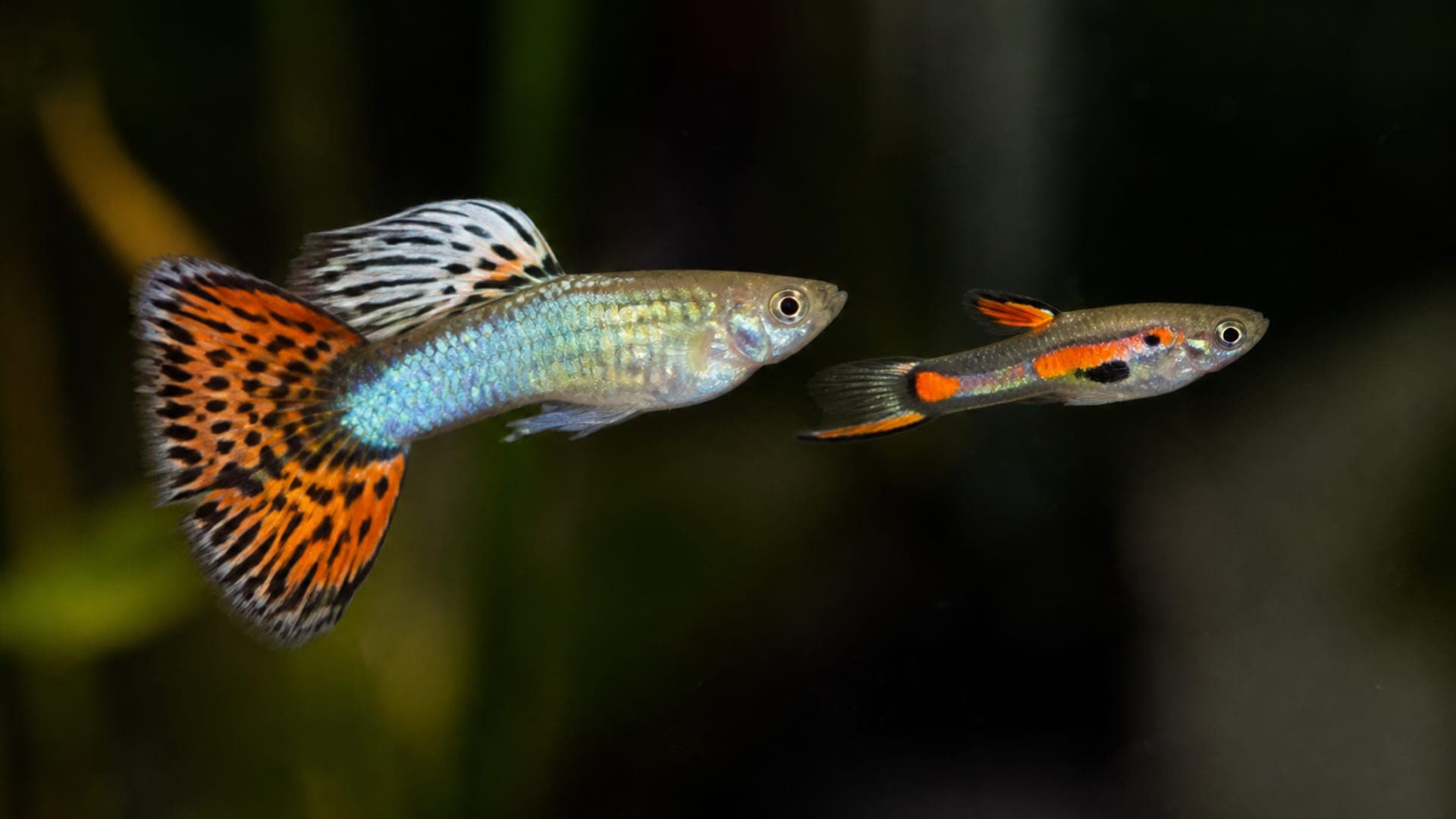
If you keep males and females together, keep two to three females for every male. This is the single most important number on this page, and it is not about breeding control — it is about survival.
Male guppies court more or less constantly. A single male will spend most of his active hours pursuing females, and a substantial share of mating attempts are sneak attempts rather than displays. One male to one female means one female absorbing all of that attention. She stops feeding properly, spends her time hiding behind equipment, loses condition, and in a lot of tanks she is dead inside three months. Aquarists usually record this as "my guppy just died" and never connect it to the ratio.
Adding females does not reduce the courting. It divides it. Three females share the pressure that one was carrying, and all four fish are better off.
A common mistake is buying two females and one male because a trio sounds balanced. It is the bare minimum and it is fragile: lose one female and you are back to a harassment problem overnight. Five females to two males is a much more robust starting group and barely changes the bioload.
The all-male alternative
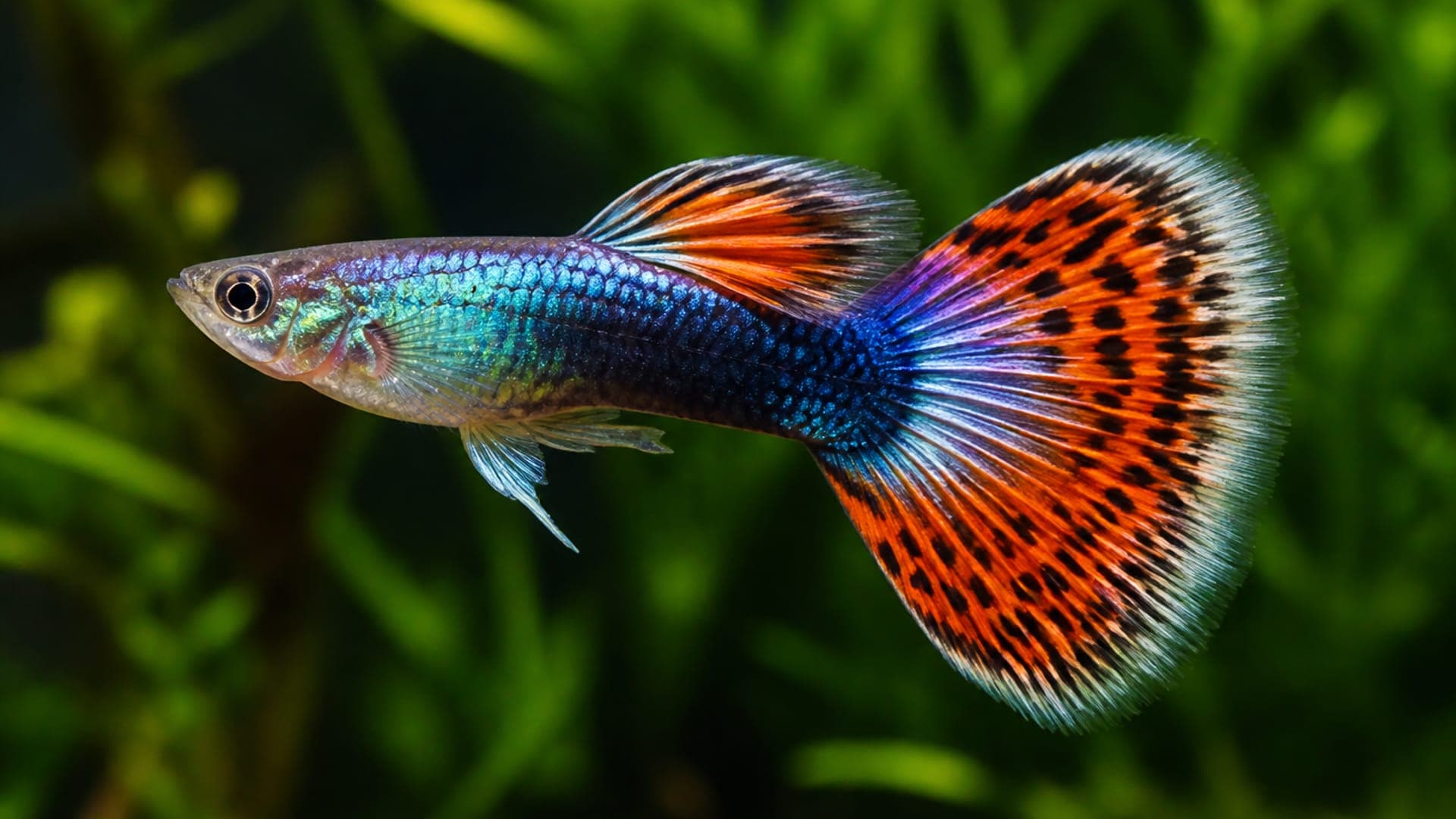
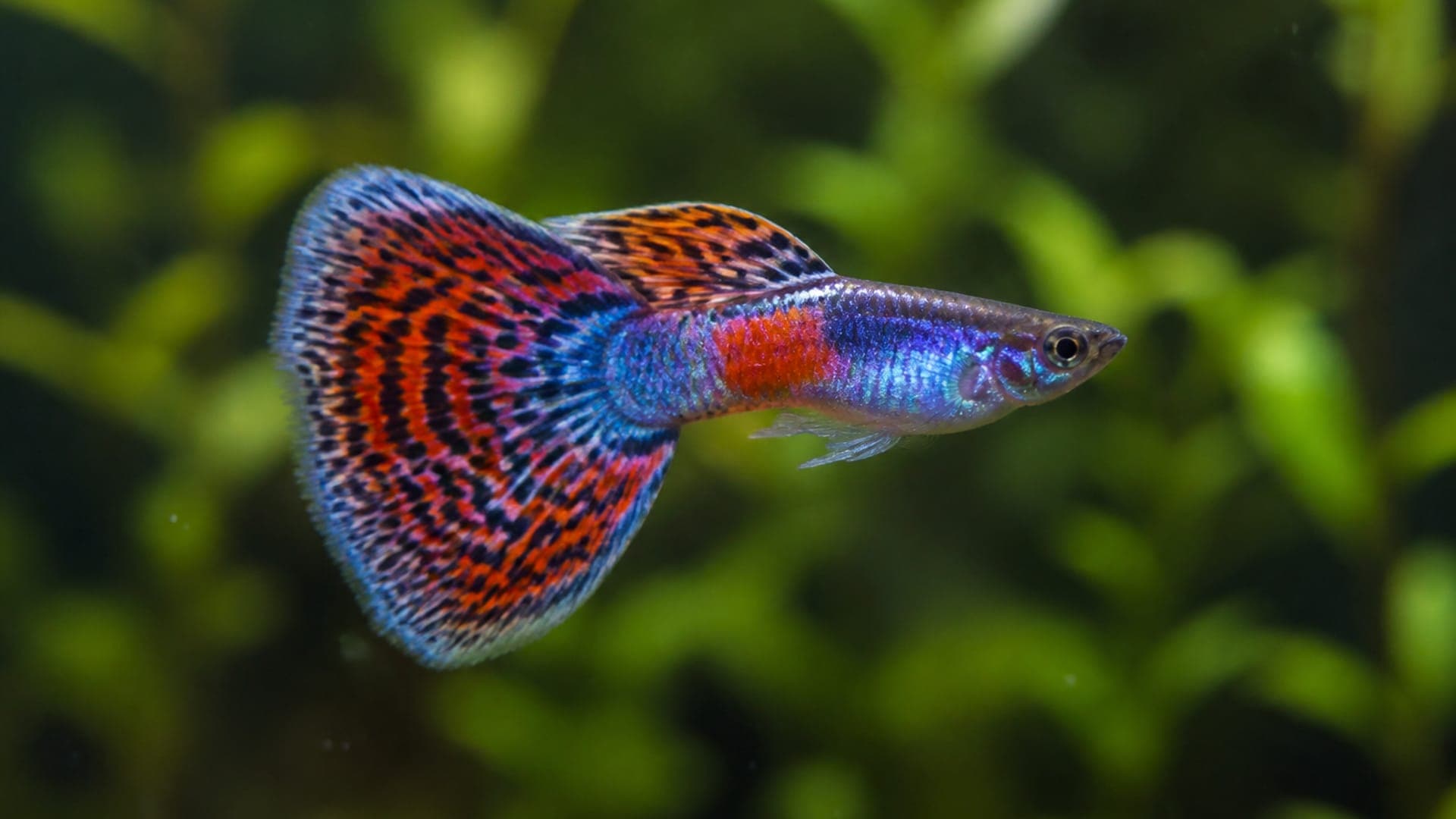
If you want the colour without the population, buy males only. It is the single best decision available to a guppy keeper with one tank and no grow-out space.
It comes with its own rule: keep six or more. Males in a group establish a loose pecking order and will chase and nip each other, particularly at long fins. With two or three males, one fish takes all of it. With six or more the aggression spreads thin and mostly resolves into display rather than damage.
Shop tanks labelled "assorted fancy male guppies" are the usual source, and mixing strains is fine here — with no females there is nothing to breed.
Female-only groups also work and are the calmest of the three options, but bear in mind that shop females are very likely already carrying stored sperm and will drop broods for months. See breeding and fry for what that actually means in practice.
Tank sizes, honestly
Ignore the inch-per-gallon rule. It was invented for goldfish in unfiltered bowls, it ignores surface area, filtration and waste output, and applied to guppies it produces absurd numbers — a 40L tank does not hold twenty adult guppies in any meaningful sense.
What actually constrains guppies is nitrate accumulation between water changes and swimming footprint. They are small but they eat heavily, produce a lot of waste for their size, and are constant active swimmers that use horizontal length rather than height.
| Tank | Both sexes | Males only | Notes |
|---|---|---|---|
| 40L / 10 gal | 1 male, 3 females | 6 males | The realistic minimum. With a mixed group, fry will overwhelm this within four months unless you have somewhere for them to go. |
| 60L / 15 gal | 2 males, 5–6 females | 8–10 males | Enough water volume to absorb a brood or two while you sort out grow-out space. |
| 100L / 25 gal | 3–4 males, 9–12 females | 12–15 males | The first size where a genuine self-sustaining colony works without constant intervention. |
| 20L / 5 gal | Not recommended | Not recommended | Sold as a guppy tank. Too small to buffer waste, too short to swim, and one brood takes it over completely. |
These assume a cycled tank with real filtration and weekly water changes. A mature nitrogen cycle is non-negotiable — guppies are hardy in the sense that they survive a lot of mistakes, not in the sense that they survive ammonia.
Length beats height. A 60cm × 30cm tank is a far better guppy tank than a tall 45cm cube of identical volume, because the usable swimming space and the gas exchange surface both scale with footprint rather than volume.
Filtration and flow
Guppies come from streams and drainage ditches, not still ponds, but they are not strong swimmers — particularly the heavily finned fancy strains, which are dragging a sail behind them. Aim for around four times tank volume per hour in turnover, and diffuse the outflow if fish are being pushed around or holding station behind the hardscape.
A sponge filter or a covered intake matters more than usual here. Bare powerheads and unguarded canister intakes kill fry constantly, and they will catch the long trailing fins of veiltail males as well.
Planning for fry, or deciding not to have them
This is where most stocking plans fail. A single female produces 20–60 fry per brood and can deliver a brood roughly monthly from a single mating. Three females is therefore somewhere near a hundred fry a month at full output, and those fry reach sexual maturity themselves in two to three months.
Left alone in a well-planted tank, the population self-limits — adults eat most of the fry, and only the ones that find cover survive. That is the mechanism that keeps a mixed colony stable, and it is worth understanding before you decide to "save" every brood in a breeder box. A planted 60L with a mixed group usually settles into a stable population somewhere around fifteen to twenty five fish without any intervention at all.
If you want the fry to survive, you need a plan for them before they arrive:
- Grow-out space. A second tank, even a bare 40L with a sponge filter, is the standard answer.
- An outlet. A local shop that takes stock, or other keepers. Have this conversation before you have two hundred juveniles, not after.
- Sexing and separating by six weeks, or the second generation starts breeding inside your grow-out tank.
If you do not want fry, keep one sex. It is not a compromise — an all-male tank is more colourful than a mixed one, since the males are the colourful sex.
Tank mates change the maths
Adding other species does not just add bioload; it changes fry survival, which changes everything downstream. Active mid-water fish like zebra danios are efficient fry predators and will hold a guppy population near zero recruitment on their own. Bottom dwellers like corydoras take far fewer.
Other livebearers — platies, mollies, swordtails — occupy similar space and have similar output, so a mixed livebearer tank compounds the population problem rather than diluting it.
The full picture is in the guppy tank mate guide.
Before you buy
- Decide on one sex or both. This decision determines everything else — and check the anal fins yourself rather than trusting the shop label.
- If both, buy at least twice as many females as males, and never fewer than three females.
- If males only, buy six or more at once.
- Check the tank is cycled, heated to 24–26°C, and that the intake is fry-safe and fin-safe.
- Confirm your tap water suits them before you stock — guppies need hard water, and soft-water tanks are where most unexplained guppy losses come from.