Guppy Tail Types & Colour Strains
Delta, veiltail, lyretail, double sword and the rest — plus cobra, tuxedo, mosaic and moscow colour strains, and which are actually easier to keep.
Guppy tail types and colour strains
Wild guppies are small, grey-bodied fish with a modest tail and a scatter of iridescent spots on the flank. Everything in a shop tank labelled "fancy guppy" is the result of roughly a century of selective breeding away from that starting point.
Knowing the vocabulary is useful for two reasons beyond the obvious. It tells you what you are actually buying, since "assorted fancy guppy" covers a range of quite different fish. And fin type has real husbandry consequences — some of these strains are meaningfully harder to keep than others.
Tail shapes
Guppy tails are classified by the outline of the caudal fin. Show standards (the IFGA in the US, similar bodies in Europe and Asia) define these precisely; shop fish are looser approximations.

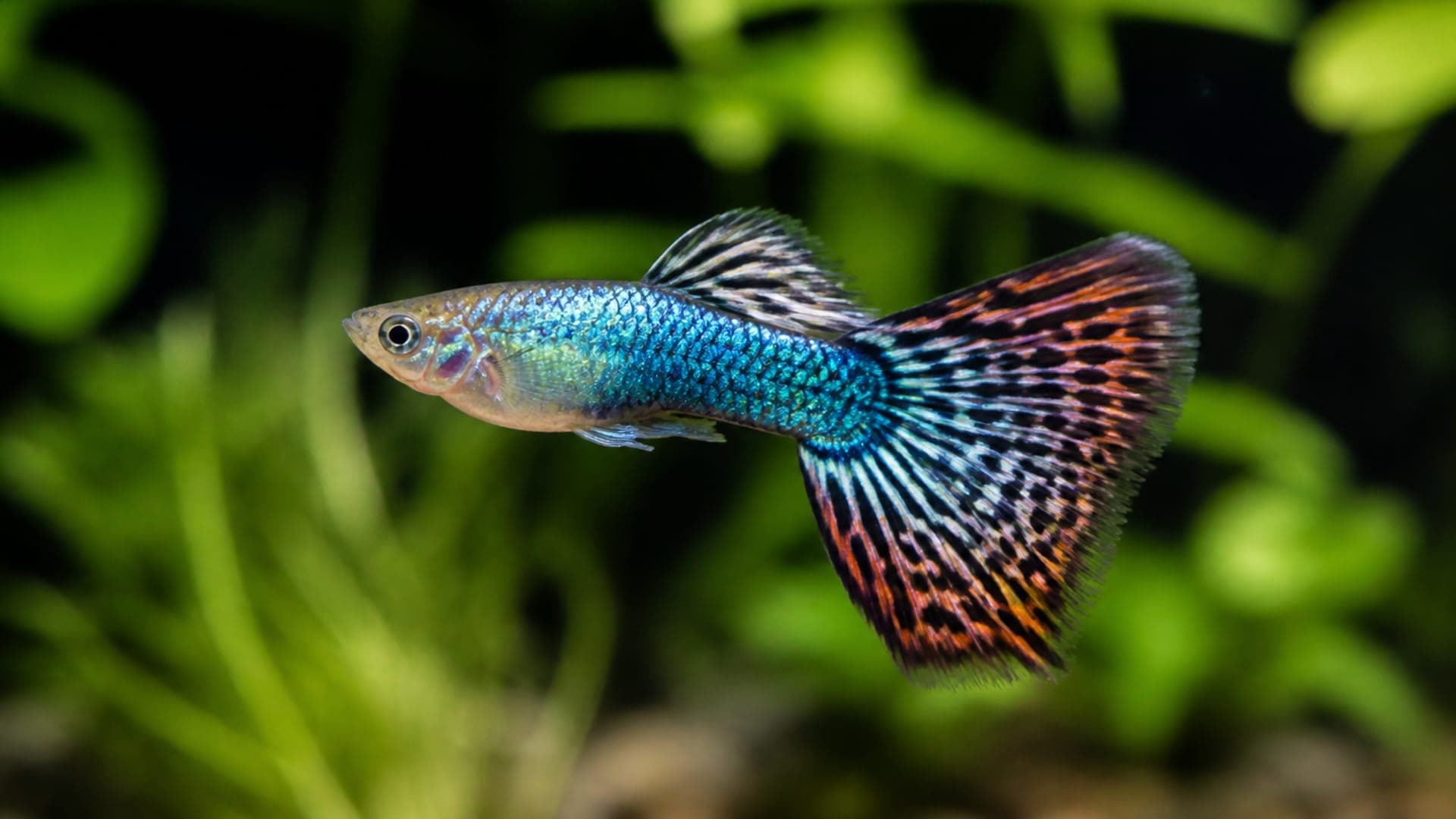
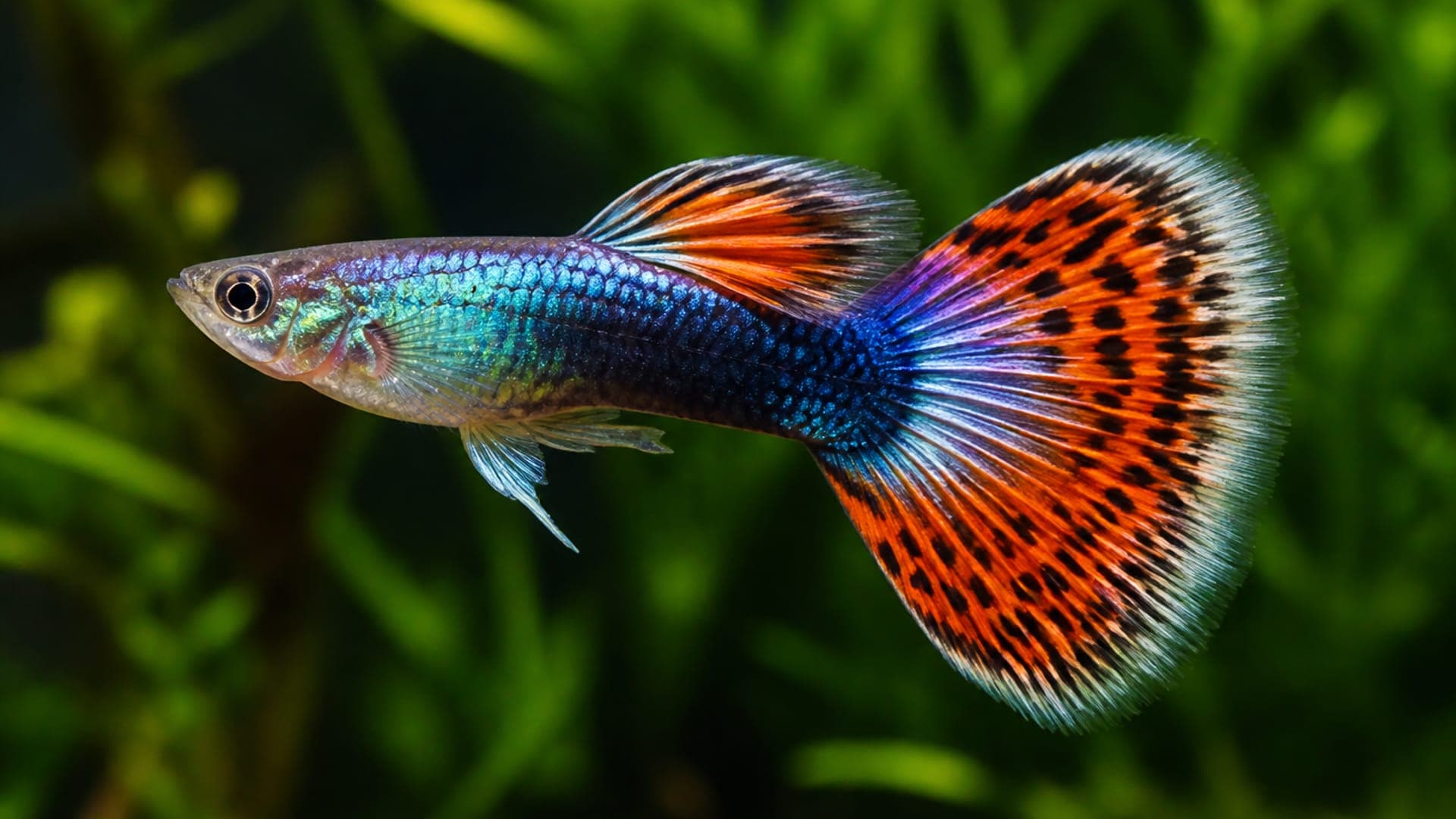
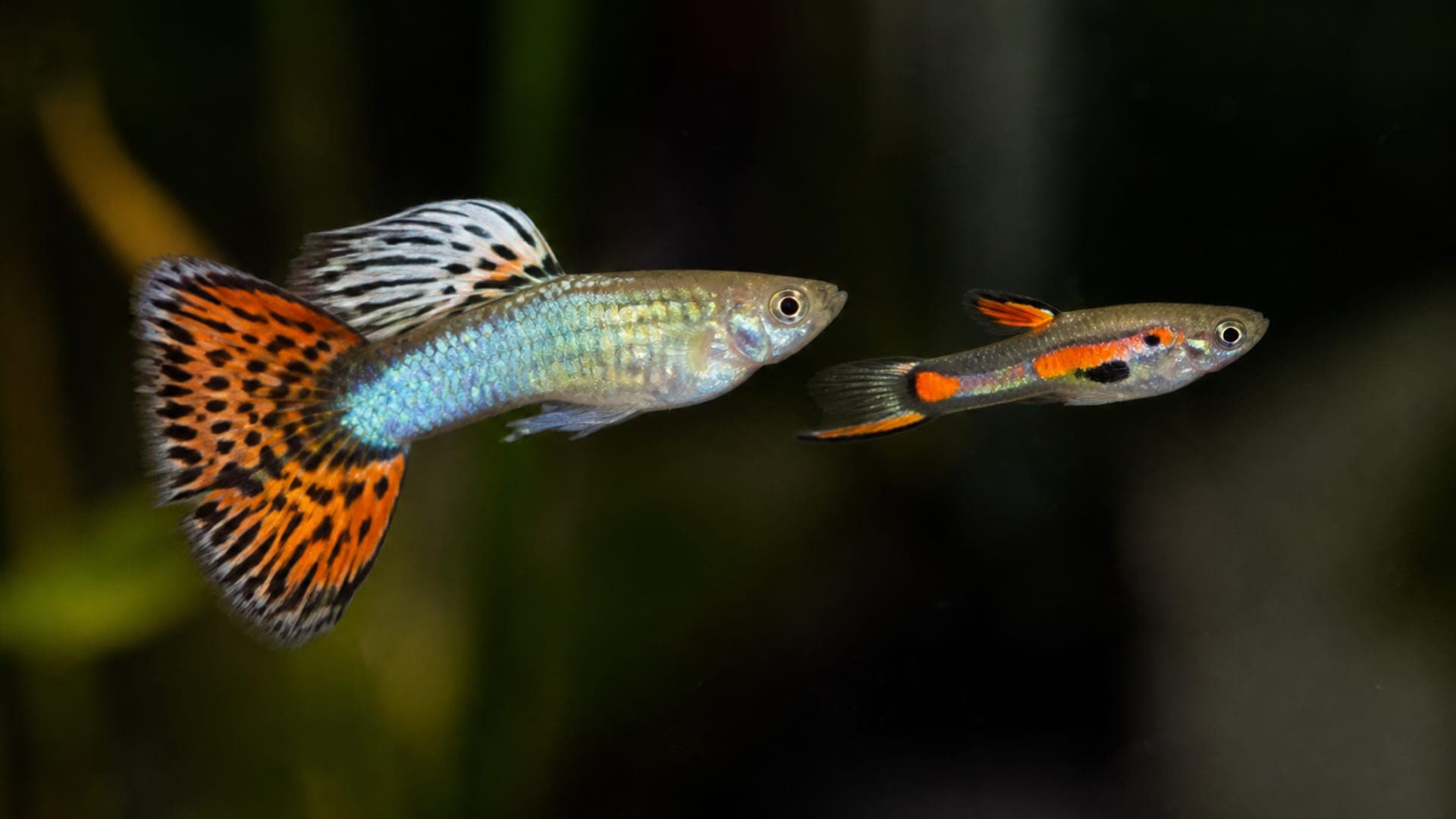
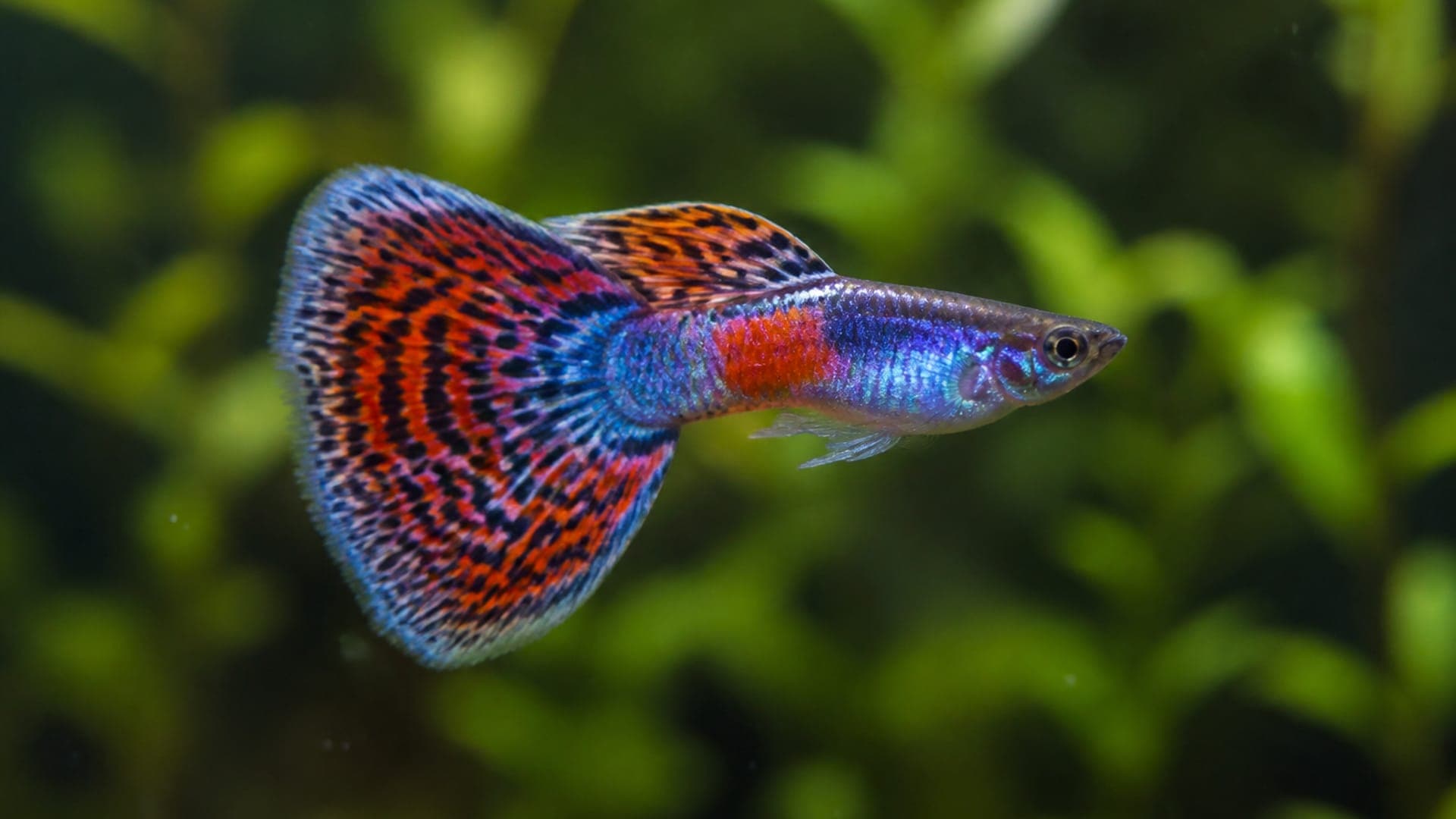
Delta / triangle tail. The dominant fancy shape — a large fin opening to a wide triangle, ideally at around a 70° spread. Most "fancy guppies" are deltas.

Veiltail. Similar size to a delta but with a narrower spread, hanging in a more rectangular, trailing shape. Flows dramatically; the fin is heavy.

Fantail. Between the two — a broad fan, slightly rounded at the trailing edge.

Round tail / spadetail. A short, rounded or spade-shaped fin, much closer to the wild form. Increasingly popular among people who want guppies that swim properly.

Lyretail. The top and bottom rays extend well beyond the body of the fin, producing a distinctive open "U" with two long points.

Double sword. Extensions from both the top and bottom edges, with the centre of the fin shorter — an elegant, symmetrical shape. Top sword and bottom sword have the extension on one edge only.

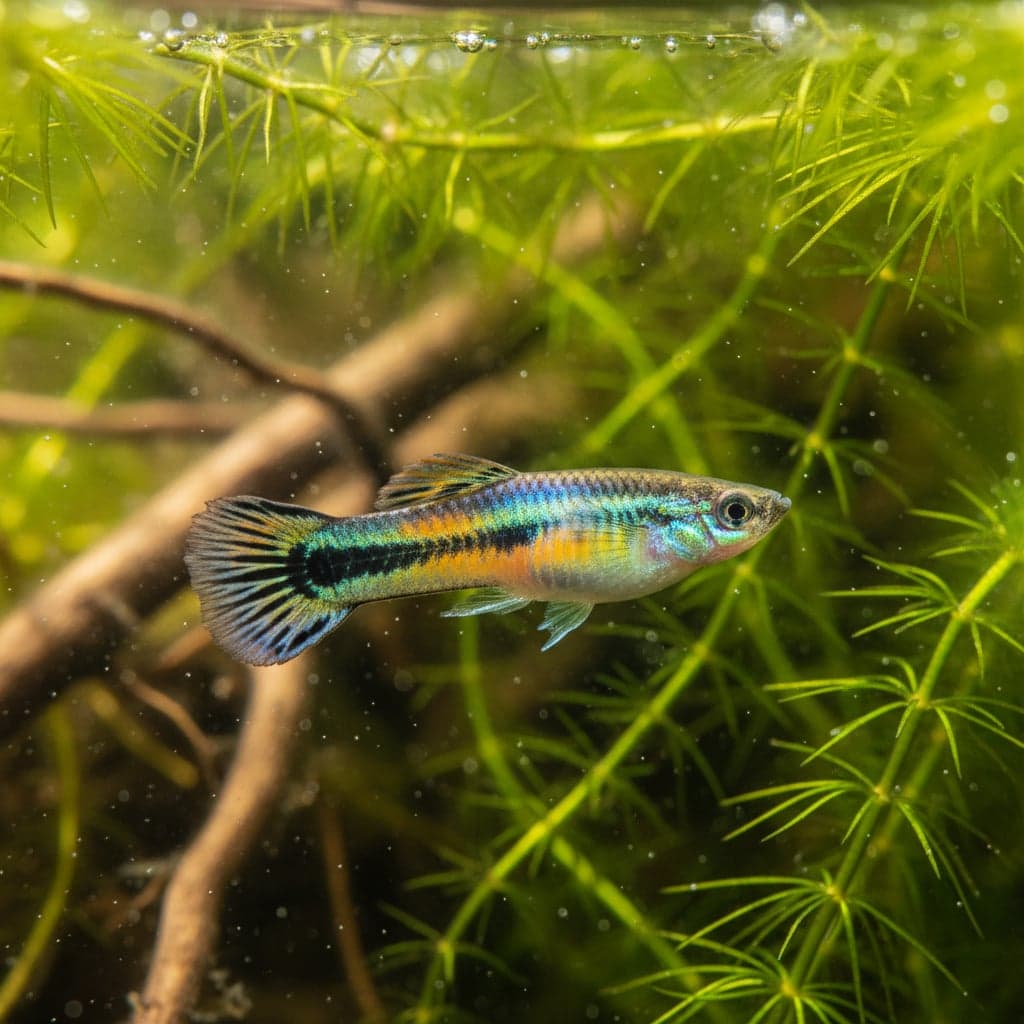
Pintail / needle tail. A single fine point extending from the centre.

Flag tail. A short, squared-off rectangular fin.

Spearhead / cofertail. Small, pointed, close to wild-type.
Fin length has consequences
This is the part that matters for care rather than aesthetics.
A delta or veiltail male is carrying a fin substantially larger than his body, and he is dragging it through the water every second of his life. Compared with a round-tailed or sword-tailed fish, he is:
- A weaker swimmer, and more affected by flow. Strong filter output that a wild-type guppy ignores will leave a veiltail male permanently struggling behind the hardscape.
- More prone to fin rot, simply because there is far more fin tissue, and damage takes longer to heal.
- A much more attractive target for fin-nippers. This is the main reason bettas and long-finned guppies are a poor mix, and why tiger barbs and serpae tetras are a firm no.
- More vulnerable to unguarded intakes. Trailing fins get pulled into filter inlets that a shorter-finned fish would swim past.
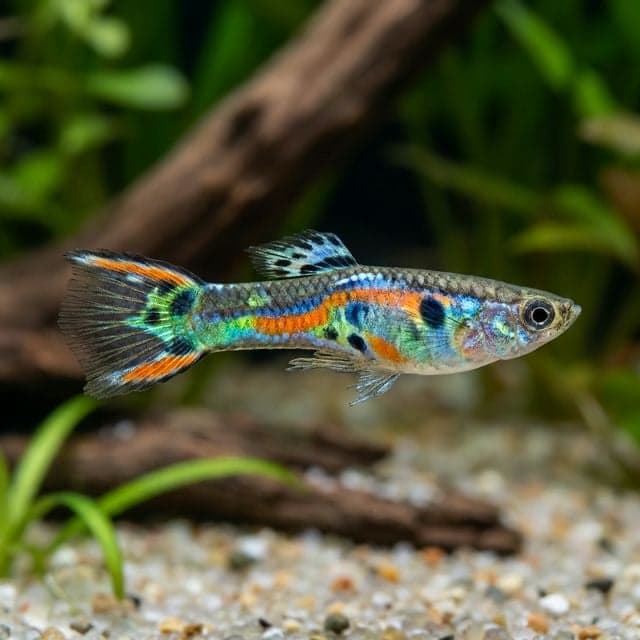
If you want guppies that behave more like the fish in the wild — fast, agile, constantly active — look for short-finned strains, or Endler's livebearers, which have never been bred for long fins at all.
Colour strains and patterns
Colour is described separately from tail shape, so a fish is typically both — a "blue delta cobra", for example.

Cobra / snakeskin. Fine rosette or chain-link patterning over the body and often into the fin. Snakeskin refers to the tightest, most regular version of the pattern.

Tuxedo. The rear half of the body is a solid dark block — usually black or deep blue — contrasting sharply with a paler front half.

Mosaic. Irregular, interlocking patches of colour in the tail, without the regularity of a cobra pattern.

Grass. Very fine dark speckling across the tail, like scattered seed.

Lace. A delicate net-like pattern, generally on a paler ground.

Metal / platinum. A solid metallic sheen over the head and front body, usually silver, gold or platinum.

Moscow. Intense solid colour covering the entire body — Moscow blue, purple and green are the well-known lines. Among the most striking and among the more demanding to keep well.

Half-black (HB). The rear body solidly black, with the tail a contrasting colour.

Koi / red tail. White or pale body with a red-orange rear and tail, resembling koi carp markings. Very popular currently.

Albino. Red or pink eyes and no dark pigment. Albino strains are noticeably more light-sensitive and generally less robust — they benefit from subdued lighting and floating plant cover.
Panda, dragon, glass belly, blonde and many others are recognised lines or regional names, with definitions that vary between breeders and countries.
Buying: what to look for
Shop tanks of mixed "assorted fancy male guppies" are exactly what they say — fish of mixed and unknown parentage, sold on appearance. Perfectly fine if you want a colourful all-male tank. Not useful if you want to breed anything predictable.
Whatever you are buying, look at:
- Fins held open. Clamped fins in the shop tank means stressed or unwell fish, and it is the single most reliable thing to check.
- Full, straight bodies. Any spinal curve is a hard no — usually a soft-water grow-out problem, and it does not improve.
- No red threads at the vent. See Camallanus.
- Active swimming, not hanging near the surface or the heater.
- What the shop's water is like. A fish moving from very different hardness to yours needs slow acclimation — ask, and check yours against the target range.
Locally bred fish from a club or a hobbyist are almost always hardier than imported stock, and often better-looking, since they were selected by someone who kept them rather than by a farm optimising for shipping volume.
Strains do not stay put
Fancy strains are maintained by selection, not by genetics alone. If you keep a mixed group and let them breed freely, the distinct patterns blur within a few generations and the population drifts back toward a greyish wild-type fish with a modest tail.
This is not a failure — it is what happens when selection stops. But it does mean "I'll buy a nice mixed group and breed my own" produces a tank of increasingly ordinary-looking fish rather than a self-sustaining supply of fancy ones. To hold a strain you keep one line, select every generation, and remove the fish that miss the standard.
The detail is in breeding and raising fry, and telling the sexes apart before they breed is covered in male vs female guppies.
One thing worth weighing before you buy on looks alone: the heavily finned strains are the fragile ones. A large ornamental tail costs energy to carry and offers more surface for fin rot, and the closer a guppy sits to the wild type the longer it tends to live. See guppy lifespan.