Guppy vs Endler: How to Tell Them Apart
Poecilia reticulata and Poecilia wingei differ in size, fin shape and colour — but they interbreed freely, which is why most shop "Endlers" are hybrids.
Guppy vs Endler
Endler's livebearer (Poecilia wingei) and the guppy (Poecilia reticulata) are closely related, look similar to a casual glance, and will breed with each other producing fully fertile offspring. That last fact is the source of most of the confusion in the hobby, and it is why a lot of fish sold as Endlers are not.
The quick comparison
| Endler (P. wingei) | Guppy (P. reticulata) | |
|---|---|---|
| Male size | 2–2.5cm | 3–3.5cm |
| Female size | 3–3.5cm | up to 6cm |
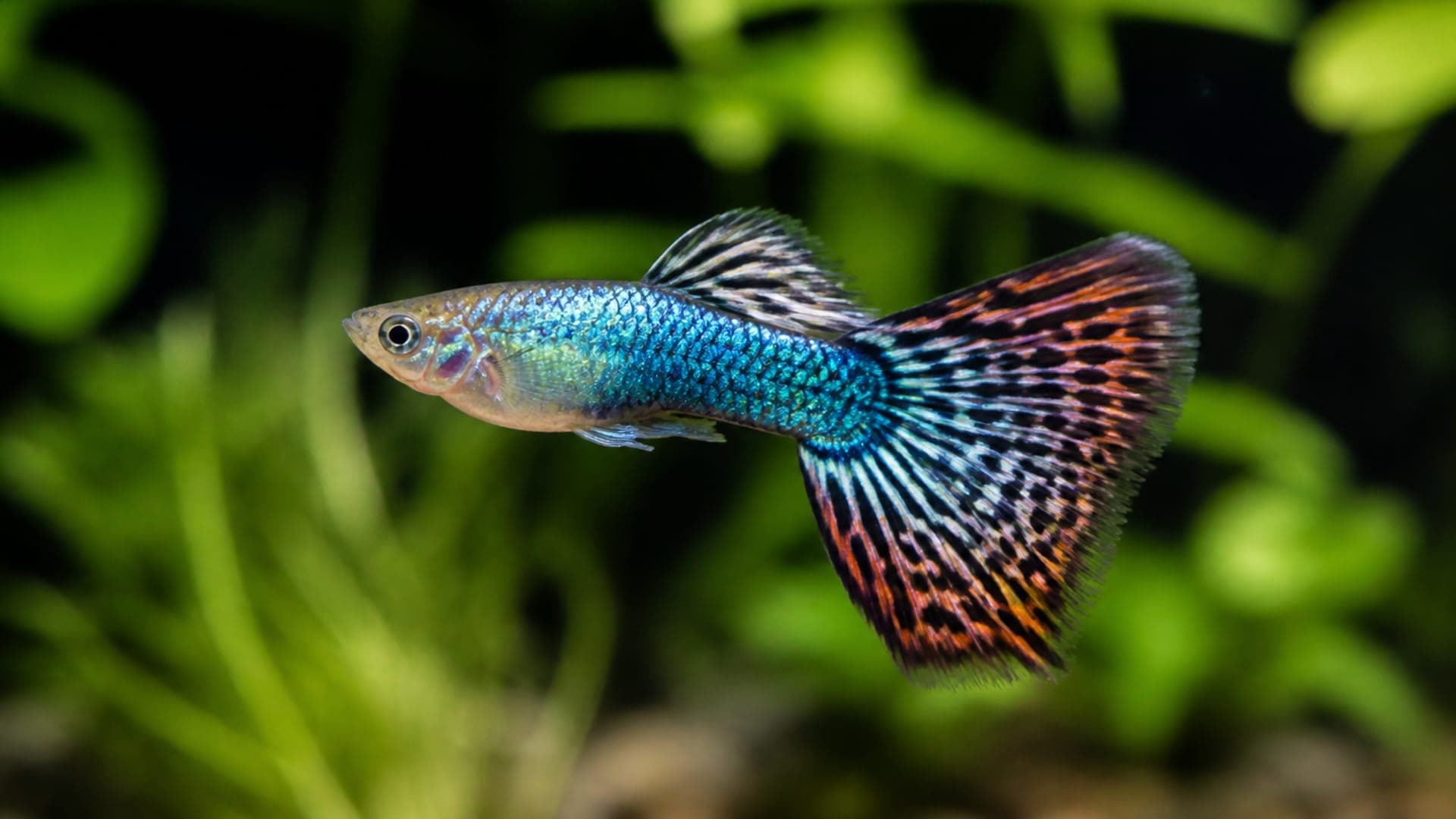
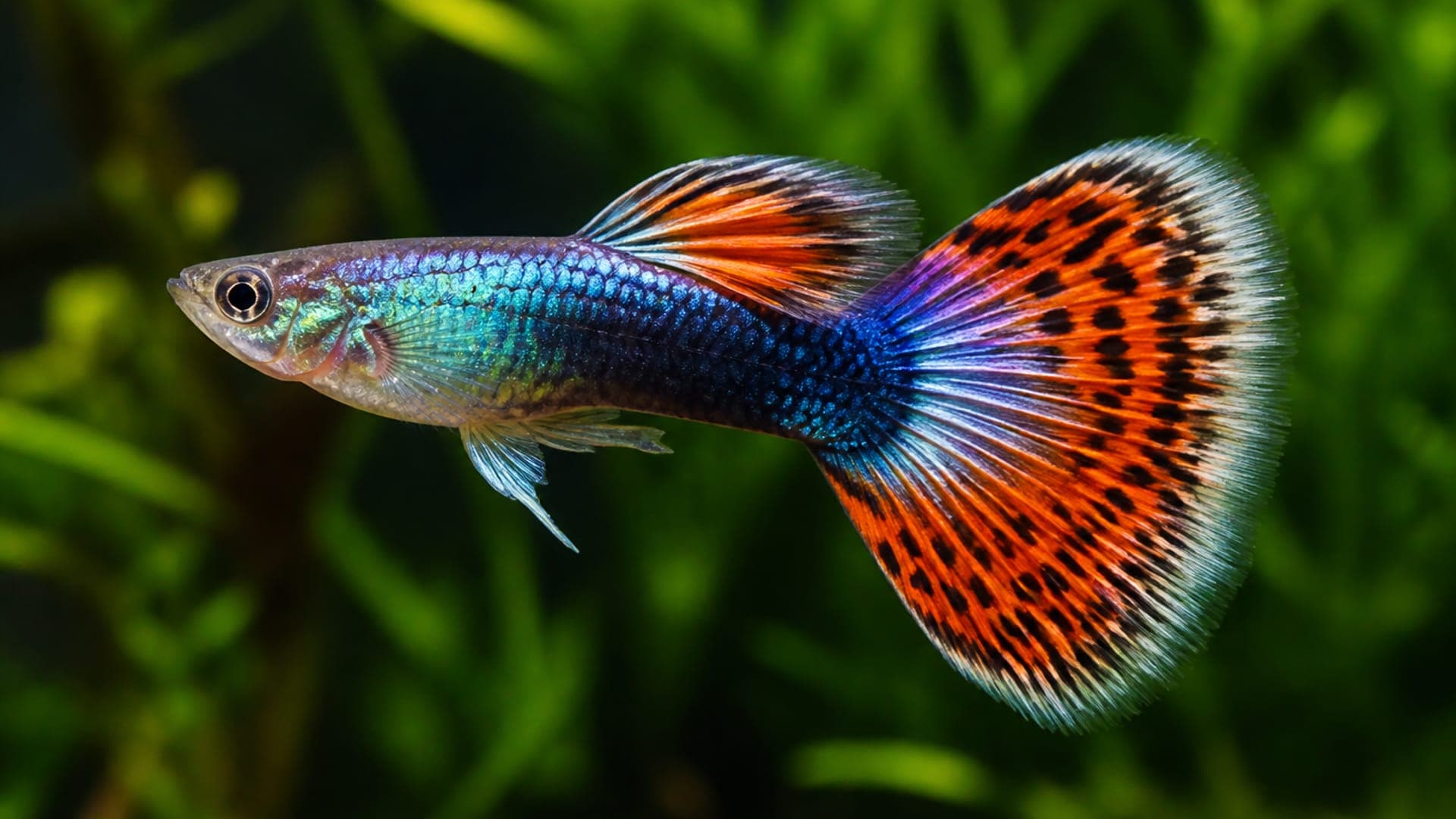
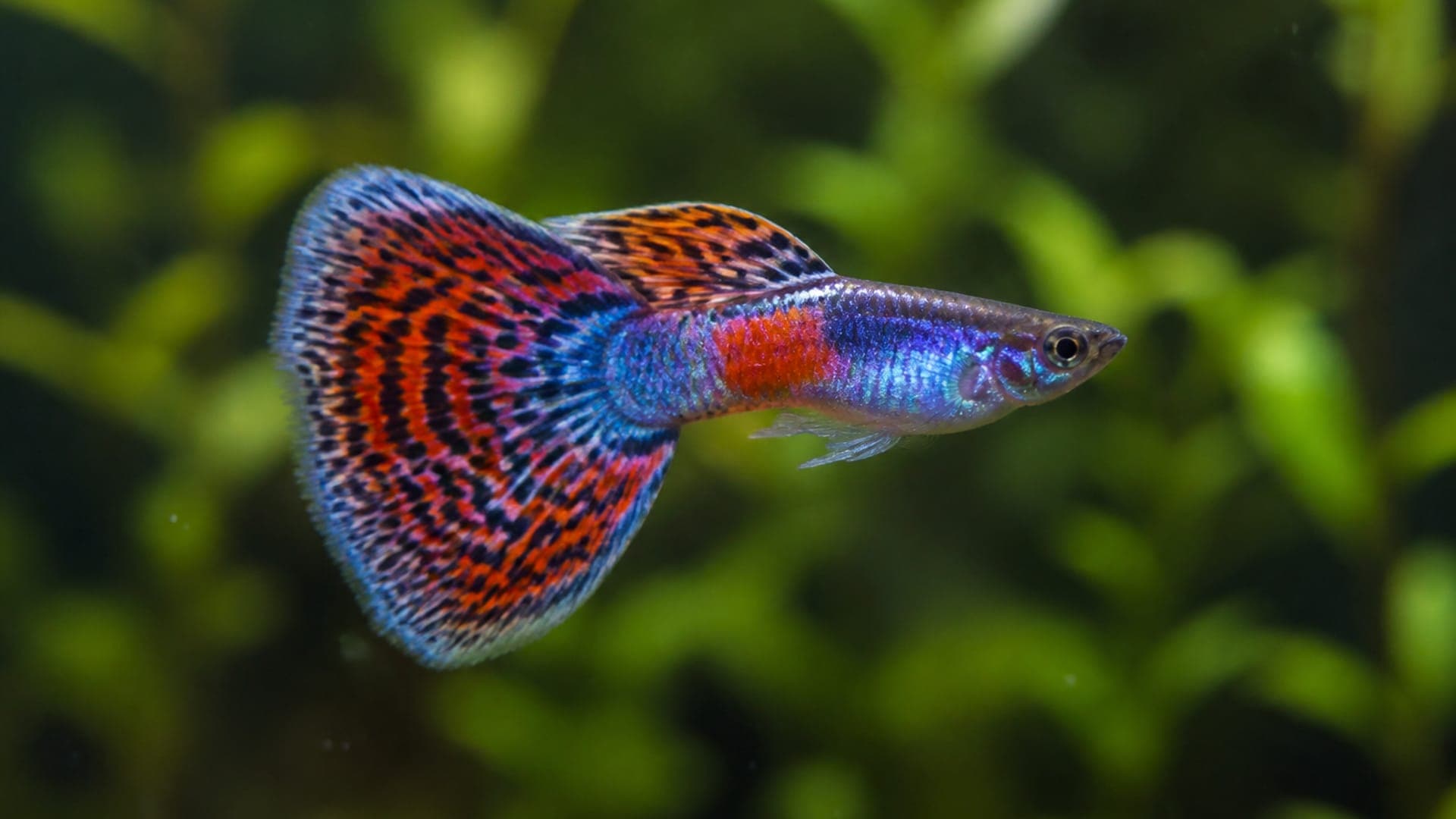
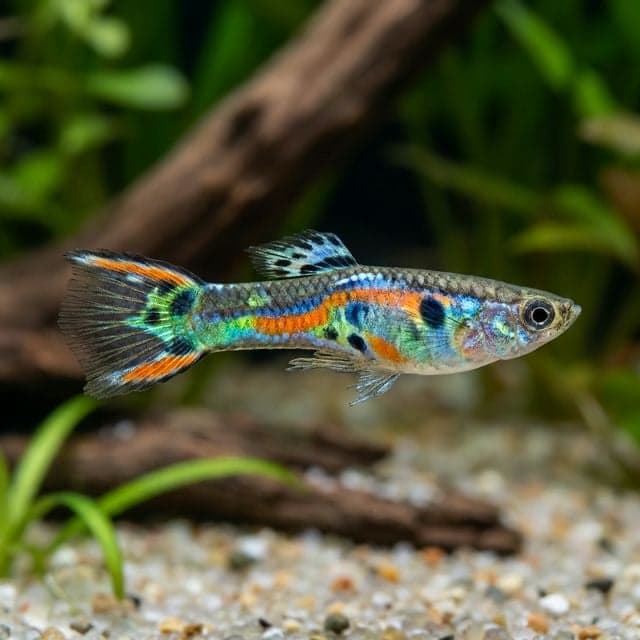
| Male fins | Short — spade, sword or small round tail | Often large: delta, veil, lyre |
| Male colour | Bold blocks of metallic green, orange and black | Enormous range, line-bred |
| Female appearance | Small, plain silver-tan, slim | Larger, deeper-bodied, often some tail colour |
| Origin | Laguna de Patos and Cumaná, north-east Venezuela | Trinidad, Tobago, Venezuela, Guyana and widely introduced |
| Gestation | ~23 days | 21–30 days |
| Brood size | 5–25 | 20–60 |
| Temperament | Faster, busier, more restless | Active but more sedate |
Telling them apart in the shop
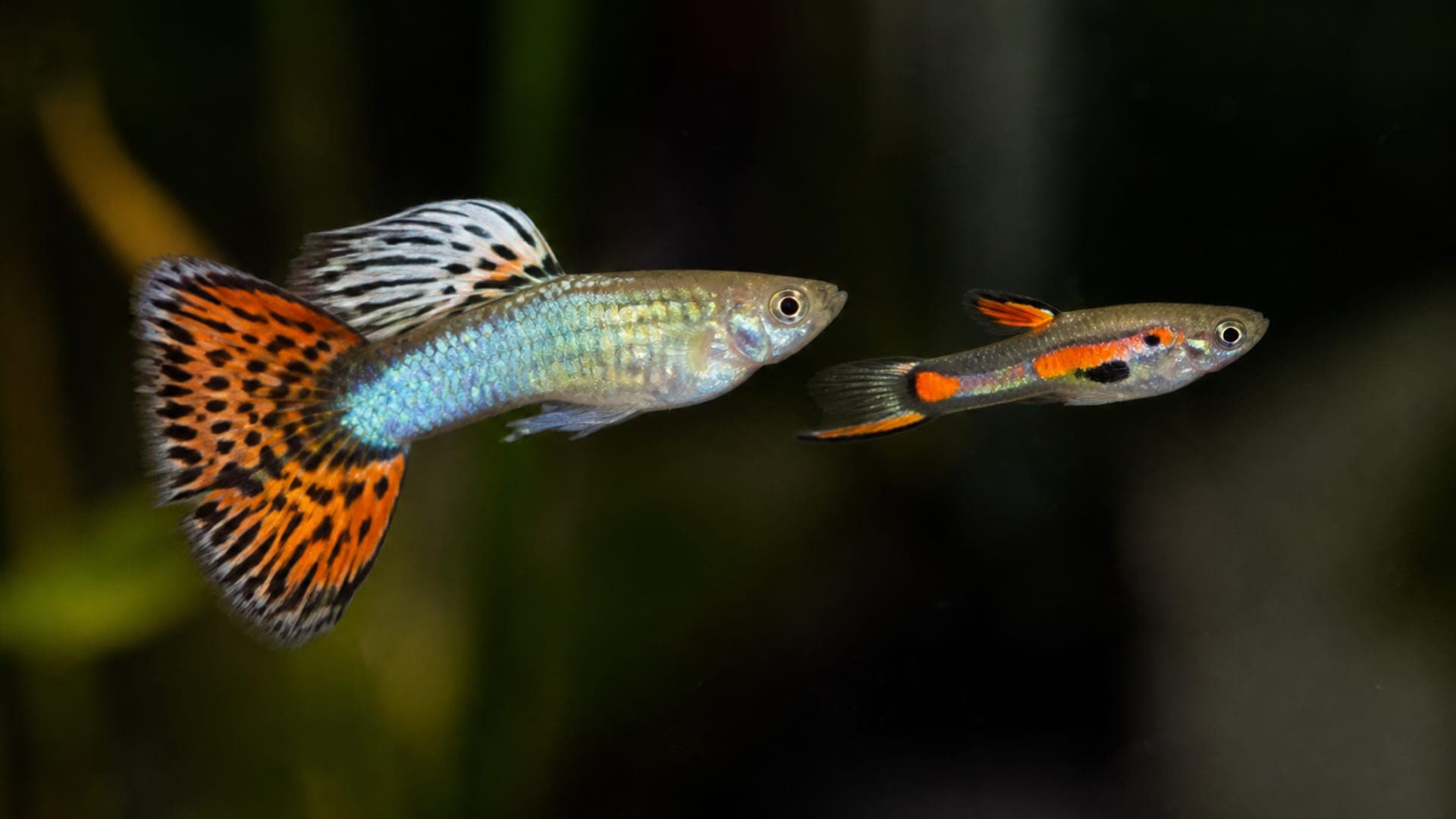
Size is the most reliable cue. A mature male Endler is noticeably smaller than a male guppy — closer to a large Boraras than to a fancy guppy. If a "pure Endler" male is the same size as the guppies in the next tank, be sceptical.
Fin shape is the second. Endlers have not been bred for finnage. Their tails are short spades, or occasionally a simple sword extension. Any flowing delta or veil tail means guppy genes are in there somewhere.
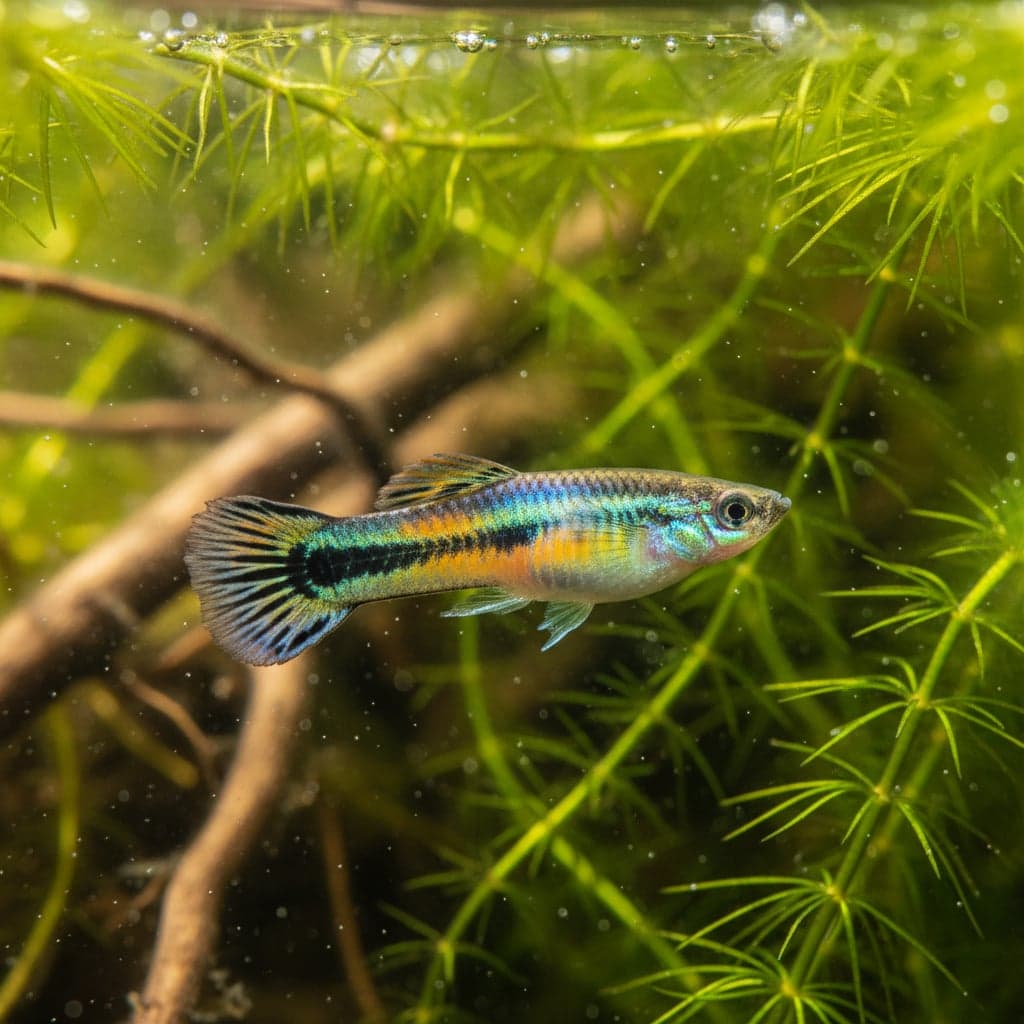
Colour organisation differs. Endler males carry bold, well-defined blocks of colour — typically metallic green, black and orange — arranged in distinct patches on a clear body, often with a bright orange peduncle spot. Guppy colour tends to be more diffuse, more patterned, and spread through the fins.
Females are hard. Female Endlers are small, slim and plain silvery-tan. Female guppies are larger and deeper-bodied. Between the two, size is really the only usable signal, and it is unreliable in immature fish. This is the main practical reason unintentional hybridisation happens.
N-class and K-class
Because pure Endlers are worth preserving and hybrids look similar, the hobby uses a classification developed by Adrian Hernandez and John Endler:
- N-class — documented pure Poecilia wingei, traceable to a known wild collection. The lines from Laguna de Patos, collected by John Endler in 1975 and traced back further to Franklyn Bond in 1937, are the reference point.
- K-class — known hybrids. Endler × guppy crosses, whatever they look like.
- P-class — phenotypically Endler-like, but of unverified ancestry. Looks right, no documentation.
Most fish sold in general aquatic shops as "Endlers" are P-class at best and frequently K-class. That is not necessarily a problem — hybrids are attractive, hardy fish. It matters if you intend to maintain a pure line, in which case buy from a specialist breeder or a livebearer club with documented provenance.
They will hybridise
Put Endlers and guppies in the same tank and you will get hybrids, quickly. There is no barrier — the offspring are fully fertile and will backcross in both directions, so a single generation of mixing is not reversible by selection afterwards.
If you want to keep both, keep them in separate tanks. Not different ends of the same tank, not a divider — separate tanks. This is the single most common way pure Endler lines are lost.
Hybrid offspring are typically intermediate: a bit larger than an Endler, with somewhat more finnage, and colour that can be genuinely striking in the first generation before drifting in later ones.
Care differences
Very few, which is part of why they mix so easily.
Both want the same water: hard, alkaline and mineral-rich, GH 8–20, KH 4–15, pH 7.0–8.5. The full detail is in guppy water hardness and it applies to Endlers equally.
The differences worth knowing:
- Endlers are hardier. They have not been through the same intensive line-breeding, so they are closer to a wild fish in constitution. If you have lost fancy guppies for no clear reason, Endlers are a sensible next attempt.
- Endlers are busier. Faster, more restless, constantly moving. Some people find them more entertaining; they are less suited to a serene aquascape.
- Endlers suit smaller tanks better. A 40L that is marginal for a guppy colony is comfortable for Endlers, given their smaller adult size and smaller broods.
- Endlers breed a little more slowly — smaller broods, though just as relentless in frequency. It is a difference of degree, not kind: the stocking planning still applies.
- Endlers handle flow better, having no large fins to drag.
Which to keep
Choose Endlers if you have a smaller tank, want fish that look close to wild, have struggled with fancy guppy stock, or want something harder-wearing. The colour on a good male Endler is as intense as anything in the freshwater hobby, it just comes in a smaller package.
Choose guppies if you want the variety — the huge range of tail types and colour strains simply does not exist in Endlers — or want larger, more visible fish in a bigger tank.
Choose one, not both, unless you have two tanks.
Related
- Endler's livebearer profile
- Guppy species profile
- Picta / swamp guppy — a third relative, and not a guppy at all in the usual sense
- Guppy tank mates — applies to Endlers too
- Guppy lifespan — why Endlers tend to outlive fancy guppies
- Male vs female guppies — sexing, and why hybrids are easy to make by accident