How Long Do Guppies Live? Lifespan and What Shortens It
Guppies live one to three years, and shop guppies routinely die far sooner. What the real range is, why modern fancy strains are so fragile, and the levers that actually extend it.
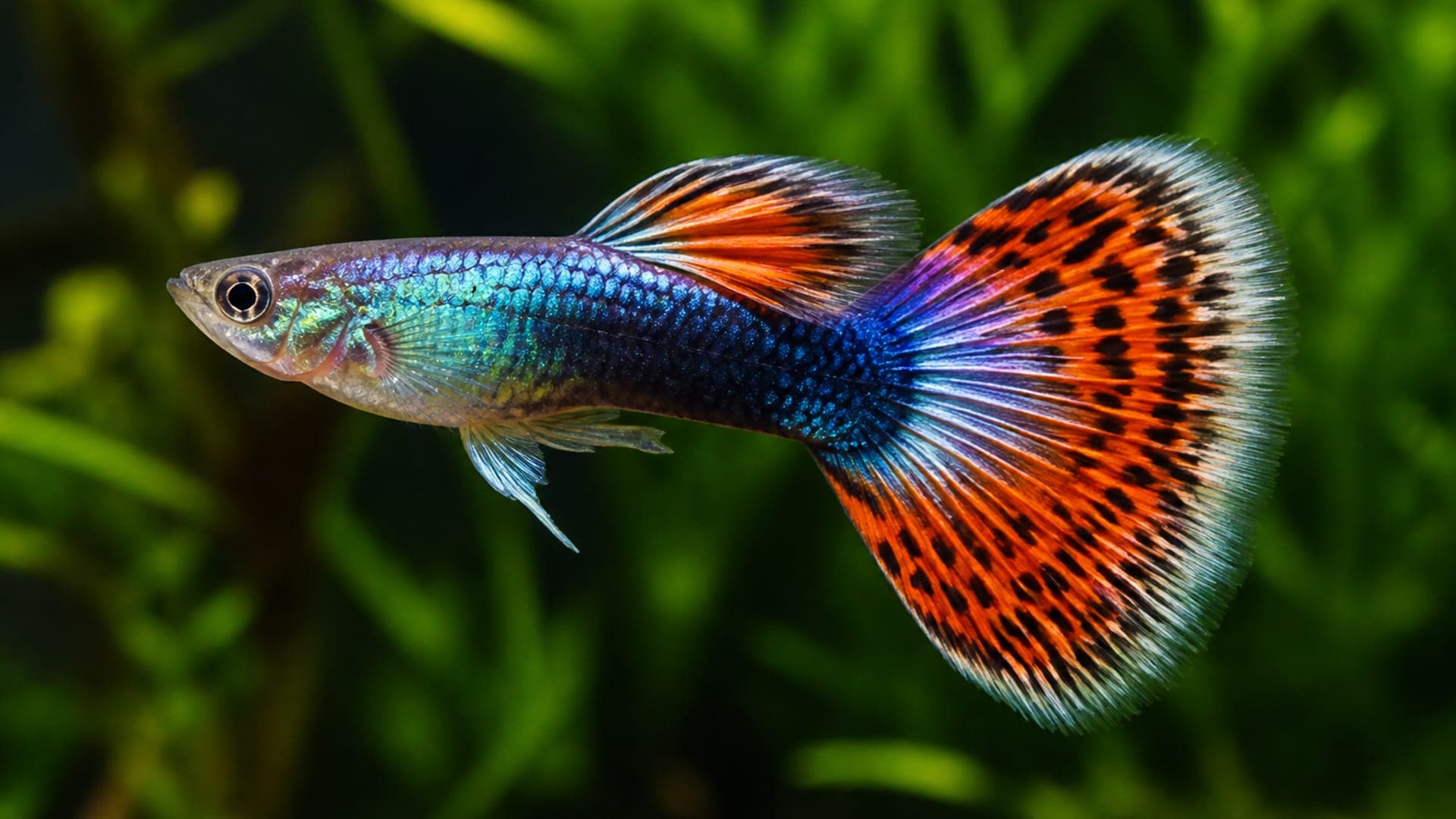
The honest answer is one to three years, with two years being a realistic expectation for a well-kept fish bought in decent condition. Females generally outlive males.
The answer people actually want is why theirs died in four months, and that has much less to do with the species than with where the fish came from.
Why shop guppies die young
A guppy sold in a chain store has usually had a harder first six months than it will ever have in your tank.
The mass-market supply chain runs on high-density outdoor ponds in Southeast Asia, prophylactic antibiotics, and selection for colour and finnage at production speed. Three things follow from that, and all of them land on you:
Age at sale. Guppies reach sexual maturity at two to three months and are sold at or shortly after that point. A "young" shop guppy may already be a quarter of the way through its life. Females are frequently sold already gravid, having been bred before they were ever put on a shelf.
Antibiotic dependence. Fish raised on continuous low-dose antibiotics carry an immune system that has never been tested. Moving into a clean home tank with no medication is where that gets discovered — often as an outbreak in the first fortnight, which is why quarantine matters more for guppies than their hardy reputation implies.
Water shock. Farm water is hard and alkaline. If your tap water is soft, the fish moves from ideal chemistry to hostile chemistry in one bag. This is the single largest avoidable cause of early guppy death and it is covered in full in guppy water hardness.
Locally bred guppies from a hobbyist or a specialist breeder routinely outlive chain-store fish by a year or more, in the same tank, on the same food. If you have had a run of guppies dying young, change where you buy before you change anything else.
Why the fancy strains are frailer
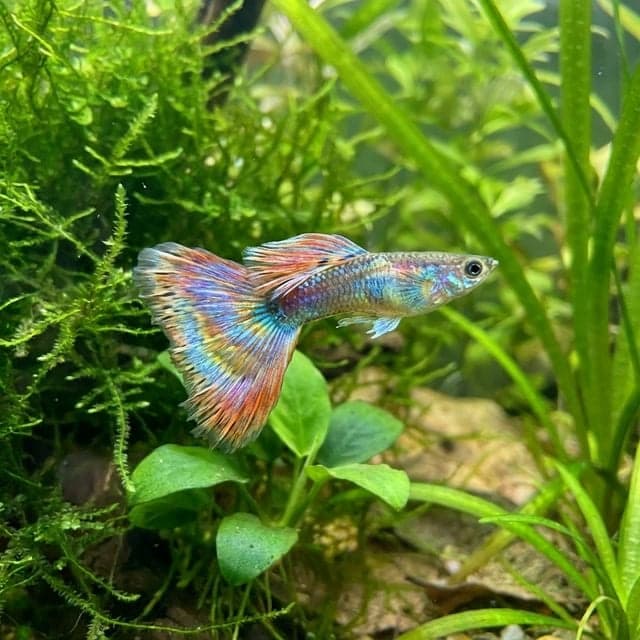
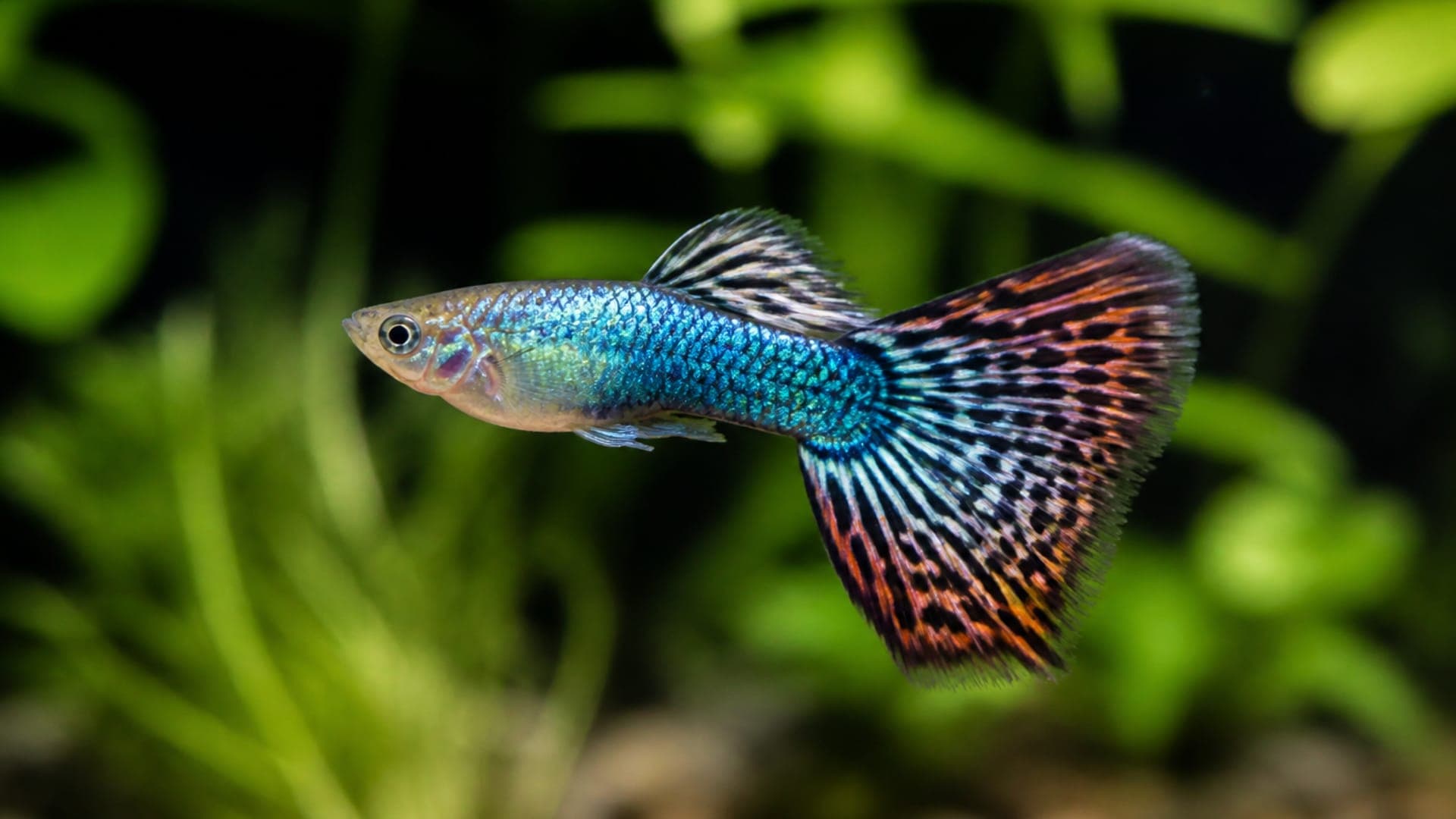
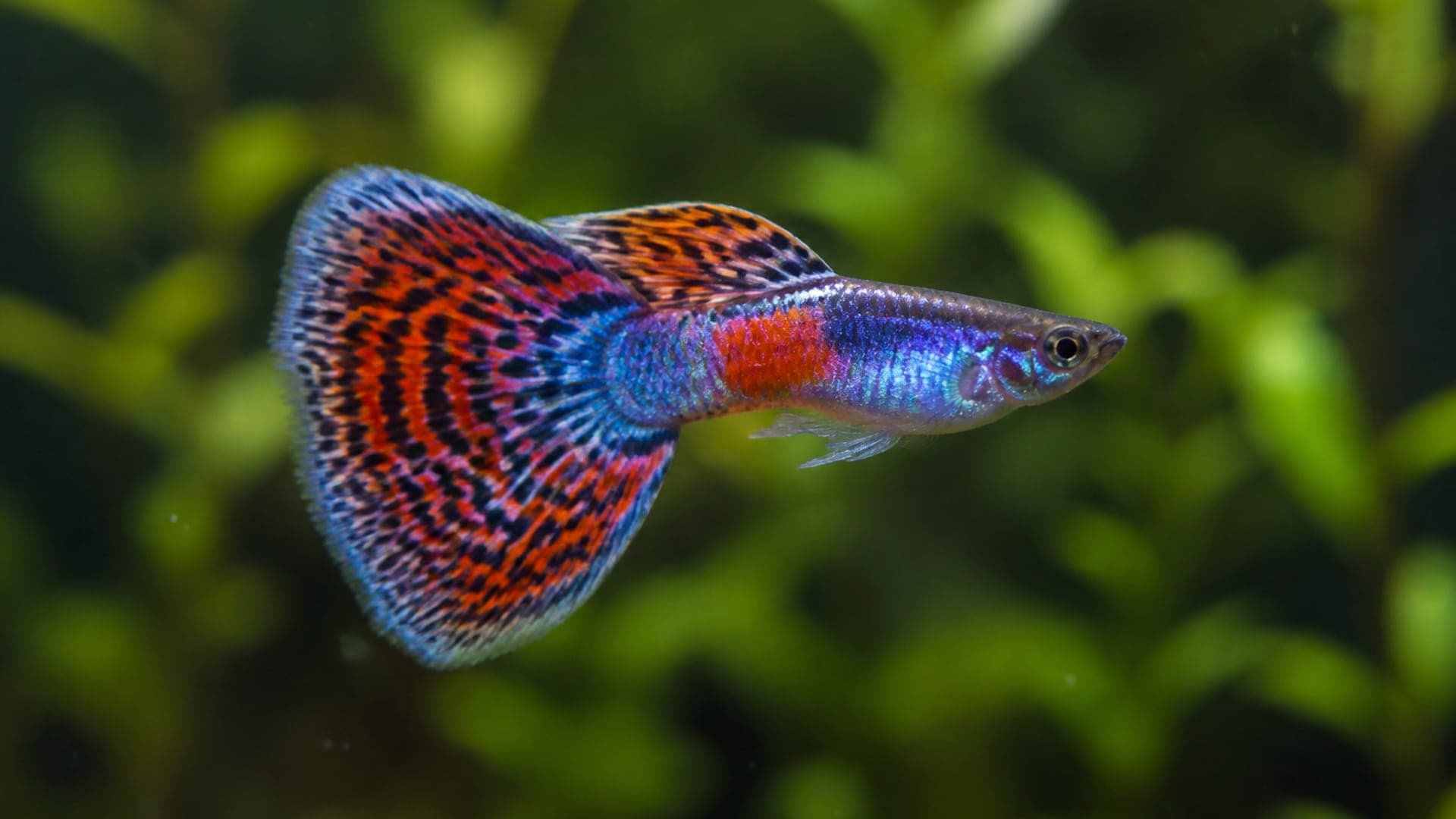
Guppy strains have been selected hard for exaggerated fins and saturated colour over many generations, and much of that work has been done in closed lines with small effective population sizes.
The result is a fish carrying a real inbreeding load, with a large ornamental tail that costs energy to drag around and offers a large surface for fin rot to work on. Heavily finned veiltails and ribbon strains are noticeably more fragile than plainer fish.
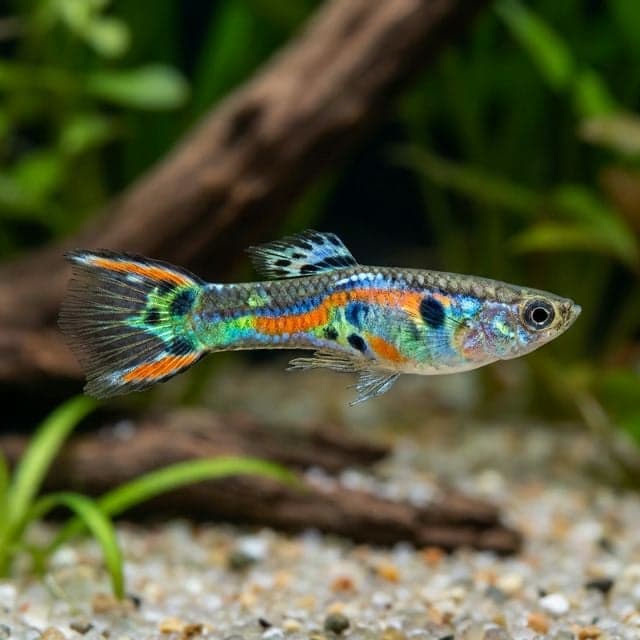
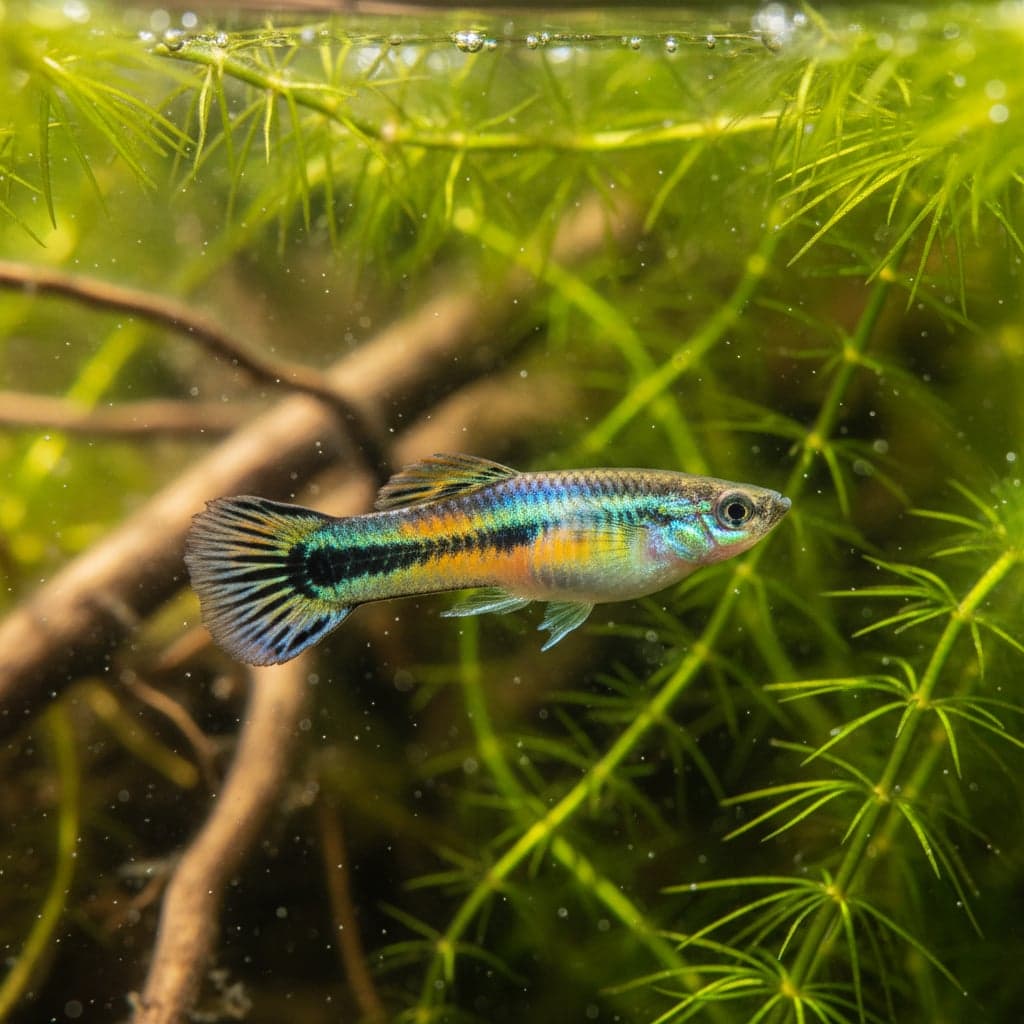
The pattern is consistent enough to plan around: the closer a guppy is to the wild type, the longer it tends to live. Feeder-strain guppies and Endler's livebearers are markedly tougher than show strains, which is exactly what you would expect given what each has been selected for.
Males, females, and the cost of reproduction
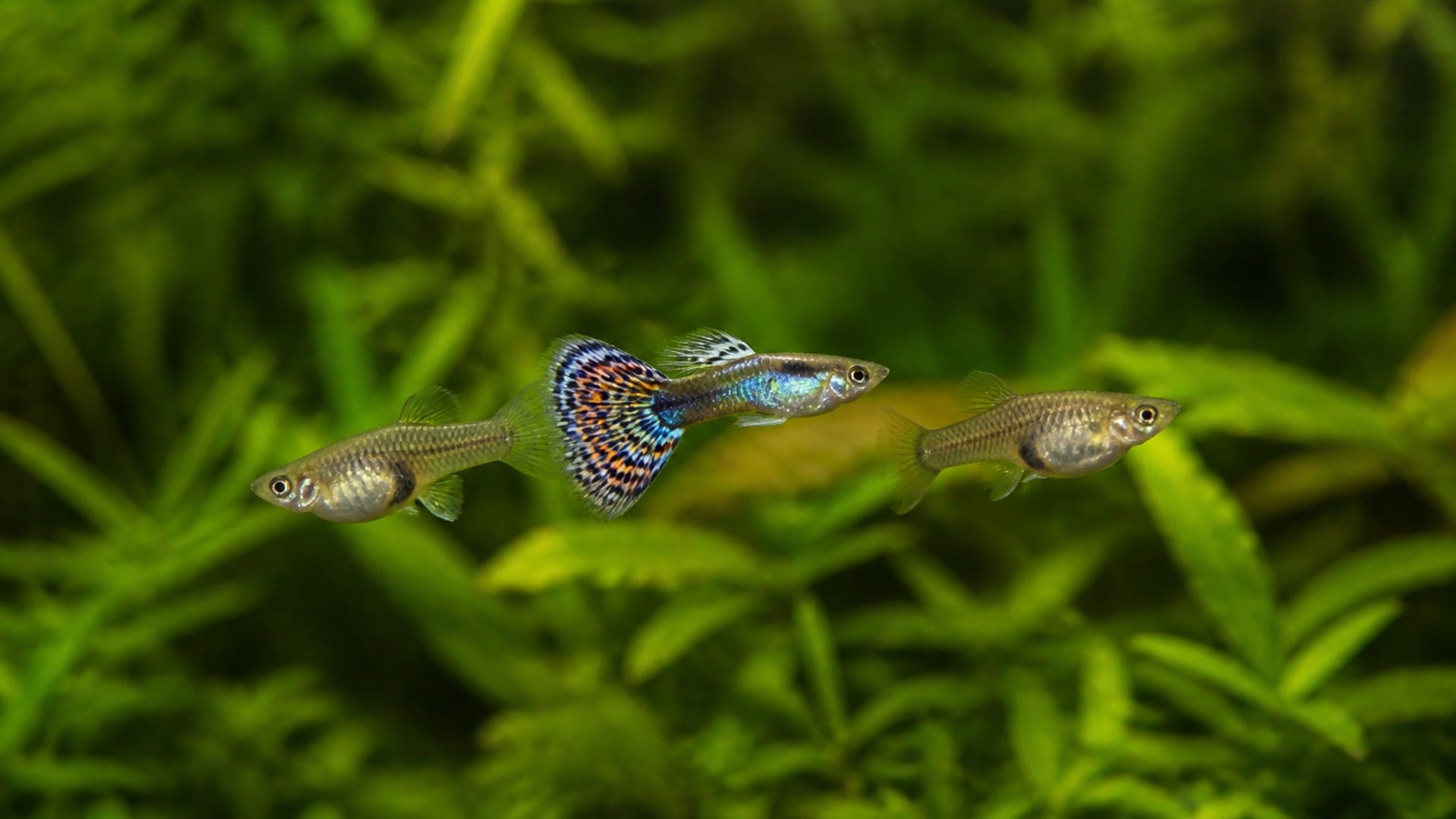
Females usually live longer, but they carry a specific risk the males do not.
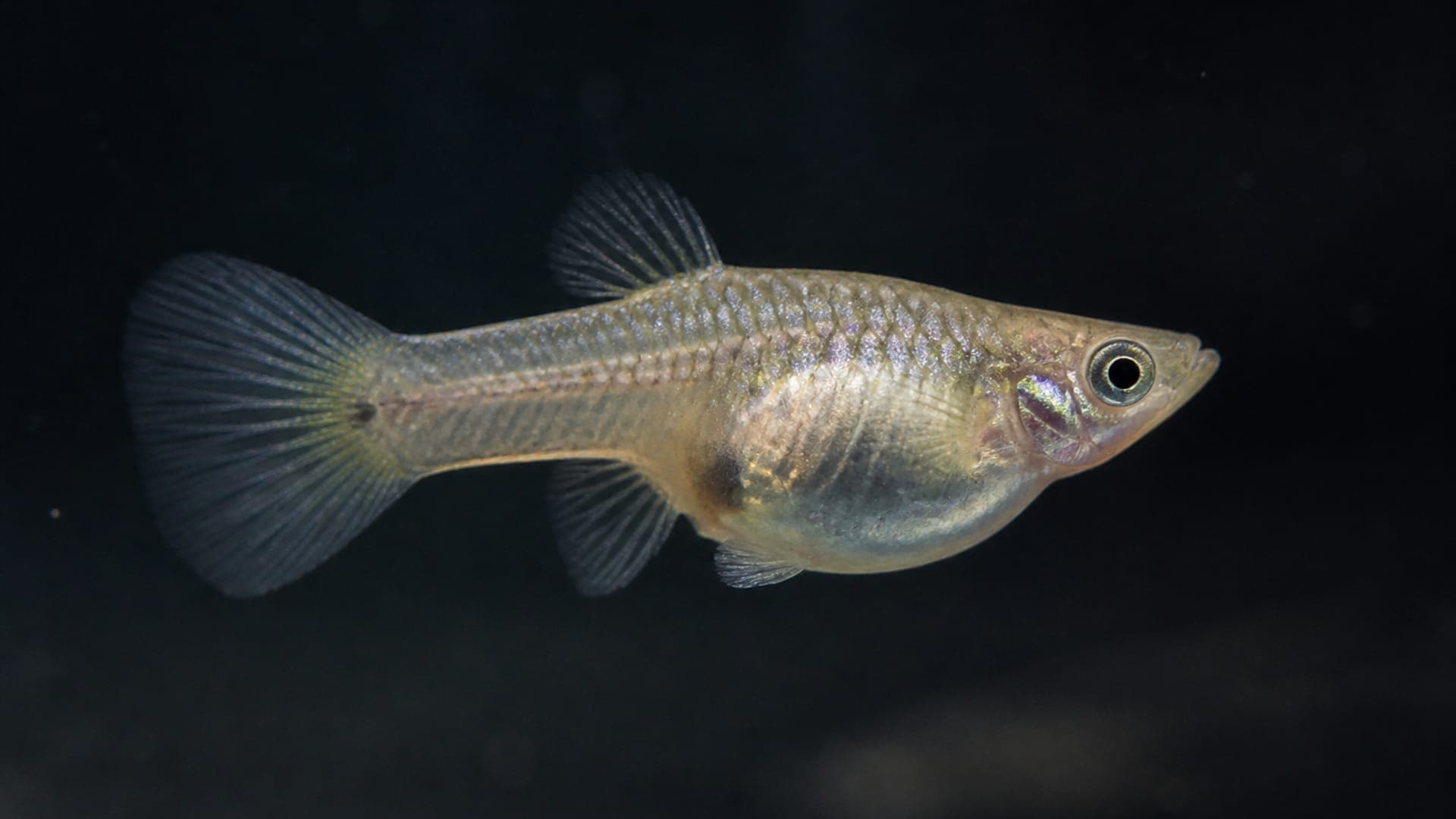
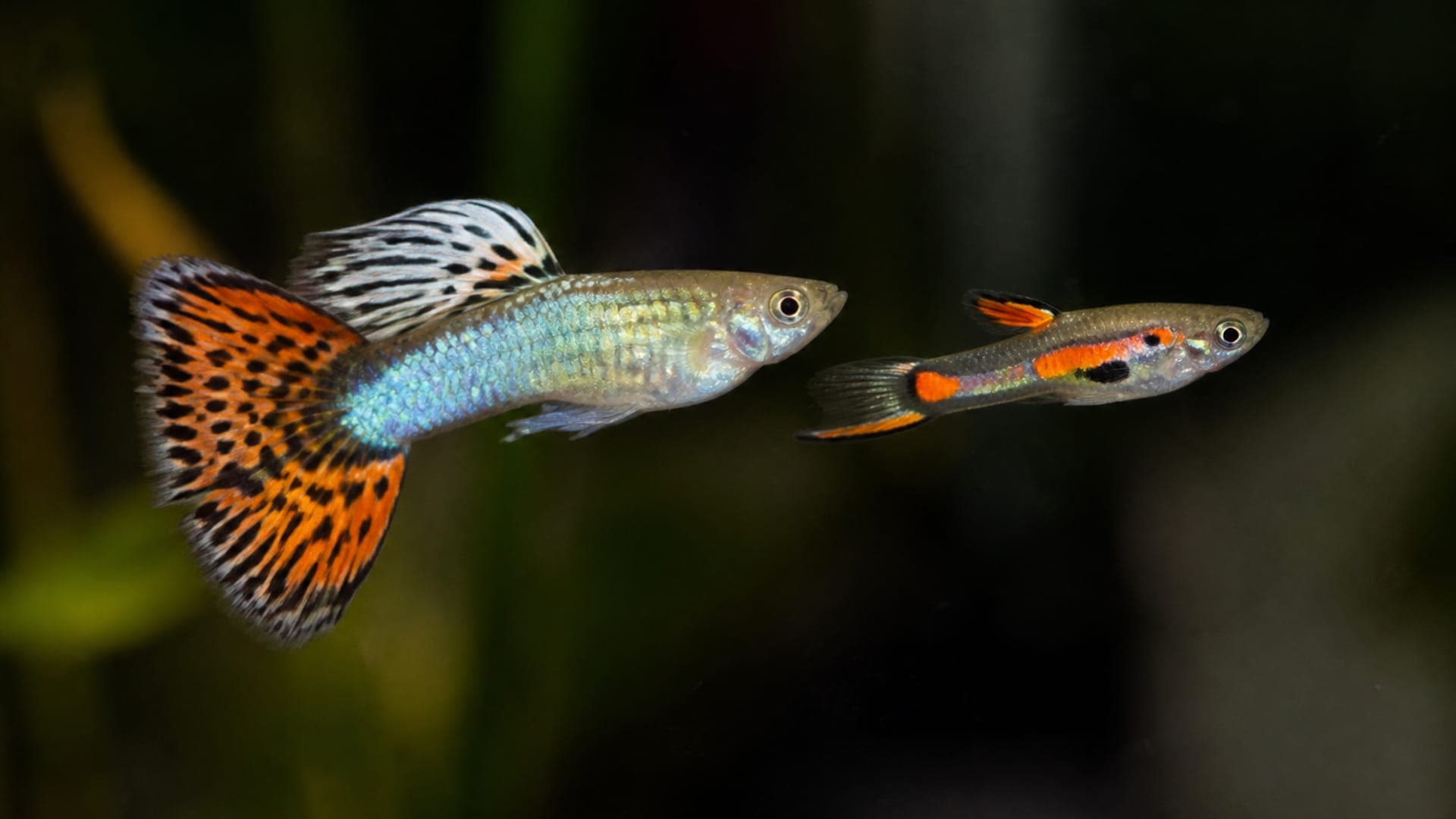
Continuous pregnancy is expensive. A female mated once stores sperm and can deliver a brood roughly monthly for months afterwards, and a female producing brood after brood without recovery ages visibly — she loses condition, her colour flattens, and she becomes vulnerable to everything else. Females in male-heavy tanks die young for this reason as much as from the harassment described in tank size and stocking.
Males pay a different price. They spend their active hours courting rather than feeding, and in a group with too few females they also absorb constant low-level aggression from other males.
Both of these point the same way: an all-male or all-female group is the long-lifespan configuration, and a badly ratioed mixed tank is the short one.
What actually extends it
In rough order of effect:
- Buy better fish. A locally bred guppy in hard water beats every other intervention on this list combined.
- Get the water chemistry right — GH 8–20, KH 4–15, pH 7.0–8.5. Soft water is a slow death sentence, not a preference.
- Run cooler. 23–24°C rather than 27–28°C measurably extends life, because metabolic rate tracks temperature.
- Fix the sex ratio, or keep one sex.
- Underfeed rather than overfeed, and vary the diet.
- Keep nitrate low with consistent water changes. Chronic nitrate does not kill quickly; it shortens lives quietly.
- Quarantine new arrivals so one purchase does not reset the whole tank.
Notice that most of this is decided before the fish is in the tank. Guppy lifespan is largely a sourcing and setup problem, not a daily-care problem.
What ageing looks like
Old guppies are recognisable, and knowing the signs stops you treating age as disease. Colour fades and the iridescence flattens first. The spine may curve slightly. Fins look thinner and more ragged at the edges without the tissue damage of an infection. The fish becomes less active, feeds less enthusiastically and spends more time holding station near cover.
There is no treatment for this and medicating an old fish generally makes its last weeks worse. Distinguishing it from actual disease mostly comes down to speed: illness arrives over days, age arrives over months.
Before you buy
- Ask where the shop's guppies come from, and look for a local breeder first.
- Test your tap water's GH before buying, not after.
- Expect two years from a good fish, and treat three as a genuinely good result.
- Keep one sex if longevity matters more than fry.
- Run at the cooler end of the range.