What to Feed Guppies: Diet, Amounts and Schedule
Guppies are omnivores that need more vegetable matter than most flake food gives them. What to feed, how much, how often, and why overfeeding is the most common cause of a sick guppy.
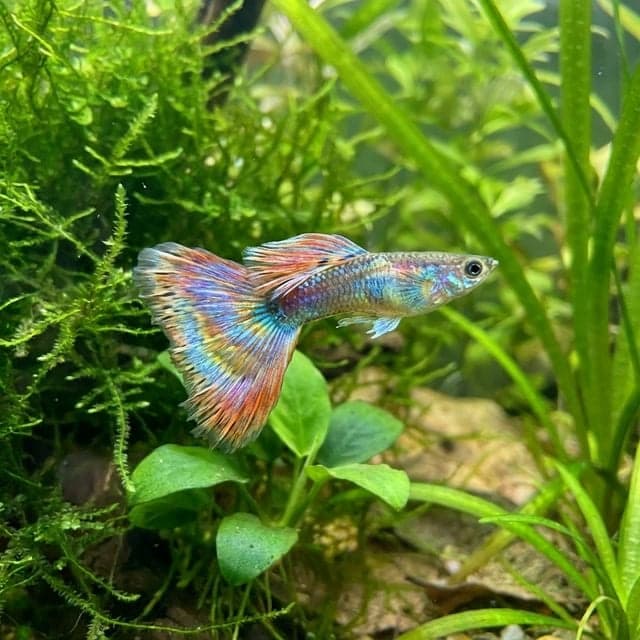
Guppies will eat anything you drop in the tank, immediately and enthusiastically, and then behave as though they have not been fed for a week. That behaviour is what makes them easy to feed badly. Almost every guppy digestive problem in the hobby comes from a keeper who was being generous.
The two things worth getting right are variety and quantity. Neither is complicated, but the standard advice — a pinch of tropical flake twice a day — gets the first one wrong and leaves the second undefined.
What they actually eat
Wild guppies graze. Gut-content studies of wild populations find a diet built mostly on algae, diatoms and plant detritus, topped up with mosquito larvae, small crustaceans and whatever invertebrates drift past. They are omnivores with a genuine herbivorous lean — not the pure carnivores that heavy protein feeding assumes.
That matters because most "tropical flake" is a protein-forward fishmeal product. Fed exclusively, it produces the constipated, bloated, stringy-faeces guppy that turns up in every aquarium forum. The fish is not diseased. It is being fed a diet its gut is not built for.
A diet that works
Think of it as a staple plus rotation, not a single product.
Staple (most feeds). A quality flake or micro-pellet with a named fish or krill meal in the first two ingredients, not "fish derivatives" or wheat. Spirulina-based flakes are an excellent staple for guppies specifically, because they supply the vegetable fraction the fish actually wants.
Rotation (two or three feeds a week). Swap one feed for something else:
| Food | Why |
|---|---|
| Frozen or live daphnia | Mild laxative effect; the standard fix for a slightly bloated fish |
| Frozen baby brine shrimp | High-value protein, small enough for guppy mouths, triggers strong colour |
| Blanched vegetable — courgette, deshelled pea, spinach | Fibre and plant matter; a squashed pea is the classic constipation remedy |
| Microworms / vinegar eels | Live food, excellent for conditioning females and raising fry |
| Crushed algae wafer | Cheap way to add grazing material |
Ignore the tubifex blocks glued to the glass, and treat freeze-dried bloodworm as an occasional item rather than a staple — it swells after being eaten and is a reliable route to bloat in a fish this size.
Guppies have upturned mouths and feed at the surface. Anything that sinks fast is going to the substrate uneaten, so match the food to where the fish are.
How much, and how often
Two small feeds a day, each one consumed completely in about thirty seconds. That is the whole rule.
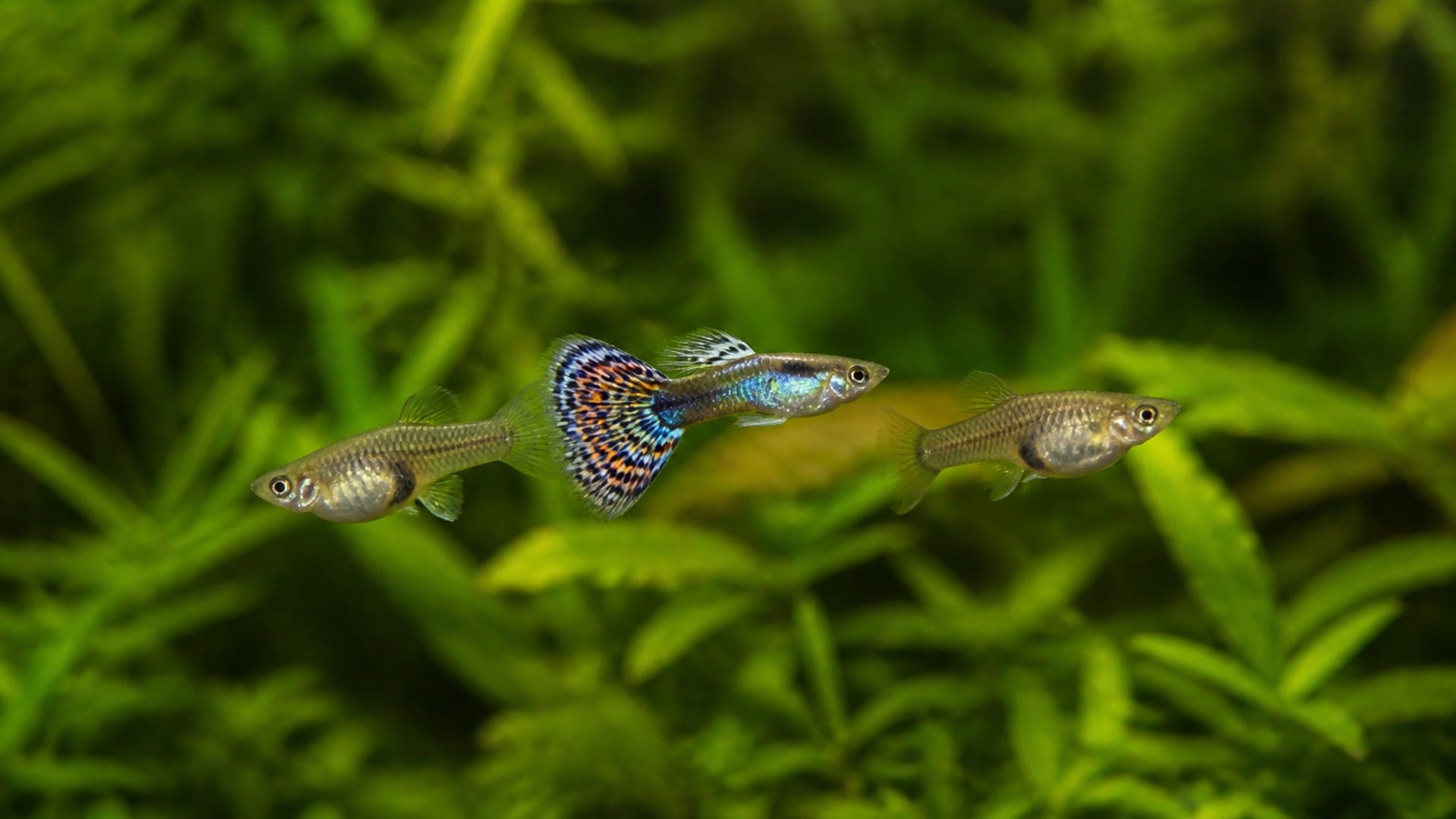
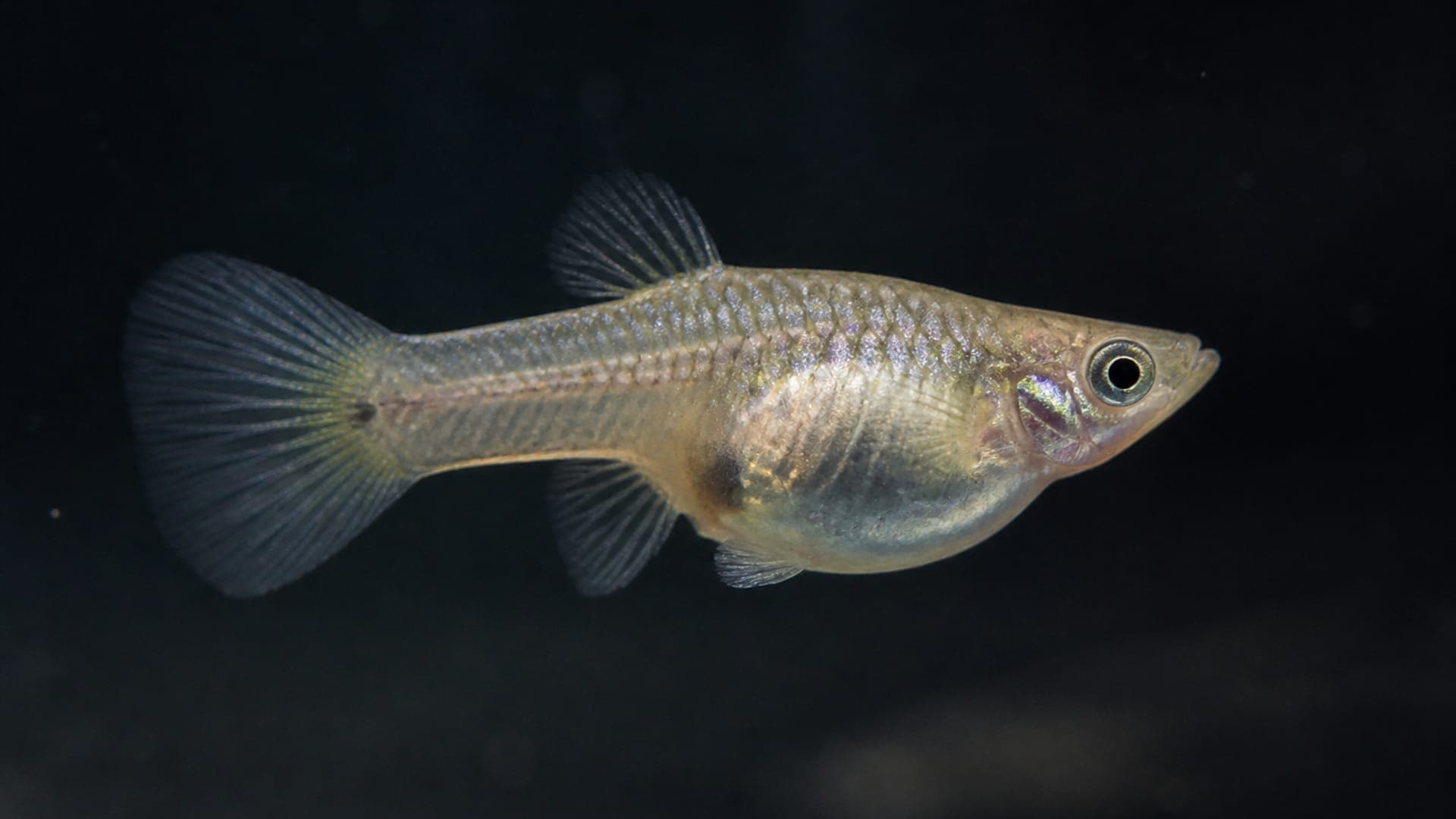
A guppy's stomach is roughly the size of its eye. The volume of food this implies looks insultingly small next to what a shop feeding chart suggests, and it is still enough. Any food still drifting after a minute was too much, and it becomes nitrate.
Adults tolerate a fast day each week comfortably, and it is genuinely useful in a tank that has been running heavy. Fry are the exception and are covered separately in breeding and fry — they need small feeds three to five times a day, which is the one situation where guppy feeding is labour-intensive.
Holidays: a healthy adult guppy is fine unfed for a week. Do not use holiday feeder blocks. They dissolve on their own schedule, foul the water, and cause far more losses than a week of fasting ever does.
Overfeeding is the actual risk
Overfeeding does damage on two fronts at once, and the second is the one that kills fish.
The direct effect is digestive: bloat, constipation, stringy white faeces, and in bad cases a swim bladder problem where the fish struggles to hold depth. Most of this resolves with a two-day fast followed by daphnia or a deshelled pea.
The indirect effect is water quality. Uneaten food and the extra waste from overfed fish both drive ammonia and nitrate up, and in a small guppy tank that moves fast. A large share of "my guppies are dying and the water tests fine" cases are tanks where the water was tested a week after the damage was done. The nitrogen cycle does not have spare capacity for enthusiasm.
Symptoms that are genuinely disease rather than diet are separated out in guppy diseases and health. Start by assuming it is the food, because it usually is.
Colour, and what actually drives it
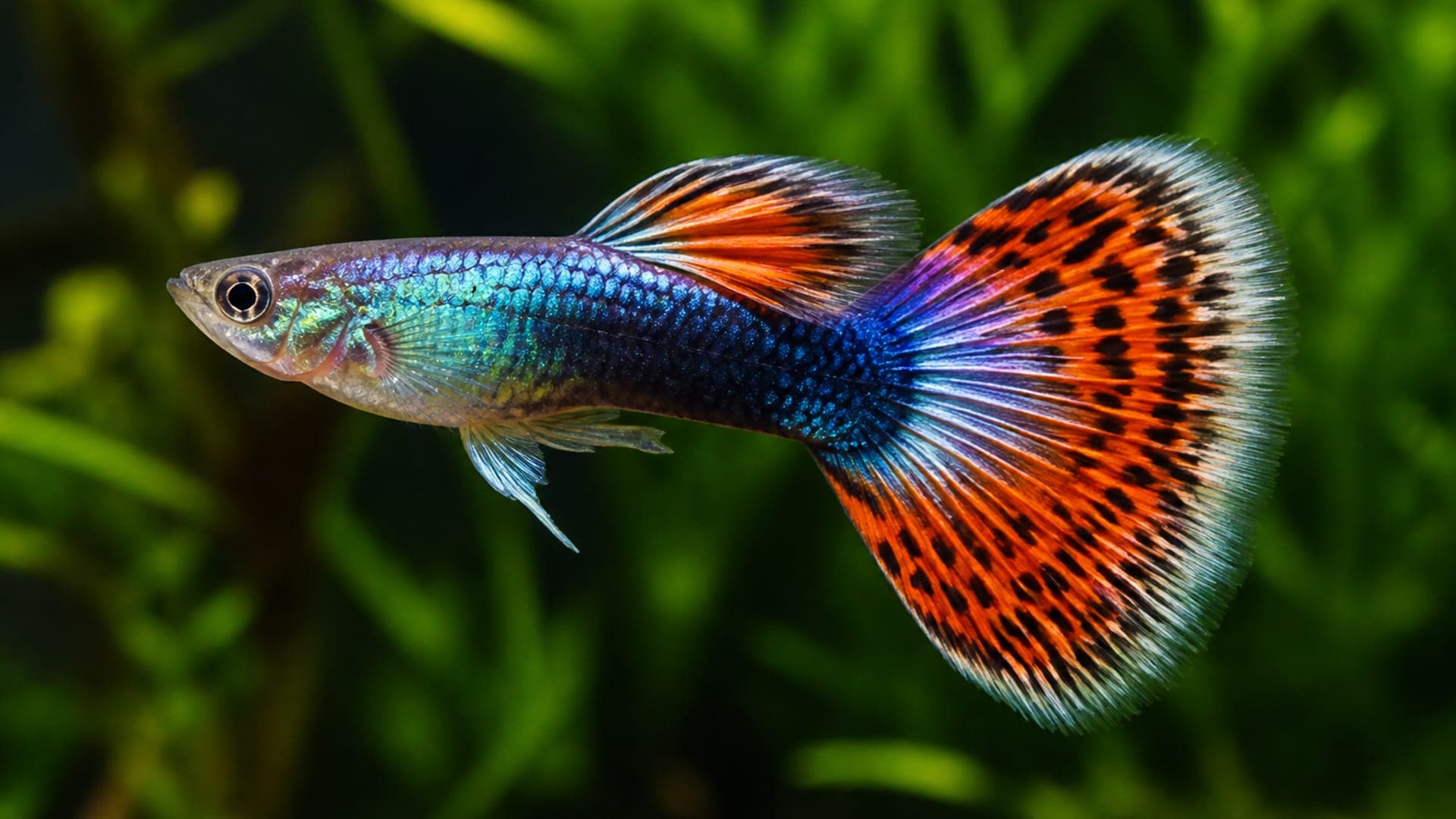
Carotenoids in the diet drive red, orange and yellow pigmentation, which is why spirulina, krill, astaxanthin-containing foods and colour-enhancing flakes produce a visible improvement over a few weeks. This is real, not marketing.
What those foods cannot do is add colour the fish does not have genetically. A strain's colour ceiling is fixed when you buy the fish; diet decides how close to that ceiling it gets. Fish that arrive pale from a shop are usually stressed and under-fed rather than poorly bred, and often colour up substantially within a month on a varied diet.
Before you buy
- Pick a spirulina-based or genuinely varied staple, not a generic protein flake.
- Buy the smallest tub that will last three months — flake loses vitamin content fast once opened.
- Add one frozen food to the freezer: daphnia if you buy only one.
- Feed twice a day, thirty seconds each, and stop there.
- If a fish looks bloated, fast it for two days before you reach for medication.