Golden Wonder Panchax
The Golden Wonder Panchax (Aplocheilus lineatus) is a large, predatory killifish from India, prized for its brilliant gold color and its specialized surface-hunting behavior.
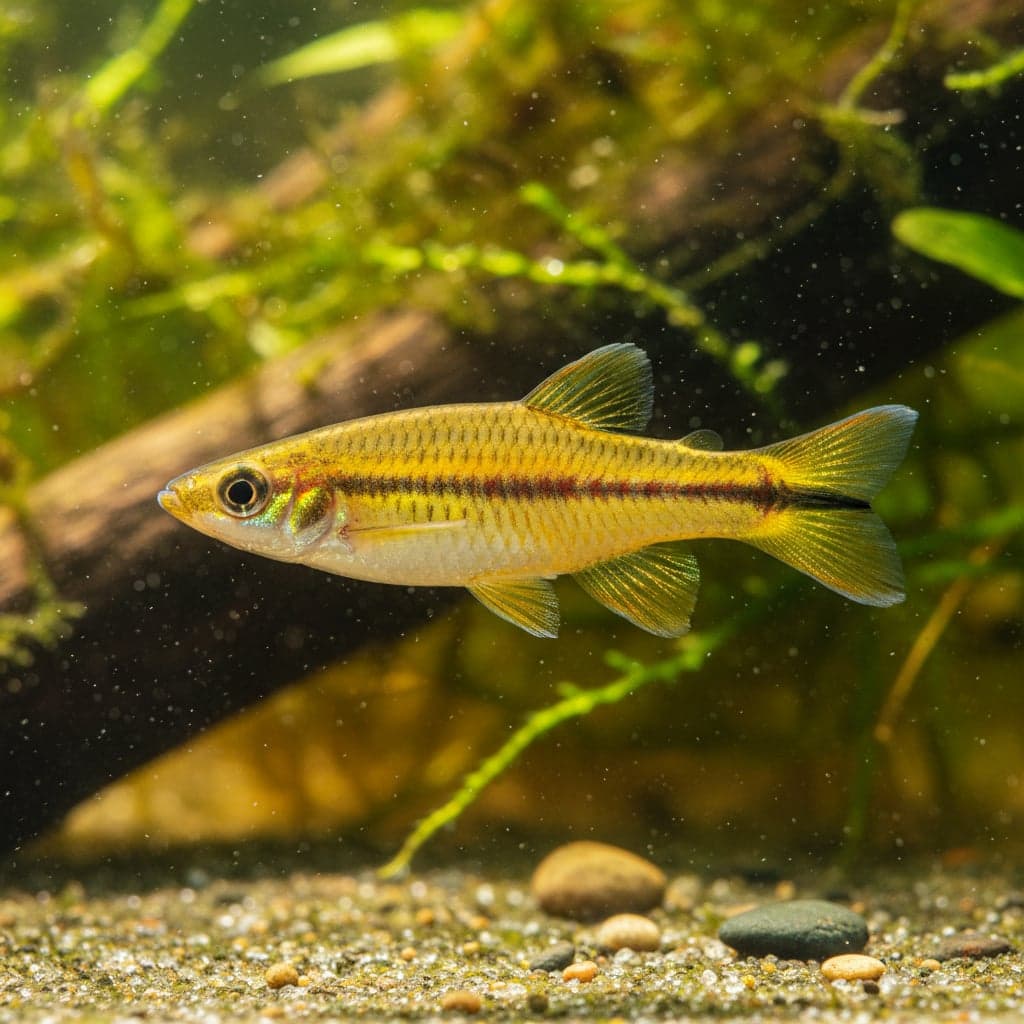
Golden Wonder Panchax
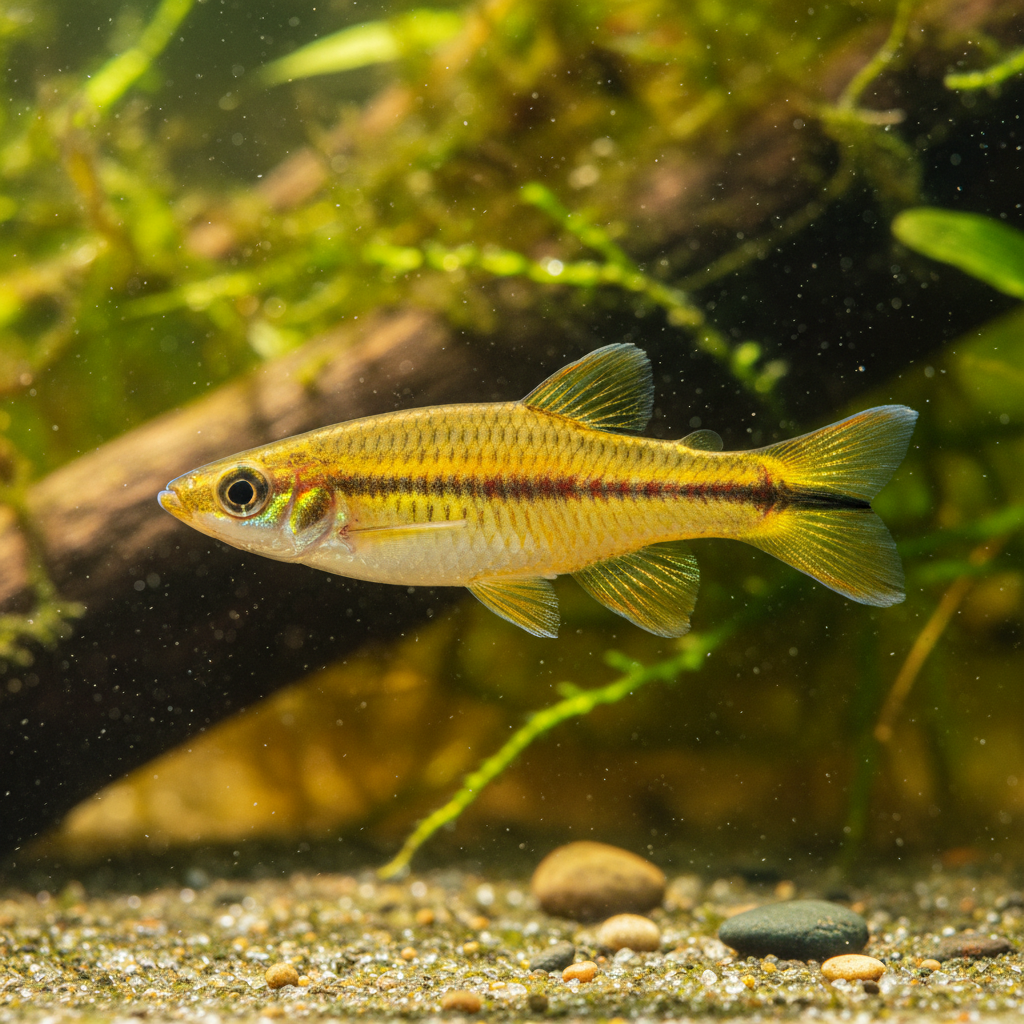
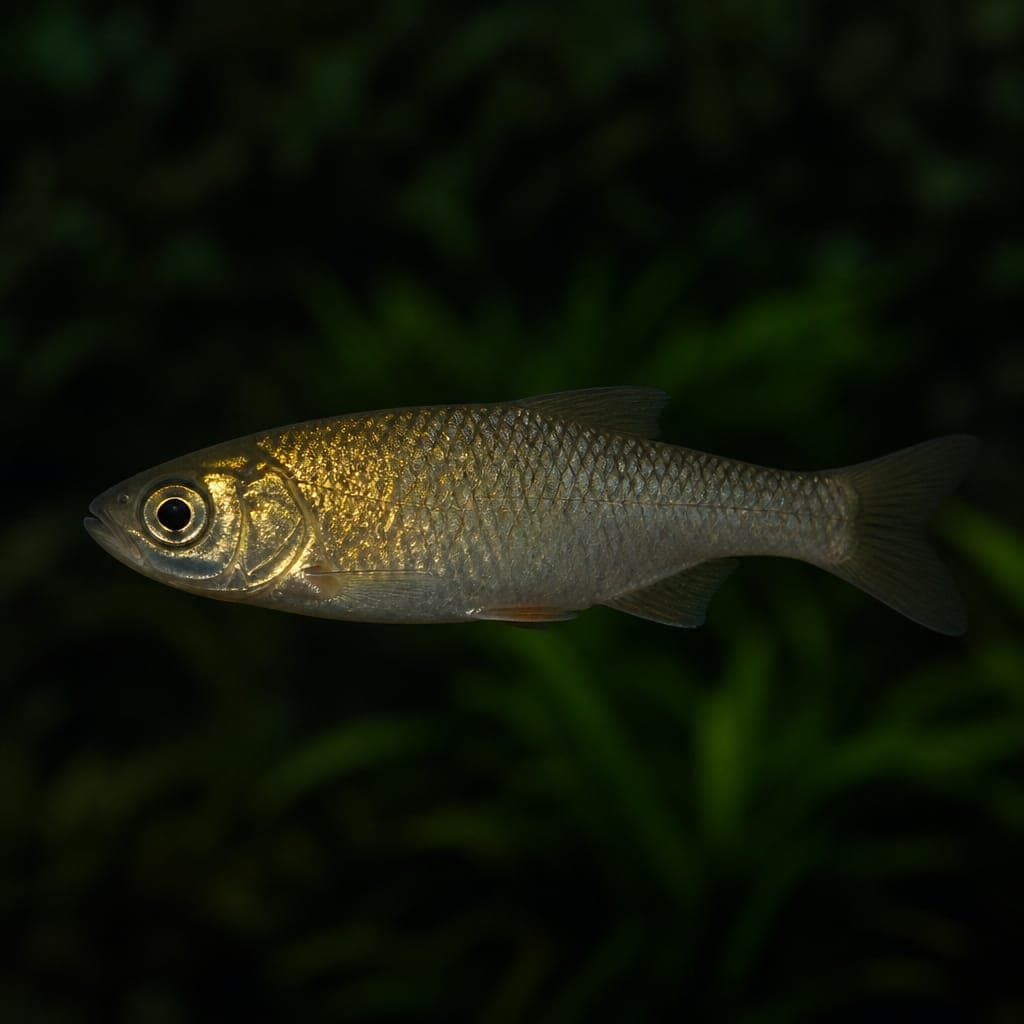
The Golden Wonder Panchax (Aplocheilus lineatus) is a stunning and highly social killifish. While the wild type is a subtle silver with dark lines, the "Golden Wonder" is a domestic selective breeding triumph, featuring a brilliant, shimmering golden-yellow body from head to tail.
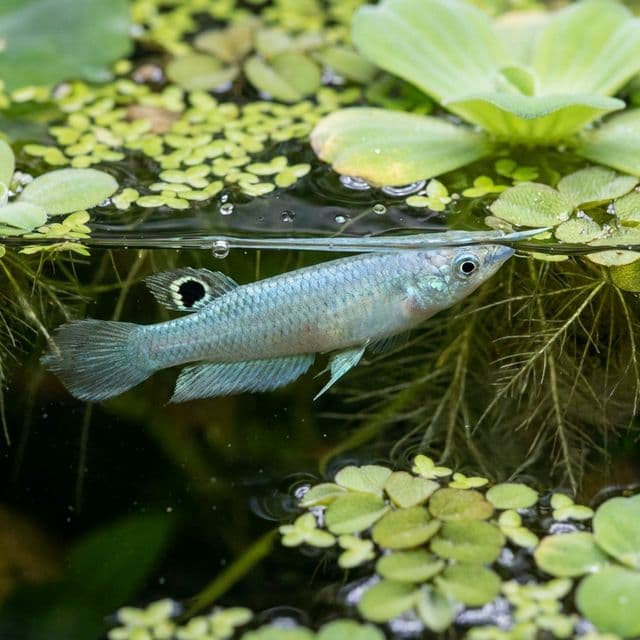
Growing to about 4 inches (10 cm), it is one of the largest and most robust killifish in the hobby. It is specialized for life at the water's surface, with a flat back and an upward-turned mouth, allowing it to strike at prey from below with incredible speed.
Natural Habitat & Origin
Contrary to some sources, the Golden Wonder Panchax (and its wild ancestor) is native to the freshwater and brackish habitats of India and Sri Lanka. It is a highly adaptable species found in a variety of environments, including slow-moving rivers, swamps, rice paddies, and even coastal lagoons. They are typically found in the top few inches of water, lurking among floating vegetation or overhanging branches.
Care Requirements
The Golden Wonder Panchax is exceptionally hardy and adaptable, making it an excellent choice for beginner aquarists provided its predatory nature is respected. It thrives in a pH between 6.0 and 7.5 and a temperature range of 72°F to 82°F (22°C to 28°C).
A minimum tank size of 20 gallons (80L) is required for a small group. The most important setup requirement is a secure, tight-fitting lid, as they are powerful jumpers. The tank should feature plenty of surface cover, such as floating plants (Pistia, Salvinia, or Frogbit), which make the fish feel secure and provide natural hunting grounds.
Diet & Feeding
The Golden Wonder Panchax is a surface predator. In the wild, its diet consists almost entirely of insects and smaller fish that venture near the surface.
In the aquarium, they are not picky and will readily accept high-quality flakes and pellets. However, to maintain their vibrant gold color and health, they should be offered regular treats of live or frozen foods such as crickets, fruit flies (Drosophila), bloodworms, and brine shrimp. Caution: Any fish small enough to fit in its surprisingly large mouth (like neon tetras or juvenile guppies) will likely be eaten.
Behavior & Temperament
While not schooling fish in the traditional sense, they are social and do best in small groups. They spend the vast majority of their time in the top layer of the water column.
They are generally peaceful toward fish that they cannot eat, but they can be territorial and "nippy" with their own kind if the tank is too small or lacks cover. Their predatory instinct is strong; they are constantly patrolling the surface, watching for any movement that might indicate a meal.
Tank Mates
Ideal tank mates are robust and medium-sized species that inhabit the middle and lower levels of the tank:
- Larger Tetras (Congo, Bleeding Heart)
- Robust Barbs (Cherry, Rosy)
- Corydoras and peaceful Catfish
- Medium-sized Cichlids (Angelfish, Gouramis)
- Large Rainbowfish
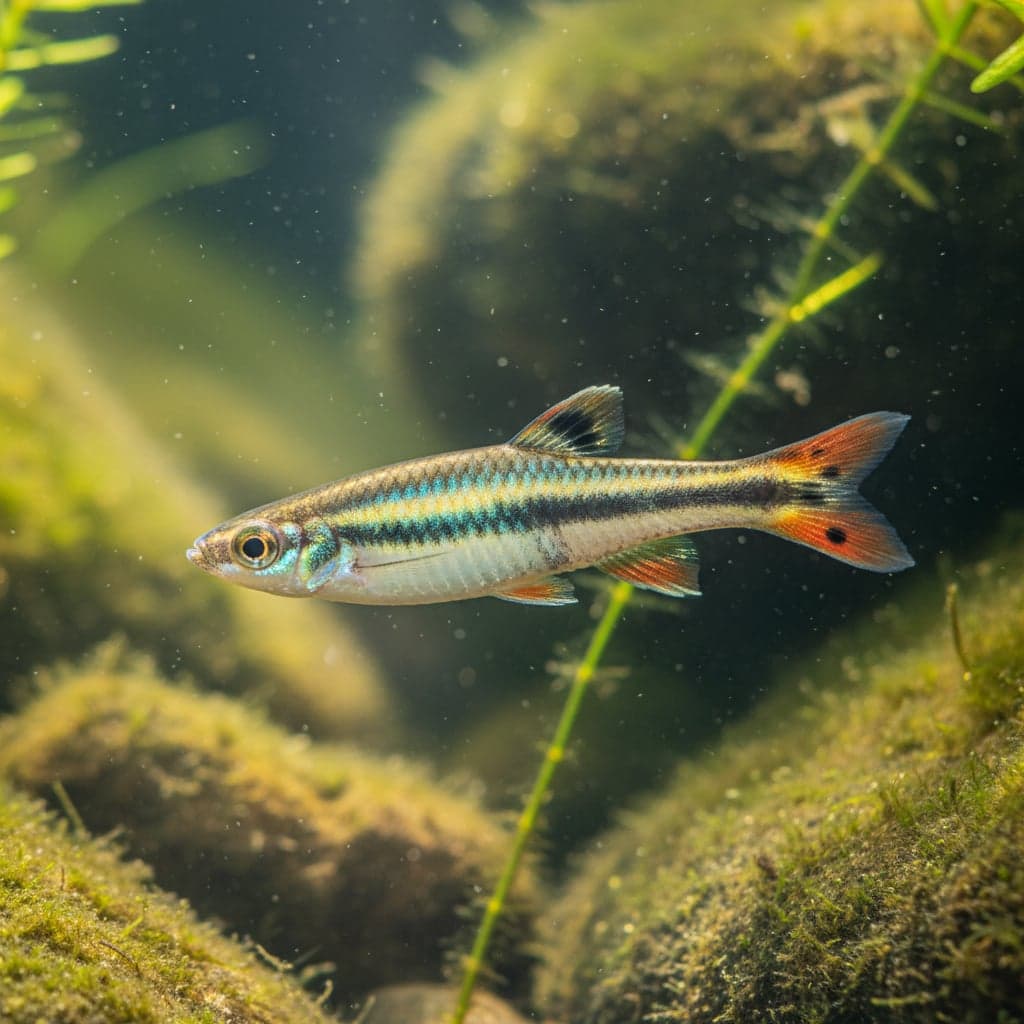
Avoid very small species like Neon Tetras, Galaxy Rasboras, or juvenile shrimp, as they will likely be seen as food.
Breeding
They are relatively easy to breed in captivity. They are egg-hangers; the male will court the female, and spawning typically occurs among fine-leaved floating plants or spawning mops. A single female can lay up to 100 eggs over several days. The eggs are quite large and take 10-14 days to hatch depending on temperature. The parents should be removed after spawning as they will eat the fry. The fry are large enough to take newly hatched brine shrimp immediately.
Common Health Issues
Golden Wonder Panchax are generally very robust. The primary health concern is injury from jumping if the tank is not properly covered. Like all tropical fish, they can be susceptible to Ich or Velvet if stressed, but they generally have a very strong immune system when kept in a well-maintained, planted environment with a varied diet.