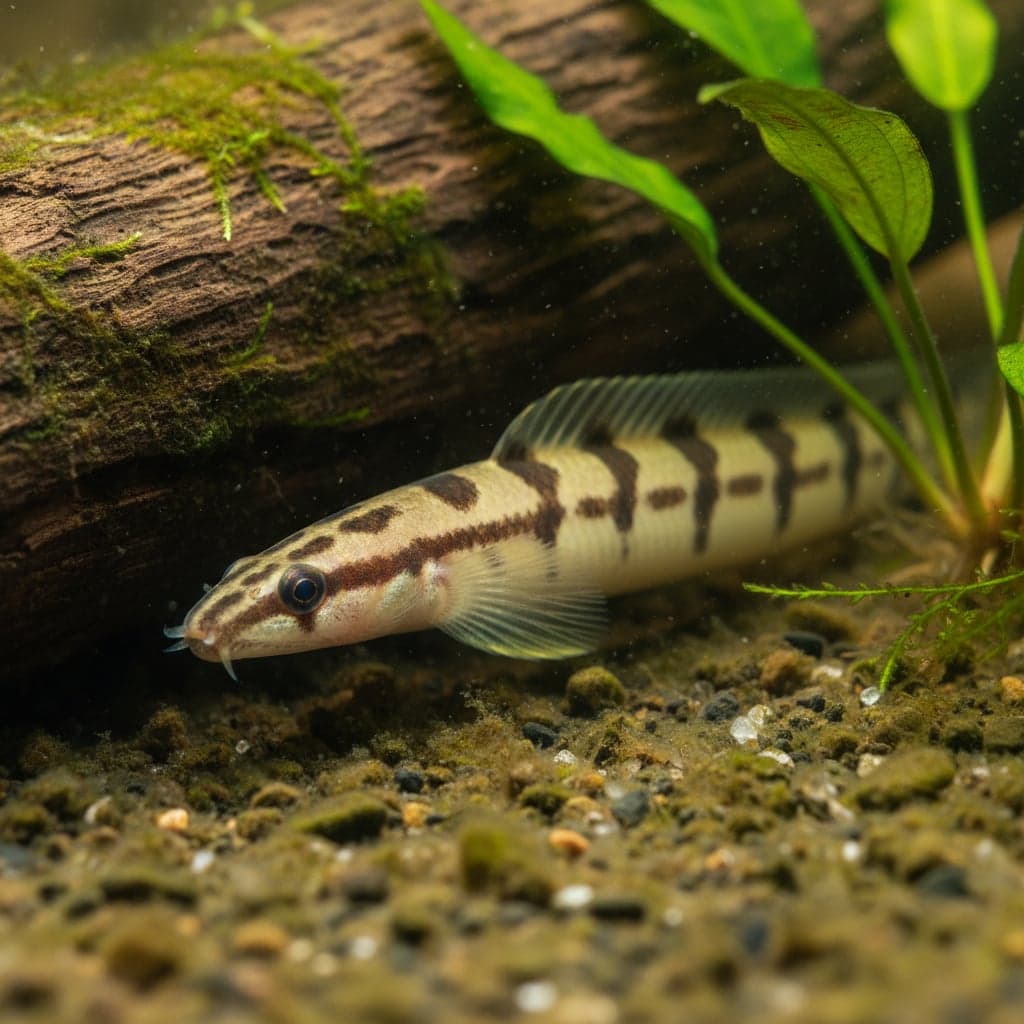
Golden Vampire Pleco
The Golden Vampire Pleco (Leporacanthicus heterodon) is a uniquely adapted, carnivorous catfish with specialized teeth for eating snails and shellfish.
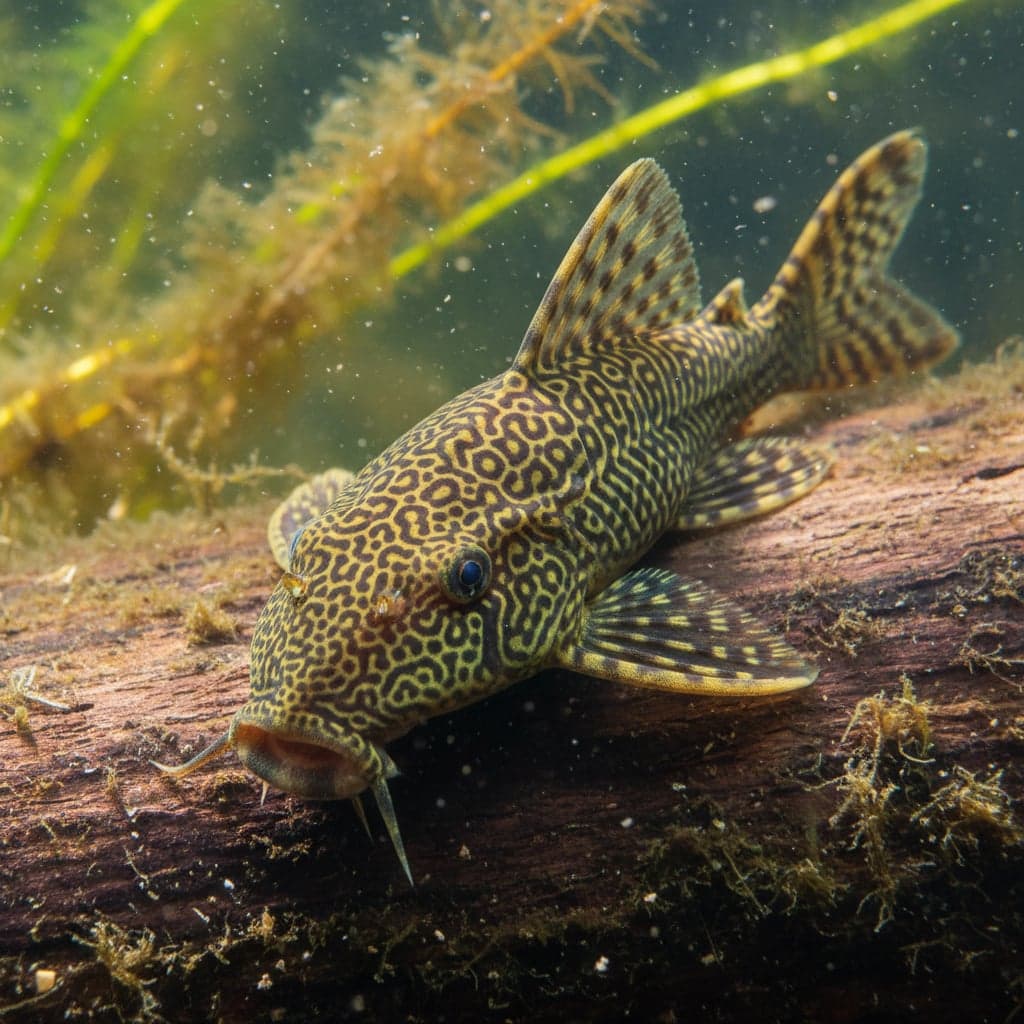
Golden Vampire Pleco
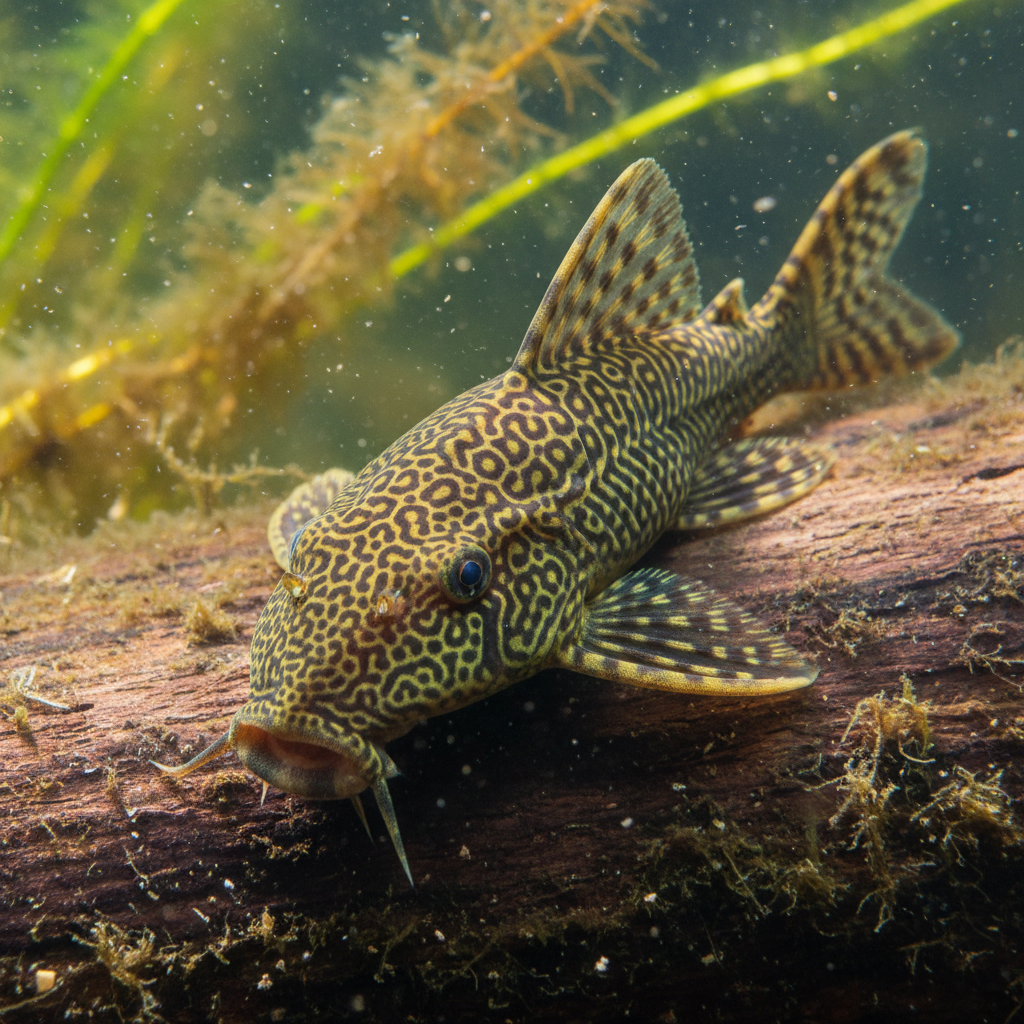
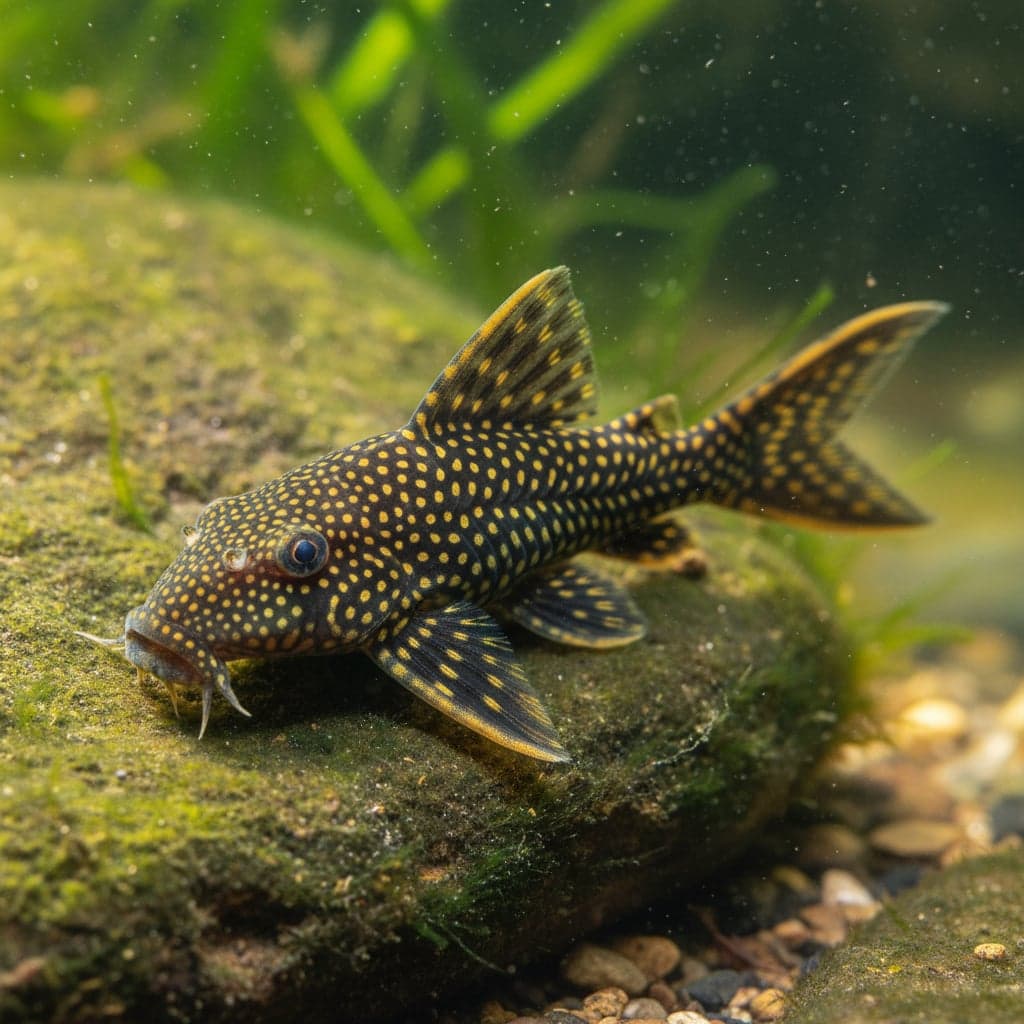
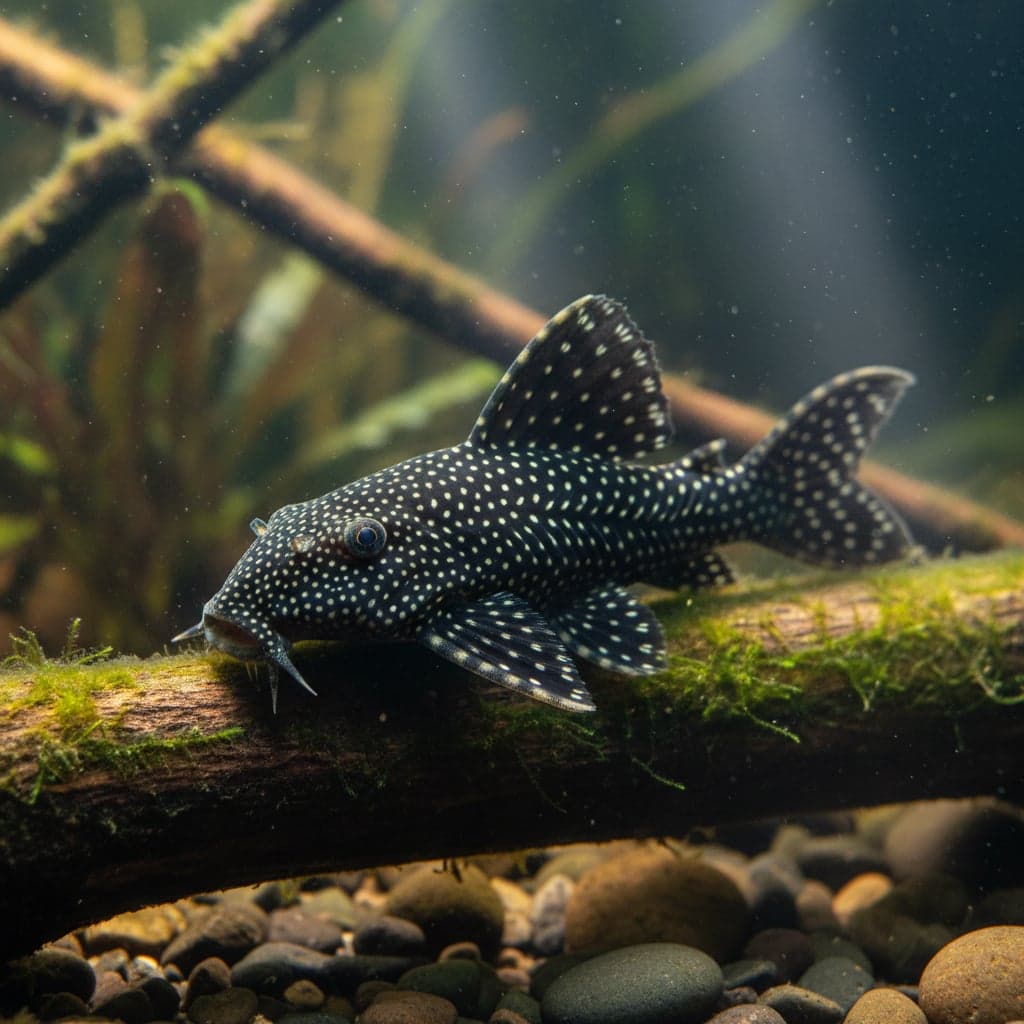
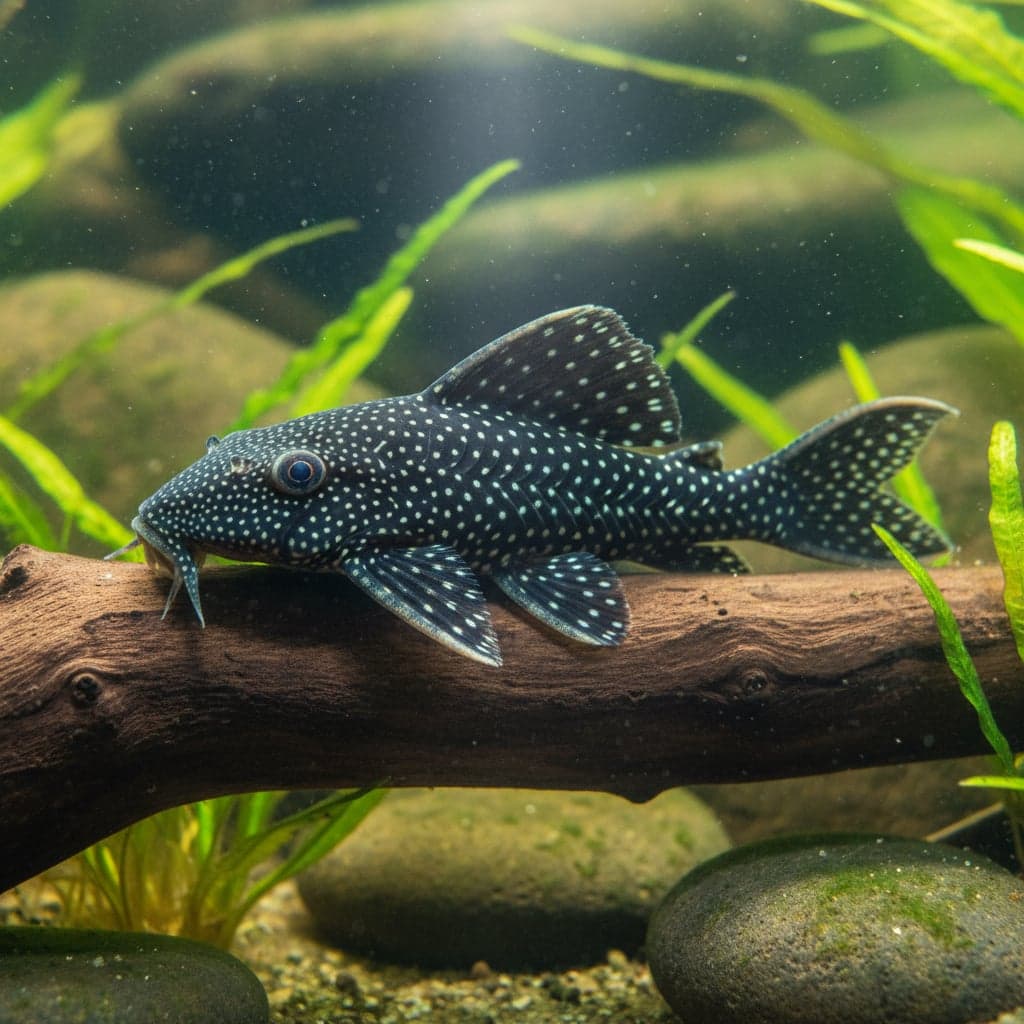
The Golden Vampire Pleco (Leporacanthicus heterodon) is one of the most distinctive and highly adapted members of the Loricariidae family. Its common name "Vampire" refers to its specialized dentition: it possesses a few incredibly long, sharp teeth on the upper jaw, which it uses like a tool to hook and drag snails or bivalves from their shells.
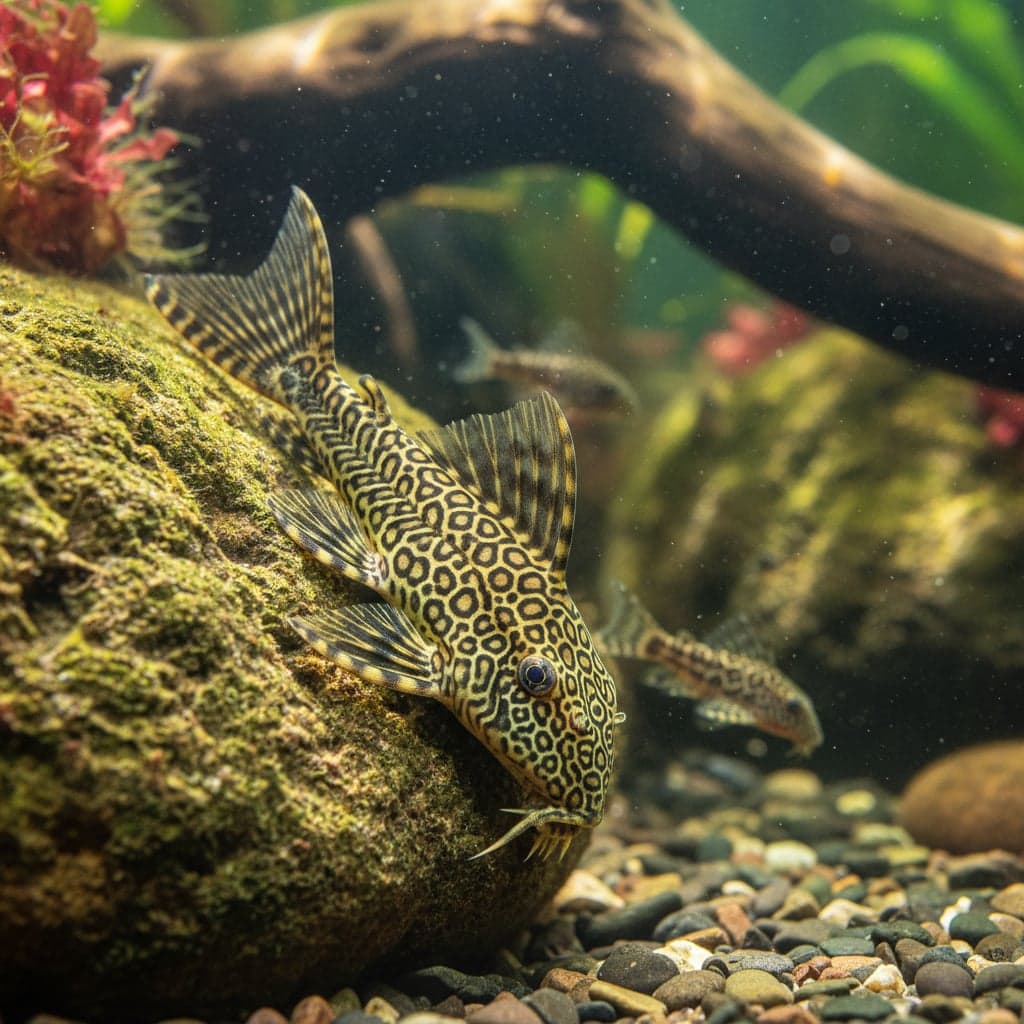
Growing to about 6-7 inches (15-18 cm), it features a beautiful golden-yellow to light brown body covered in numerous small dark spots. Unlike many other plecos, the "Golden Vampire" is quite active and can be surprisingly bold once acclimated to its environment.
Natural Habitat & Origin
This species is native to the lower Rio Xingu and Rio Tocantins basins in Brazil. They are typically found in areas with moderate to fast-flowing water, usually associated with rocky outcrops and large driftwood tangles. These "clearwater" rivers are warm and well-oxygenated. They spend their days wedged deep into the crevices of wood or rocks, emerging primarily at night to hunt for their specialized prey.
Care Requirements
The Golden Vampire Pleco is relatively hardy but requires high water quality and plenty of dissolved oxygen. The water temperature should be maintained between 75°F and 82°F (24°C to 28°C), with a pH between 6.0 and 7.5.
A minimum tank size of 40-50 gallons (200L) is required for an adult. The most important part of the tank setup is the presence of numerous caves and driftwood structures. Bogwood is particularly important as they naturally inhabit wood-rich environments. The water turnover should be high to mimic their riverine habitat.
Diet & Feeding
A common and potentially fatal mistake is assuming the Golden Vampire Pleco is an algae eater. It is almost strictly a carnivore. In the wild, its primary diet consists of snails, shellfish, and aquatic insect larvae.
In captivity, they should be fed protein-rich sinking pellets, freeze-dried bloodworms, and frozen foods like mysis and brine shrimp. They will also appreciate the occasional whole prawn or mussel. Feeding live snails is an excellent way to provide enrichment and allow them to use their specialized teeth. They will rarely, if ever, eat algae.
Behavior & Temperament
The Golden Vampire Pleco is semi-aggressive and can be quite territorial, especially toward other plecos or bottom-dwellers. They will fiercely defend their favorite cave.
While mostly nocturnal, they become quite active during feeding times. They are generally peaceful toward fish that inhabit the upper levels of the tank, but their boisterous nature and sharp "vampire" teeth mean they should be housed with robust tank mates.
Tank Mates
Ideal tank mates include:
- Large schools of Tetras or Rasboras
- Robust Cichlids like Severums or Geophagus
- Active Cyprinids like Silver Sharks or Tinfoil Barbs (in very large tanks)
- Other robust catfish, provided there is enough space and multiple caves
Avoid housing them with small, delicate bottom-dwellers or with too many other bottom-dwelling species that compete for the same territory and caves.
Breeding
Breeding Golden Vampire Plecos in the home aquarium is rare and considered quite an achievement. They are cave spawners. The male will select a deep cave and attempt to lure a female inside. Once eggs are laid, the male takes over all parental duties, fanning and guarding the eggs until they hatch. Success usually requires very high water quality, a high-protein diet for conditioning, and a dedicated setup with numerous cave options.
Common Health Issues
They are generally robust but are sensitive to high nitrates and low oxygen levels. Like all plecos, they are susceptible to intestinal parasites; a high-quality, protein-rich diet is essential for maintaining their health. Their active nature means they can sometimes injure themselves on sharp decorations if spooked, so smooth rocks and driftwood are preferred.