Tasselled Filefish
The Tasselled Filefish (Chaetodermis penicilligerus) is a remarkable camouflaged Indo-Pacific fish — peaceful and characterful, but not reef-safe.
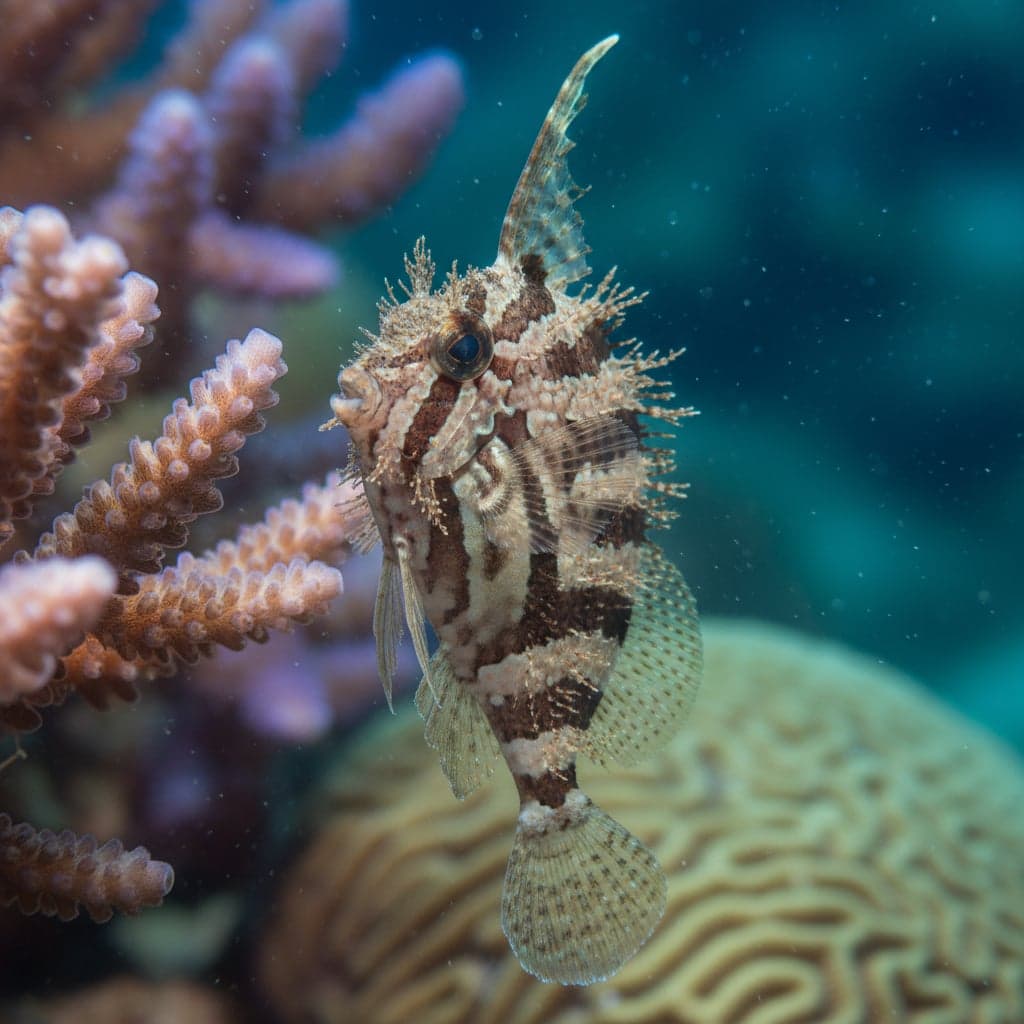
Tasselled Filefish
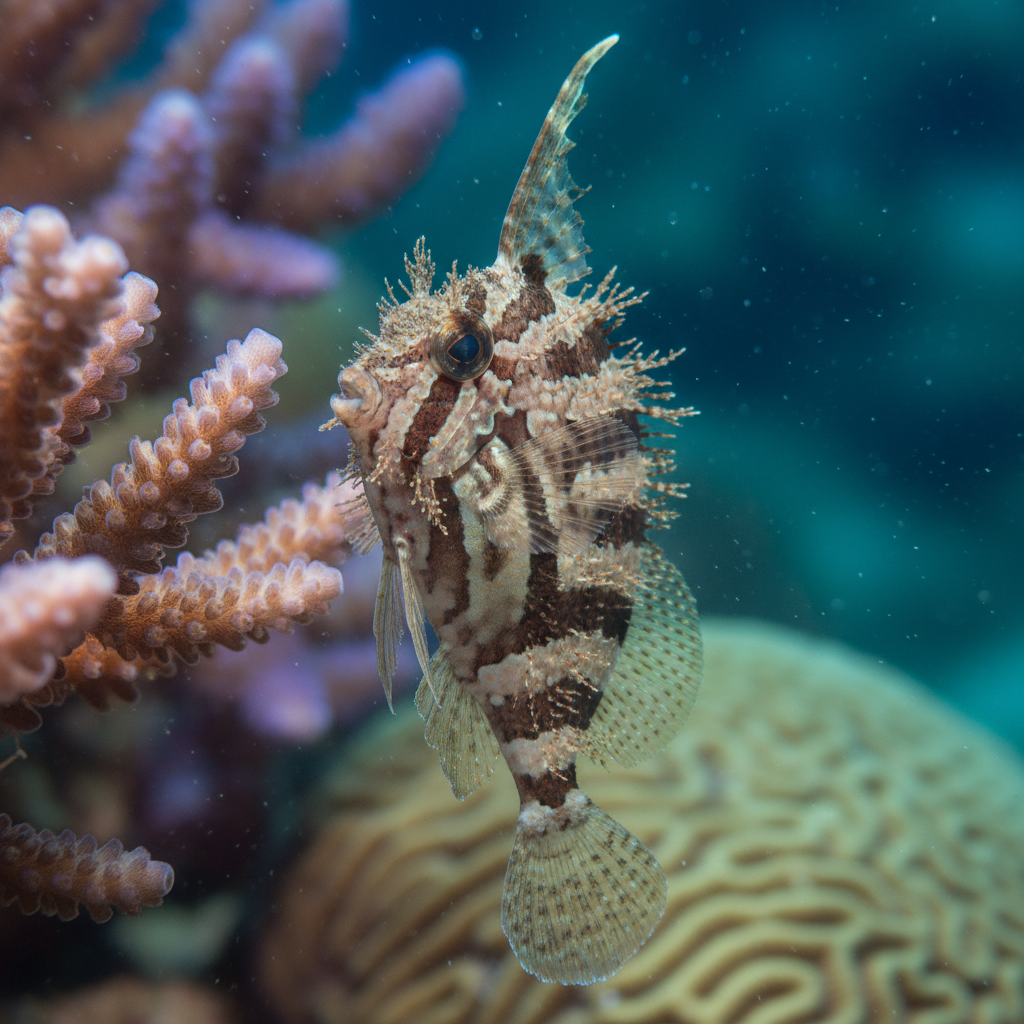
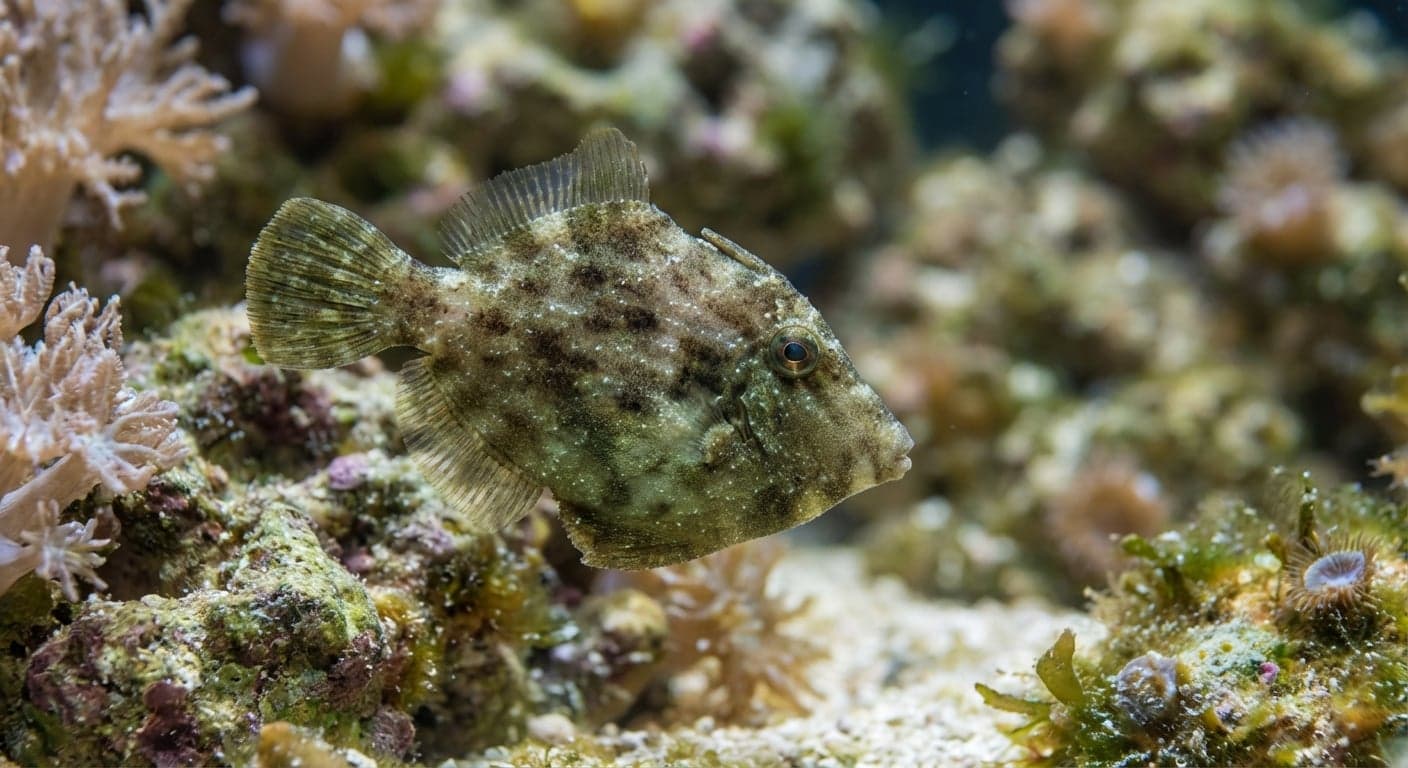
The Tasselled Filefish (Chaetodermis penicilligerus), also called the leafy or prickly filefish, is one of the reef’s great masters of disguise — its mottled grey-green body is covered in skin flaps and tassels and crossed by fine dark lines, breaking up its outline so effectively that it can vanish against weedy rubble and seagrass. Slow-moving, peaceful and full of character, it is a fascinating fish for a larger marine aquarium, though its filefish appetite means it is not reef-safe.
Its bizarre, camouflaged appearance makes it a real conversation piece for keepers who appreciate the unusual — and who are willing to run fish-focused systems rather than prize coral gardens.
Calm tankmates and foraging structure are the price of admission. Coral safety is not on the menu. Frontmatter lists solitary because that is how most home tanks should keep this oddball: one browser, peaceful companions, no SPS forest to sample.
Natural Habitat & Origin
Chaetodermis penicilligerus ranges across the Indo-Pacific, drifting slowly through weedy, rubble-strewn and seagrass areas near reefs. The tasselled body blends with algae and debris as it forages on a mixed diet. Camouflage is its main defence; it does not outswim predators or bullies, which is why captive companions must be chosen for pace as much as size.
In the aquarium it appreciates structure — rock, and ideally some macroalgae — to forage among and feel secure, in a calm community. Open water alone is not enough; it wants things to disappear into.
Care Requirements
Stable marine conditions: salinity about 1.024–1.026, pH 8.1–8.4, temperature 24–26°C (75–79°F). Adults reach about 30 cm (12 inches). Plan on around 340 litres (about 90 US gallons) or more — volume that gives a full-grown filefish room to browse without constantly turning in a box. Length and footprint matter more than height: this is a horizontal forager, not a mid-water racer. It is relatively hardy given a calm environment and a varied diet, but as a slow, deliberate feeder it must not be housed with fast, greedy tankmates that vacuum every meal.
Flow should be moderate rather than punishing. High-energy reef gyres that look impressive on SPS push a tassel-covered body into constant bracing and make deliberate picking harder. Aim for circulation that keeps waste moving without blasting the lower rock and algae zones where this fish works. Leave browseable surfaces — live rock with film, and macroalgae if you can keep it — rather than scraping every pane weekly into sterile glass.
Quarantine new arrivals. Like other marine fish it can carry marine ich (Cryptocaryon irritans) and marine velvet (Amyloodinium ocellatum); stress from shipping shows up as spots and appetite loss. Medications belong in hospital tanks — especially relevant if you ever hoped to move it onto a reef display, which filefish generally should not join. Use the Aquarium Tracker to log salinity, temperature and whether this slow feeder is actually getting food when faster fish are present. A peaceful oddball that looks “fine” for two weeks and then pinches behind the pectorals was usually outcompeted the whole time.
Diet & Feeding
Omnivore. Wild fish take small invertebrates, algae and other matter while browsing. In the aquarium offer a varied diet of frozen mysis and brine shrimp, finely chopped seafood, marine preparations and foods with marine algae content. Nori or other dried marine algae on a clip helps cover the plant side of that mix. Feed several small meals a day. A tank with natural growth and macroalgae helps support its slow, browsing style between offered feeds.
Watch condition closely. Peaceful filefish lose weight quietly when outcompeted. Target feed with tongs if needed, and do not assume “it ate something” because the cube disappeared in ten seconds of wrasse frenzy. Variety matters: an all-mysis diet misses the algae side of an omnivore that expects mixed forage. If prepared foods are ignored after shipping, offer smaller, softer pieces near structure rather than broadcasting into open water where speedsters win first.
Behavior & Temperament
Peaceful, slow-moving, and inclined to bother no one while drifting deliberately around the tank. That placid nature means it is easily out-competed or stressed by faster, more aggressive fish. A calm community is essential. It spends its time foraging and blending into the scenery — behaviour that looks inactive until you notice how thoroughly it has inspected every rock face.
Do not confuse peacefulness with reef manners. The same deliberate browsing that makes it charming toward fish is exactly how it samples polyps and mantles.
Tank Mates
Pair with peaceful, similarly paced fish — calm tangs, peaceful wrasses, larger gobies, cardinalfish and similar — and avoid nippy or aggressive species. With regard to the reef, it is not reef-safe: like other filefish it will nip coral polyps, clam mantles and ornamental invertebrates. Best in fish-only systems or soft, non-precious setups where coral loss is acceptable — which for most keepers means fish-only.
Avoid housing it with large angelfish or triggers that will harass a slow oddball, and avoid tiny ornamental shrimp if you want to keep them. Give it visual cover so it can settle without constant mid-water traffic. Macroalgae, if you keep it, doubles as cover and forage — just accept that a browsing filefish will rearrange and sample what you plant.
Breeding
Chaetodermis penicilligerus is not commonly bred in the home aquarium; trade specimens are wild-collected. Pairing behaviour and larval rearing are outside normal hobby practice for this species. Enjoy the camouflage and foraging behaviour as the show; do not buy a pair expecting a breeding project.
Common Health Issues
Reasonably hardy, but still vulnerable to ich and velvet when stressed, and prone to weight loss if outcompeted at feeding time. Quarantine new arrivals, keep water quality stable, and provide a calm tank with plenty of structure. Skin flaps and tassels can look ragged after rough netting — handle gently and prefer containers over chasing with a coarse net when possible. Secondary infections follow skin damage more often than mysterious “filefish disease,” so gentle moves matter.
Do that, and this extraordinary camouflaged fish is a hardy and captivating addition to a peaceful fish-focused aquarium. Put it in a high-energy mixed reef with prize corals and aggressive feeders, and the tassels become the least of what you lose.