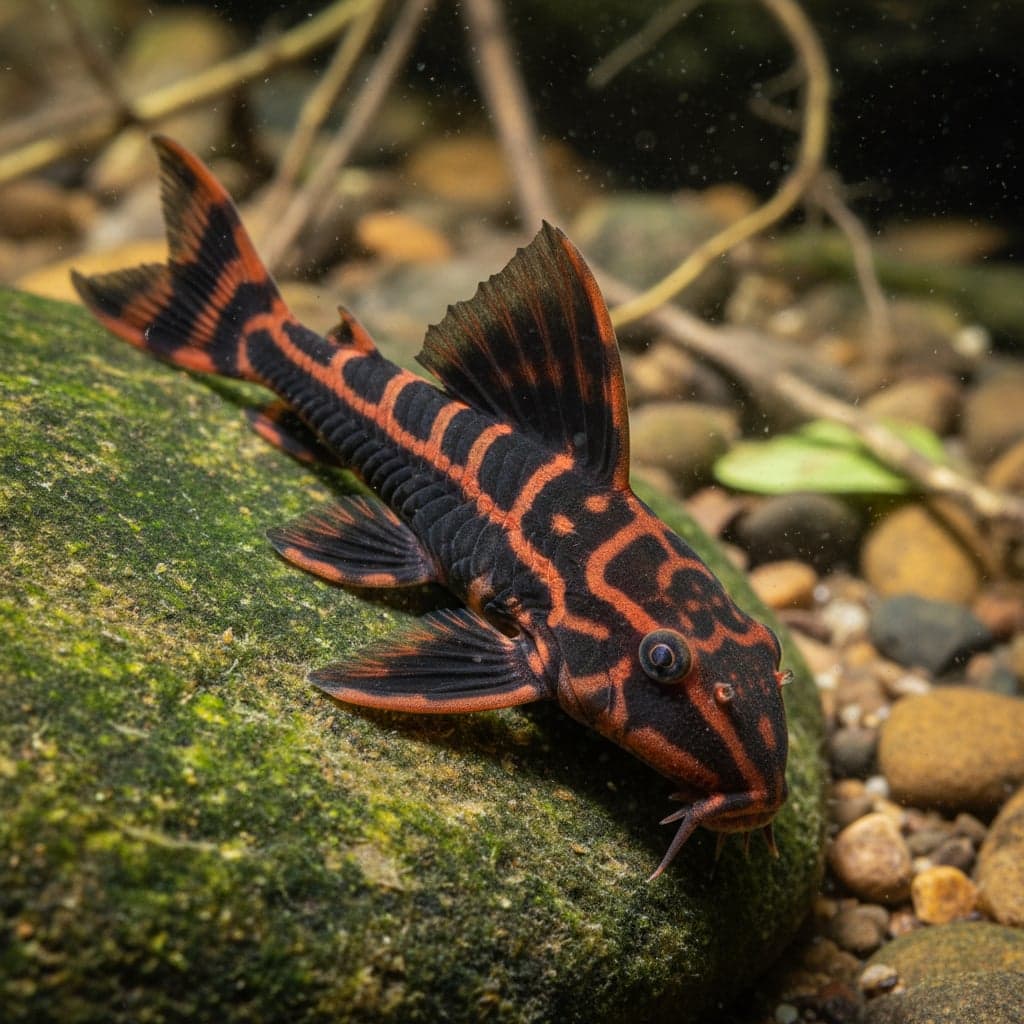
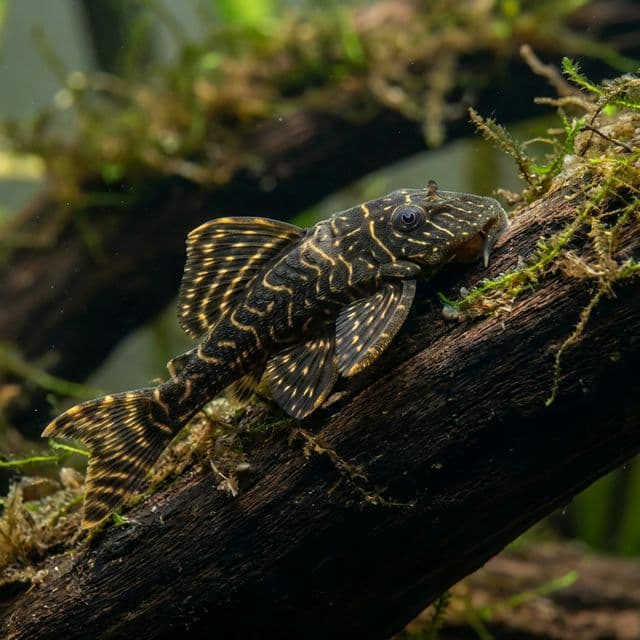
Tiger Plec L002 / L074: Panaqolus sp.
A 12cm Panaqolus that rasps driftwood as a dietary requirement, not a preference. Wood in the tank is non-negotiable.

Tiger Plec L002 / L074
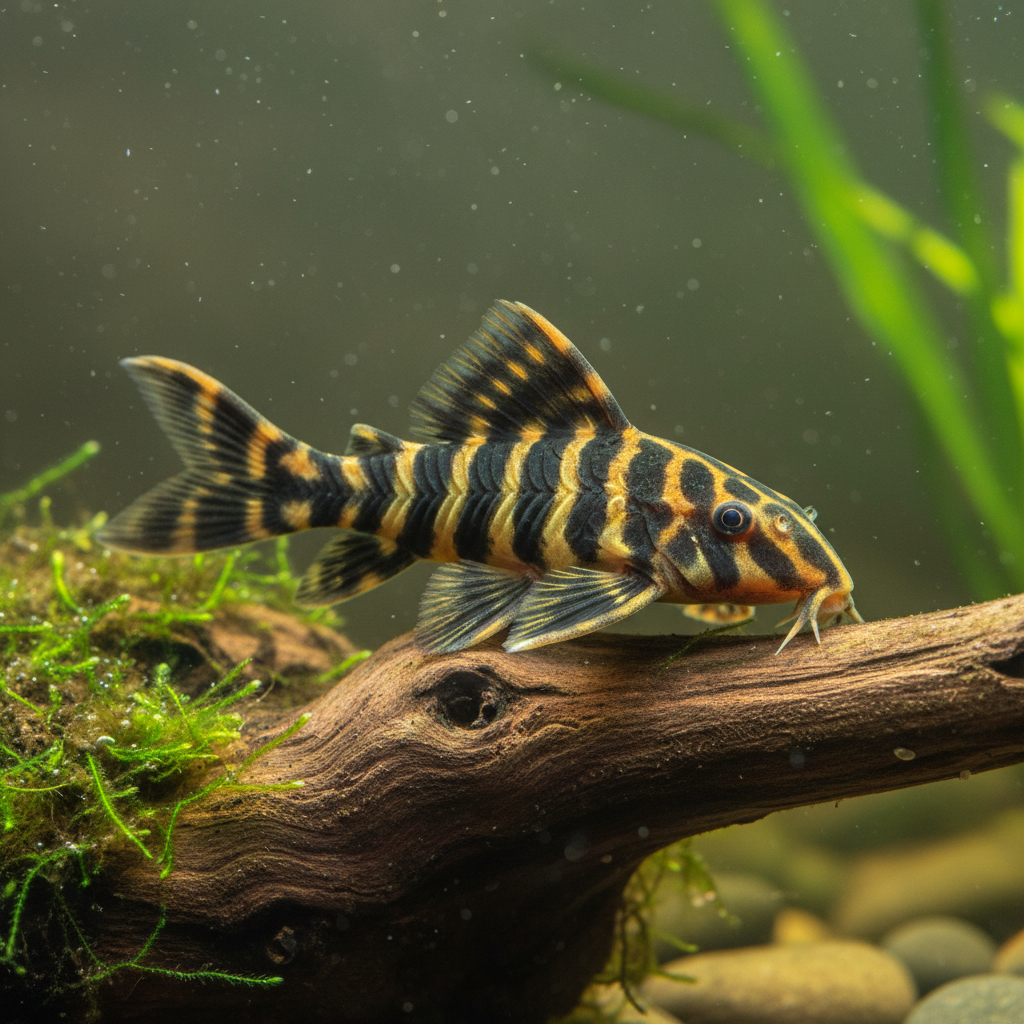
The Tiger Plec L002 / L074, scientifically categorized under the genus Panaqolus, is a fascinating species of catfish highly sought after in the aquarium hobby for its unique patterns and striking colors. Characterized by its distinct banded patterns of dark browns and yellows, this fish can bring a sense of locality and excitement to any freshwater aquarium. The visual appeal of the Tiger Plec lies in its striking appearance and the alluring contrast it creates against the green backdrop of aquatic plants. With its broad body and large dorsal fin, the Tiger Plec also boasts a unique morphology that sets it apart from other freshwater species.
In addition to its aesthetic merits, the Tiger Plec L002 / L074 holds a significant place within the aquarium community due to its ecological role in natural habitats and its adaptability in captivity. While being a robust algae-eater contributes to tank cleanliness, it also lends itself as a great addition for aquarists looking to maintain a balanced ecosystem. Enthusiasts appreciate not only its beauty but also its relatively low maintenance requirements compared to other plecos, making it an ideal choice for both novice and experienced hobbyists.
Natural Habitat & Origin
The Tiger Plec L002 / L074 originates from the warm, slow-moving rivers and streams of South America, predominantly found in areas like the Rio Orinoco in Venezuela and parts of Brazil. These rivers often feature a blackwater environment, rich in tannins and organic matter, which contributes to the unique coloration and adaptability of this species. The water in these habitats is typically low in mineral content, making it soft and slightly acidic to neutral, with a pH ranging from 6.0 to 7.5. The natural environment for these fish includes an abundance of submerged wood, leaf litter, and a variety of aquatic plants that provide shelter and foraging opportunities.
The ecological context of the Tiger Plec reveals its role as an important detritivore, contributing to the breakdown of decaying organic materials and helping maintain ecological balance in its natural habitat. By emulating these conditions in captivity, aquarists can ensure optimal health and thriving behavior of the Tiger Plec, allowing them to flourish in home aquariums while exhibiting their natural behaviors.
Care Requirements
To provide optimal care for the Tiger Plec L002 / L074, specific water parameters and tank setups are crucial. Ideal water temperature ranges should be maintained between 24°C to 28°C (75°F to 82°F), with the pH ideally resting between 6.0 and 7.5. The hardness levels should be kept relatively low, typically around 2 to 15 dGH, to mimic their soft, natural riverine environments. A spacious aquarium, ideally a minimum of 100 liters (around 26 gallons), is necessary to accommodate their adult size and promote healthy swimming habits.
Setting up the tank for a Tiger Plec should involve plenty of hiding spots and biotope-style decorations, including driftwood, rocks, and plants. A sandy or fine gravel substrate is recommended, as it allows for natural foraging behaviors. Moderate lighting is preferable, as these fish typically thrive in slightly dimmer conditions in the wild, allowing them to feel secure and stress-free. It's essential to ensure that the aquarium is adequately filtered to maintain water quality while allowing areas of lower water flow for the fish to rest and hide.
Diet & Feeding
As omnivores, Tiger Plecs have a varied diet primarily consisting of algae, detritus, and plant matter, making them highly beneficial for maintaining a clean aquarium. They will relish high-quality sinking pellets or wafers specifically designed for herbivorous fish, which should form the foundation of their diet. Additionally, supplementing their diet with fresh vegetables such as zucchini, cucumber, or blanched spinach can enhance their nutritional intake.
Frozen or live foods, such as bloodworms or brine shrimp, can be offered occasionally to provide diversity and fulfill their protein needs. It’s essential to avoid overfeeding, as this can lead to water quality issues. Instead, provide small, frequent meals that they can consume quickly. Monitoring their feeding habits will also ensure that the Tiger Plec remains healthy and active.
Behavior & Temperament
The Tiger Plec L002 / L074 is generally known to be a peaceful species, exhibiting a calm and shy demeanor. They tend to be nocturnal and are often more active during the night when seeking food and exploring their environment. While they may occasionally display territorial behavior, especially during feeding, they are not classified as aggressive towards other tank inhabitants.
A key behavioral trait of the Tiger Plec is its preference for keeping to the bottom and mid-level areas of the tank. Providing ample hiding places, such as caves or driftwood, is essential for creating a comfortable environment where they can retreat when feeling threatened. Though these fish may not actively school, they often appreciate the company of their own kind, which can promote a sense of security, though it’s advisable to keep them in small groups to minimize competition and stress.
Tank Mates
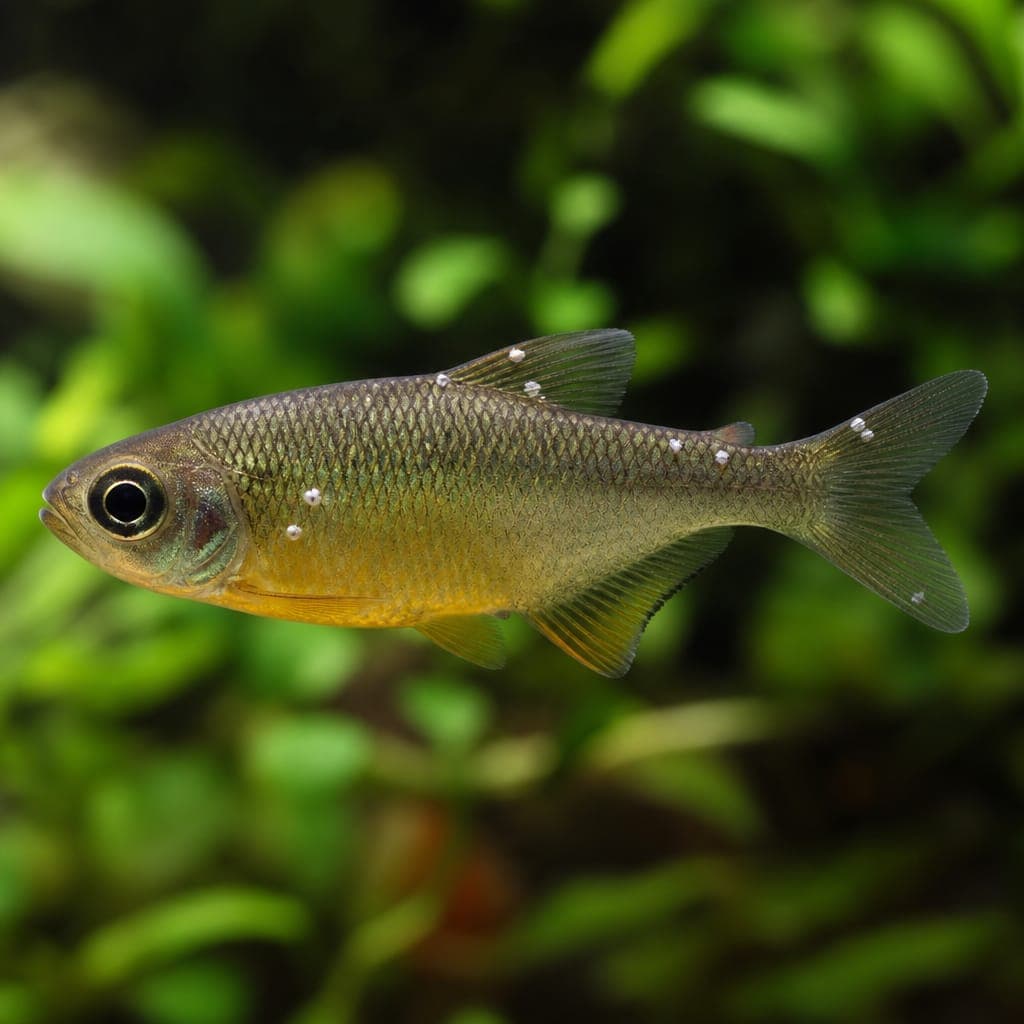
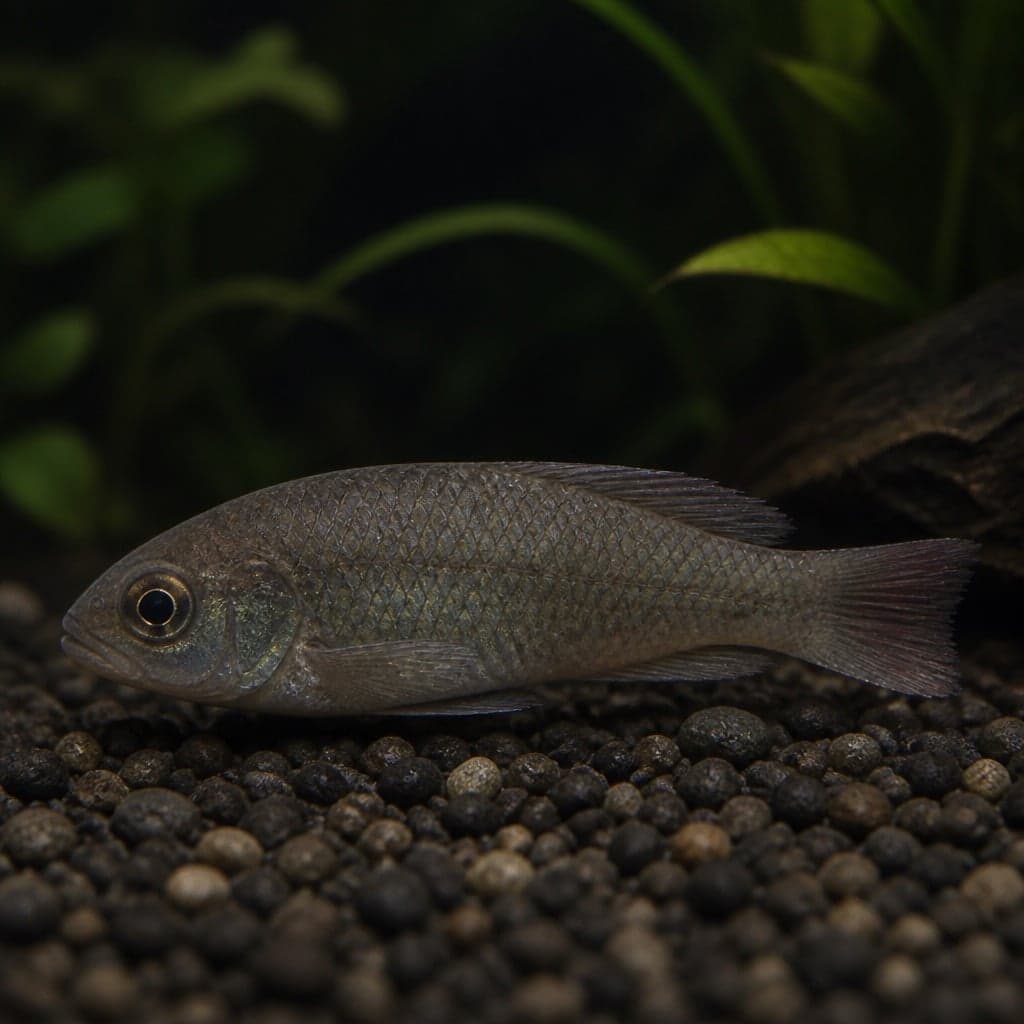
When considering suitable tank mates for the Tiger Plec L002 / L074, it’s crucial to select community-oriented species that share similar water parameter needs and temperaments. Excellent tank mates include other peaceful fish species like tetras, rasboras, danios, and medium-sized cichlids. They can also coexist with other non-aggressive bottom dwellers, such as loaches, which can help create a diverse and harmonious aquarium.
Conversely, it is essential to avoid larger, aggressive species, such as predatory cichlids or fast-swimming fish, which may intimidate or outcompete the Tiger Plec for food. Additionally, avoid keeping them with overly aggressive or fin-nipping fish, as this will prevent stress and ensure a more peaceful community tank environment.
Breeding
Breeding Tiger Plec in captivity can be a rewarding yet challenging experience. They exhibit specific spawning behavior that requires the right conditions, including a slightly acidic pH, stable temperatures, and a well-maintained tank environment. It is often advised to condition a breeding pair with a diet rich in protein just before introducing them to a spawning area.
Providing suitable caves or breeding sites within the tank can greatly facilitate spawning, as Tiger Plecs are known to appreciate dark, secluded locations. The female Tiger Plec will lay eggs on a flat surface or in the entrance of a cave, and the male will take responsibility for guarding and aerating the eggs. After hatching, the fry will typically require fine food particles or specialized fry food for optimal growth. It is crucial to maintain water quality during this period to promote their health and development.
Common Health Issues
While the Tiger Plec L002 / L074 is generally resilient, certain health issues may arise if the proper care requirements are not met. Some common ailments include ich (Ichthyophthirius multifiliis), parasites, and bacterial infections, often prevalent in poor water conditions. Preventative measures include regular water changes, maintaining stable water parameters, and quarantining new additions to the aquarium.
Another health issue to watch for is "bloat," often due to overfeeding or poor diet, which can lead to digestive problems. Providing a balanced diet and monitoring feeding practices can help mitigate this risk. Additionally, observing the fish for any signs of stress or illness, such as loss of appetite, clamped fins, or unusual lethargy, allows early intervention. Stable soft water, ample driftwood for grazing, and a balanced diet keep Tiger Plecs thriving for years.