Goldhead Nannacara
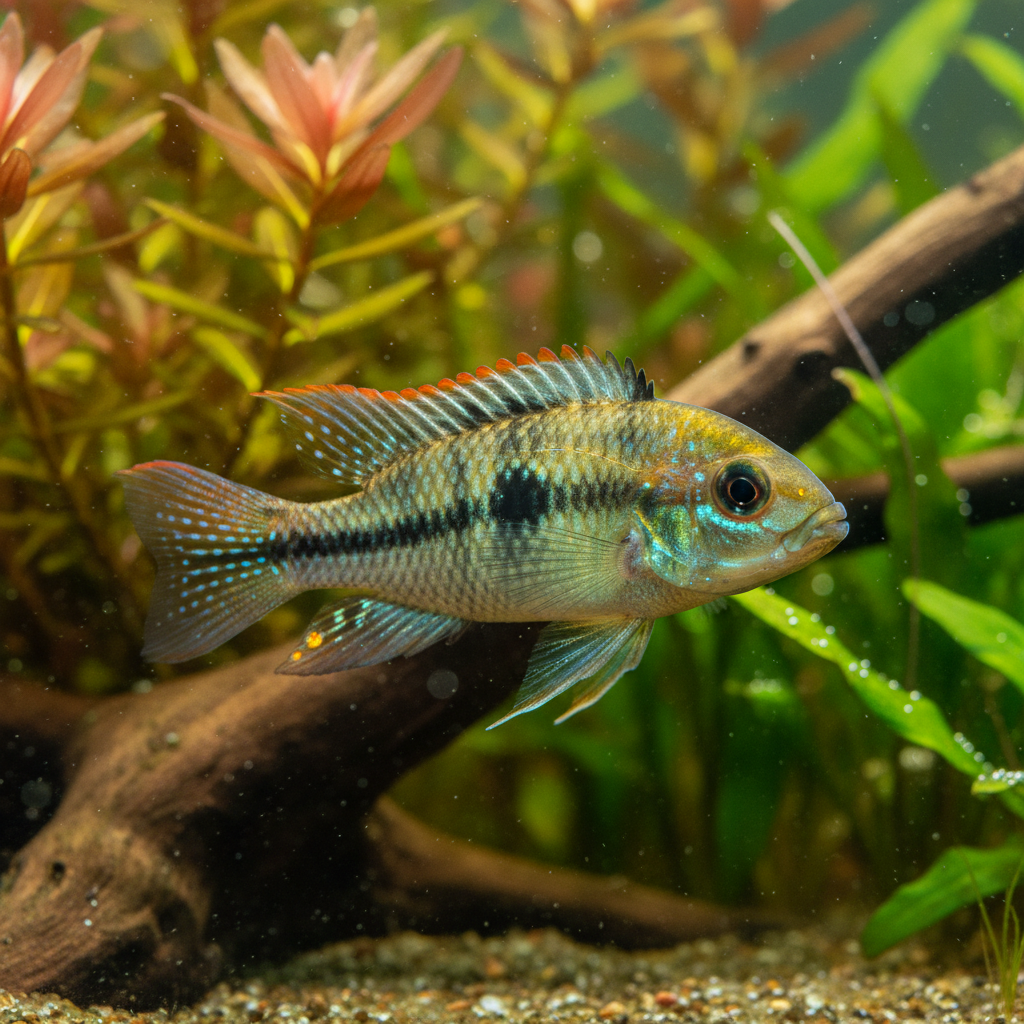
The Goldhead Nannacara (Nannacara aureocephalus) is a charming dwarf cichlid from the Guiana Shield, named for the male's vibrant golden-yellow forehead and distinctive brooding patterns.
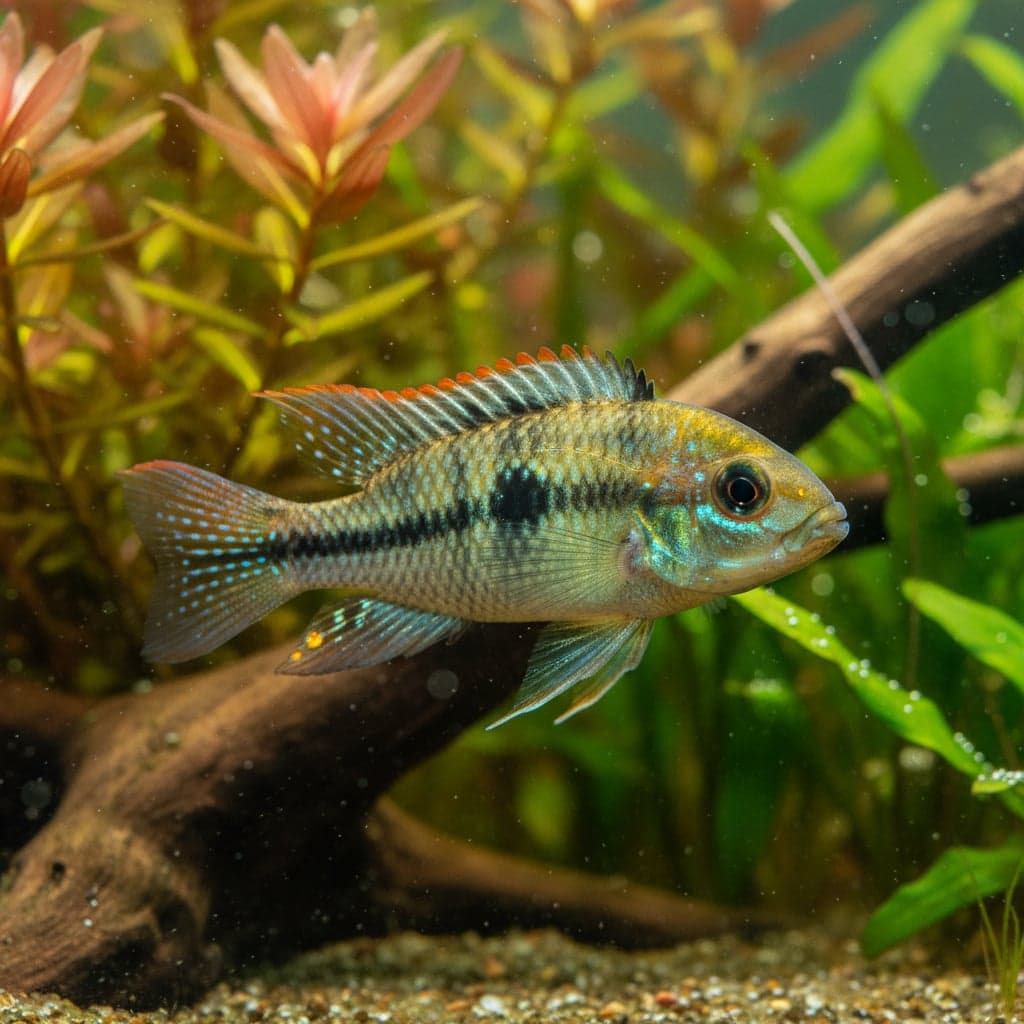
Goldhead Nannacara
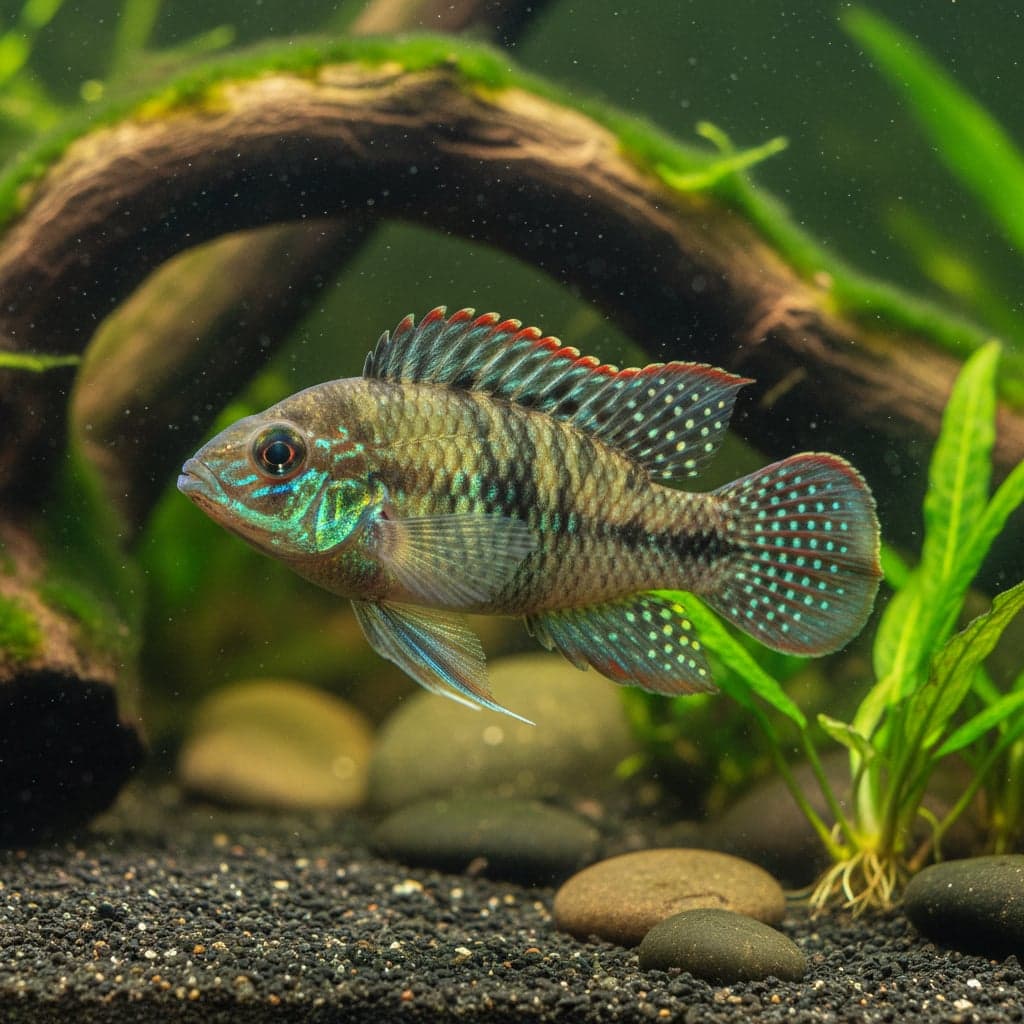
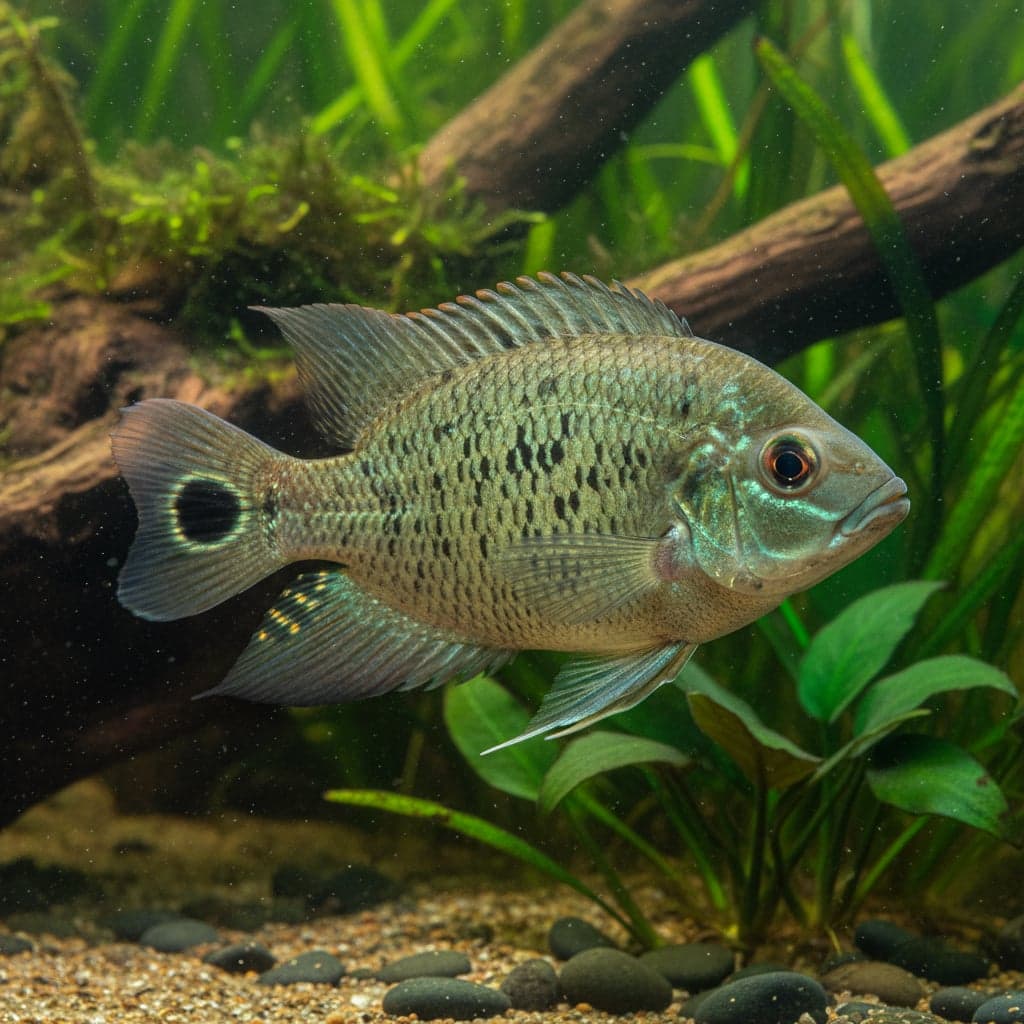
The Goldhead Nannacara (Nannacara aureocephalus) is a relatively rare but highly prized dwarf cichlid in the aquarium hobby. As its name suggest, the male is characterized by a strikingly vibrant golden-yellow head and forehead. The rest of the body is often a mix of metallic green, blue, and bronze scales.
Like other Nannacara species, they are sexually dimorphic; males are larger and more colorful (up to 7 cm), while females are smaller (up to 5 cm) and typically a drab beige, except when breeding.
Natural Habitat & Origin
This species is endemic to the coastal river basins of French Guiana and eastern Suriname, specifically the Approuague, Mahury, and Marowijne rivers. They inhabit slow-moving or stagnant waters, often in the shade of dense rainforest canopies. Their natural environment is filled with leaf litter, submerged roots, and overhanging vegetation, providing soft, slightly acidic, and tannin-stained water.
Care Requirements
The Goldhead Nannacara is moderately hardy but sensitive to poor water quality. It requires soft, acidic water with a pH between 6.0 and 7.0 and a temperature range of 75°F to 82°F (24°C to 28°C).
A minimum of 75 litres (20 gallons) is sufficient for a pair of these 7cm Nannacara. The aquarium should be densely planted and feature plenty of "micro-caves" made from coconut shells, small flowerpots, or driftwood. A sandy substrate with a layer of dried oak or catappa leaves will mimic their natural habitat and provide beneficial tannins.
Diet & Feeding
They are omnivorous foragers. In the wild, they feed on small insects, bottom-dwelling crustaceans, and organic detritus. In the aquarium, they are not fussy and will accept high-quality flakes and sinking pellets. However, to bring out their best coloration and ensure success in breeding, they should be fed a variety of live or frozen foods such as daphnia, brine shrimp, and bloodworms.
Behavior & Temperament
Generally peaceful and reclusive, the Goldhead Nannacara becomes highly territorial when breeding.
A fascinating behavioral trait shared with its cousin N. anomala is the female's dramatic color change when guarding eggs or fry. She develops a dark, high-contrast "checkerboard" or grid-like pattern across her body and becomes extremely aggressive, even driving the much larger male away from the nesting site.
Tank Mates
Suitable tank mates include other peaceful soft-water species:
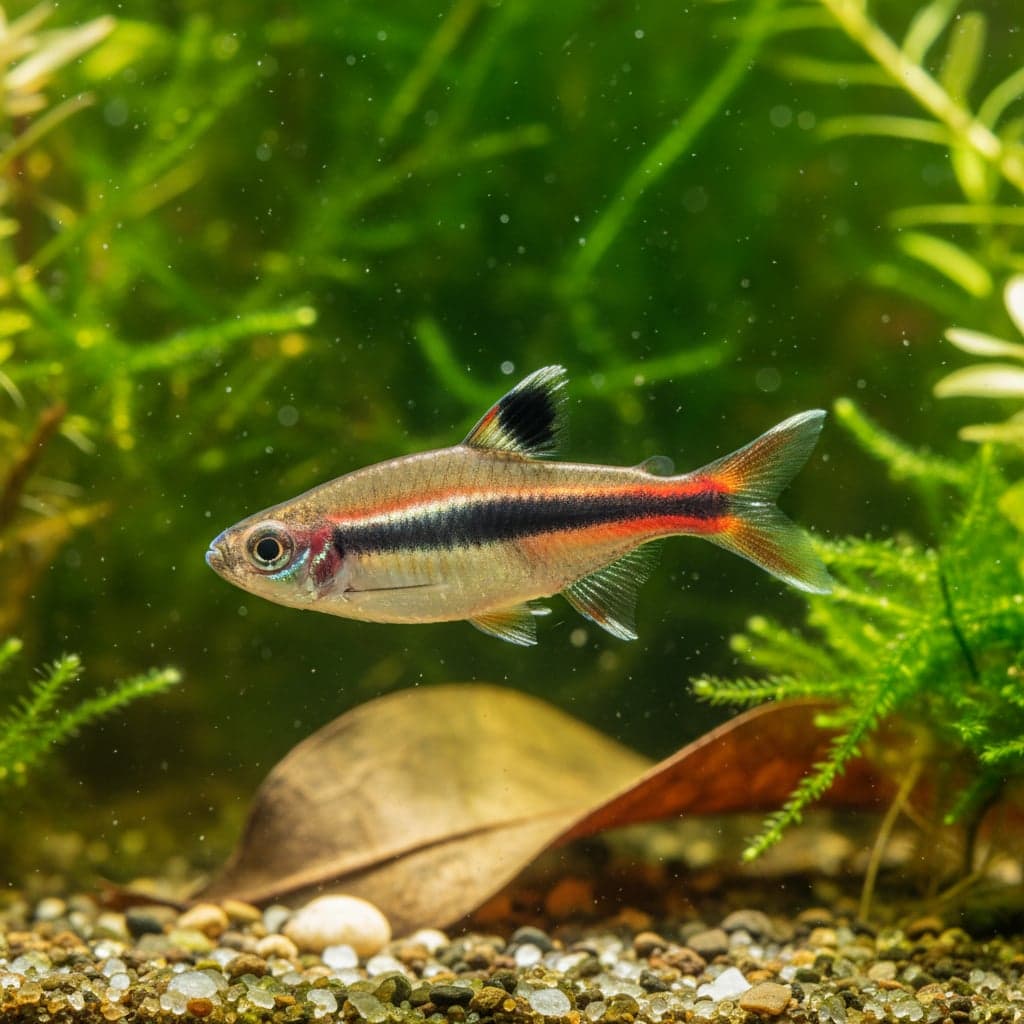
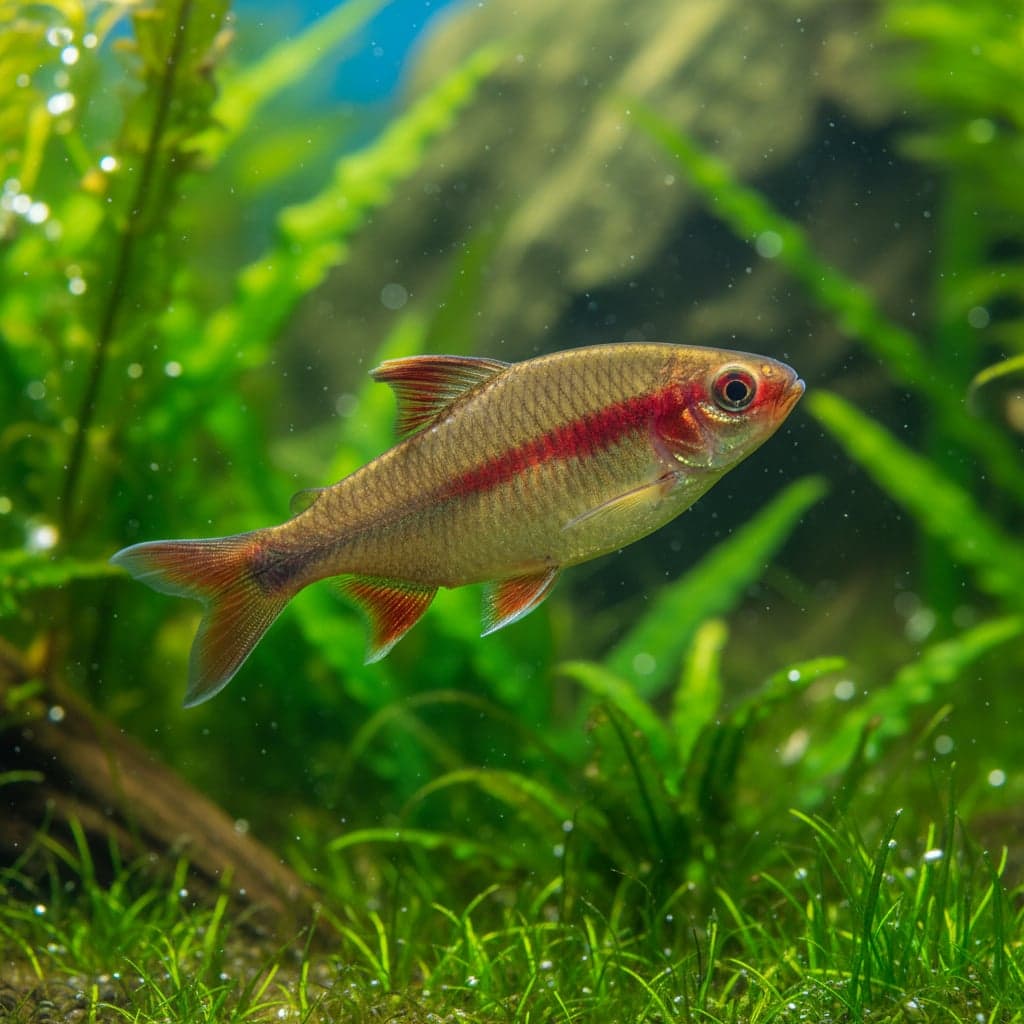
- Tetras (Cardinal, Rummy-nose, Ember)
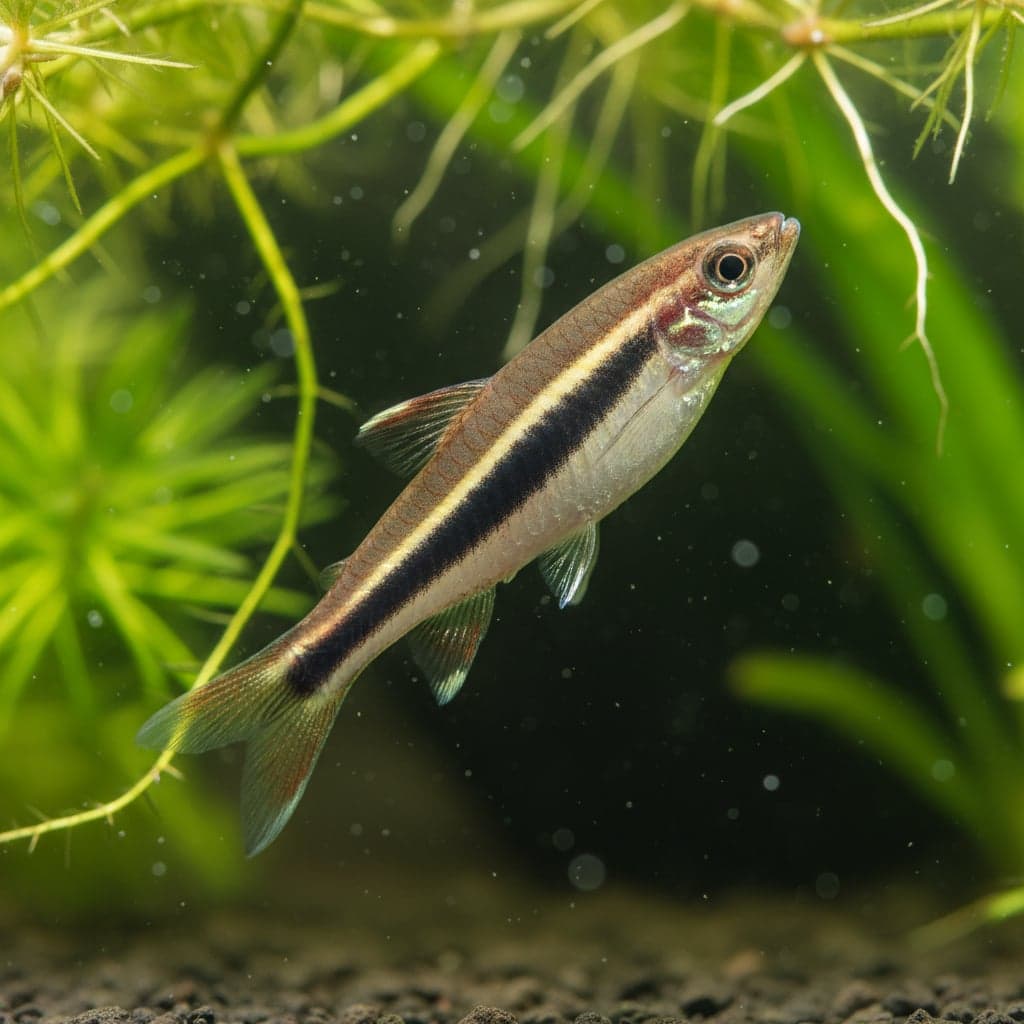
- Pencilfish
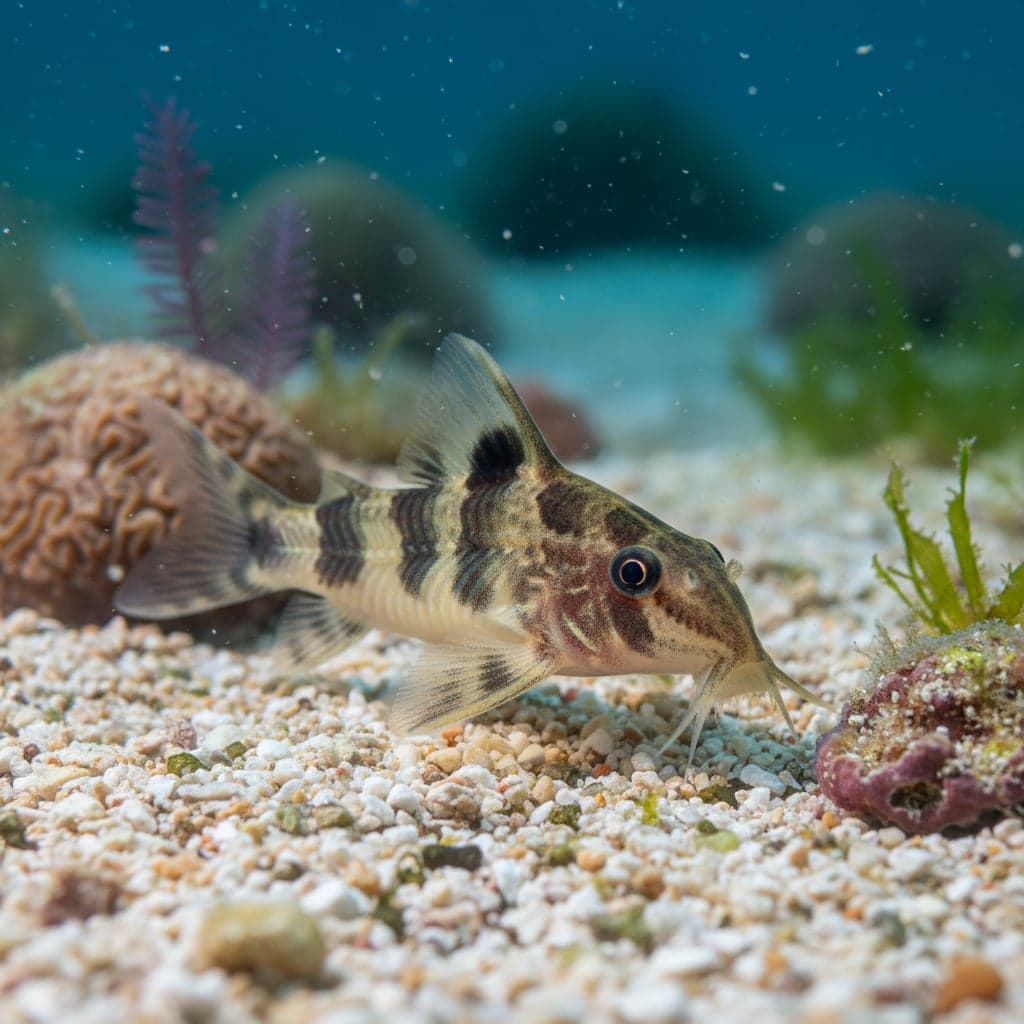
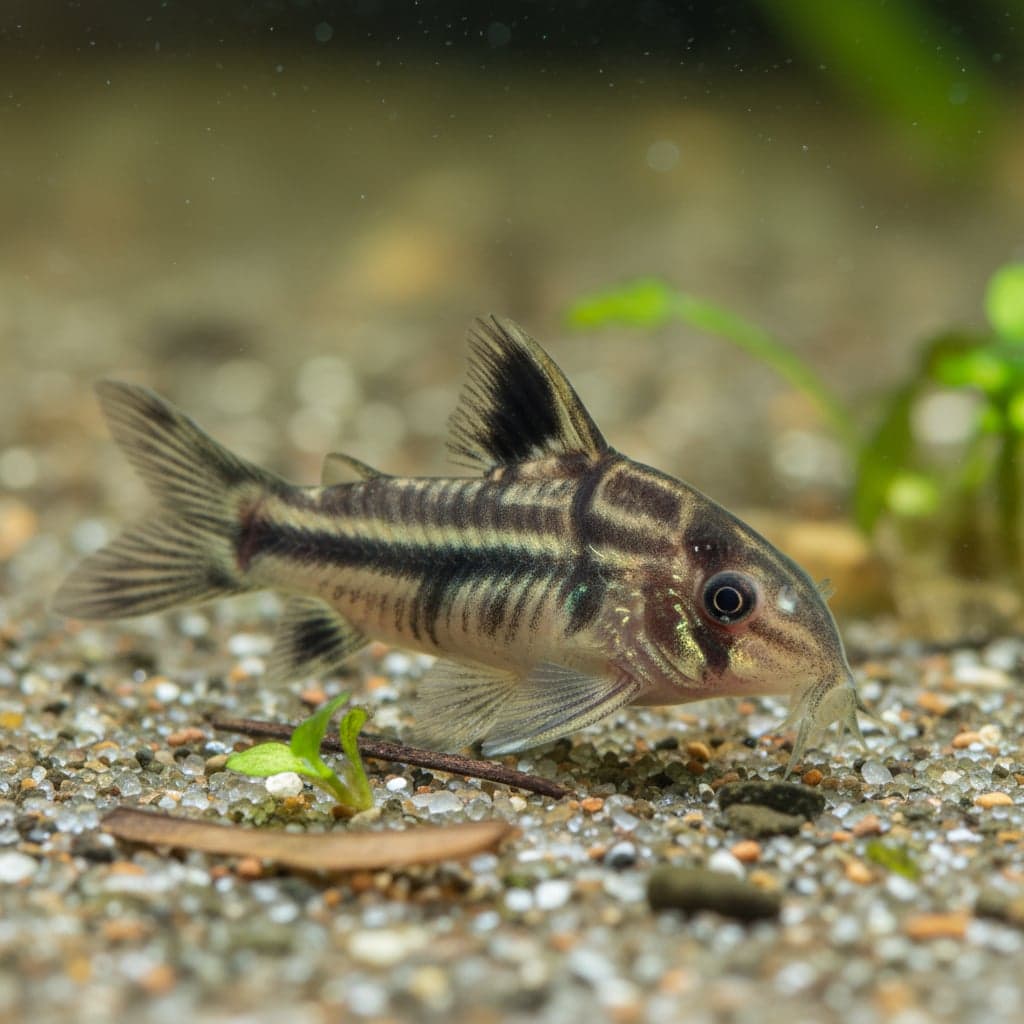
- Corydoras Catfish
- Otocinclus
- Dwarf Gouramis
Avoid housing them with large or aggressive cichlids. If given enough space, they can coexist with other peaceful dwarf cichlids, but in small tanks, it is best to keep them as the only cichlid species.
Breeding
They are cave spawners and relatively easy to breed if provided with clean, soft water and a quiet environment. The female will typically lay eggs on the ceiling of a cave or a shaded leaf. Once spawning is complete, the female takes over all brooding duties. In smaller tanks, it may be necessary to remove the male temporarily as the protective female may injure him. The fry hatch in 2-3 days and become free-swimming a few days later, after which they can be fed newly hatched brine shrimp or specialized fry food.
Common Health Issues
They are sensitive to high nitrate levels and ammonia. Regular water changes and a established nitrogen cycle are essential. Like all dwarf cichlids, they can be prone to intestinal parasites if fed a poor-quality diet. Maintaining a stable, clean environment and providing varied, high-quality food is the best way to ensure their longevity.