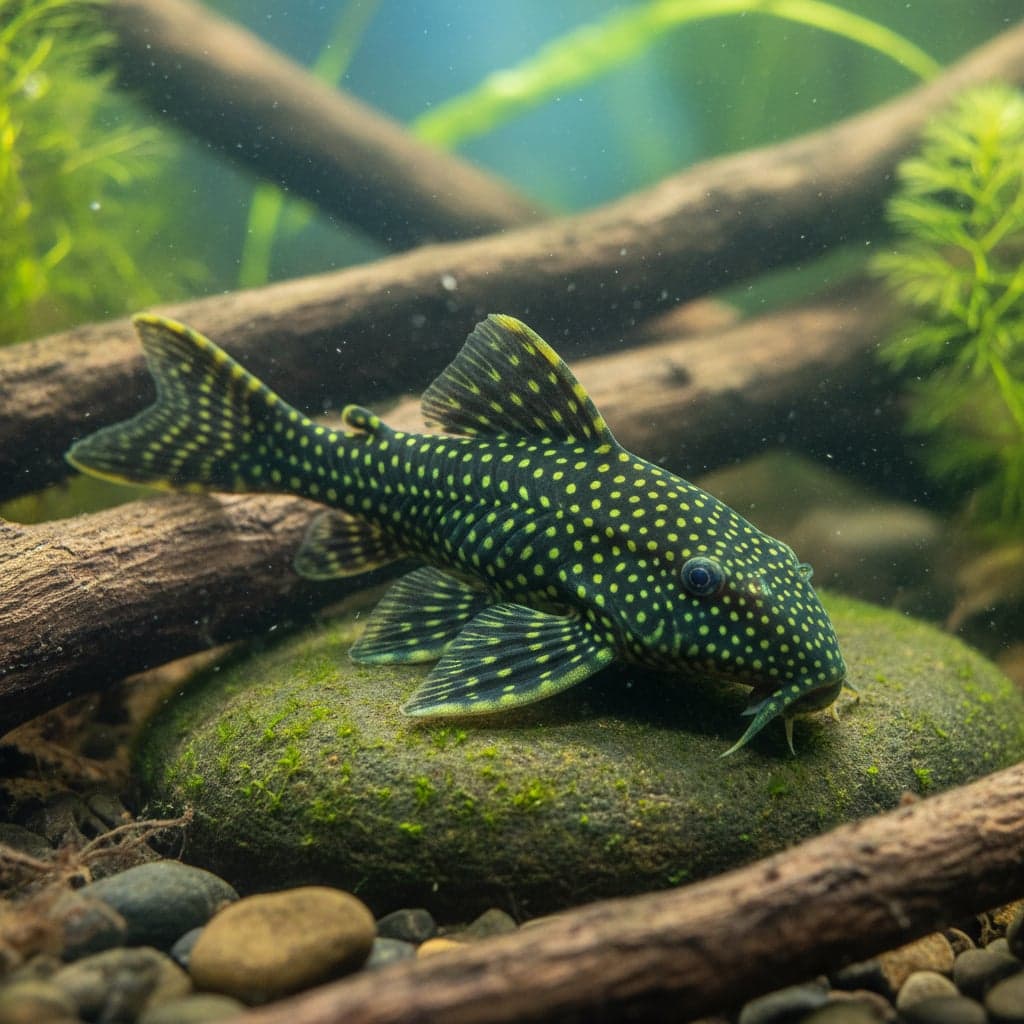
Green Phantom Plec L200
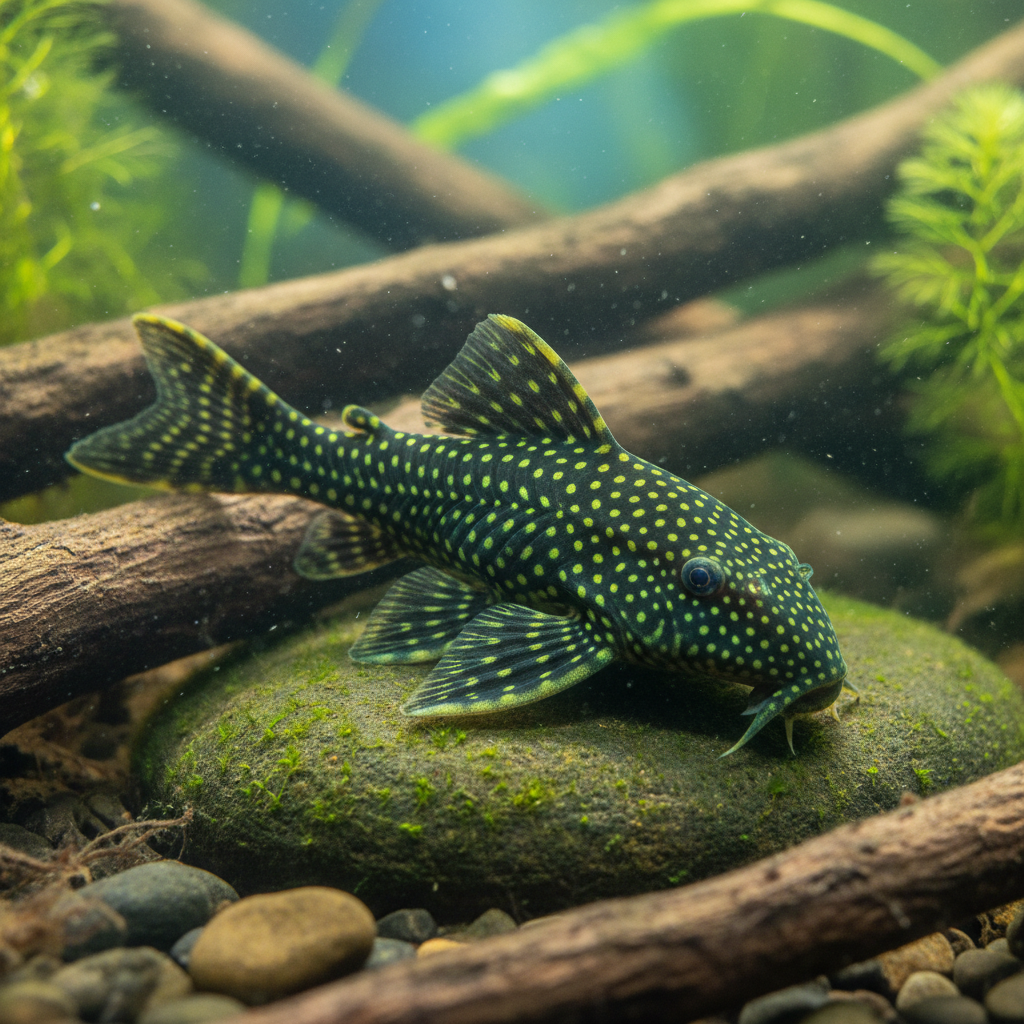
The Green Phantom Plec L200 (Hemiancistrus subviridis) is a stunning, neon-green loricariid from the rapids of the Rio Orinoco, known for its vibrant color and yellow spotting.
Green Phantom Plec L200
The Green Phantom Plec L200 (Hemiancistrus subviridis) is one of the most visually arresting "L-number" catfish in the hobby. It features a solid, vibrant lime-green to lemon-yellow body color, often covered in small, pale yellow spots concentrated towards the head and front of the body.
It is important to note that two different species are traded under the L200 code: Hemiancistrus subviridis (the "standard" Green Phantom) and Baryancistrus demantoides (the "Hi-fin" Green Phantom). This profile focuses on H. subviridis, which is characterized by a dorsal fin that is NOT connected to the adipose fin.
Natural Habitat & Origin
This species is native to the upper Rio Orinoco basin in Venezuela, particularly in the regions near Puerto Ayacucho. They inhabit areas of extreme current, living in the "interstices" between large granite boulders in deep, fast-flowing rapids. The water in these areas is exceptionally high in dissolved oxygen and relatively warm.
Care Requirements
The Green Phantom Plec is a high-flow specialist. Its most critical requirement is high dissolved oxygen and strong water movement, which is best achieved with powerful powerheads or a manifold system. They also prefer warmer temperatures, ideally between 77°F and 86°F (25°C to 30°C).
A minimum tank size of 40 gallons (150L) is required for an adult. The aquarium should feature a substrate of smooth river stones and large boulders to mimic their natural "rapids" habitat. While they do not eat wood, having pieces of driftwood is beneficial for providing cover and supporting the growth of biofilm (aufwuchs), which they graze on.
Diet & Feeding
In the wild, they are aufwuchs grazers, sifting through the biofilm on rocks for algae, small invertebrates, and organic matter.
In the aquarium, they should be offered a varied diet that includes high-quality algae wafers, sinking omnivore pellets, and plenty of fresh vegetables like zucchini, cucumber, and blanched spinach. They also benefit significantly from protein-rich foods like frozen bloodworms or mysis shrimp, but these should be fed as supplements to a primarily vegetable/biofilm-based diet.
Behavior & Temperament
Green Phantom Plecs are generally peaceful toward other fish but can be quite territorial toward other bottom-dwellers, especially other plecos of the same or similar species. In a small tank, they will vigorously defend their chosen cave or rock crevice.
They are mostly active during the evening and night, but as they become comfortable, they will venture out during the day, especially if the tank is not overly bright.
Tank Mates
Suitable tank mates include any fish that can handle the high-flow and warm-water conditions they require:
- Large Tetras (Congo Tetras, Bleeding Heart Tetras)
- Silver Dollars
- Discus or Angelfish (if flow can be moderated in parts of the tank)
- Other Loricariids (if the tank is large enough for multiple territories)
- Corydoras
Avoid housing them with very aggressive cichlids that might outcompete them for territory or with fish that prefer cool, still water.
Breeding
Breeding Hemiancistrus subviridis in captivity is considered difficult but has been achieved by dedicated specialist breeders. They are cave-spawners. Success usually involves providing very high flow, exceptionally clean water with frequent large water changes, and slightly higher temperatures to simulate the breeding season. The male will guard the eggs in a tight-fitting cave until they hatch.
Common Health Issues
They are generally hardy if their oxygen and flow requirements are met. The most common cause of death is hypoxia (low oxygen) or stress from sudden shifts in water chemistry. They are also prone to "bloat" if fed an overly rich or protein-heavy diet without enough fiber/vegetable matter. Like most plecos, they are sensitive to copper-based medications and high levels of salt.