Threespot Eartheater: Satanoperca daemon
A 25cm eartheater that sifts sand for food all day. Needs very soft acidic water, deep fine sand, and a group of five or more.
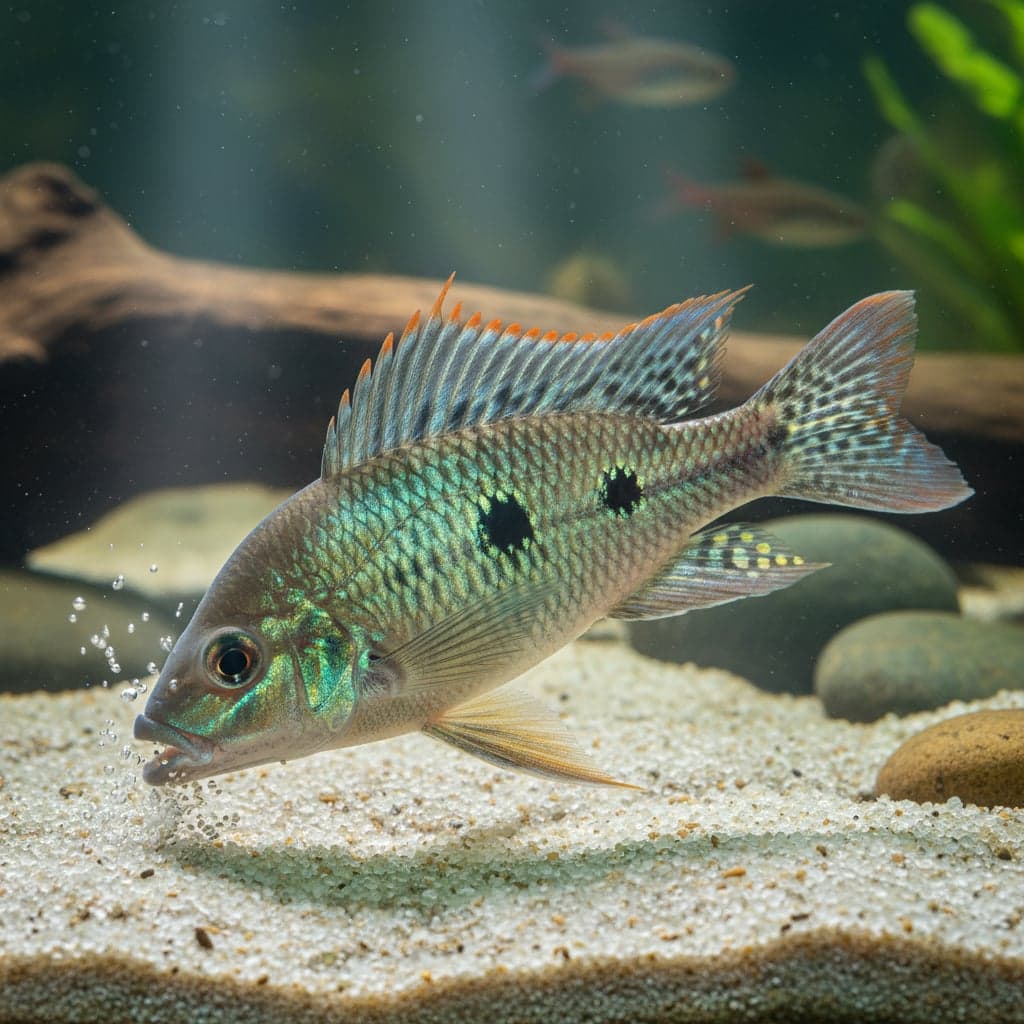
Threespot Eartheater
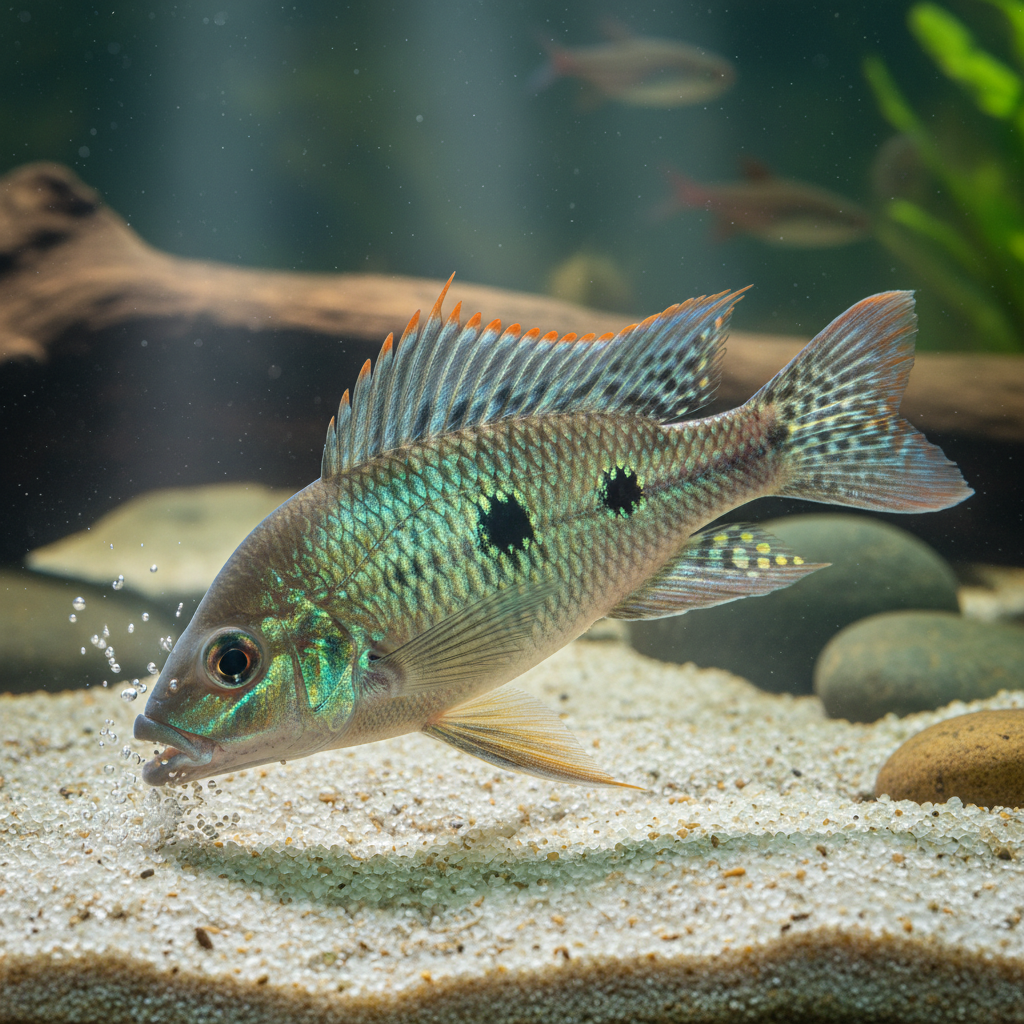
The Threespot Eartheater, scientifically known as Satanoperca daemon, is a captivating species of cichlid that hails from the waters of South America, particularly the Amazon River basin. This fish is highly valued in the aquarium hobby for its unique aesthetics and intriguing behavior. Characterized by its striking coloration, the Threespot Eartheater displays a remarkable combination of soft blues and silvers with iridescent spots that shine under proper lighting, creating a visual display that is both elegant and alluring. The three distinct dark spots on its flanks give this species its common name, serving as a visual marker that makes it easily recognizable among enthusiasts.
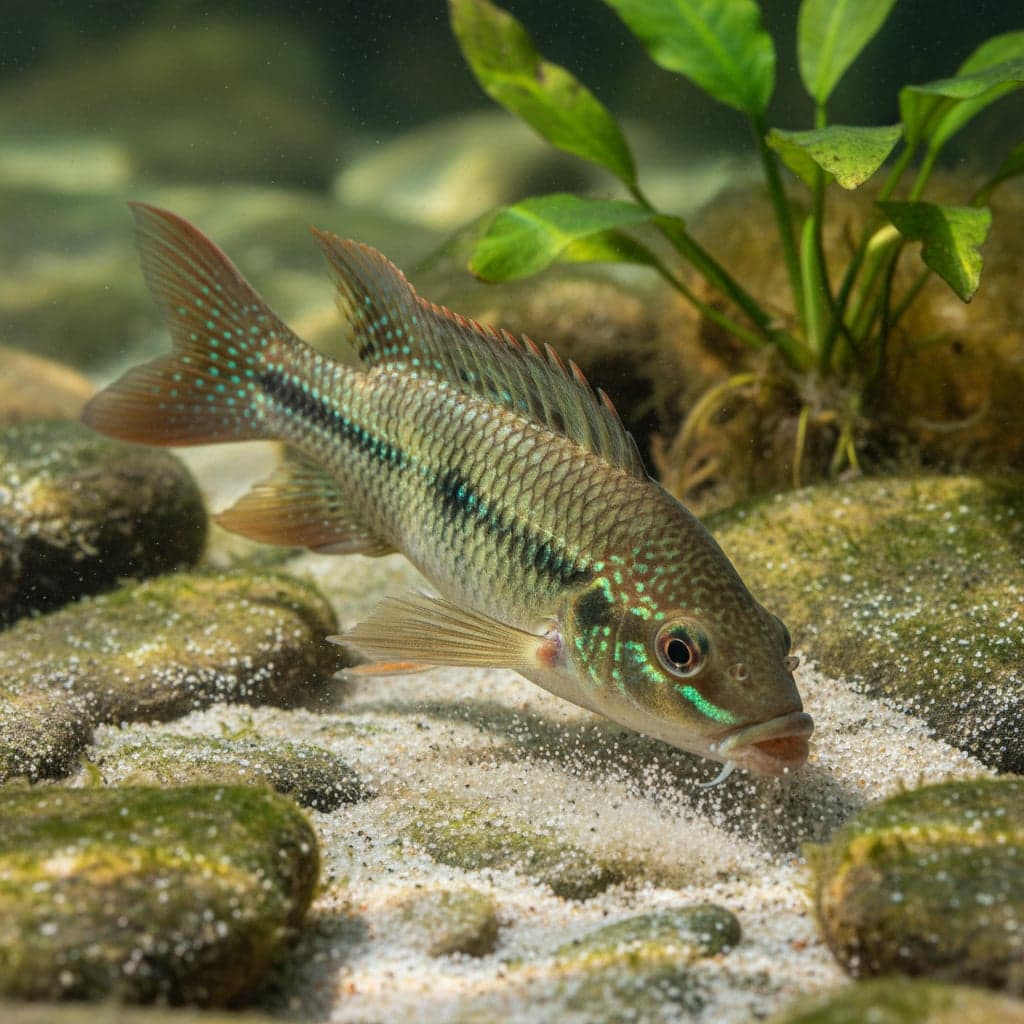
Significant for both its beauty and its interesting feeding habits, the Threespot Eartheater is known for its unique substrate-sifting behavior, a trait many aquarists find fascinating. As natural foragers, these fish play a vital role in controlling substrate detritus, thus contributing to the overall health of their ecosystems. In captivity, they can bring both beauty and functionality to a well-maintained aquarium, making them a sought-after species for both novice and expert aquarists alike.
Natural Habitat & Origin
The Threespot Eartheater is native to the murky waters of the Amazon Basin, specifically found in countries like Brazil and Peru. Its preferred habitat includes slow-moving rivers and floodplain lakes, where aquatic vegetation thrives, and the substrate is primarily composed of fine sand and mud. This environment, typically rich in organic matter and characterized by a blackwater environment, supports a diverse range of flora and fauna, providing the ideal conditions for these cichlids. The waters in this region are generally soft and acidic, contributing to the species' specific care requirements in captivity.
In their natural habitat, the Threespot Eartheater often inhabits areas with plenty of hiding spots and structures, such as fallen logs, aquatic plants, and gravel beds. These regions not only afford safety from predators but also serve as an abundant hunting ground for their preferred prey, comprising small invertebrates and detritus. Understanding the Threespot Eartheater's natural environment is crucial for replicating suitable tank conditions that promote their well-being and encourage natural behaviors.
Care Requirements
To create an optimal environment for the Threespot Eartheater, aquarists should consider a minimum tank size of 75 gallons, allowing for ample swimming space and territories. Water parameters are crucial for their health; ideally, the pH should range from 6.0 to 7.5, with a temperature between 75°F to 82°F (24°C - 28°C) and soft to moderately hard water (4-15 dGH). The substrate should consist of fine sand or soft gravel to enable substrate sifting while minimizing injury to these delicate fish.
A well-planted aquarium with hiding spots made from driftwood and rocks will mimic their natural habitat, providing security and stimulating behaviors. Lighting should be moderate to low, as these fish thrive in dimly lit environments that replicate the structure of their original habitats. Incorporating live plants such as Java Fern or Anubias can enhance the visual appeal while ensuring a comfortable environment for the Threespot Eartheater.
Diet & Feeding
The Threespot Eartheater is an omnivorous fish, displaying a diverse diet that enables it to thrive in the aquarium setting. In nature, it feeds on small invertebrates, plant matter, and detritus. To replicate this diverse diet in captivity, provide high-quality flake food or pellets specifically formulated for cichlids as a base diet. Additionally, supplement their nutrition with frozen or live foods such as bloodworms, brine shrimp, and daphnia, which encourage natural foraging behavior.
As substrate sifters, the Threespot Eartheater enjoys rummaging through the sand for food particles. Therefore, frequent feedings with a variety of offerings is recommended to ensure that they receive a balanced diet and remain healthy. Be mindful of overeating, as this can lead to health issues; it's best to provide smaller portions multiple times a day.
Behavior & Temperament
The Threespot Eartheater exhibits a generally peaceful demeanor but can show territorial behavior, especially during breeding periods or in smaller tanks. They are not true schooling fish; rather, they prefer to establish territories where they can sift through the substrate without interference. When kept in appropriate group sizes, they can coexist peacefully with similar-sized fish. Their behavior is often characterized by a curiosity and intelligence that makes them enjoyable to observe, particularly during feeding times.
In the aquarium, the Threespot Eartheater tends to occupy the mid to bottom layers of the tank, engaging in substrate sifting while occasionally venturing to the top during feeding. A well-structured environment that allows them to establish territories will lead to a more harmonious aquarium atmosphere, thus enhancing the overall experience of keeping this stunning species.
Tank Mates
Selecting appropriate tank mates for the Threespot Eartheater is essential for maintaining a peaceful community aquarium. Compatible species include larger, peaceful cichlids such as the Discus, Rainbow Cichlids, and some of the larger Tetras like the Silver Dollar. Other suitable companions are schooling fish like Rasboras or Danios that occupy different water levels without posing competition for food.
Conversely, avoid housing the Threespot Eartheater with overly aggressive or territorial species, such as smaller cichlids or fish that nip fins, like certain barbs and tetras. Keeping peaceful, similarly sized fish will reduce stress and aggression, leading to a thriving community tank.
Breeding
Breeding the Threespot Eartheater in captivity can be a rewarding endeavor. These fish exhibit parental care, with males often taking on a more active role. To inspire spawning behavior, it is crucial to provide optimal water conditions, including slightly elevated temperatures (around 80°F or 27°C) and a pH closer to neutral. A sandy substrate alongside flat stones or broad-leaved plants can serve as spawning sites, as females prefer to lay eggs on smooth surfaces.
During the breeding process, the male will engage in courtship displays that include swimming patterns and displays of color, ultimately leading to the female laying clutches of eggs, which they will guard diligently. Post-spawning, the fry become free-swimming after about a week and can be fed infusoria or finely crushed flakes to support their early growth. With proper care and conditions, aquarists can successfully breed the Threespot Eartheater and enjoy observing the journey of the young fish.
Common Health Issues
While the Threespot Eartheater is generally robust, they can be susceptible to certain health issues common among freshwater fish. These may include ich, fin rot, and various parasitic infections. Maintaining stable water parameters and regular tank maintenance can significantly reduce the risk of disease. Preventative measures involve quarantining new fish before introducing them to the main aquarium and ensuring a balanced diet.
Regular observation is key; if signs of illness appear, such as unusual swimming patterns, color fading, or lethargy, it is essential to address the issue promptly. Using medications as needed, along with maintaining pristine water quality, can help prevent many common health concerns associated with this beautiful and engaging species.