Goldie Pleco L014
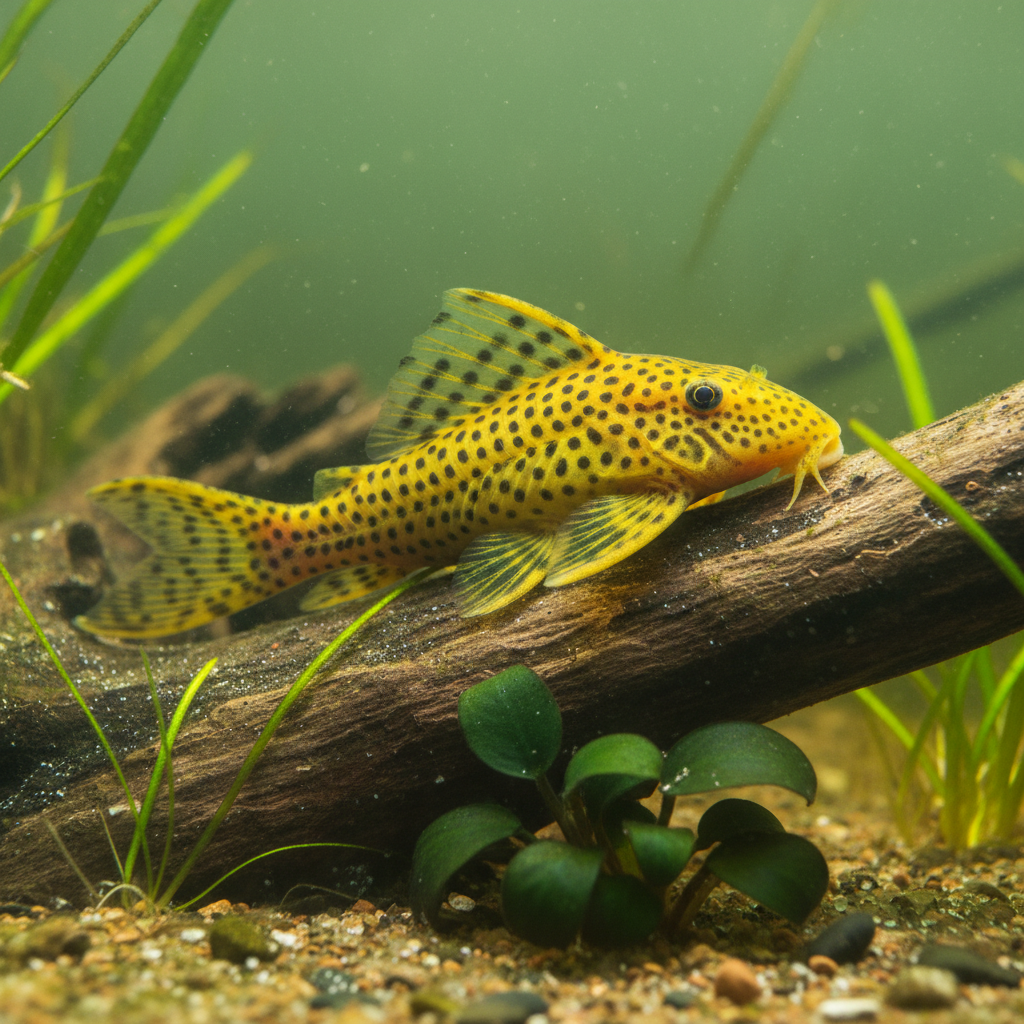
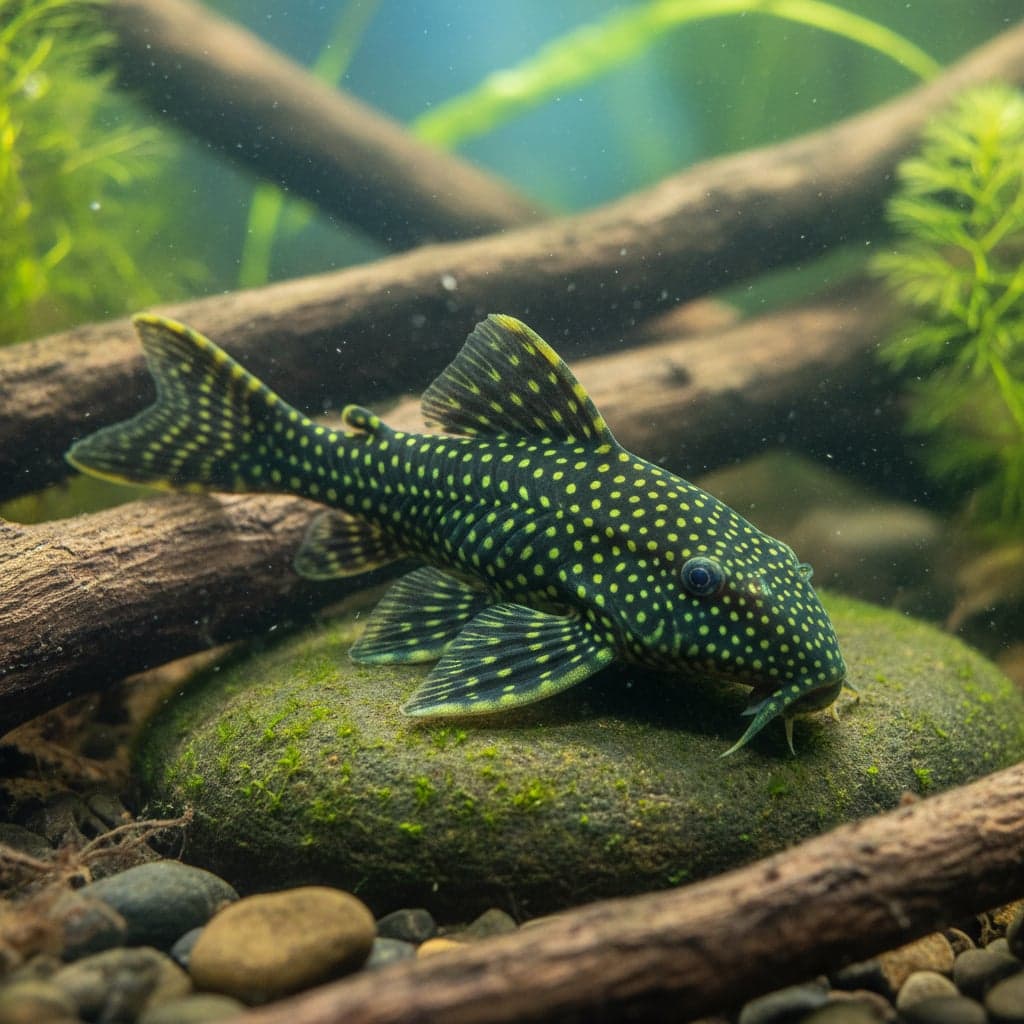
The Goldie Pleco (L014) is a magnificent, large species from the Rio Xingu, known for its deep charcoal body covered in bright gold spots and its striking golden-edged fins.

Goldie Pleco L014
The Goldie Pleco, scientifically known as Scobinancistrus aureatus and designated as L014, is one of the most prestigious and beautiful large plecos in the aquarium hobby. As a juvenile, it displays a remarkably high-contrast pattern: a dark, almost black body densely covered in brilliant golden-yellow spots, with fins that are almost entirely gold. As they mature, the pattern remains striking, though the spots become finer and and more numerous.
Growing to an impressive 12-14 inches (30-35 cm), the L014 is a heavyweight of the pleco world. It is highly sought after for its vibrant color, which does not fade significantly with age.
Natural Habitat & Origin
This species is endemic to the Rio Xingu and its tributaries in the Pará state of Brazil. It is a clearwater species that inhabits deep, fast-flowing river channels with rocky substrates. They are often found in the "pedrais" (rapids), where they wedge themselves into deep crevices. The water in the Xingu is famously warm, very well-oxygenated, and mineral-soft—conditions that are vital to replicate for their long-term health.
Care Requirements
The Goldie Pleco is a large, powerful fish that requires a significant aquarium setup. A minimum tank size of 125-150 gallons (500-600L) is recommended for an adult. Because they come from fast-flowing rapids, they demand extreme water turnover and excellent oxygenation. The use of heavy-duty powerheads or wavemakers is essential to simulate their natural environment.
The water temperature should be kept on the warmer side, between 79°F and 86°F (26°C to 30°C), with a pH between 6.0 and 7.5. The substrate should consist of sand or rounded river stones, and the tank MUST provide massive, sturdy caves (slate or large driftwood) where the fish can feel secure.
Diet & Feeding
A common misconception is that all plecos eat algae. The Goldie Pleco is primarily a carnivore. In the wild, it forages for aquatic insect larvae, small crustaceans, and other invertebrates among the rocks.
In the aquarium, they should be fed a protein-rich diet: sinking pellets, freeze-dried bloodworms, and frozen foods like mysis shrimp, chopped cockle, or whole prawns. While they may graze on biofilm, they will NOT clean a tank of algae. Proper nutrition is essential for maintaining their bright golden color.
Behavior & Temperament
The L014 is semi-aggressive and highly territorial toward other bottom-dwellers, especially other Scobinancistrus or Hypancistrus species. A single specimen is usually the best approach for most home aquaria.
They are primarily nocturnal but often become bold enough to explore during the day once they are comfortable. They are generally peaceful toward fish that inhabit the upper levels of the tank, but their sheer size and strength mean they should be housed with robust companions.
Tank Mates
Ideal tank mates are large, robust species that inhabit the middle and upper levels of the tank:
- Large Cichlids (Satanoperca, Geophagus, Uaru)
- Large schools of Silver Dollars or Metynnis
- Active Characins like Chalceus
- Large Rainbowfish
Avoid housing them with small or delicate species, or with too many other large bottom-dwellers that may fight over cave territory.
Breeding
Breeding the L014 in captivity is very difficult and is usually only achieved by specialist breeders in large, high-flow setups. They are cave spawners. The male selects a large cave and guards the eggs and fry with great ferocity. Success requires perfect water parameters, a high-protein diet for conditioning, and a massive cave that can accommodate the size of the breeding pair.
Common Health Issues
They are sensitive to high levels of nitrates and ammonia. Poor oxygenation is a common cause of stress and secondary infections. Like all large catfish, they are susceptible to intestinal parasites; maintaining high water quality and providing a varied, high-quality diet is the best way to ensure their health. Their active nature in high-flow environments means they require a well-structured tank with no sharp edges on decorations.