Snakehead Betta: Betta channoides
A small, fiery orange mouthbrooding betta from the blackwater forest streams of eastern Borneo, best kept as a pair or small group in a quiet, soft-water tank.
Also known as: jewel betta · Betta channoides

Snakehead Betta
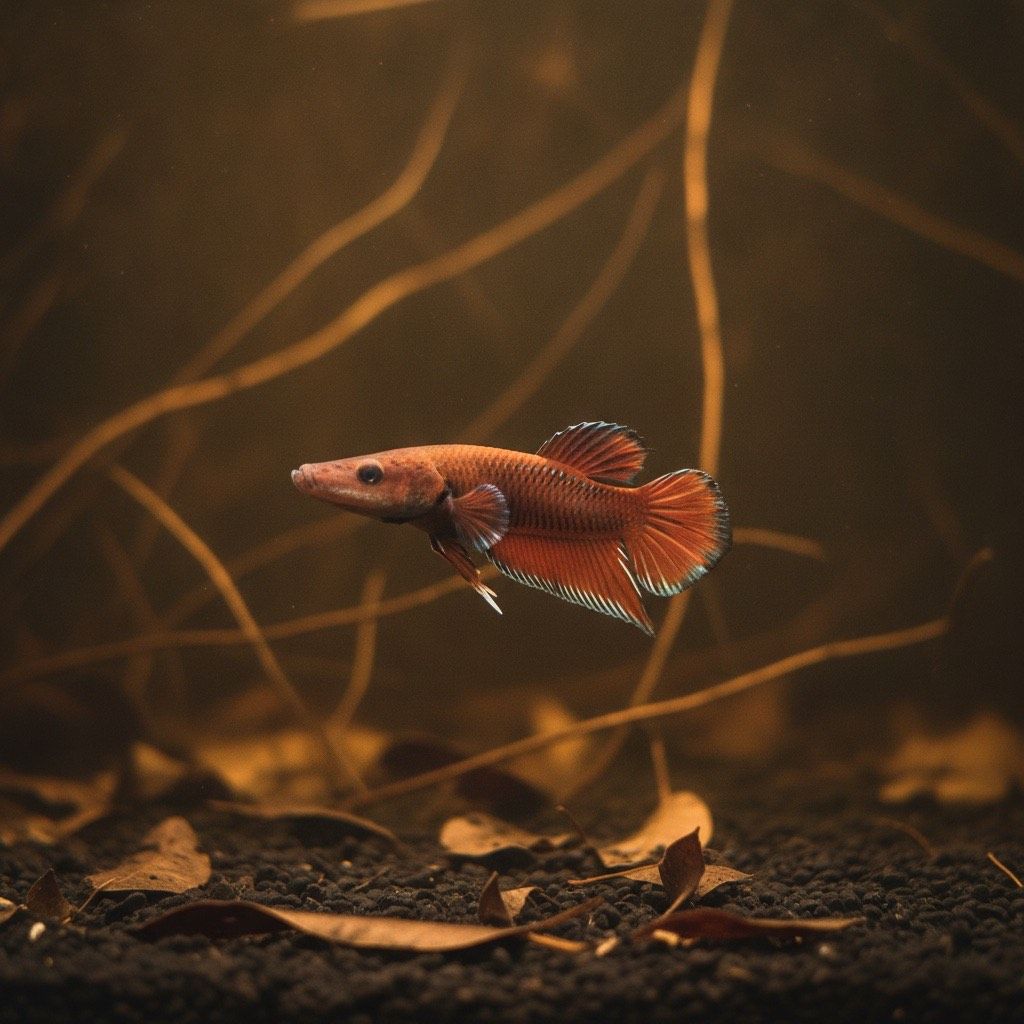
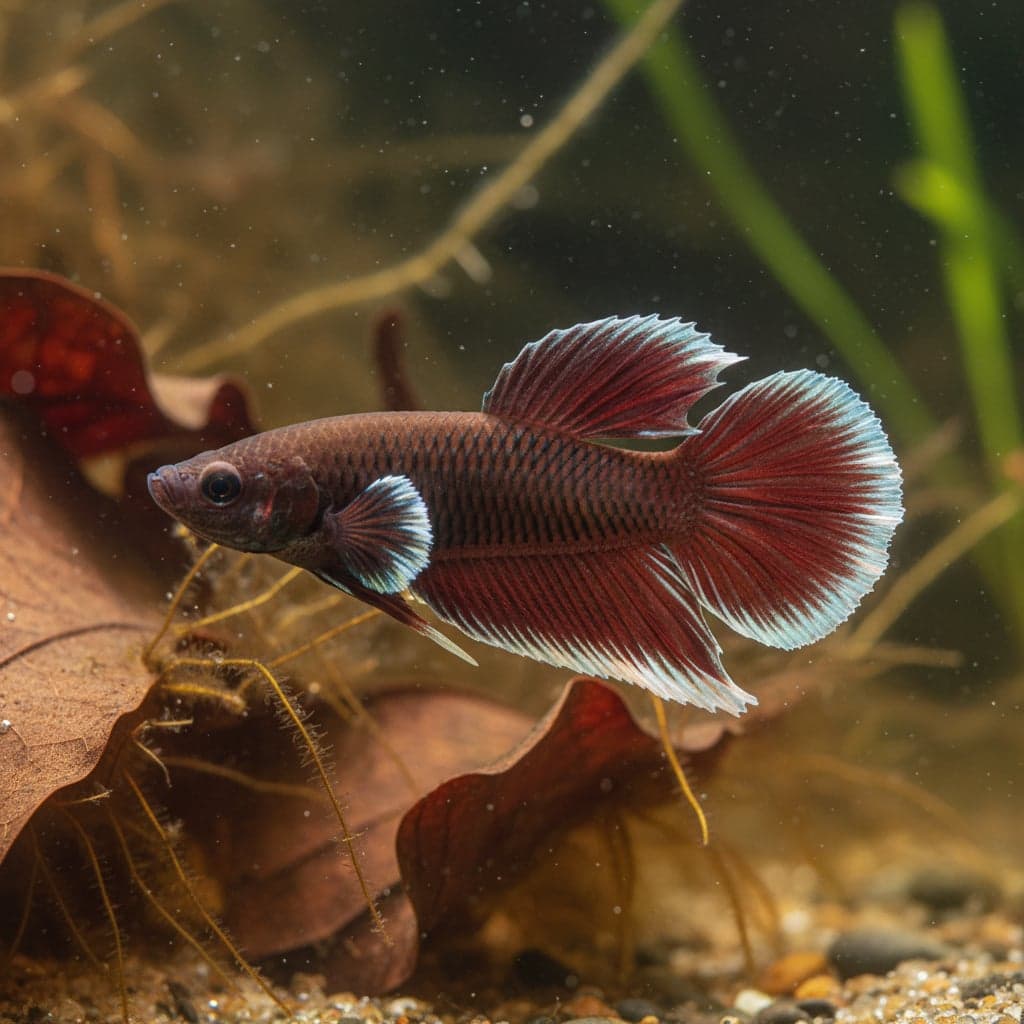
The Snakehead Betta (Betta channoides) takes its name from its broad, flattened head, which gives it a passing resemblance to a miniature snakehead. It is one of the smallest and most colourful of the wild bettas: adult males are a deep brick-orange to red, with black-edged fins picked out in white at the tips. Females are a duller orange-brown. Adults reach about 40 mm standard length, roughly 4-5 cm in total.
It is not a long-finned fighting fish. Like most wild bettas it is shy, peaceful with other species, and far more interesting to watch in a planted, dimly lit tank than its size suggests.
Natural Habitat & Origin
Betta channoides is known only from the Mahakam river basin in East Kalimantan, on the Indonesian part of Borneo. It lives in shallow forest streams where the water is stained brown by leaf litter, very soft and acidic, and shaded by overhanging vegetation. Fish shelter among fallen leaves and the roots of marginal plants, often in very little water.
Its range is small, and forest clearance in Borneo makes wild populations vulnerable. Captive-bred fish are available and are the better choice.
Care Requirements
Soft, acidic water is the key requirement: pH 4.0-6.5 and hardness of 1-5 dGH, at 23-30°C. In most areas this means using RO or rainwater, or a mix. Leaf litter (dried catappa or oak leaves) and a few pieces of wood release tannins that stain the water and help lower the pH, recreating the dark conditions the species prefers.
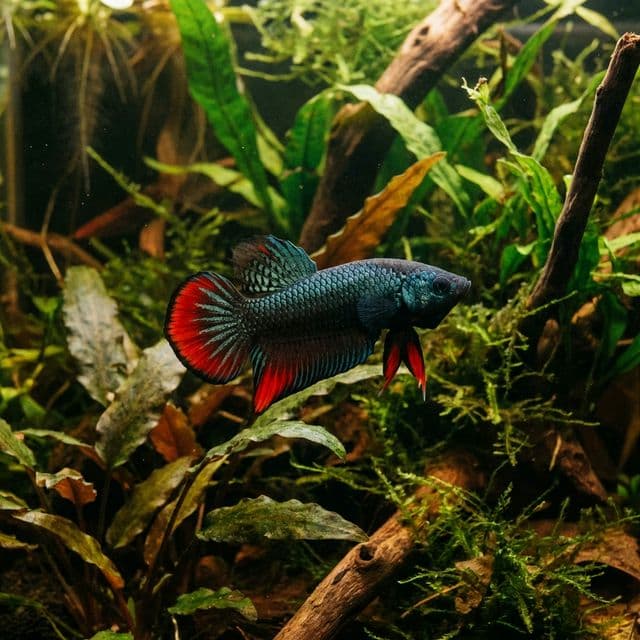
A tank with a 45 × 30 cm base, around 40 litres, suits a pair or a small group. Keep the flow gentle, the lighting subdued, and provide plenty of cover: floating plants, leaf litter across the bottom, and caves or tangles of roots. A tight lid is essential, because bettas jump, and it also keeps the air above the water warm and humid for these labyrinth fish, which breathe air at the surface.
Water quality must stay stable. Make small, regular water changes with water matched in temperature and softness, rather than large changes that swing the pH.
Diet & Feeding
In the wild this species feeds on insects, small invertebrates and zooplankton. In the aquarium it is a picky feeder at first and often refuses dried food. Offer small live and frozen foods: daphnia, brine shrimp, bloodworm, mosquito larvae and grindal worms. Some individuals learn to take small pellets over time, but live and frozen foods should remain the core of the diet.
Behavior & Temperament
Snakehead Bettas are peaceful and retiring. They can be kept as a pair or as a small group, where males display to one another but rarely do damage in a well-furnished tank. Males are more colourful and have broader heads than females.
They are not suited to a busy community tank. Fast or boisterous fish outcompete them for food and keep them in hiding.
Tank Mates
The best setup is a species tank. If you want companions, choose very small, peaceful fish that share its soft, acidic water:
- Chili Rasbora
- Spotted Rasbora
- Small, peaceful loaches such as Kuhli Loaches
Avoid shrimp if you want them to breed: adult bettas will eat shrimplets, and shrimp will eat betta fry.
Breeding
Betta channoides is a paternal mouthbrooder. After an embrace beneath the surface, the female collects the eggs and passes them to the male, who holds them in his mouth for 10-21 days, depending on temperature. Broods are small, and ten eggs is considered a good number.
A brooding male eats little and should be left undisturbed. Many breeders leave the pair together in a well-planted tank; others move the male to his own tank shortly before he releases the fry, which are large enough to take newly hatched brine shrimp straight away.
Common Health Issues
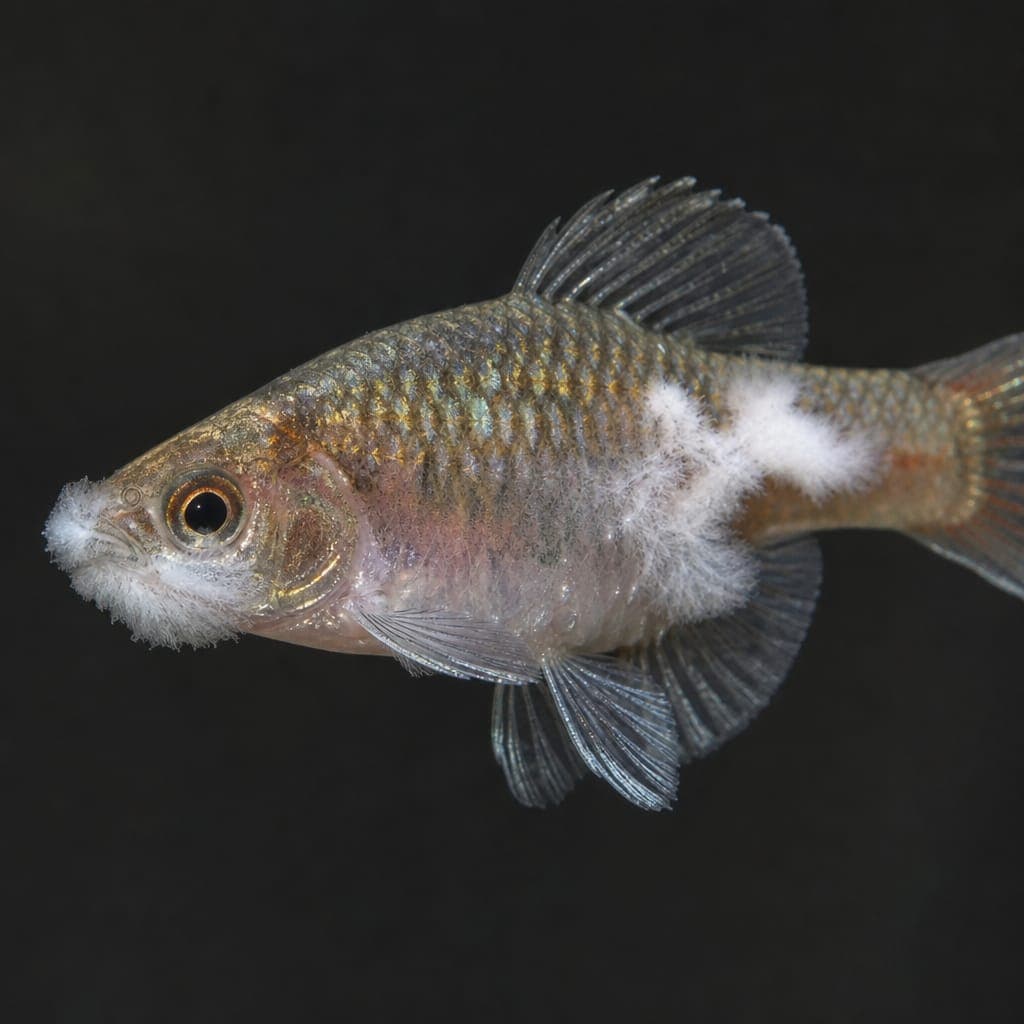
Most problems in wild bettas come from water that is too hard or too alkaline, or from sudden changes in chemistry. Bacterial and fungal infections follow stress. Keep the water soft, acidic, clean and stable, quarantine new fish, and feed a varied diet of small live and frozen foods.