Threadfin Funky Goby: Stiphodon sp.
A 5cm nano goby with extended fin rays. Reef safe and peaceful, and small enough to be eaten by most tank mates.
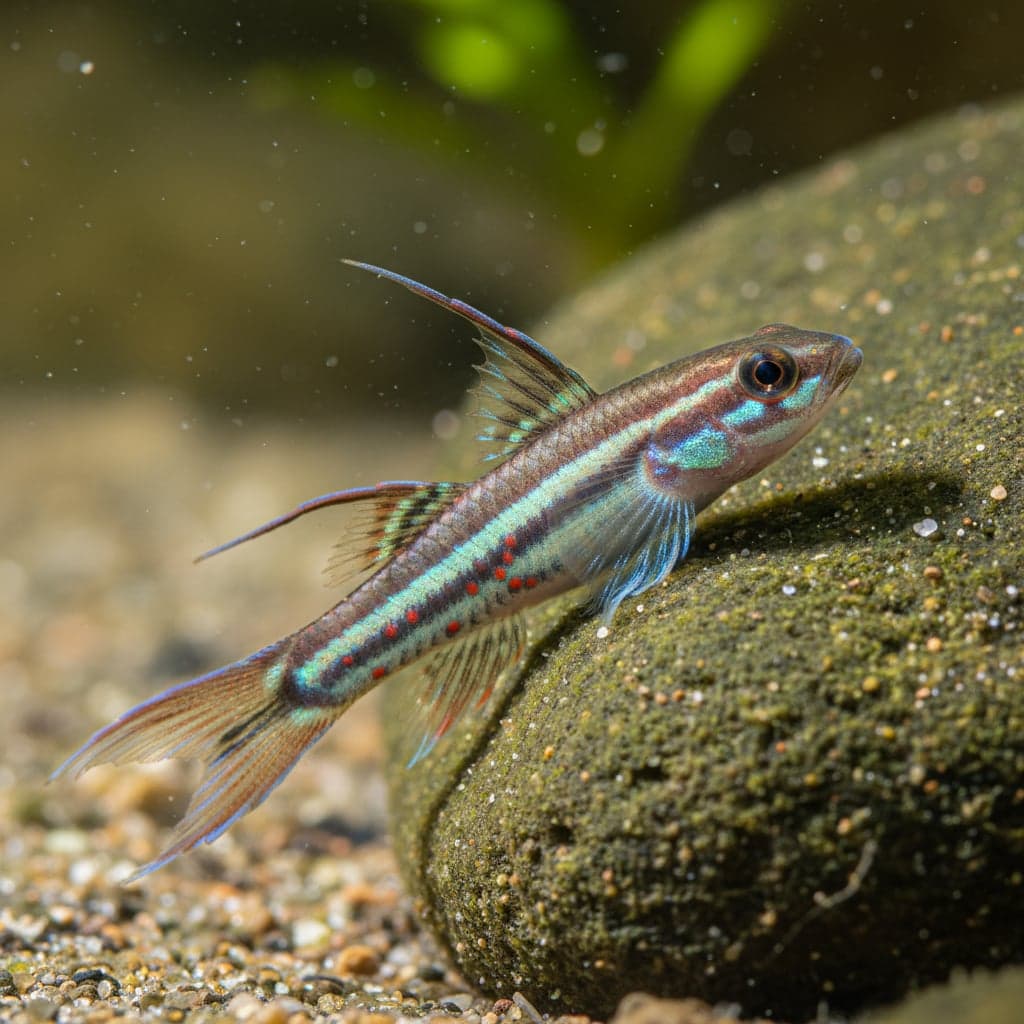
Threadfin Funky Goby
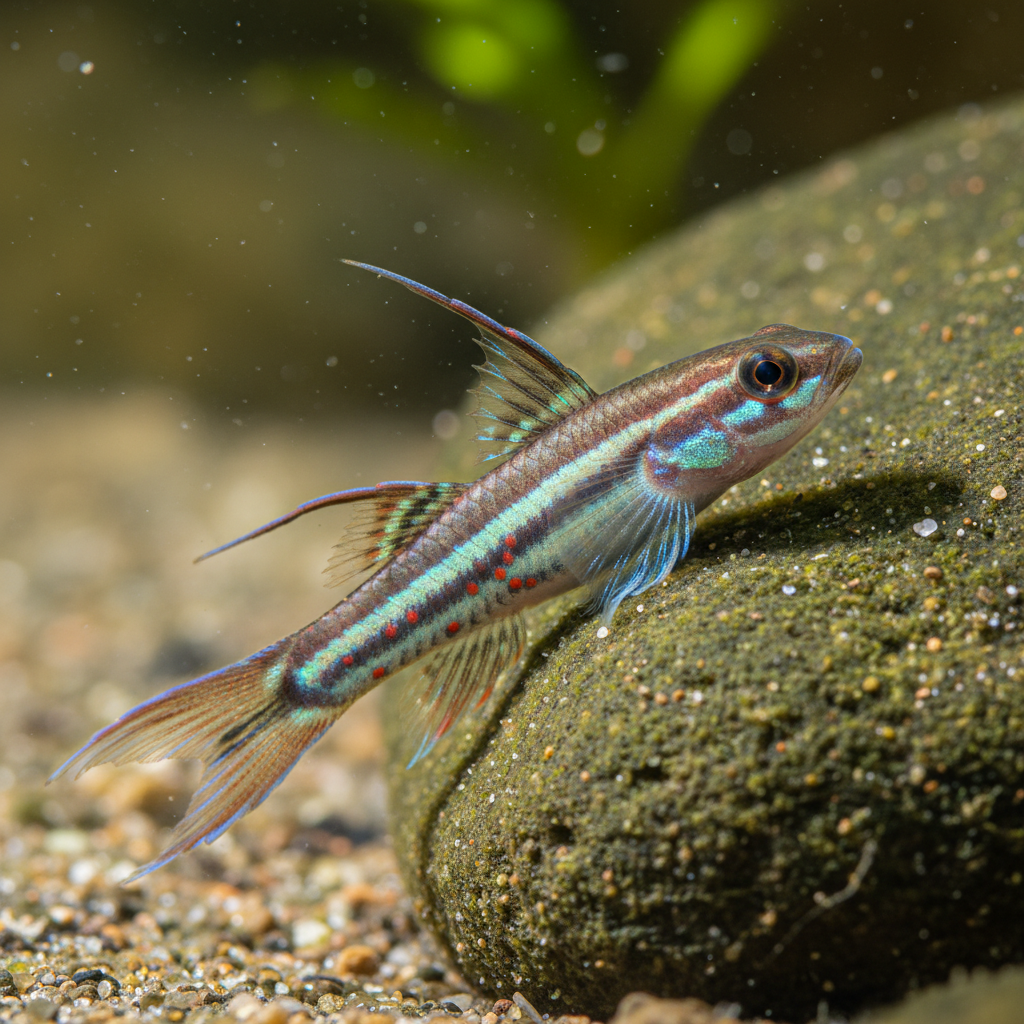
The Threadfin Funky Goby, scientifically known as Stiphodon sp., is a captivating addition to the freshwater aquarium hobby. Known for its striking appearance, this small fish typically showcases vibrant hues of blue, yellow, and green. Its elongated body features delicate, flowing fins that often give it a "threadfin" appearance—a characteristic that greatly enhances its visual charm. Enthusiasts are drawn to this species not only for its aesthetic appeal but also for its intriguing behaviors and peaceful nature, making it a wonderful choice for a community tank.
In the aquarium, the Threadfin Funky Goby serves as a unique focal point, often drawing attention from both visitors and seasoned aquarists alike. Its serene demeanor and bottom-dwelling habits allow it to flourish in aquascapes where it can exhibit its natural behaviors, such as foraging among the substrate for food. The significance of the Threadfin Funky Goby in the aquarium hobby extends beyond its physical allure; it embodies a connection to the diverse ecosystems of Southeast Asia and promotes awareness of aquatic conservation.
Natural Habitat & Origin
The Threadfin Funky Goby hails from the fresh waters of Southeast Asia, primarily inhabiting the streams and rivers of Indonesia and surrounding regions. This species thrives in environments characterized by clear, soft waters often rich in vegetation and leaf litter. The natural habitat typically includes lowland streams with gentle currents, where the gobies can find adequate cover and foraging opportunities.
These fish are commonly found in riverine systems that feature substrates of sand and gravel. The water parameters in their natural environments generally exhibit low levels of hardness and acidic pH, highlighting the importance of replicating these conditions in captivity to ensure their health and well-being.
Care Requirements
To optimize the Threadfin Funky Goby's well-being, specific care requirements must be met. An ideal aquarium size for these fish starts at 20 gallons, allowing ample space for swimming and exploration. A substrate of fine sand or smooth gravel is recommended to simulate their natural environment and facilitate foraging behaviors. Lighting should be moderate to highlight the vibrant colors of the fish while allowing for shaded areas created by plants or driftwood, as these provide essential hiding spots.
Key water parameters include a pH range of 6.0 to 7.5, a temperature range of 72°F to 82°F, and water hardness between 2-10 dGH. Regular water changes and filtration are vital to maintain a clean environment and stable water chemistry, crucial for this sensitive species.
Diet & Feeding
The Threadfin Funky Goby is primarily an omnivore, and its diet in captivity should consist of high-quality flake foods, pellets, and a variety of live or frozen foods. While balanced flake and pellet options designed for small fish can be ideal staples, providing frozen or live offerings such as daphnia, brine shrimp, and bloodworms will promote vibrant health and coloration. It is also beneficial to include some plant-based foods or spirulina to ensure a well-rounded diet. As bottom-dwellers, they are particularly active foragers, so offering food scattered along the substrate mimics natural feeding behavior.
Behavior & Temperament
The Threadfin Funky Goby is celebrated for its peaceful and social demeanor. While these fish can be found in small groups, they tend to be more active and display interesting interactions when kept in schools of at least three to five individuals. Their social nature promotes healthy behaviors and mitigates stress. Although generally non-aggressive, males can display territorial tendencies during breeding season or if they feel crowded.
Positioning these fish in the mid to lower levels of the aquarium is recommended, as they prefer to occupy areas near the substrate where they can safely forage and explore.
Tank Mates
When selecting tank mates for the Threadfin Funky Goby, it is essential to choose species that share similar water parameters and temperaments. Suitable companions include small, peaceful fish such as the Neon Tetra, Ember Tetra, and other dwarf rasboras. Shrimp species like Cherry Shrimp and Amano Shrimp also coexist harmoniously with this goby.
However, larger or more aggressive species should be avoided as potential tank mates, including Cichlids and larger barbs, which could pose a threat to the Threadfin Funky Goby and decrease its quality of life.
Breeding
Breeding the Threadfin Funky Goby in captivity can be a rewarding challenge, requiring specific conditions to encourage spawning. The fish exhibit a unique courtship display where males perform vibrant displays of color and fin posturing to attract females. To facilitate successful reproduction, a separate breeding tank may be beneficial, equipped with gentle filtration and a substrate of fine sand.
Spawning typically occurs on flat surfaces or among vegetation, and after laying eggs, the parents will exhibit little to no parental care. The tiny eggs will hatch in about 3 to 5 days, and the fry will require infusoria or very fine powdered food to thrive during their initial growth stages.
Common Health Issues
Like many aquarium fish, the Threadfin Funky Goby can be susceptible to specific health issues if not cared for properly. Common diseases include ich (Ichthyophthirius multifiliis), fin rot, and various parasitic infections. Maintaining high water quality and low stress levels through proper tank management can significantly reduce the risk of illness.
Regular monitoring for signs of disease, including changes in behavior, appetite loss, or visible lesions, is crucial for early detection and treatment. Quarantining new arrivals and enhancements such as aquatic plants and driftwood can promote a healthy, stress-free environment that supports the overall health of these enchanting fish.