Batik Nerite Snail: Vittina turrita
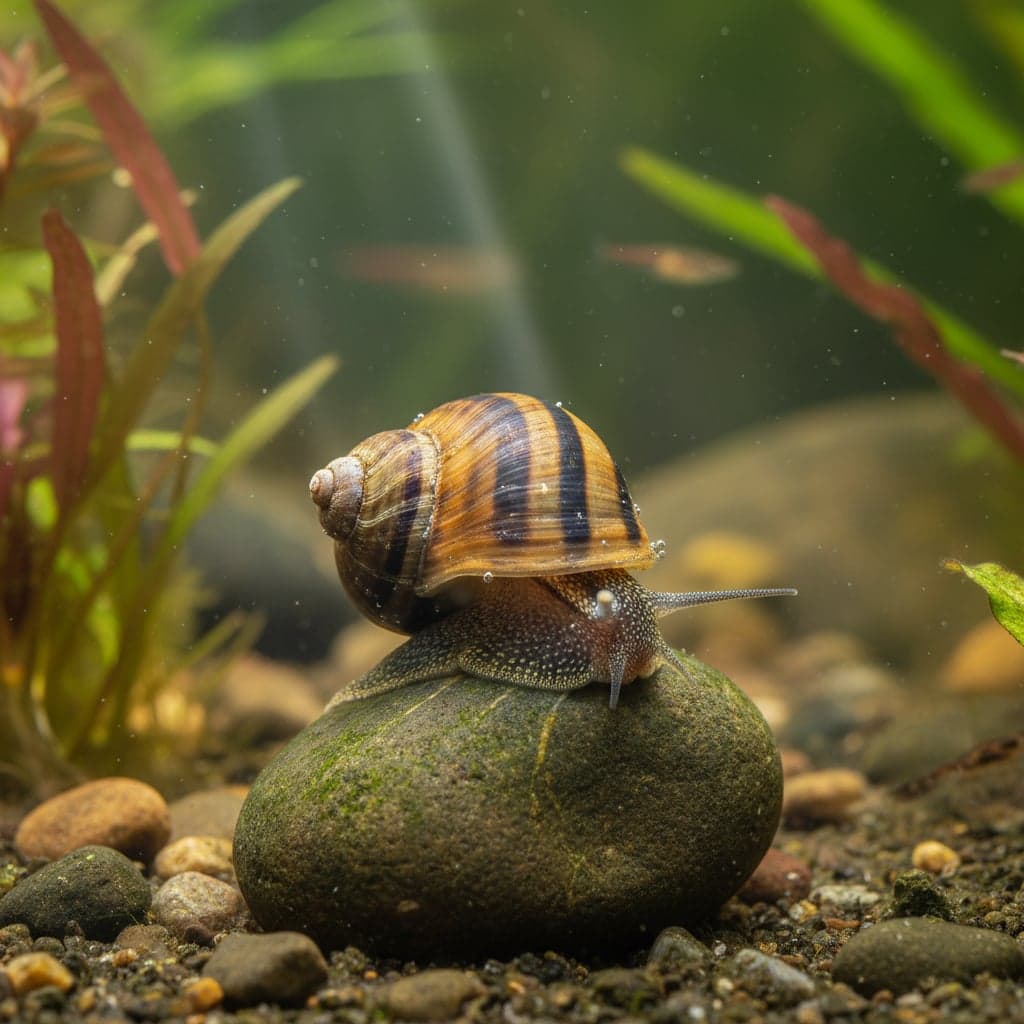
Named for the wax-resist dye pattern its shell resembles — no two are marked alike, which makes individuals easy to tell apart.
Also known as: Batik Snail · Vittina turrita

Batik Nerite Snail
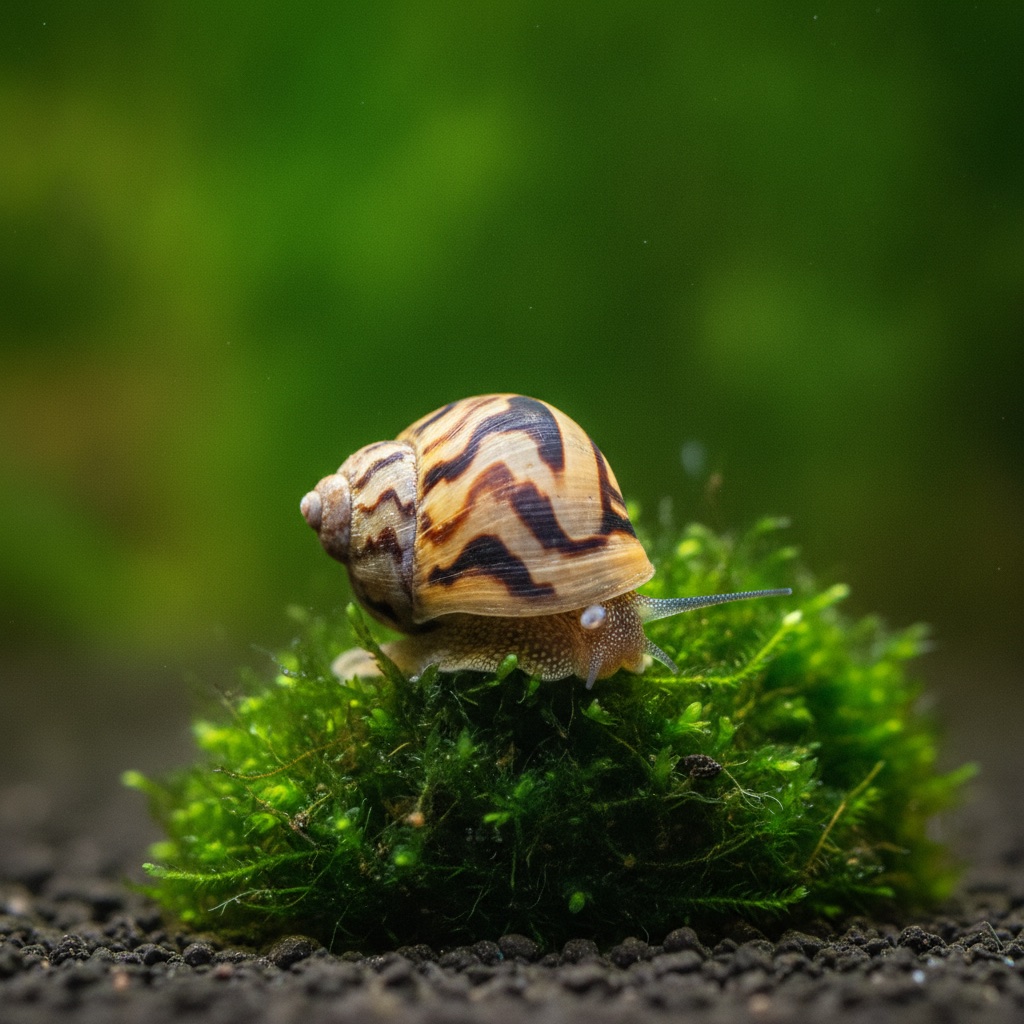
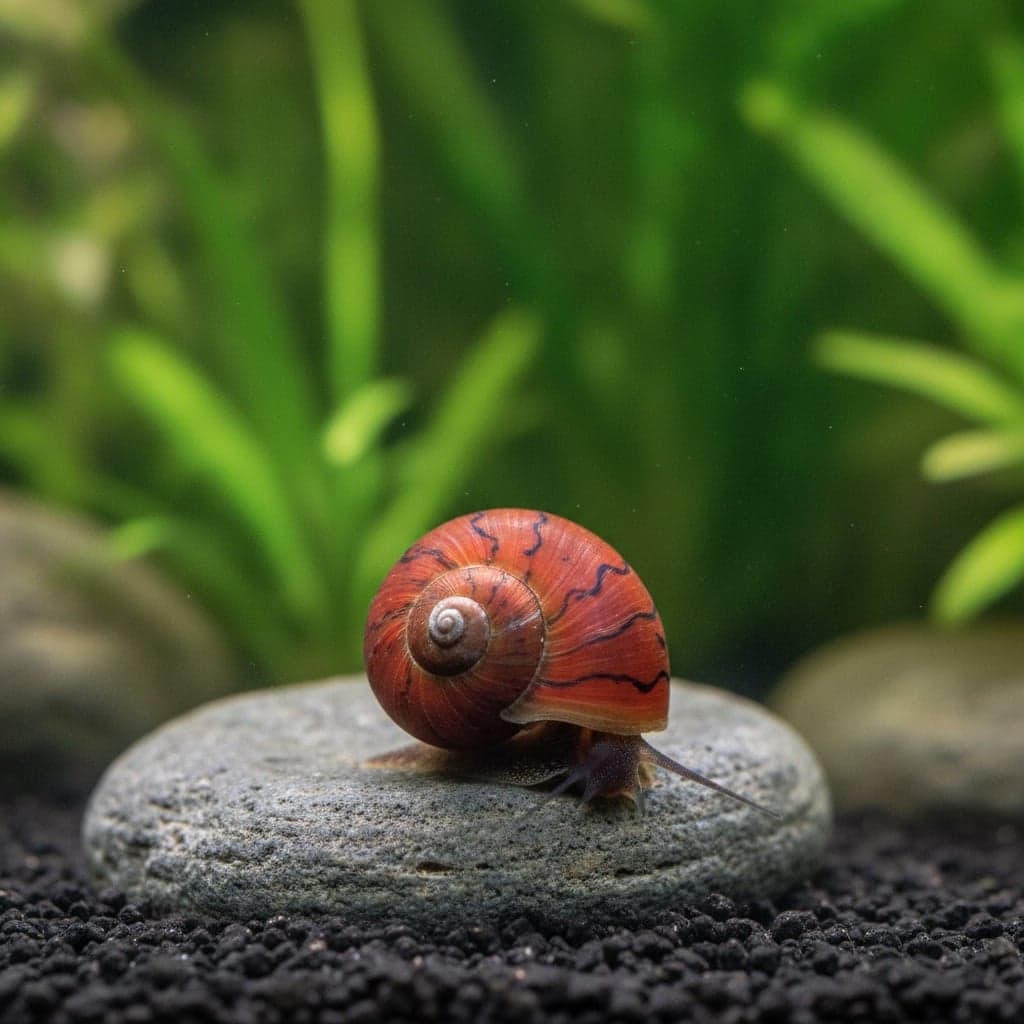
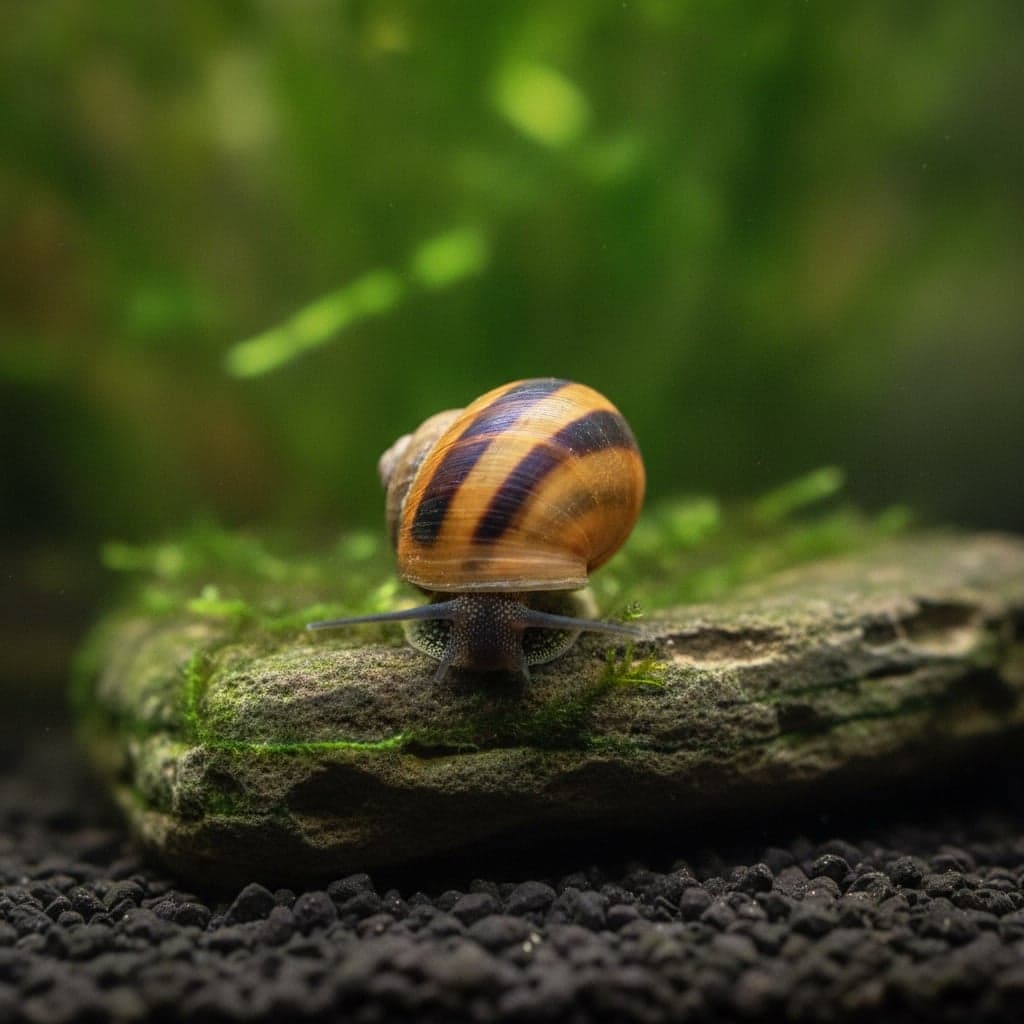
The Batik Nerite takes its name from the Indonesian wax-resist dyeing technique, and the comparison is apt: the shell carries irregular dark zig-zags and flame-like bands over a tan or amber ground, and the pattern is different on every animal. Buy six and you can tell all six apart within a week. That sounds trivial until you realise it is the only common aquarium snail you can actually keep track of individually — which means you notice when one stops moving, rather than discovering three weeks later that the group is down to four.
Beyond the shell, it is a nerite like any other: a hard-water algae grazer that works constantly, will not breed in your tank, and will lay eggs everywhere regardless. Care is identical to the zebra and olive varieties, so the choice between them is aesthetic rather than practical.
Natural Habitat & Origin
Vittina turrita comes from the coastal streams and river mouths of Southeast Asia — Indonesia, Malaysia, Thailand and the Philippines — where it lives on rock and wood in moving water. Like the rest of the family it is amphidromous: adults are freshwater animals, but the species depends on the sea for one stage of its life. Larvae hatched upstream drift down into brackish estuary water, spend weeks as planktonic veligers, settle out as microscopic snails and then climb back up the river against the current.
Almost every Batik Nerite in a shop is wild-collected from that upstream adult population, because nobody has found a commercially viable way to run the brackish larval phase at scale. It is worth knowing what that implies: the snail in the bag has already been through collection, holding, export and retail, and a proportion of losses in the first fortnight is import stress rather than anything you did.
Care Requirements
Hard, alkaline water is not a preference here, it is a structural requirement. The shell is aragonite — calcium carbonate — and in soft or acidic water it is chemically undersaturated, meaning the water actively dissolves it faster than the snail can lay down new material. The visible sequence is a chalky white bloom at the tip of the spire, then pitting through the pattern, then a translucent shell you can see light through. On a Batik that damage is particularly obvious because the erosion eats the markings.
Aim for GH 6-12, KH 4 or above, and a pH held comfortably over 7.0. If your tap water is soft, add crushed coral to the filter or use a remineraliser rather than reaching for pH-up products, which move pH without adding the carbonate that keeps it there — GH, KH and hardness explains why those are different fixes.
Fit a lid. Nerites graze the biofilm band right at the waterline and keep climbing past it; an open-topped tank loses snails to the floor, where they desiccate within hours. Keep the water level a couple of centimetres below the rim as a second line of defence.
Use the Aquarium Tracker to log these parameters against your own readings — it flags a drift before it becomes a problem.
Diet & Feeding
Film algae, diatoms, green dust and biofilm, rasped off glass, wood, rock and leaves with a radula. One Batik Nerite per 20-40 litres is a sensible density in a tank with a real algae supply. Any more and they clear the surfaces faster than the tank can regrow them.
This is where most nerite deaths actually come from. People stock for the algae outbreak they can see, the outbreak ends in ten days, and the snails then starve slowly over the following two or three months in a tank that looks immaculate. Once the glass stays clean between water changes, you are feeding them: algae wafers, blanched courgette, spinach or a spare rock kept in a bright window to grow a green film. See feeding invertebrates.
Behaviour & Temperament
Peaceful, methodical and completely indifferent to its tank mates. Batik Nerites work in slow diagonal sweeps across a surface, and much of that work happens after lights out. They do not eat healthy plants — the radula cannot get through an intact leaf cuticle — but they will clean a dying leaf down to the veins and be blamed for killing it.
The individual patterning makes them unusually good animals to observe. A snail that has parked in the same spot for two days, or that is sitting sealed on the substrate rather than clamped to a vertical surface, is telling you something is wrong; with identical-looking snails you would never spot it.
Tank Mates
Small peaceful community fish, and dwarf shrimp of any colour line — cherry shrimp, blue dream and the rest want the same mineral content and eat the softer biofilm the snails do not bother with. Otocinclus make a good complement rather than a competitor, since they take the soft green film and the nerites take the hard stuff.
Avoid anything built to eat snails: pea puffers, larger loaches such as clown and yoyo, and assassin snails. Also avoid large cichlids, which will chip away at the shell aperture until the snail dies of the injury even when they cannot pull it out.
Choosing between nerite varieties
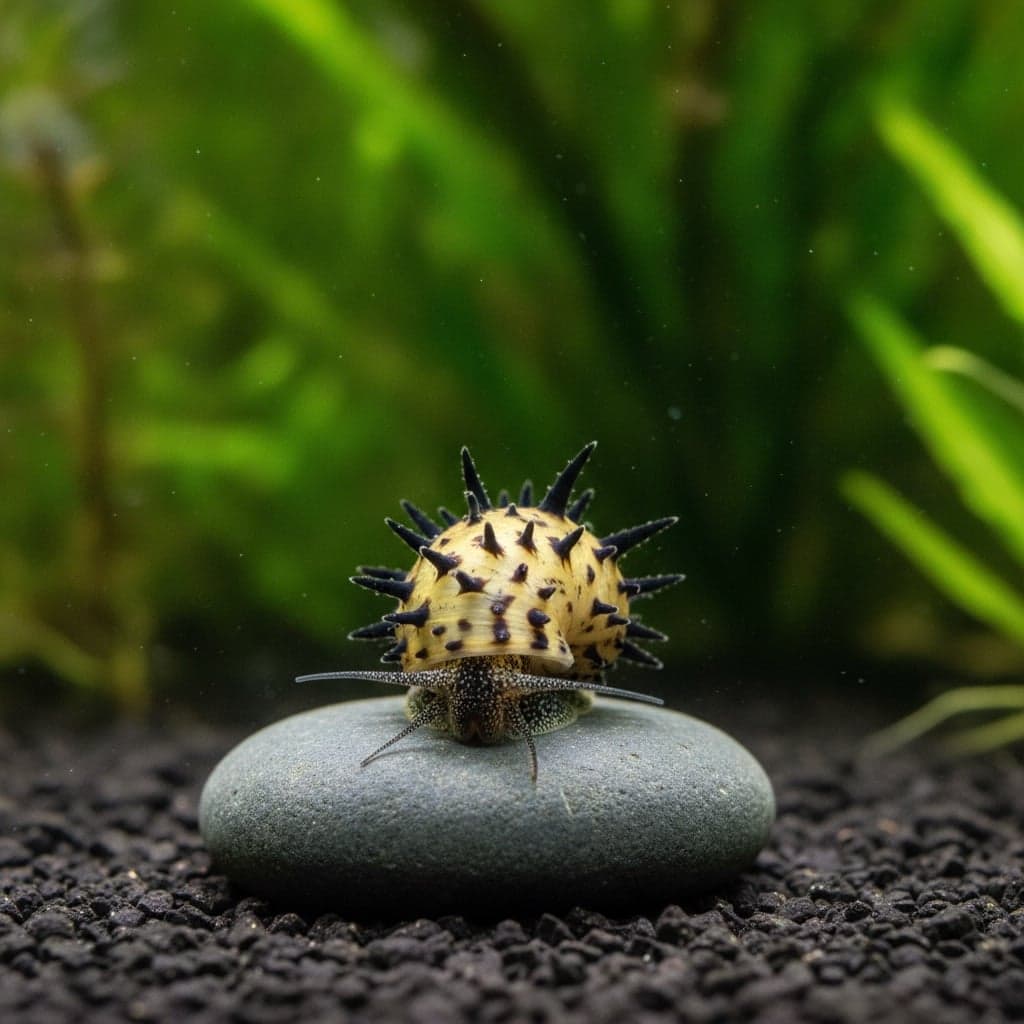
All nerites share the same care requirements, so the choice comes down to shell pattern and size. The Batik is the one to pick if you want individually distinguishable animals; the olive is the better green spot algae eater and the horned the better nano-tank fit. See the nerite snail comparison guide for the full range side by side.
Breeding
It will not happen. The larvae need brackish water to develop, and a freshwater aquarium provides no route to it, so a Batik Nerite in a tank is a terminal generation.
The eggs come anyway. Females deposit hard white capsules, each about the size and shape of a sesame seed, cemented onto glass, wood, rock, plant leaves and the shells of other snails. Each capsule contains dozens of embryos under a calcified lid, and that lid is why they are so hard to remove: a razor blade clears them from glass, but on porous wood and rock they are effectively permanent. Nothing hatches. If the eggs bother you, keep one snail — nerites do not self-fertilise, so a solitary animal lays nothing.
Common Health Issues
Shell erosion in soft or acidic water, as above. It does not reverse; correcting hardness only stops the progression, with clean new growth appearing at the shell lip.
Copper is lethal to every invertebrate in the tank and the exposure lasts far longer than the dose. Copper-based ich and snail treatments kill nerites outright at concentrations that barely register on a fish, and the copper then adsorbs onto substrate, rock and silicone and releases slowly for months. Treat sick fish in a hospital tank instead — medications and heavy metals cover the detail. Most planted-tank fertilisers are safe at label dose, but check any product carrying copper in its trace mix before overdosing it.
Beyond that, watch for snails that have fallen onto their backs on smooth sand and cannot right themselves, and for animals that stay sealed and detached for more than a day. A dead snail decomposes fast and can spike ammonia in a nano tank within hours, so remove it as soon as you are sure.