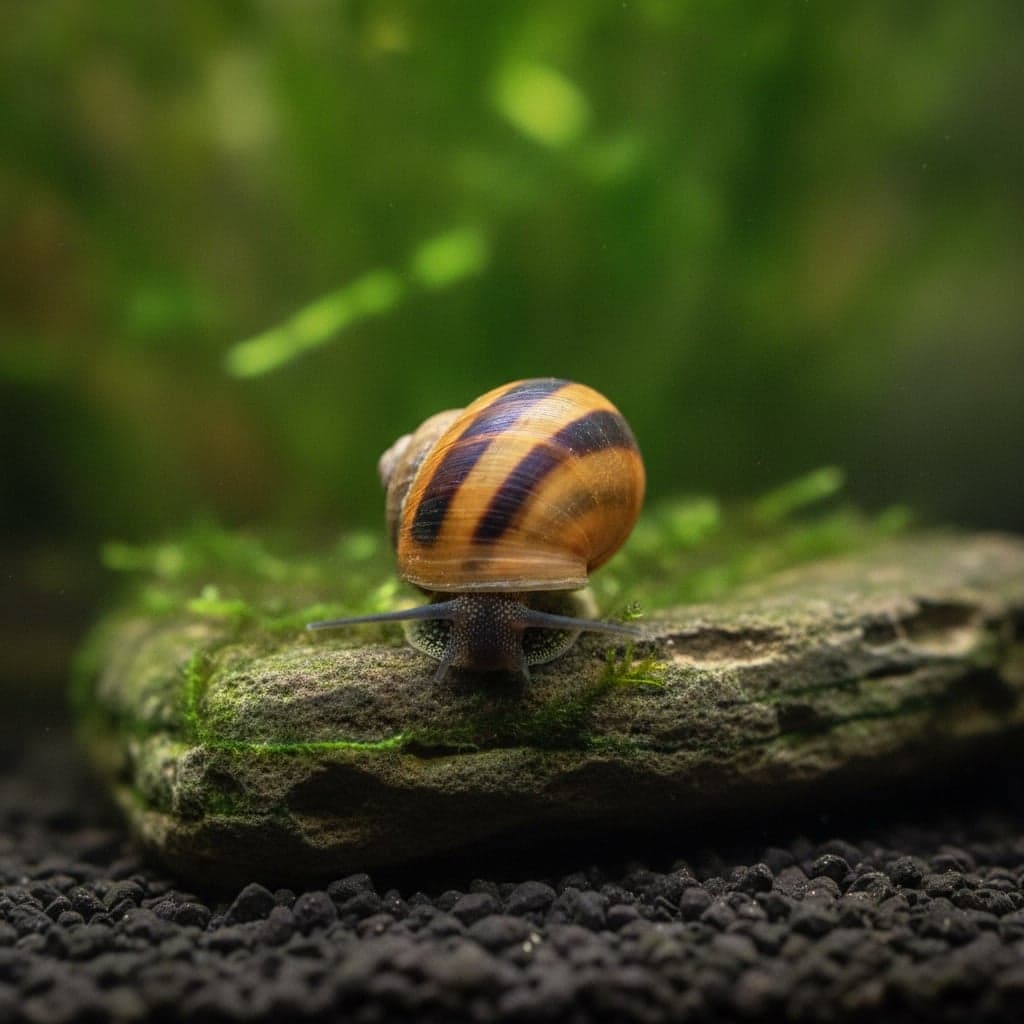
Olive Nerite Snail: Neritina reclivata
The plainest nerite and among the hardiest — a smooth olive-green shell and an appetite for the green spot algae most grazers ignore.
Also known as: Olive Snail · Neritina reclivata

Olive Nerite Snail
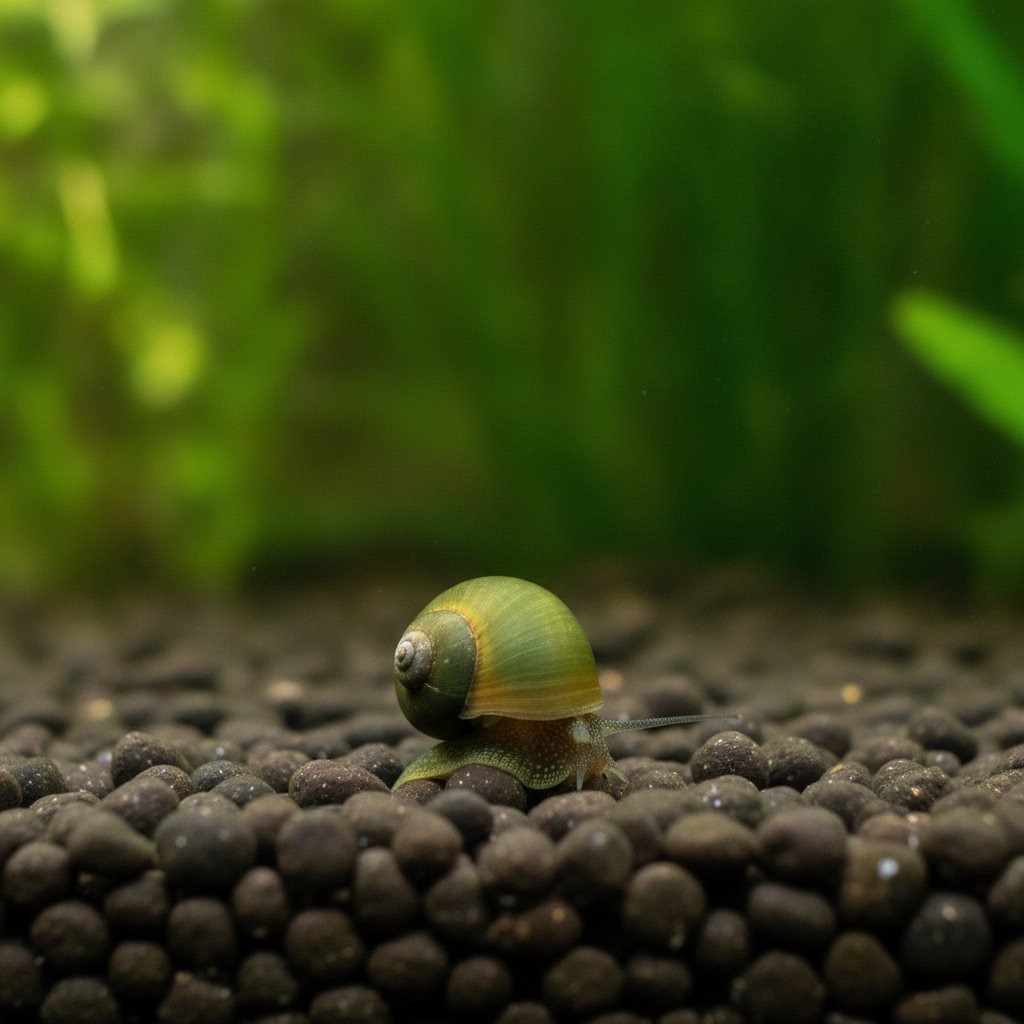
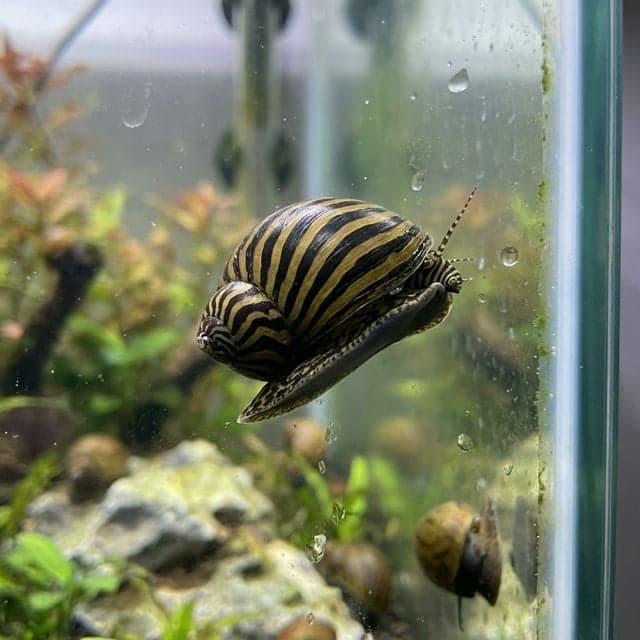
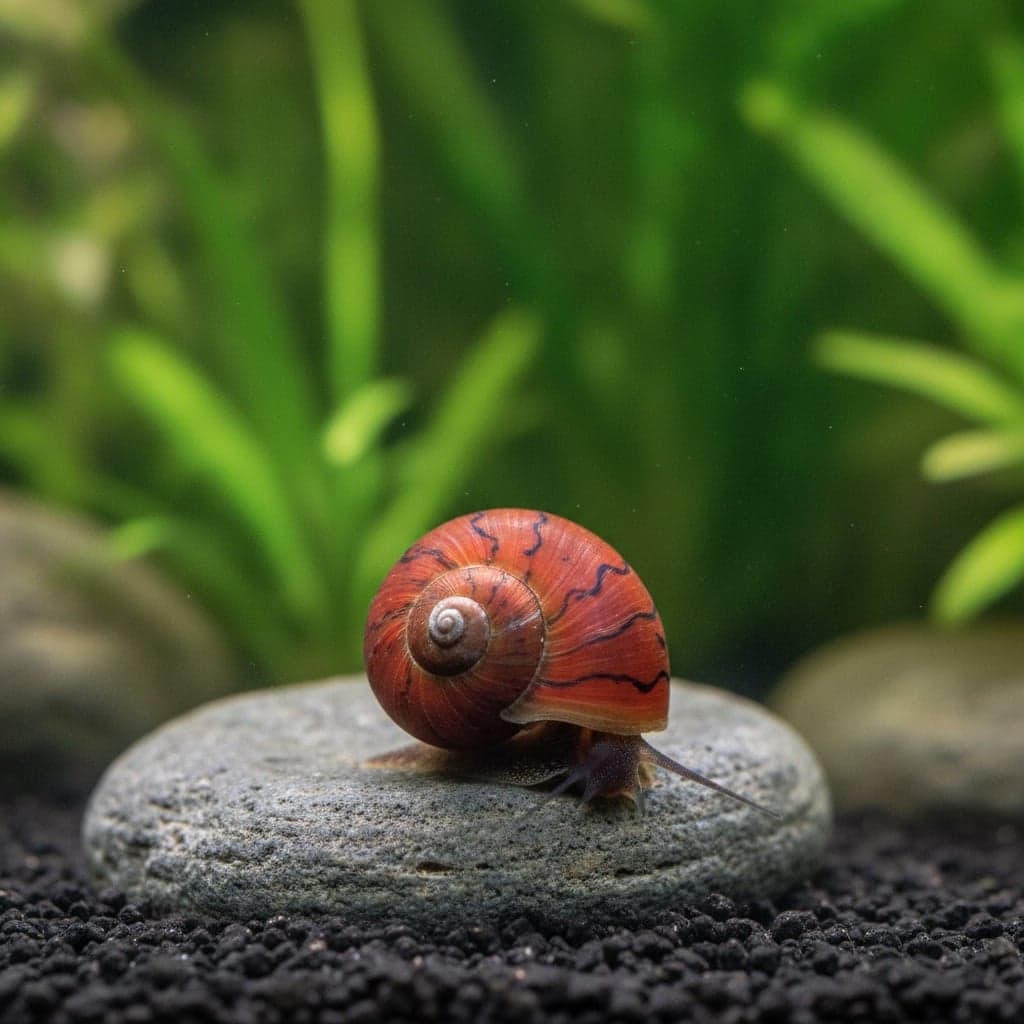
The Olive Nerite is the nerite nobody photographs. It has no stripes, no horns and no batik marbling — just a smooth, domed shell in a flat olive-green that darkens with age. That plainness is exactly why it is worth buying. Of all the nerites in the trade, this is the one that most reliably eats green spot algae, the hard green discs that weld themselves to glass and to anubias leaves and that almost every other grazer in the hobby leaves behind.
The trade-off is that an Olive Nerite is very good at working itself out of a job. Six of them will strip a 60-litre tank in a fortnight and then have nothing left to eat, and the slow starvation that follows is the single most common cause of death in nerites — far more common than any disease. Buy for the algae you actually have, not for the algae you are afraid of.
Natural Habitat & Origin
Neritina reclivata is an estuarine animal from the Gulf and Atlantic coasts of the southeastern United States, the Caribbean and the Gulf of Mexico. Adults are found well upstream in fresh water, clinging to rock, wood and reed stems, but the population as a whole straddles the salinity gradient: the same species occurs in genuinely brackish marsh channels a few kilometres downstream.
That range is the key to everything odd about nerite behaviour. Olive Nerites are amphidromous — they spend adult life in fresh water, but their larvae have to reach salt. Eggs laid upstream release swimming veliger larvae that drift down to the estuary, feed in the plankton for weeks, settle as tiny snails and then crawl back upriver. In a closed glass box there is no downstream, no plankton and no salt, so the cycle stops at step one. The eggs are still laid.
Care Requirements
The Olive Nerite is genuinely undemanding on temperature and will sit anywhere in the 22-28°C band, but it is not undemanding on mineral content. The shell is calcium carbonate, and in soft, acidic water the water chemistry itself dissolves it. Below roughly 6 dGH, or at a pH under 7, the shell surface stops being replaced faster than it erodes and you begin to see chalky white patches at the spire, then pitting, then a thin translucent shell that cracks under its own weight. No amount of feeding fixes this, because the calcium a snail uses for shell maintenance is largely taken up from the water rather than the diet.
Target GH 6-12 and a KH high enough to keep pH stable above 7.0. In soft tap water the usual fix is crushed coral in the filter or a mineral additive rather than a pH-adjusting chemical — see GH, KH and hardness for the difference. A cuttlebone floating in the tank is a cheap supplementary source.
Two mechanical points matter more than they sound. Nerites graze right up to and above the waterline and will keep going onto the rim, so a tank without a lid loses snails to the carpet. And a nerite that falls onto flat sand upside down cannot always right itself; if you see one on its back, turn it over.
Use the Aquarium Tracker to log these parameters against your own readings — it flags a drift before it becomes a problem.
Diet & Feeding
The Olive Nerite grazes with a radula, a toothed ribbon that rasps a surface clean rather than picking food off it. That mechanism is why it handles the hard, mineralised algae other animals cannot: green spot, green dust and diatoms all come off under a radula that would be too slow for a fast-growing filamentous nuisance like hair algae. Do not buy nerites to solve a hair algae or black beard algae problem; they will not touch either in any useful quantity.
Once the glass is clear, you have to feed them. Algae wafers, blanched courgette or spinach, and a piece of driftwood or a rock left to grow biofilm all work. The tell for underfeeding is not obvious behaviour but the shell itself: a starved nerite lays down a thin, pale new growth band at the shell lip, and it sits still on the glass for days at a time. Feeding invertebrates covers the schedule in more detail.
Behaviour & Temperament
Peaceful to the point of being inert. Olive Nerites do not interact with fish, do not compete with shrimp, and do not eat healthy plants — the radula is not strong enough to break an intact leaf cuticle, though it will clean the biofilm off a dying one and get blamed for the damage.
Most of the work happens at night. A tank that looks ungrazed at 8pm is often spotless by morning, which is why people underestimate how much a small group is doing. During the day they tend to park in the shade, under wood or on the back glass.
Tank Mates
Anything peaceful. They pair particularly well with dwarf shrimp — the cherry shrimp and its colour lines occupy the same water chemistry and eat the softer biofilm the snails leave.
Avoid the obvious snail eaters: pea puffers, clown loaches, yoyo loaches and assassin snails. A large loach cannot extract an adult nerite from its shell easily, but it can and will chip at the aperture until the snail dies of the damage. Large cichlids and puffers treat them as food.
Breeding
An Olive Nerite cannot complete its life cycle in fresh water, and it lays eggs anyway. Females cement hard white egg capsules — flat ovals about a millimetre long, exactly like sesame seeds — onto glass, wood, rock, filter intakes and the shells of other snails. Each capsule holds dozens of embryos and is sealed with a calcified crust that is close to impossible to scrape off cleanly; a razor blade takes them off glass, but on wood and rock they are permanent.
They will never hatch into anything. In fresh water the veligers either fail to emerge or die within days, so the eggs simply sit there and whiten. This is the one genuine complaint people have about nerites, and it is worth knowing before you buy rather than after. Keeping a single snail avoids it entirely, since the species does not self-fertilise.
Choosing between nerite varieties
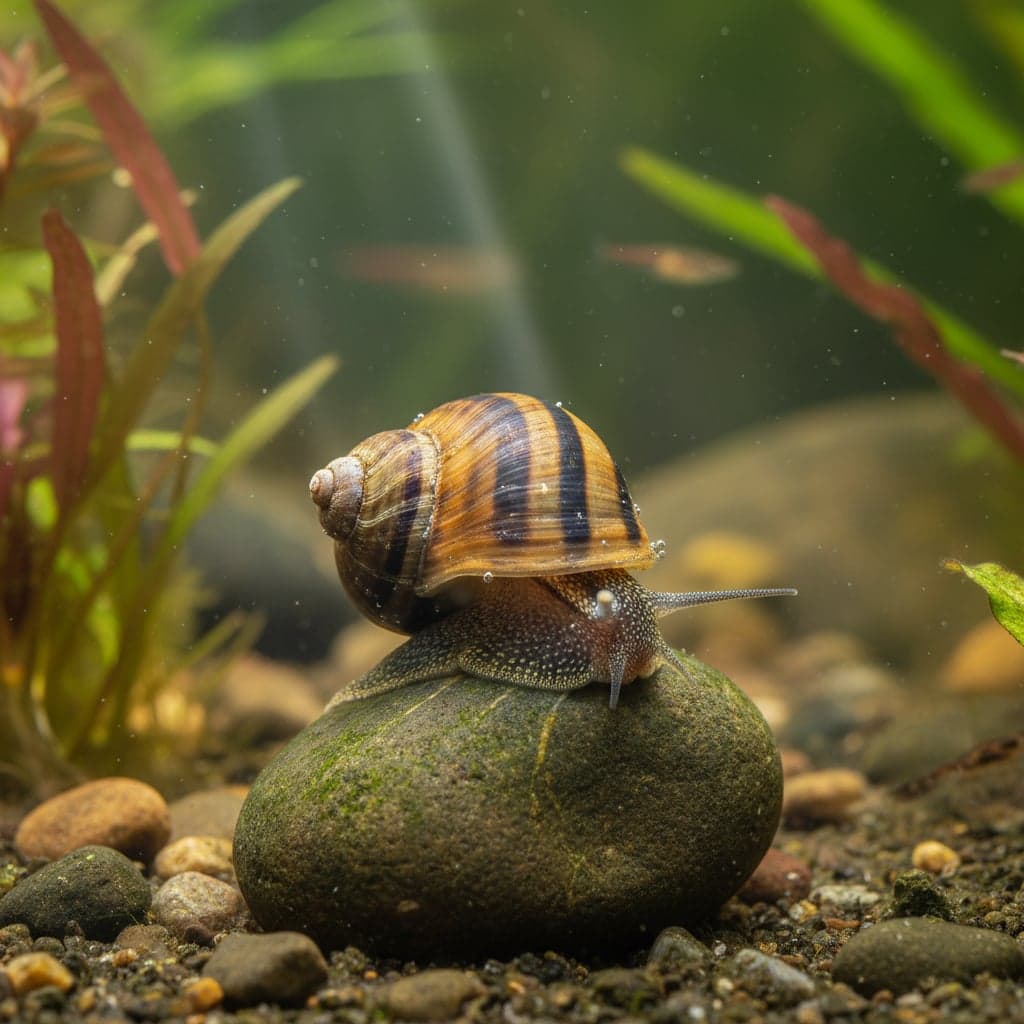
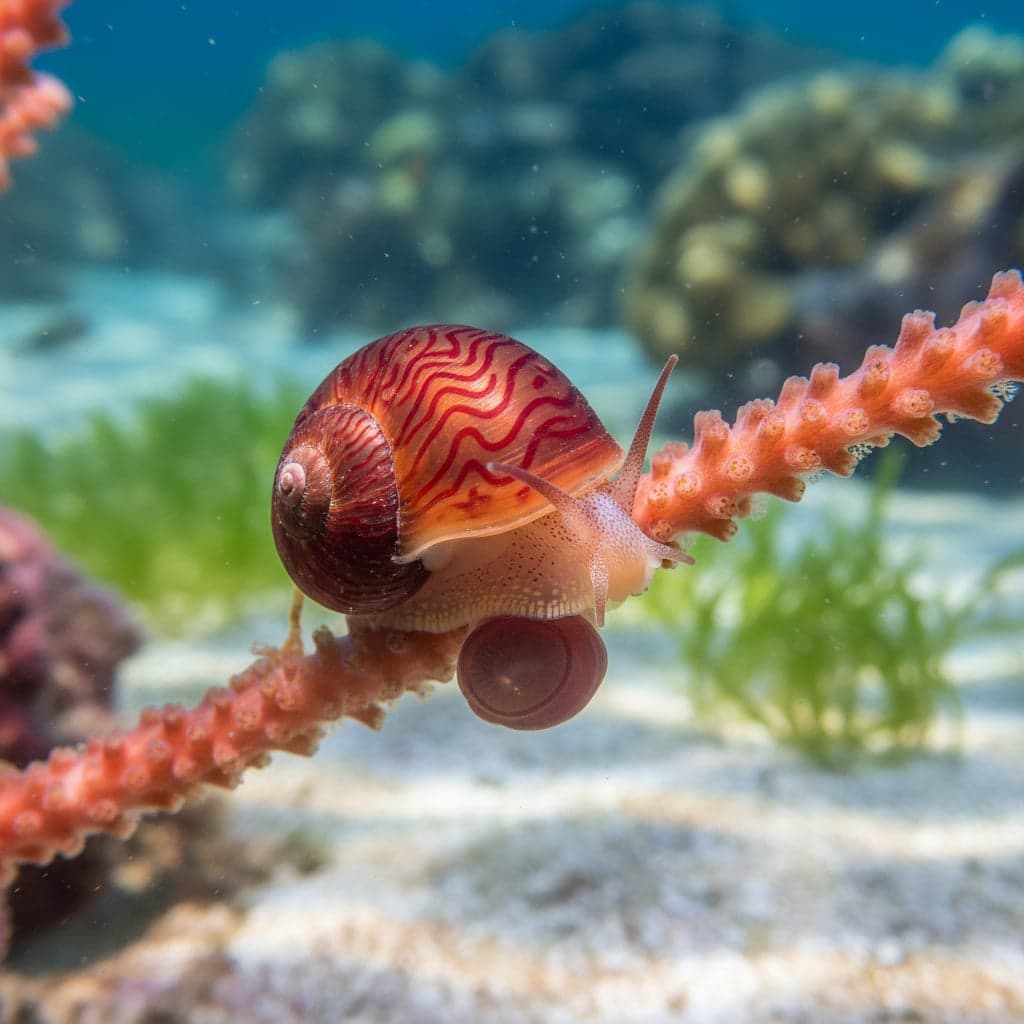
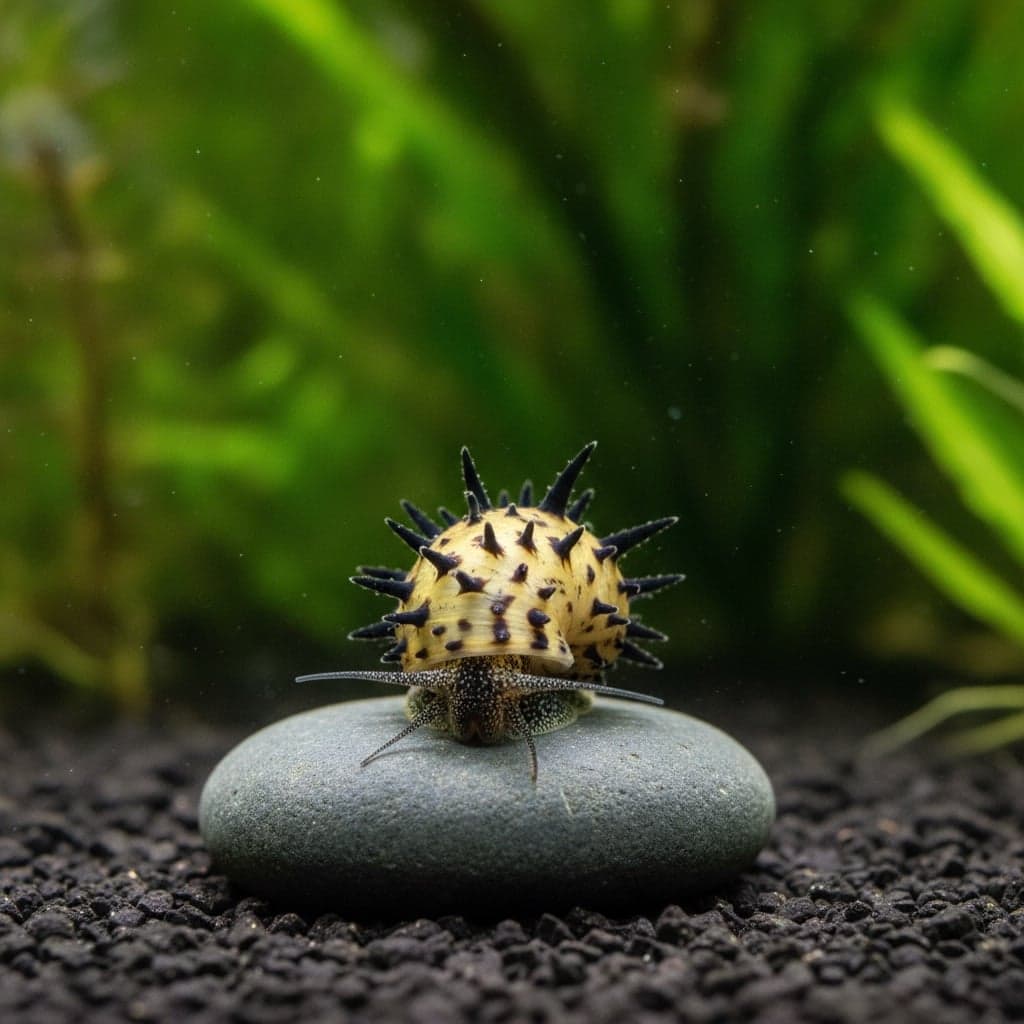
All nerites share the same care requirements, so the choice comes down to shell pattern, size and how fast they work. The Olive is the cheapest and the best at green spot algae; the zebra and tiger are the ones people buy for looks. See the nerite snail comparison guide for the full range side by side.
Common Health Issues
Shell erosion is the headline problem and it is a water chemistry issue, not a disease. Once the shell is pitted the damage does not reverse — correcting hardness only stops it getting worse, and new growth at the lip comes in properly.
Copper is the other killer, and it is worse than most people assume. Molluscs carry oxygen on copper-based haemocyanin rather than iron-based haemoglobin, but free copper ions in the water are still a potent gill and nerve toxin at concentrations well below 0.2 ppm. Copper-based ich and snail treatments will wipe out every invertebrate in the tank, and the copper then binds to substrate, rock and silicone and leaches back for months afterwards — treating a snail tank with copper contaminates the tank, not just that week's water. Treat fish in a separate hospital tank; see medications and heavy metals.
Sudden pH crashes and large unmatched water changes cause snails to seal up and drop off the glass. A nerite that stays sealed and detached for more than a day or two is usually dead; the smell confirms it immediately, and a dead snail in a small tank is a serious ammonia event.