Blue Dream Shrimp: Neocaridina davidi
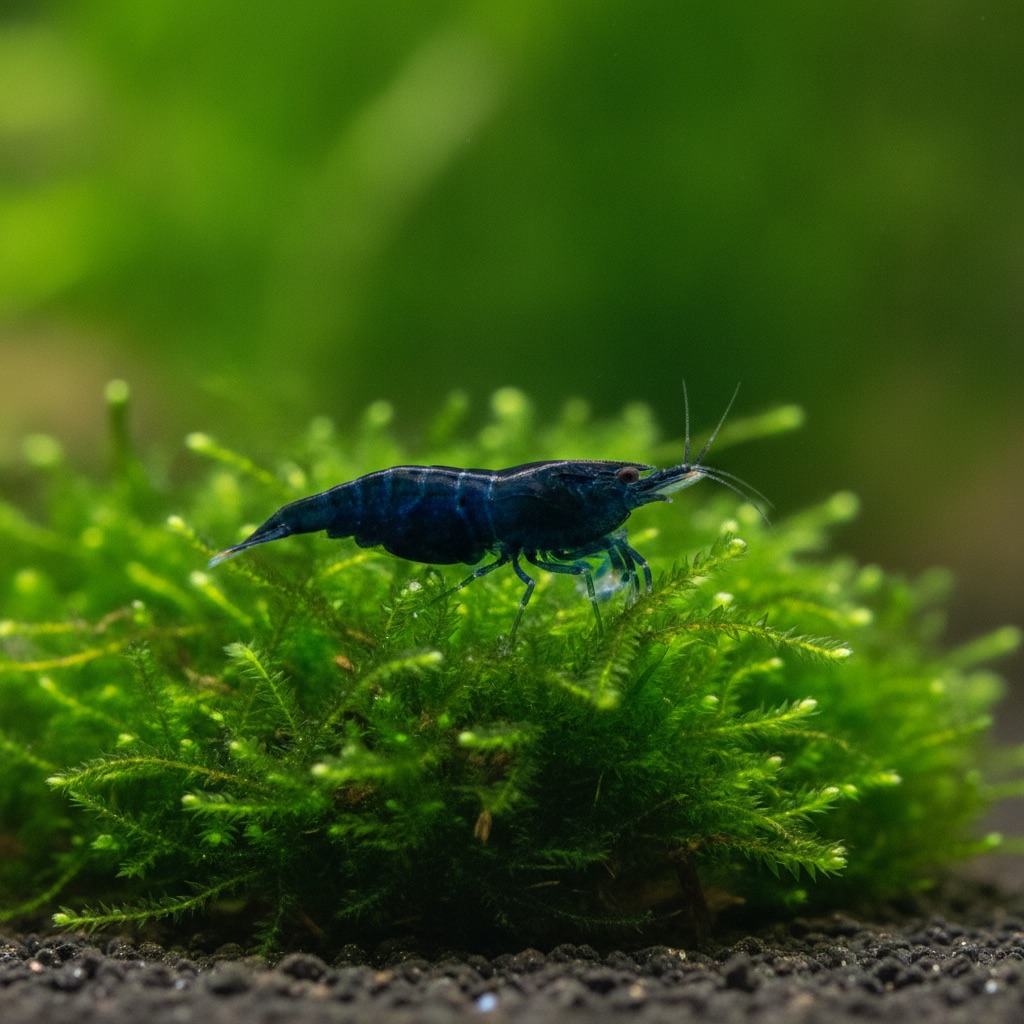
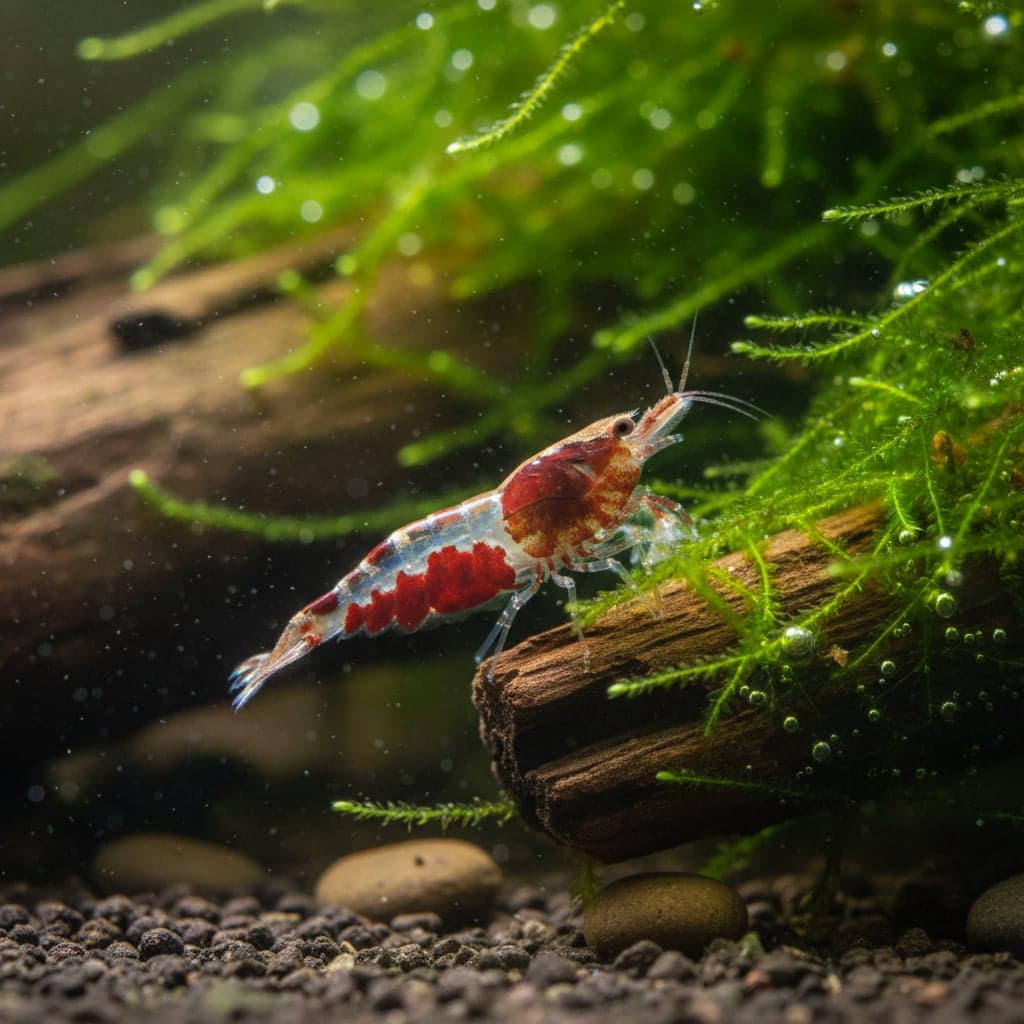
A deep, opaque blue line of Neocaridina davidi. Identical in care to cherry shrimp — keep the colour line separate or offspring revert to wild brown.
Also known as: Blue Dream Neocaridina · Blue Velvet Shrimp · Neocaridina davidi var. Blue Dream

Blue Dream Shrimp
Blue Dream is the darkest of the blue Neocaridina davidi lines — a deep, near-opaque cobalt that covers the whole animal rather than sitting as a haze over a translucent body. It was selected out of the chocolate line rather than from cherry shrimp, which is why the blue reads as saturated rather than as a tint. Blue Velvet, which shops often use as a synonym, is properly a lighter, more translucent selection from the same stock; the two interbreed freely and you will not always be sold the one on the label.
Blue is the least genetically stable of the common Neocaridina colours. A red line left to its own devices throws paler reds; a blue line throws browns, and it does so quickly. Anyone who buys twelve Blue Dreams and does nothing for two years ends up with a tank of wild-type shrimp and a genuine belief that the shop sold them dyed animals. It did not — that is just what an unmanaged recessive colour line does.
Natural Habitat & Origin
Every Neocaridina colour morph traces back to Neocaridina davidi, a small shrimp from streams and shallow rivers in Taiwan and eastern mainland China. Wild animals are a mottled translucent brown-grey with a pale dorsal stripe — camouflage against gravel and leaf litter, and the phenotype every colour line reverts towards when selection stops.
Those streams are moderately hard, near-neutral to slightly alkaline, and rich in mineral content, with heavy marginal vegetation and a constant supply of biofilm and decaying leaves. This is worth being clear about because it is the opposite of what the Caridina shrimp need: the crystal red and bee shrimp want soft, acidic water, and treating the two groups as interchangeable is the most common reason a first shrimp tank fails.
Care Requirements
The tolerance band is wide — 18-28°C, pH 6.5-8.0 — and stability inside it matters much more than the specific reading. A colony held steadily at 23°C and pH 7.4 does well; the same colony bounced between 7.0 and 8.0 by careless water changes does not.
General hardness is the parameter that actually decides whether shrimp live. Shrimp draw calcium and magnesium out of the water across the gills to build each new exoskeleton before they moult, so GH is a structural input, not a comfort setting. Aim for GH 6-8, KH 2-6 to hold pH steady. Below that range the new shell forms too soft and the animal dies part-way out of the old one; well above it, the shell forms too thick to break out of. See GH, KH and hardness, and RO remineralisation if you are starting from RO water.
Twenty litres will hold a starter colony; forty or more gives enough volume to absorb a mistake. Use a sponge filter or fit a coarse foam prefilter, because an open intake kills shrimplets. Keep driftwood, leaf litter and moss in permanently: they are the surface the food web grows on, not decoration.
One point specific to blue shrimp — substrate colour changes what you see. Blue Dreams over pale sand look washed out and grey; the same animals over dark substrate look like the photographs. Shrimp adjust pigment expression to their background over days to weeks, so this is a real effect rather than an optical illusion.
Use the Aquarium Tracker to log these parameters against your own readings — it flags a drift before it becomes a problem.
Diet & Feeding
Biofilm first and always. In a tank that has run for a couple of months, the bacterial and algal film on the glass, wood and leaves will feed a small colony without any help from you, supplemented by soft algae and decaying plant matter.
Add prepared food sparingly — a shrimp-specific food, blanched courgette, spinach or nettle, and an occasional protein feed, two or three times a week, in a portion cleared within a couple of hours. Overfeeding is the most reliable way to crash a shrimp tank; see feeding invertebrates.
Leave shed exoskeletons where they fall. The shrimp eat them to recover the calcium, and removing them throws away mineral you paid to add.
Behaviour & Temperament
Constantly active, entirely peaceful, and much bolder in numbers. Six shrimp in a planted tank hide; thirty are visible all day, working over every surface with their small feeding limbs. If you want to actually see them, buy more of them.
Colour is a health readout. A stressed or newly imported Blue Dream goes pale and semi-transparent within hours, and recovers over days once conditions settle. A colony that has gone uniformly washed-out overnight has a water problem — temperature swing, ammonia, or a large unmatched water change — not a lighting problem. Males are smaller and noticeably less intense than females; that is normal dimorphism, not poor stock.
Tank Mates
A species tank is the honest answer. Any fish that can fit a 3 mm shrimplet in its mouth will eat shrimplets, whatever its reputation, and the usual outcome in a community tank is not a massacre but a colony that quietly stops recruiting and fades out over a year as the adults die unreplaced.
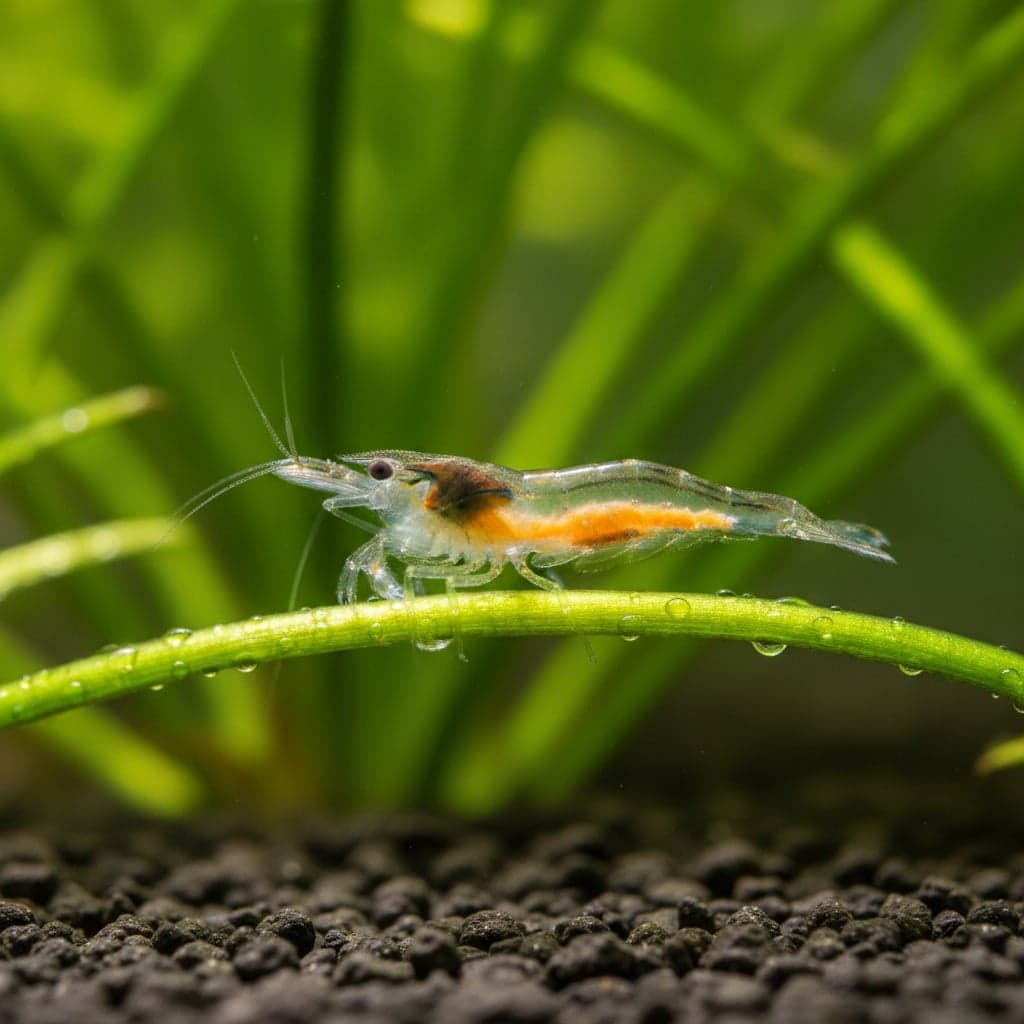
If you want fish anyway, the least damaging are tiny mid-water species — chili rasboras, ember tetras — in a densely planted tank with enough moss for the young to disappear into. Nerite snails and otocinclus are genuinely safe. Avoid ghost shrimp: they are larger, opportunistic, and will hunt dwarf shrimp.
Colour lines and breeding true
This is a selectively bred line of Neocaridina davidi — the same species as the cherry shrimp, and care is identical. Mixing colour lines in one tank produces offspring that revert toward wild brown within a few generations, so keep lines separate if you want the colour to hold. Bloody Mary, snowball, rili and sunkist orange are all the same species; they interbreed freely and their offspring express the wild-type camouflage that selection had been suppressing.
Blue needs more discipline than the other colours because the line is less fixed. Even in a pure colony, a proportion of each generation comes out pale, patchy or brown, and if those animals are left to breed the whole colony drifts within four or five generations. Culling here means moving the off-colour juveniles to a second tank before they mature, not killing them — they make perfectly good shrimp, they just should not be parents to your display colony.
Breeding
You do not breed Neocaridina so much as fail to prevent it. Stable water and adequate biofilm turn ten shrimp into a hundred inside six months.
The reason they are the beginner's shrimp is direct development. A berried female carries 20-30 eggs glued beneath her tail, fanning them for 25-30 days, and each egg releases a fully formed miniature shrimp — no planktonic larval stage, no brackish phase, no infusoria culture. The young graze the same biofilm as the adults from day one. Warmth speeds the whole cycle up: near 28°C they breed fast and live about a year, near 22°C they breed slowly and live closer to two.
All you have to provide is a filter intake the young cannot be pulled into and the restraint not to gravel-vacuum hard while they are small.
Common Health Issues
Copper wipes out colonies. Copper-based ich and snail medications kill shrimp at concentrations fish barely notice, and the copper then binds to substrate, rock and silicone and leaches back into the water for months afterwards, so the tank remains unsafe long after treatment ends. Treat fish in a hospital tank instead. Planted-tank fertilisers generally carry copper as a chelated trace and are safe at label dose — the danger is overdosing them. See heavy metals and medications.
Failed moults are the other frequent killer, and they follow chronic low GH or a sudden TDS drop — typically a large water change with unremineralised RO or cold tap water. Change 10-15% at a time, matched for temperature and minerals.
New shrimp die from acclimation more often than from anything in your tank, so drip acclimate over an hour or more and expect some first-week attrition that is a shipping cost rather than a husbandry failure.