Snowball Shrimp: Neocaridina zhangjiajiensis
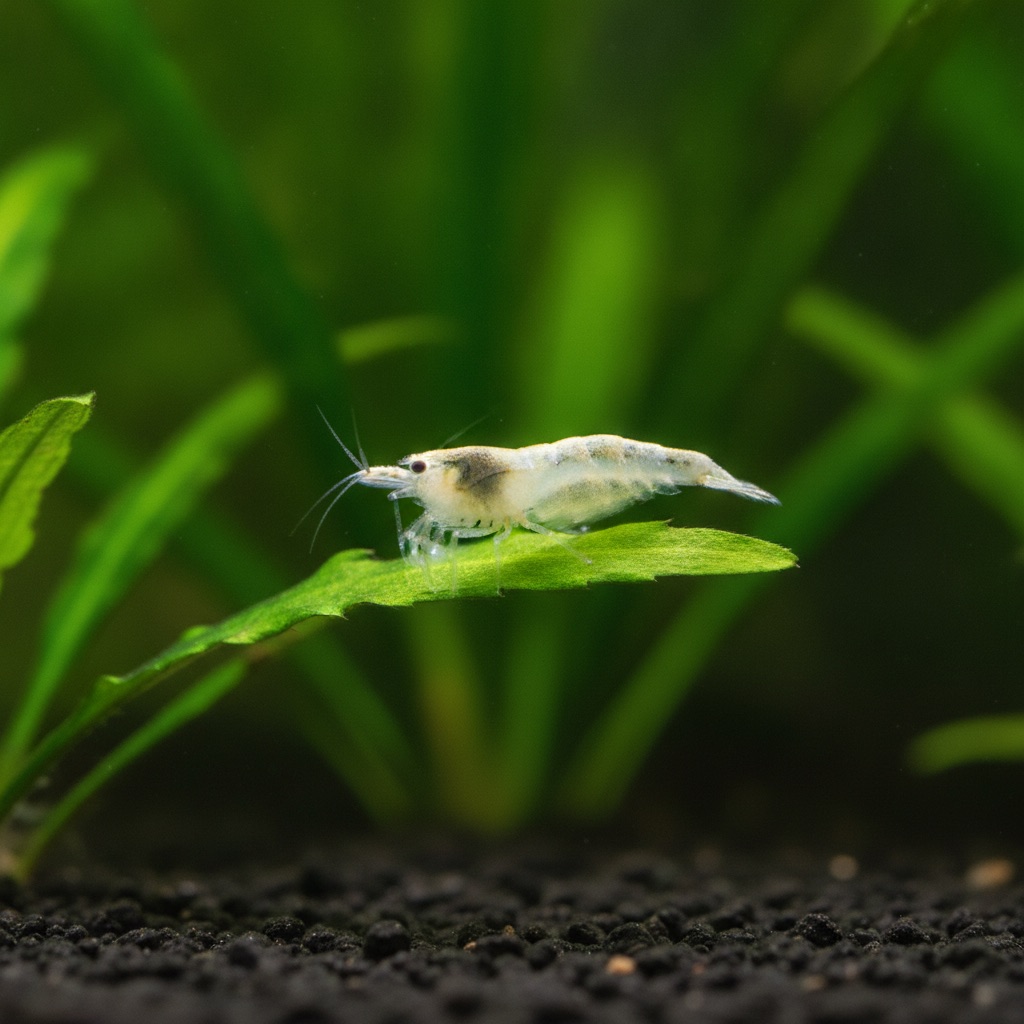
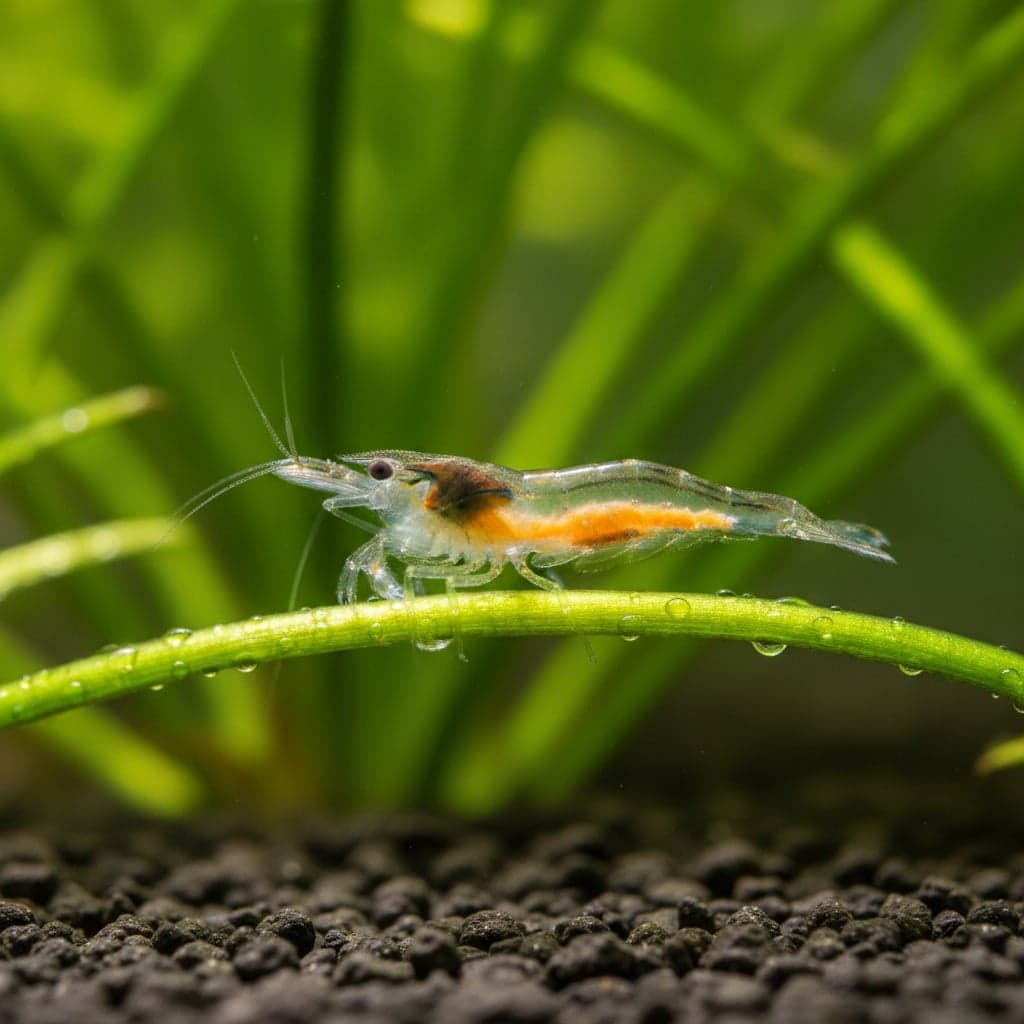
A translucent white Neocaridina named for its eggs, which look like snowballs carried beneath the female. Shows best against dark substrate.
Also known as: White Pearl Shrimp · Snowball Neocaridina · Neocaridina zhangjiajiensis var. white

Snowball Shrimp
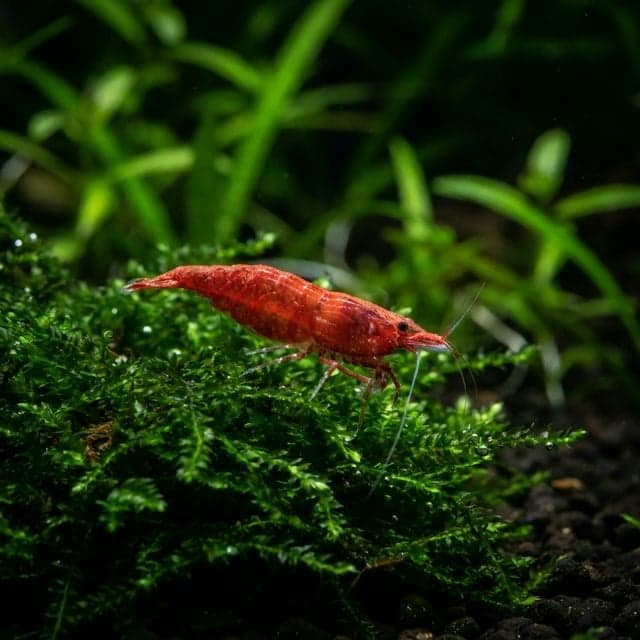
The Snowball is a white Neocaridina, and the name comes from the eggs rather than the adults. Where a cherry shrimp carries a clutch of yellow-green eggs under her tail, a berried Snowball carries a cluster of opaque white ones that genuinely do look like a handful of tiny snowballs — visible right through the translucent body, which makes this the easiest dwarf shrimp to watch a brood develop in.
The white is an absence rather than a pigment: selection removed the darker chromatophores, leaving a milky, semi-transparent animal. That has a practical consequence for how you set the tank up. Over pale sand a Snowball is nearly invisible; over dark substrate and against green planting it reads as solid white. The animal is the same either way — the scape decides whether you can see it.
Natural Habitat & Origin
Snowballs are usually sold as Neocaridina zhangjiajiensis var. white, but the taxonomy is contested and worth stating plainly: many authorities now treat zhangjiajiensis as a synonym or close relative of Neocaridina davidi, and the practical evidence supports that — Snowballs interbreed freely with cherry shrimp and every other Neocaridina colour line and produce fertile, wild-type offspring. Whatever name is on the label, treat them as the same animal for stocking purposes.
The wild stock comes from freshwater streams in China: moderately hard, near-neutral to slightly alkaline, mineral-rich water over rock and gravel with heavy marginal plants and a constant supply of biofilm and leaf litter. That is the opposite of the soft, acidic water the Caridina shrimp such as crystal reds need, and mixing the two requirements up is the usual reason a first shrimp colony collapses.
Care Requirements
Wide tolerance — 18-28°C, pH 6.5-8.0 — with stability inside the band mattering far more than the exact figure. Steady is the whole trick: a colony held at 24°C and pH 7.5 thrives, while the same colony swung around by careless water changes does not.
General hardness is the parameter that decides whether they live. Shrimp take up calcium and magnesium from the water across their gills to build each new exoskeleton before moulting, so GH is a structural input, not a comfort setting. Target GH 6-8 with KH 2-6 to hold pH steady. Too low and the new shell forms soft, and the shrimp dies part-way out of the old one; too high and it forms too thick to escape. GH, KH and hardness covers the testing, and RO remineralisation the mixing if you start from RO.
Twenty litres holds a starter colony, forty gives you margin. Run a sponge filter or fit a coarse foam prefilter — an unguarded intake shreds shrimplets. Keep driftwood, leaf litter and moss in permanently; they are the surface the food web grows on rather than decoration.
Use the Aquarium Tracker to log these parameters against your own readings — it flags a drift before it becomes a problem.
Diet & Feeding
Biofilm is the staple: the bacterial and algal film coating every surface in a mature tank, supplemented by soft algae and decomposing plant matter. A tank that has been running two months will support a small colony on that alone.
Feed on top of it sparingly — a shrimp-specific prepared food, blanched courgette, spinach or nettle, and occasional protein, two or three times a week, in a portion cleared within a couple of hours. Overfeeding is how most shrimp tanks fail; feeding invertebrates sets out the portioning.
Leave shed exoskeletons in the tank. Shrimp eat their moults to reclaim the calcium; taking them out discards mineral you paid to put in.
Behaviour & Temperament
Busy, peaceful and bolder in numbers. A handful of shrimp hides; thirty in a 20-litre tank forage in the open all day. The translucency is an unexpected diagnostic advantage — you can see the gut contents as a dark line down the back, so a Snowball with a full, dark gut is feeding well and one running empty for days is not.
Stress shows as further loss of what little opacity they have, and as animals sitting still in a corner rather than grazing. It is worth knowing that white shrimp look "washed out" by default, so use behaviour rather than colour as the health signal here — the opposite of how you would read a red or blue line.
Tank Mates
Species tank, realistically. Anything with a mouth big enough for a 3 mm shrimplet will eat shrimplets, and the usual result in a community tank is not a visible massacre but a colony that stops recruiting and dwindles over a year.
If you want fish, the smallest mid-water species do least damage — chili rasboras, ember tetras — in a tank with enough moss for the young to hide in. Nerite snails and otocinclus are genuinely safe. Avoid ghost shrimp, which are larger, opportunistic and will hunt dwarf shrimp outright.
Colour lines and breeding true
This is a selectively bred white line of Neocaridina — the same genus, and for practical purposes the same species, as the cherry shrimp, and care is identical. Mixing colour lines in one tank produces offspring that revert toward wild brown within a few generations, so keep lines separate if you want the colour to hold. That includes bloody mary, blue dream, rili and sunkist orange.
White has a specific failure mode. Because the morph is defined by the absence of colour, a drifting Snowball line does not go obviously "wrong" — it goes clear, then faintly speckled, then plainly wild-type brown, and each step looks like a slightly duller version of the last rather than an alarm. Move the least-white juveniles out before they breed and the line holds; leave it alone and it degrades without you noticing until it is gone.
Breeding
Prolific, and essentially automatic. Given stable water and enough biofilm, ten shrimp become a hundred within six months.
Neocaridina have direct development, which is what makes them the beginner's shrimp. A berried female glues 20-30 eggs to the swimmerets under her tail and fans them for 25-30 days; each hatches into a fully formed miniature shrimp. No planktonic larval stage, no brackish phase, no special first food — the young graze the same biofilm as the adults immediately. On this line the white eggs make the whole process unusually easy to follow, right down to seeing the dark eyespots develop inside them in the last week.
Temperature drives the clock: near 28°C they breed fast and live around a year; near 22°C they breed slowly and live closer to two. Provide a filter the young cannot be drawn into and avoid heavy gravel-vacuuming while they are small, and that is the whole of the intervention required.
Common Health Issues
Copper is the colony killer. Copper-based ich and snail treatments are lethal to shrimp at doses fish tolerate easily, and after dosing, the copper adsorbs onto substrate, rock and silicone and leaches back for months — the tank stays unsafe long after the treatment finishes. Treat fish in a separate hospital tank. Planted-tank fertilisers usually carry chelated copper as a trace and are safe at label dose; overdosing them is not. See heavy metals and medications.
Failed moults are the other common loss. The usual tell elsewhere is the "white ring of death" — a visible white gap at the join between carapace and abdomen in a shrimp that has split its old shell but cannot free itself — and on a translucent white animal that is much harder to see, so on this line watch instead for shrimp lying on their sides and failing to right. The causes are chronically low GH or a sudden TDS drop, most often a large water change with unremineralised RO or cold tap water. Change 10-15% at a time, matched for temperature and minerals.
Acclimation kills more new shrimp than anything in an established tank, so drip acclimate over an hour or two and treat first-week losses as a shipping cost.