Bloody Mary Shrimp: Neocaridina davidi
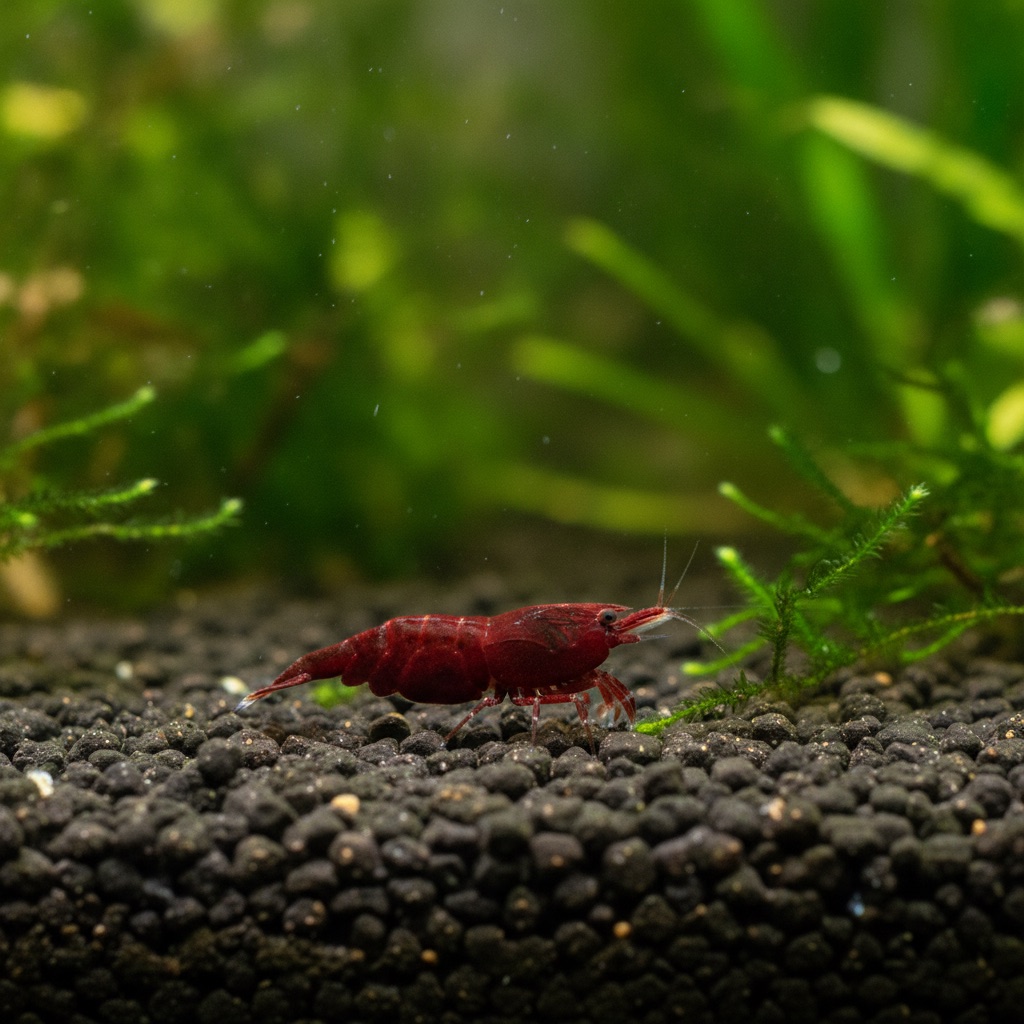
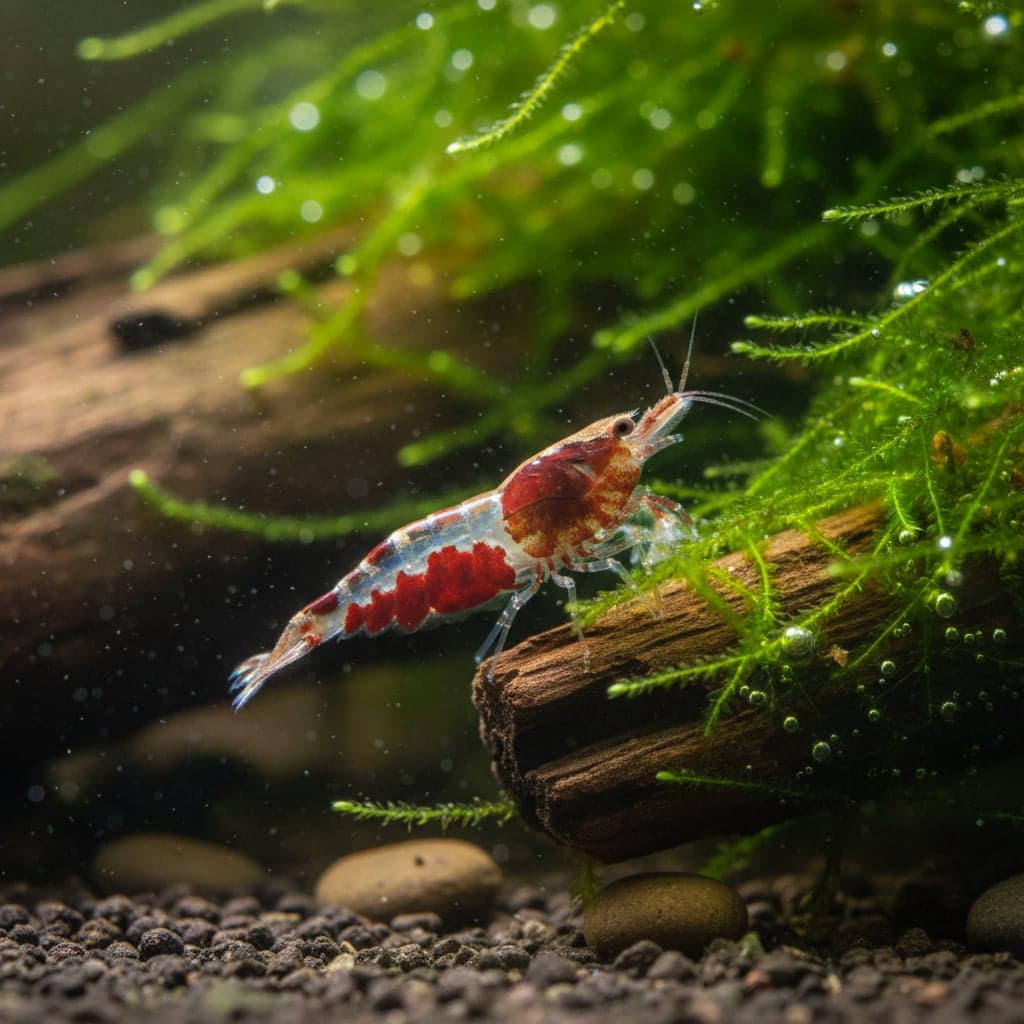
An intense blood-red Neocaridina whose colour sits in the tissue beneath a near-translucent shell, which is what separates it from the opaque-shelled Painted Fire Red.
Also known as: Bloody Mary Neocaridina · Neocaridina davidi var. Bloody Mary

Bloody Mary Shrimp
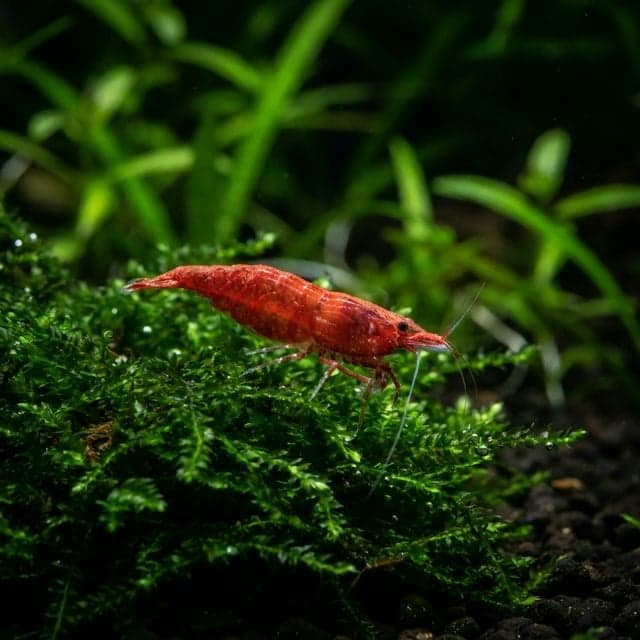
The Bloody Mary is a selectively bred red line of Neocaridina davidi, developed out of the chocolate and rili lines rather than by pushing cherry shrimp redder, and the result is a darker, denser red than a standard cherry — closer to oxblood than to postbox. It reads as solid colour even under strong planted-tank lighting, which is where lesser red lines tend to look thin and patchy.
Its real advantage over other red morphs is genetic stability. Bloody Mary is one of the more reliable colour lines in the hobby: culls are still red rather than reverting to translucent brown, so a colony left to breed on its own drifts much less than a blue or a yellow line would. That does not make it mixing-proof. Put it in with any other Neocaridina colour line and the offspring go wild-type within a few generations regardless.
Natural Habitat & Origin
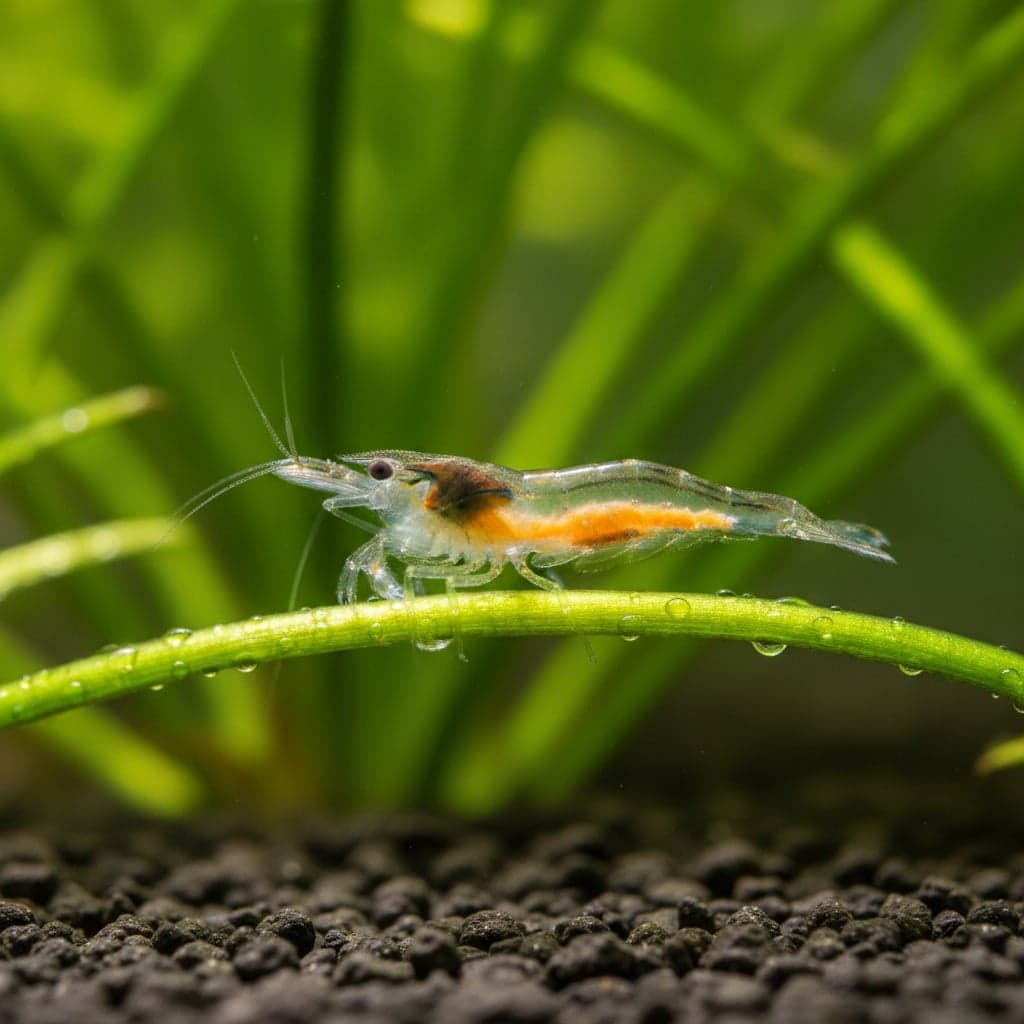
The species behind every Neocaridina colour morph is Neocaridina davidi, a small freshwater shrimp from streams and shallow rivers in Taiwan and eastern mainland China. Wild animals are a mottled translucent brown-grey — camouflage against gravel and leaf litter — with a pale dorsal stripe. Everything you see in a shop is the product of forty-odd years of hobbyist selection from that starting point.
The wild habitat is worth knowing because it explains the water they want: moderately hard, slightly alkaline, mineral-rich streams over rock and gravel, with dense marginal plants and a constant supply of biofilm and decaying leaf material. It is not the soft, acidic blackwater that crystal red shrimp and the other Caridina need, and confusing the two requirements is the most common reason a first shrimp colony fails.
Care Requirements
Neocaridina tolerate a wide band — 18-28°C and pH 6.5-8.0 — and the single most useful thing to understand is that stability inside that band matters far more than the exact figure. A colony held steadily at 24°C and pH 7.6 will thrive; the same colony swung between 7.2 and 8.0 by careless water changes will not.
The number that actually governs whether shrimp survive is general hardness. Shrimp take up calcium and magnesium from the water across their gills to build the new exoskeleton before each moult, so GH is not a comfort parameter, it is a structural input. Target GH 6-8 (some keepers run to 10), with KH 2-6 to keep pH from wandering. Too little and the new shell forms soft and the animal dies mid-moult; too much and it forms thick enough that the shrimp cannot break out of the old one. Read GH, KH and hardness and, if you run RO water, remineralisation.
A 20-litre tank is enough for a starter colony, though 40 or more gives you enough water volume to absorb mistakes. Run a sponge filter or put a coarse foam prefilter on whatever you already have — an unguarded intake shreds shrimplets. Leave driftwood, leaf litter and moss in the tank permanently; they are not decoration but the substrate the whole food web grows on.
Use the Aquarium Tracker to log these parameters against your own readings — it flags a drift before it becomes a problem.
Diet & Feeding
The bulk of what a healthy colony eats is biofilm — the bacterial and algal film that coats every surface in a mature tank — plus soft algae and decomposing plant matter. In a tank that has been running for a couple of months, that alone will sustain a small colony indefinitely.
Supplementary feeding should be small and infrequent: a prepared shrimp food, blanched courgette, spinach or nettle, and occasional protein, two or three times a week, in a quantity cleared within a couple of hours. Overfeeding is the commonest way people crash a shrimp tank, and it kills indirectly — by raising ammonia and by fuelling planaria, hydra and detritus worm blooms that prey on or crowd out shrimplets. Feeding invertebrates covers portioning.
Do not remove a shed exoskeleton. Shrimp eat their own moults to recover the calcium, and pulling them out throws away mineral you paid to put in the water.
Behaviour & Temperament
Constantly busy and entirely harmless. A settled colony works over every surface in the tank, picking with the small forward feeding limbs, and a group is far bolder than a pair — shrimp kept in ones and twos hide, while twenty in a 20-litre tank are visible all day.
Colour deepens with age and with security. New arrivals and stressed animals go pale and translucent, which is a genuine diagnostic rather than a cosmetic niggle: a colony that has gone washed-out overnight has a water quality or temperature problem, not a lighting problem. A dark substrate and dense planting both push the colour darker.
Males are smaller and noticeably less saturated than females — that is normal sexual dimorphism, not a low-grade animal.
Tank Mates
Best in a species tank. Every fish that will fit a 3 mm shrimplet in its mouth will eat shrimplets, and most that claim otherwise are simply not fast enough to be caught in the act. A colony in a community tank does not usually get wiped out; it just stops recruiting, and quietly declines over a year as adults die without replacement.
If you want fish, the least destructive options are the smallest surface and mid-water species — chili rasboras, ember tetras — in a heavily planted tank with enough moss for the young to hide in. Otocinclus and nerite snails are genuinely safe. Avoid ghost shrimp, which are larger, opportunistic and will hunt dwarf shrimp.
Colour lines and breeding true
This is a selectively bred line of Neocaridina davidi — the same species as the cherry shrimp, and care is identical. Mixing colour lines in one tank produces offspring that revert toward wild brown within a few generations, so keep lines separate if you want the colour to hold. That applies to blue dream, snowball, rili and sunkist orange alike: they are all one species, they interbreed freely, and the hybrid offspring express the wild-type camouflage the selection was suppressing.
Bloody Mary drifts less than most lines, but "less" is not "not at all". If you want the colour to stay where it is over years, remove the weakest-coloured juveniles before they breed rather than after.
Breeding
Breeding is not something you arrange; it is something you fail to prevent. Given stable water and enough food, ten shrimp become a hundred within six months.
Neocaridina have direct development, which is the whole reason they are a beginner shrimp. A berried female carries 20-30 eggs glued to the swimmerets under her tail, fanning them constantly for 25-30 days, and what hatches is a fully formed miniature shrimp, not a planktonic larva. There is no brackish phase, no infusoria culture and no separate fry food — the young eat the same biofilm the adults do from the first day. Temperature drives the clock: around 28°C they breed fast and live perhaps a year, around 22°C they breed slowly and live closer to two.
The only real intervention needed is a filter the young cannot be drawn into, and the patience not to gravel-vacuum aggressively while they are small.
Common Health Issues
Copper is the one that kills whole colonies at once. Copper-based ich and snail treatments are lethal to shrimp at doses fish shrug off, and once dosed the copper adsorbs onto substrate, rock and silicone and leaches back for months, so the tank stays unsafe long after the treatment ends. Treat fish in a separate hospital tank. Most planted-tank fertilisers contain copper in chelated trace amounts and are safe at label dose, but overdosing them is not — check the label against heavy metals and medications.
Failed moults are the other big one, and they are a mineral or shock problem rather than a disease. The sign is the "white ring of death": a clear white band at the join between carapace and abdomen in a shrimp that has split its old shell but cannot free itself. It follows chronically low GH or a sudden TDS drop — usually a large water change with unremineralised RO or cold tap water. Change 10-15% at a time, matched for temperature and mineral content.
Acclimation kills more new shrimp than anything in an established tank: drip acclimate over an hour or two, and treat first-week losses as a shipping cost.