Sulawesi Cardinal Shrimp: Caridina dennerli
Deep red with white spots, from the hot alkaline lakes of Sulawesi. Demands warmer, harder water than any other popular shrimp and will not tolerate the usual soft-water setup.
Also known as: Cardinal Sulawesi Shrimp · Caridina dennerli · White Spot Shrimp
Sulawesi Cardinal Shrimp
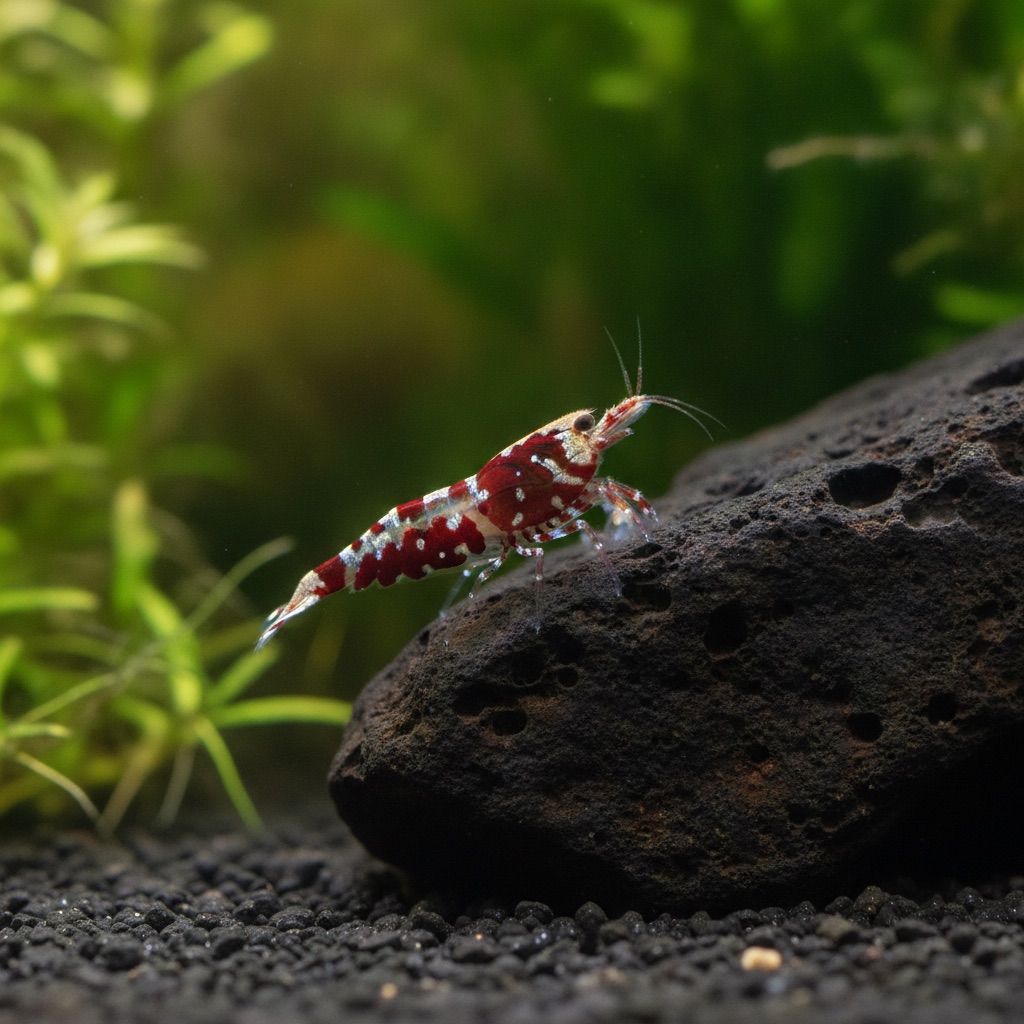
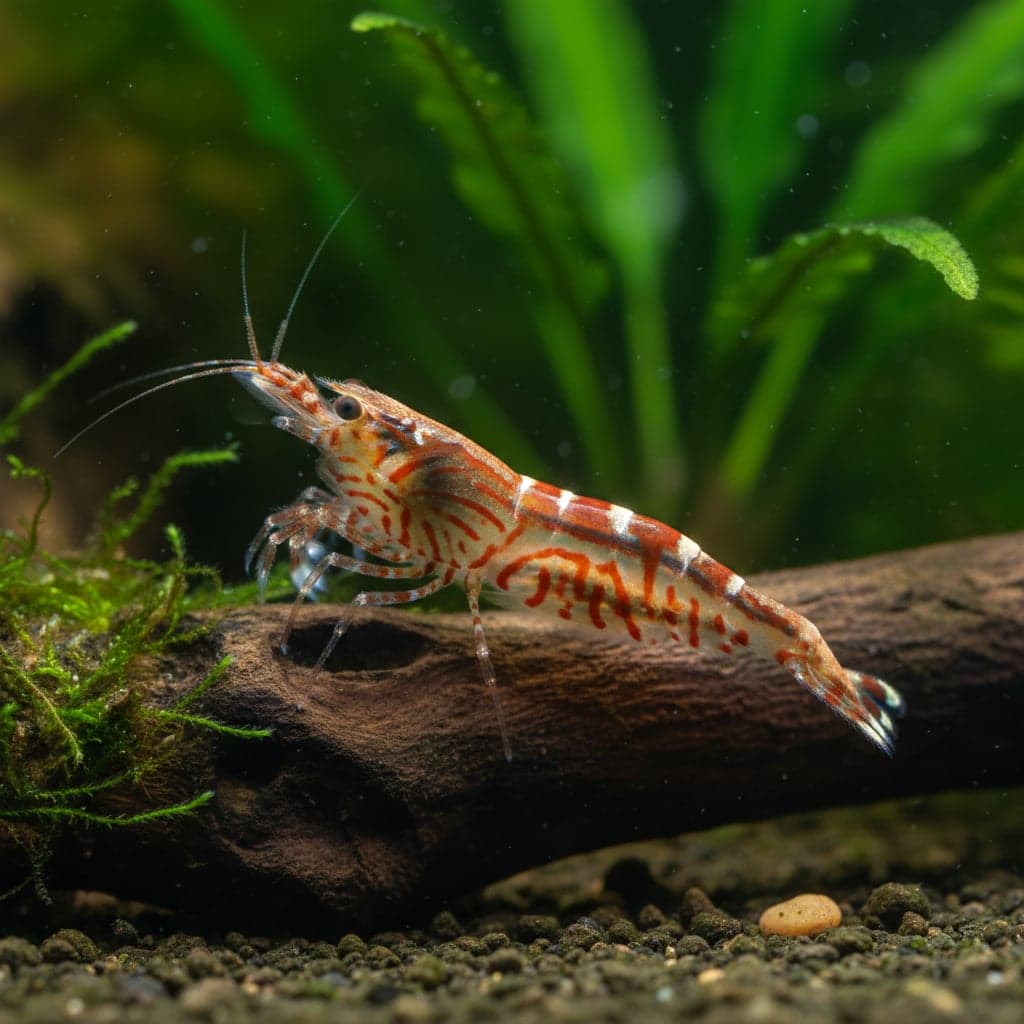
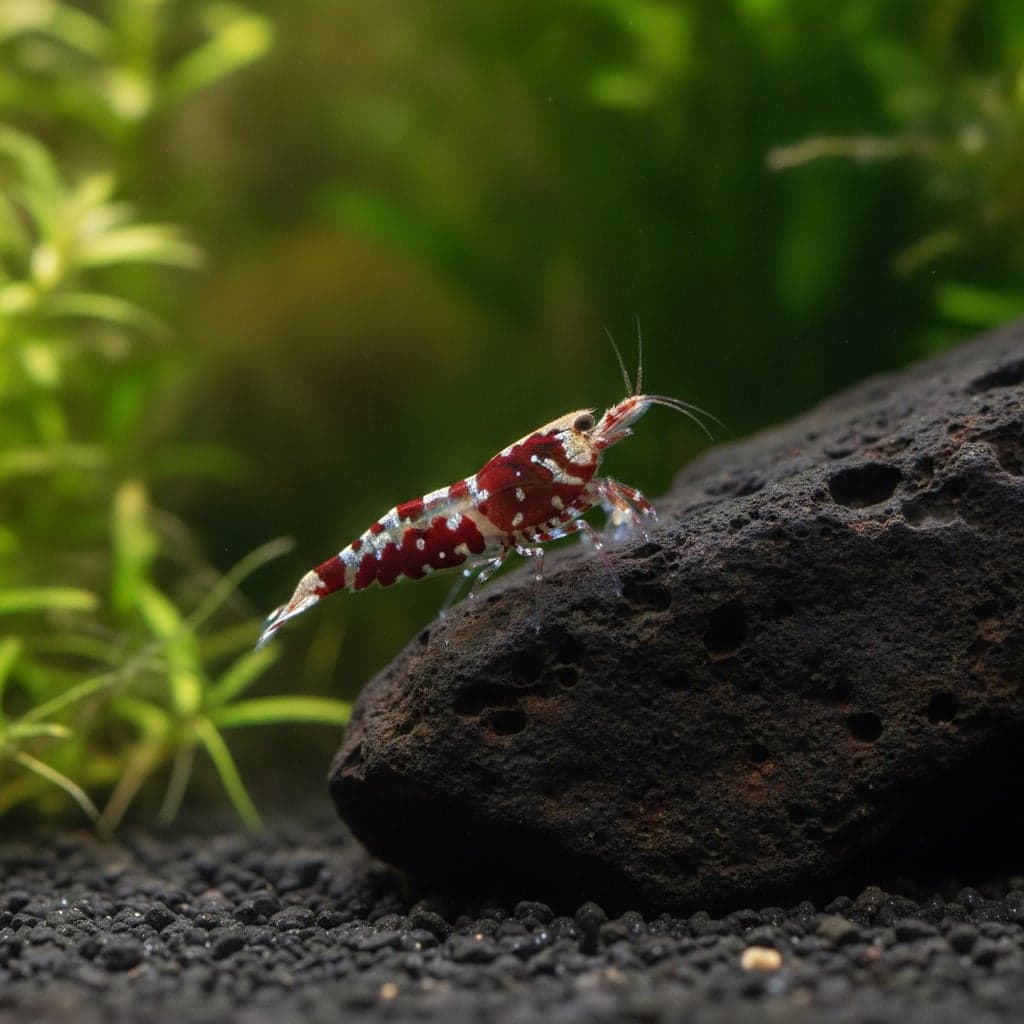
Caridina dennerli is the most striking dwarf shrimp in the hobby and the one most often killed by competent keepers. Deep wine red, scattered with crisp white spots, with white-tipped forelimbs it waves constantly as it feeds — and requirements that invert almost everything a shrimp keeper learns on Neocaridina and bee shrimp.
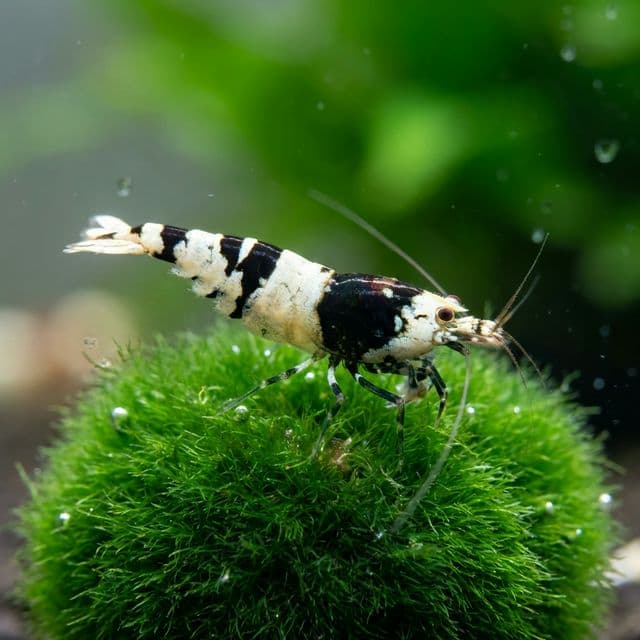
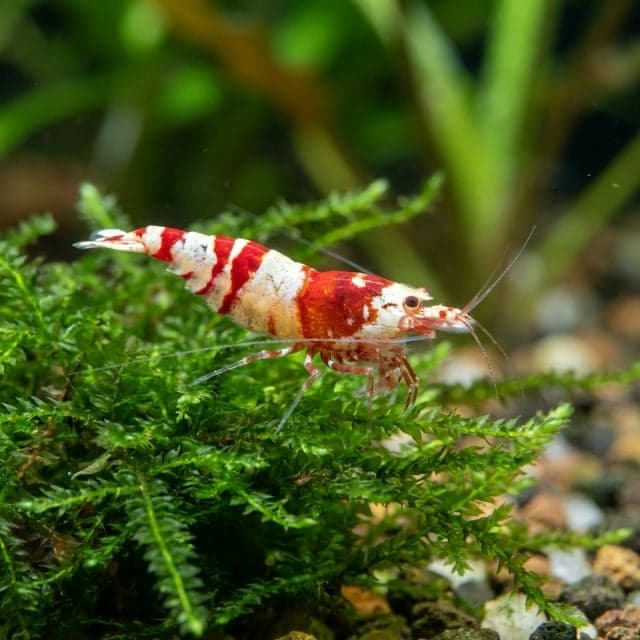
The trap is that they are a Caridina, like the crystal red shrimp, so people set them up the way they would set up bee shrimp: active soil, RO water, pH around 6.2, 22°C. That tank kills them in weeks. Cardinals come from hot alkaline lakes and need pH near 8 and water in the high twenties. Nothing about standard Caridina practice transfers.
Natural Habitat & Origin
They are endemic to Lake Matano on the Indonesian island of Sulawesi — not to Sulawesi generally, but to one ancient lake in the Malili system, part of a group of lakes several million years old that have generated their own radiation of shrimp, snails and fish found nowhere else. Cardinals live on hard rock substrate in shallow water, grazing the algal and bacterial film that coats it.
Three features of that water define their care, and only two of them are widely understood.
The lake is hot. Surface water sits around 27-31°C year round, with no seasonal drop. It is alkaline, with pH typically 7.8-8.5, buffered by the surrounding geology. And — the part people miss — it is not especially hard. Conductivity in Matano is low, in the region of 200 µS/cm, which is a TDS in the low hundreds of parts per million and a general hardness far below what "hard alkaline water" usually implies. High pH with modest mineral content is an unusual combination and it is the one you have to reproduce.
Lake Matano is also under real pressure from nickel mining, sedimentation and introduced fish, and most stock in the trade is still wild-collected. Buying captive-bred animals where you can find them is not a purity gesture; it is the difference between a shrimp that has been in a tank its whole life and one that has been through a month of collection and freight.
Care Requirements
Temperature first. Hold 27-30°C with a reliable heater and, on a tank this small, a second thermometer you actually read. Below about 26°C Cardinals stop feeding, become inactive and decline over a few weeks; the deaths come late enough that people rarely connect them to the cold snap that caused them. A heater failure in a Cardinal tank is a colony-level event, not an inconvenience.
Chemistry second, and this is where the common advice misleads. You want pH 7.8-8.5 with enough KH to hold it there — 4-6 dKH is typical — but you do not want to bludgeon the water hard with a GH booster to get there. Aim for a modest GH, around 4-6, and a TDS in the region of 120-180 ppm. The practical route is RO water plus a Sulawesi-specific mineral salt formulated for exactly this profile, or RO plus a light hand with crushed coral and a general remineraliser. See GH, KH and hardness, RO remineralisation and TDS for the underlying mechanics.
Maturity third. Cardinals eat biofilm, and a new tank has none. Set the tank up, add rock and light, and run it for two to three months before the shrimp go in. Rough-surfaced stone — lava rock is ideal — gives far more grazing area than smooth hardscape and mirrors the substrate they evolved on. Use a sponge filter for gentle flow and a surface the biofilm can colonise.
Then leave it alone. Cardinals tolerate change worse than almost any other freshwater invertebrate. Water changes should be 10% at most, weekly, with water matched for temperature, pH and TDS — a 30% change with mismatched water will kill shrimp within a day.
Use the Aquarium Tracker to log these parameters against your own readings — it flags a drift before it becomes a problem.
Diet & Feeding
Biofilm and aufwuchs, scraped off rock. In a properly matured tank this is most of what they need, and a tank with visible biofilm on the stones is a tank that will keep Cardinals alive.
Supplement lightly with foods designed for biofilm grazers — powdered shrimp foods, spirulina or bacterially cultured products, a little blanched spinach — a few times a week, in quantities the shrimp finish quickly. Excess food is more dangerous here than in a Neocaridina tank because the high temperature accelerates decomposition and the animals themselves tolerate ammonia badly. Feeding invertebrates covers the general approach.
Leave shed exoskeletons in the tank for the shrimp to consume and recycle the calcium.
Behaviour & Temperament
Completely peaceful, and much shyer than Neocaridina. New arrivals hide in the rockwork for days or weeks; a settled group grazes in the open with the feeding limbs in constant motion, which is the display people buy them for. The white tips on the forelimbs flick visibly as they work, and a group of a dozen on a lit rock face is genuinely spectacular.
Reading their condition takes attention. Cardinals do not lose colour as dramatically as a red Neocaridina under stress; instead they stop grazing, sit still in cover, and gradually thin. Behaviour is the signal here, and a Cardinal that has not been seen feeding for several days is in trouble.
Tank Mates
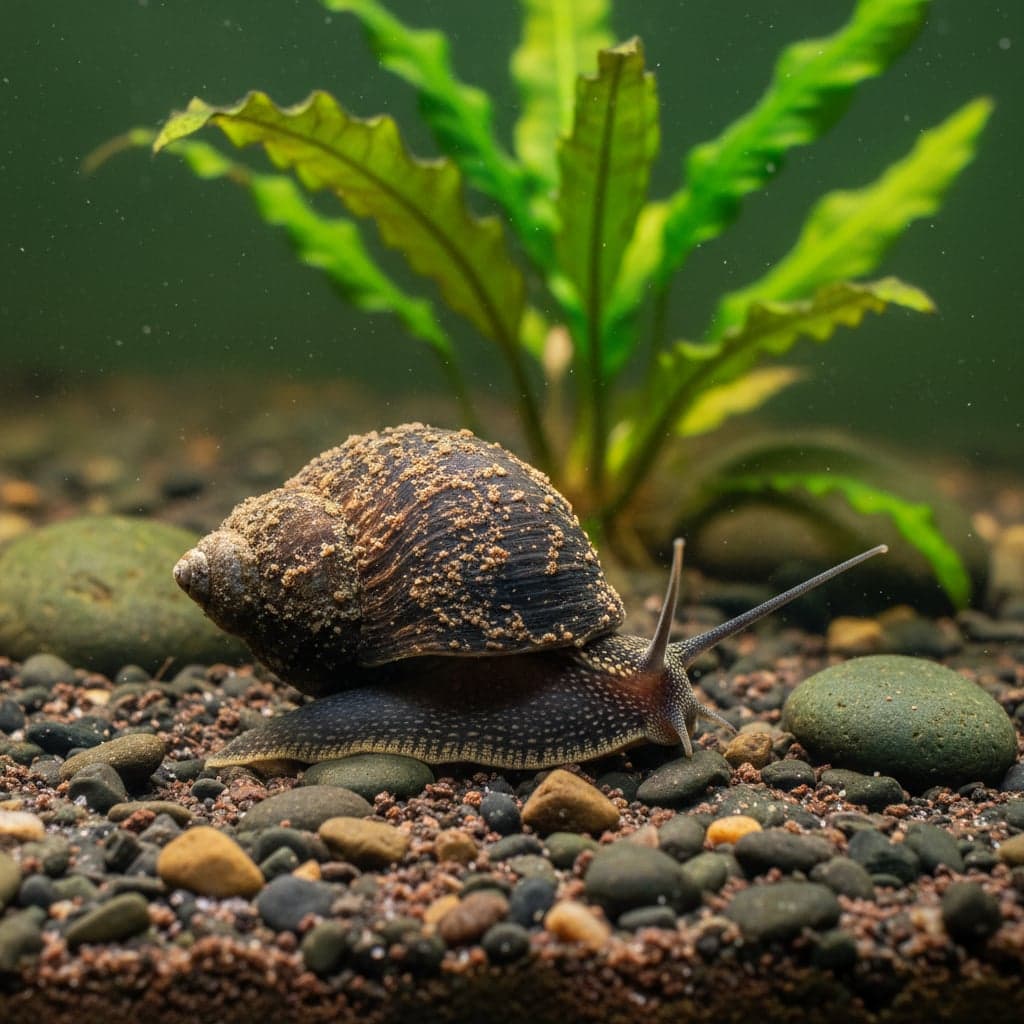
A species tank, and this is not a cautious recommendation but a practical one: almost nothing else in the freshwater hobby wants 28°C at pH 8.2 with low TDS. The handful of animals that do are the other Sulawesi endemics — the Sulawesi red line shrimp and the Sulawesi snails from the same lake system — and they are the only tank mates worth considering.
No fish. Even a small fish will eat shrimplets, and the shrimplets are the whole point given how slowly this species reproduces.
Breeding
Cardinals do breed in fresh water — they have direct development like other dwarf shrimp, with no larval or brackish stage — but they do it slowly, and a Cardinal colony grows at nothing like the pace of Neocaridina.
A berried female carries a small clutch, typically 10-25 eggs, for roughly four weeks, and releases miniature shrimp that immediately begin grazing biofilm. Survival of those juveniles depends almost entirely on how mature the tank is: in a rock-covered, biofilm-rich tank with no predators, a good proportion make it; in a clean new setup, almost none do.
Do not try to intervene. The most effective breeding strategy with this species is a stable, mature, undisturbed species tank held rigidly at the right parameters for a year. A colony that survives its first six months usually starts producing steadily after that.
Common Health Issues
Parameter shock is the leading cause of death, and it is nearly always self-inflicted. The classic sequence is a large water change with water that is a degree or two cooler and a different TDS, followed by deaths over the next 24 to 48 hours. Small changes, matched water, and patience. Any adjustment to the tank — remineraliser dose, new rock, a different food — should be made gradually.
Copper kills them as it kills every invertebrate, and the exposure long outlives the dose: copper-based ich and snail treatments adsorb onto substrate, rock and silicone and leach back for months. Never medicate a Sulawesi tank with copper. Check any fertiliser trace mix, and see heavy metals and medications.
Failed moults follow low mineral content or an abrupt TDS swing, and show as a shrimp stuck half out of its old shell. The fix is prevention: hold GH steady in the target range rather than letting it drift down between water changes.
Finally, expect losses in the first month with wild-caught stock regardless of what you do. These animals have been through collection, holding, air freight and a retail tank whose parameters were probably wrong, and the mortality that follows is accumulated damage rather than a fault in your setup. Acclimate by slow drip over two to three hours, put them into a mature tank, and judge your husbandry on month three rather than week one.