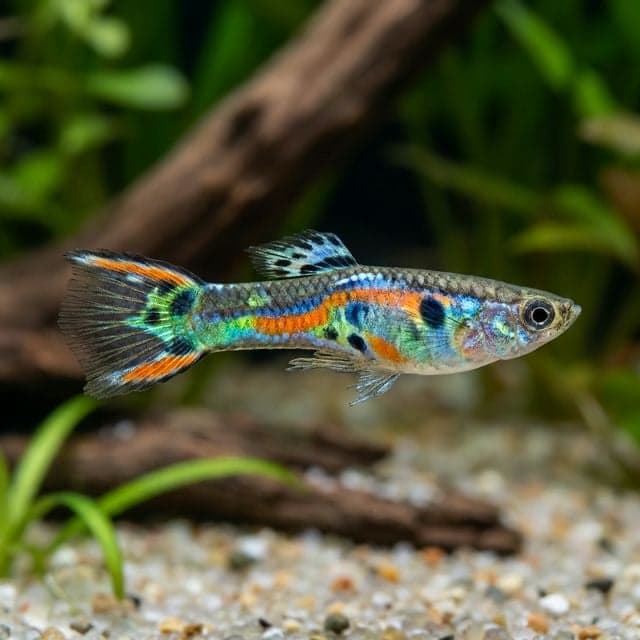
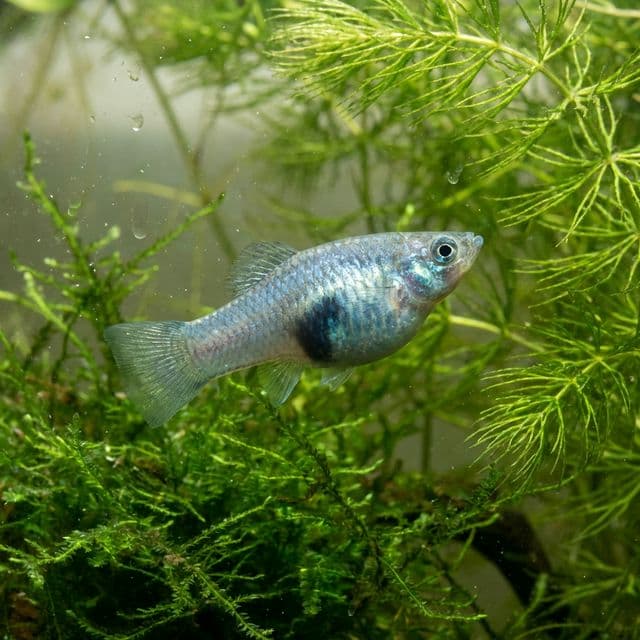
Yucatan Molly: Poecilia velifera
The giant sailfin molly of Mexico's Yucatán Peninsula: a large, hard-water livebearer whose males carry the tallest dorsal fin of any molly. Listed as Vulnerable in the wild.
Also known as: giant sailfin molly · sail-fin molly · Poecilia velifera
Yucatan Molly
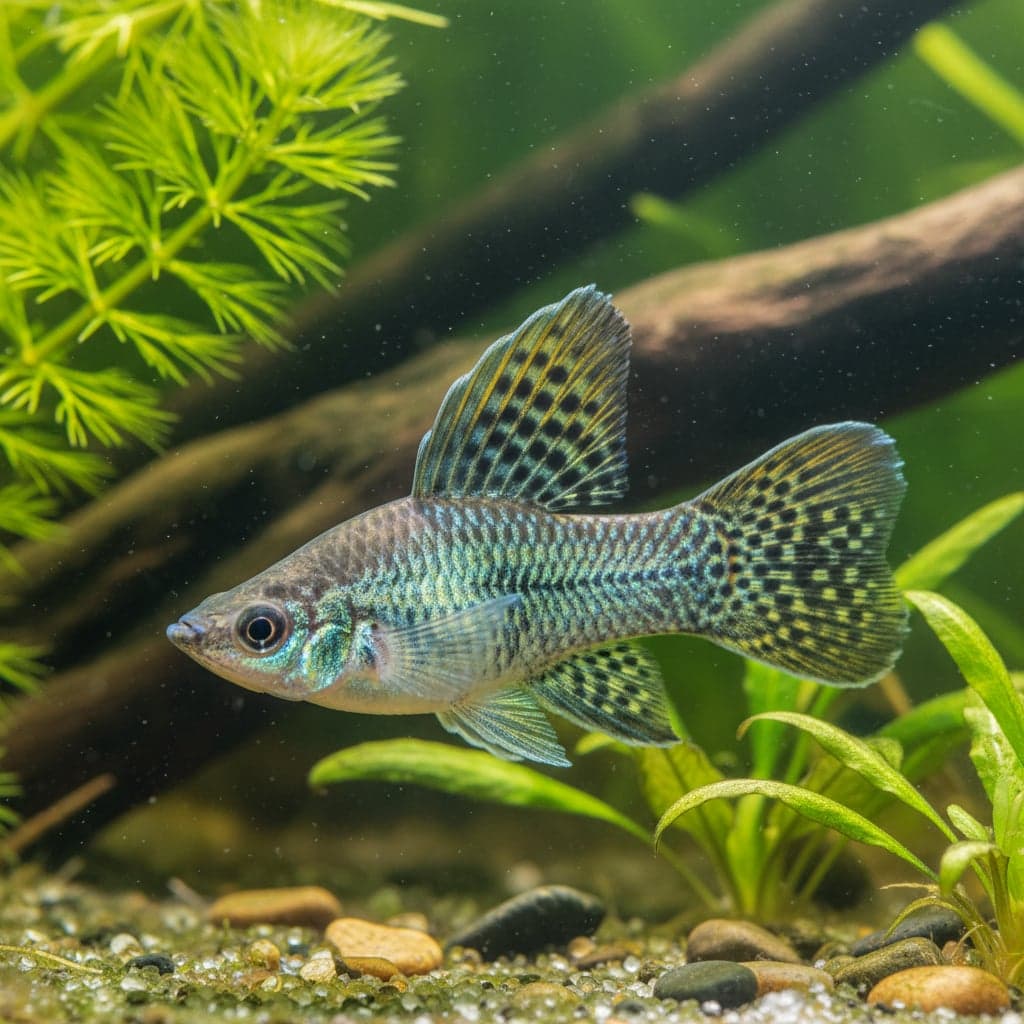
The Yucatan Molly (Poecilia velifera), often sold as the giant sailfin molly, is the largest and most spectacular of the mollies. Mature males raise a dorsal fin so tall and long that it runs from just behind the head almost to the tail, patterned with rows of blue, gold and black spots. When a male displays, he spreads it like a sail and holds it over a female, which is one of the best shows any livebearer puts on.
FishBase gives a length of up to 15 cm total length, so this is a noticeably bigger fish than the mollies most people know. Females are heavier-bodied and plainer, while males are slimmer and more colourful.
Yucatan Molly or Sailfin Molly?
Two species share the "sailfin" name. The Sailfin Molly (Poecilia latipinna) comes from the south-eastern United States and north-eastern Mexico. The Yucatan Molly is the Mexican endemic. The easiest way to tell them apart is the dorsal fin: in P. velifera it starts further forward and carries more rays, usually 18 or 19, against roughly 14 in P. latipinna. That is why a mature velifera male's sail looks so much bigger.
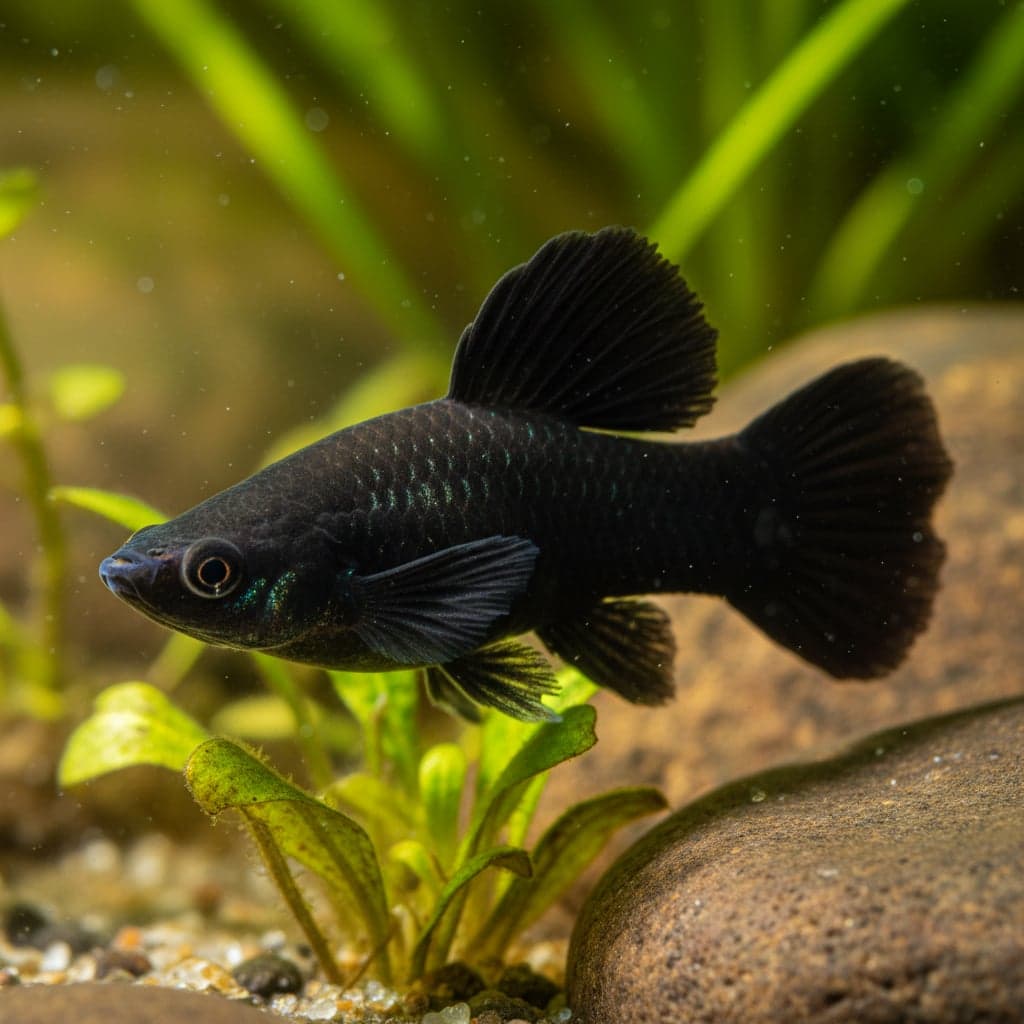
Many fish in shops are hybrids or man-made colour strains, and the two species cross readily. If you want true Yucatan Mollies, buy from a breeder who keeps the line pure.
Natural Habitat & Origin
This molly is found only in Mexico, in the Yucatán and Quintana Roo region and the lower Usumacinta and Laguna de Términos systems. It lives in coastal lagoons, mangrove channels, sinkhole-fed pools and the lower reaches of rivers. The water there is warm, hard and alkaline because it drains limestone, and in many places it is brackish or close to full seawater.
The IUCN lists the species as Vulnerable. Coastal development, tourism and pollution along the Yucatán coast are shrinking its habitat, so captive-bred stock is the only responsible choice.
Care Requirements
Keep the Yucatan Molly warm, at 25-28°C, in hard, alkaline water. FishBase records a pH of about 8.0 and a hardness of 13-19 dH, and anything between pH 7.5 and 8.5 works well. Soft or acidic water is the most common reason mollies fail in aquariums.
Many keepers add a little aquarium salt, and the species does well in brackish water. Salt is not essential if the water is hard enough, but it helps with the fin and skin problems mollies are prone to.
Because males need room to grow and show their sail, a tank of at least 100 cm length and about 200 litres suits a group. In cramped or cool conditions males often never develop full fins. Provide open swimming space along the front, strong lighting to grow algae, plants such as Java Fern that tolerate hard water, and efficient filtration, since these are large, hungry fish.
Diet & Feeding
In the wild adults eat worms, crustaceans, insects and plenty of plant matter, much of it algae grazed from surfaces. In the aquarium give a vegetable-based flake or pellet as the staple, and add blanched spinach, courgette and spirulina foods. Offer live or frozen brine shrimp and daphnia a few times a week. A tank with some algae growth lets them graze naturally between meals.
Behavior & Temperament
Yucatan Mollies are peaceful and sociable. Keep them in a group with more females than males, ideally two or three females per male, so that no single female is chased constantly. Males display to one another with raised fins but rarely injure each other.
They spend most of their time in the middle and upper water, and they are active all day.
Tank Mates
Choose peaceful fish that like the same warm, hard water:
- Mexican Tetra
- Swordtail
- Bristlenose Pleco for the bottom
- Nerite Snail
The Firemouth Cichlid shares its home waters and can live with adult mollies in a large tank. Avoid fin-nippers, which target the males' sails, and do not mix them with other mollies if you want to keep a pure line.
Breeding
Like all mollies, the Yucatan Molly is a livebearer. Females give birth to fully formed fry roughly every four weeks, and the fry are large enough to eat crushed flake and baby brine shrimp from the first day. Adults may eat fry, so dense plants or floating cover improve survival.
Males take many months to reach full size, and the biggest sails appear only in warm, spacious tanks. Breeders who want large-finned males raise the young in roomy grow-out tanks with frequent water changes.
Common Health Issues
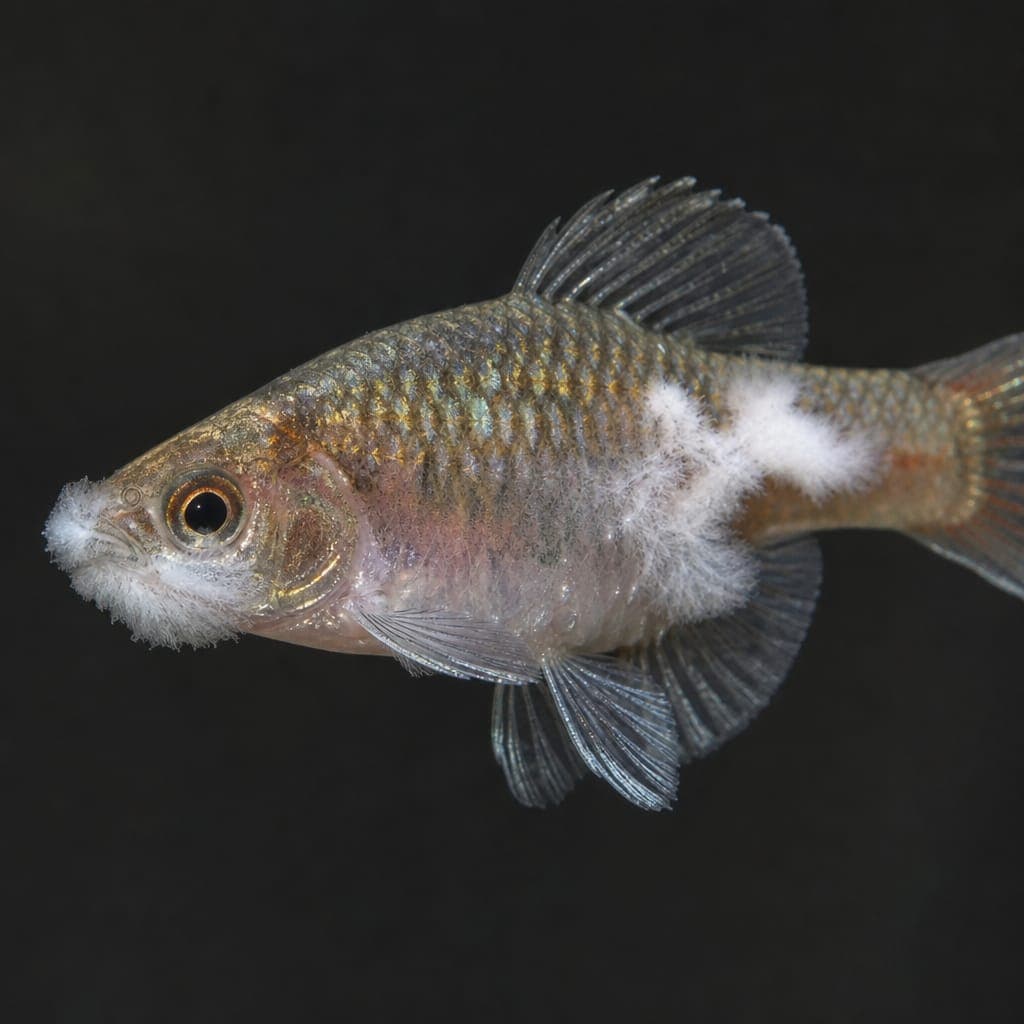
Most problems come from soft, acidic or cool water. In those conditions mollies develop "shimmies", a rocking on the spot that signals stress, and they become prone to fungus and white spot. Keeping the water hard, warm and clean, with regular water changes, prevents nearly all of it. Quarantine new fish, as mollies from mass farms often carry parasites.